
#cryptosecurity
cryptosecurity
9.5M views
16,257 Discussing
Hot
Latest

·
--
Bearish
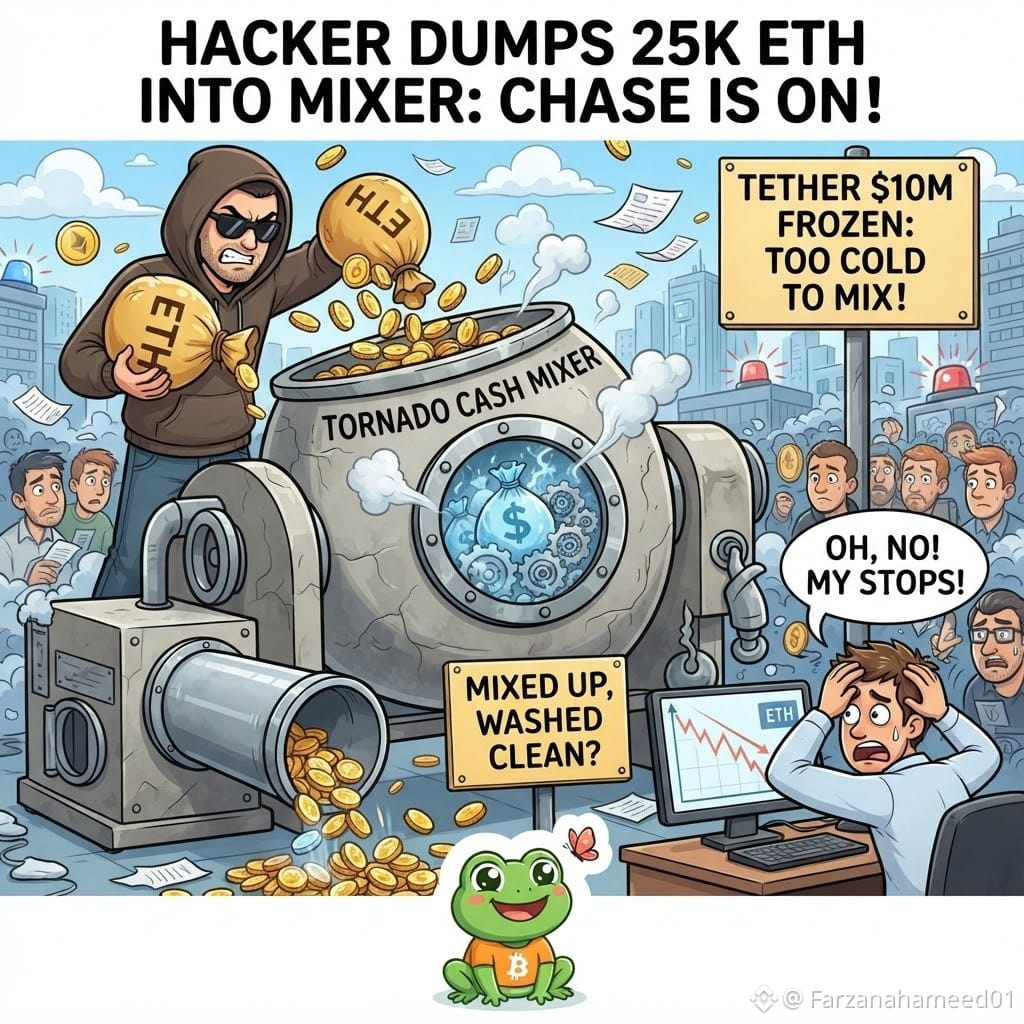
CRYPTOBILIS HACKER LAUNDERS 25,000 ETH THROUGH A MIXER: THE SAME OLD MONEY-LAUNDERING SONG! 😱
After seeing Tether freeze $10 million, the hacker quickly changed course!
#cryptobilisattackermoves25000ethtotornadocash
Breaking news shows that 25,000 ETH (∼$58.74 million) from the $95.35 million hack involving 1,486 Ledger wallets has been sent to Tornado Cash.
Quick analysis:
👉 The hacker is using a “mixer” to erase traces and prepare to dump, which could put short-term psychological pressure on ETH and trigger sell-offs.
👉 The remaining assets have been completely withdrawn from the old wallets, and the on-chain chase is getting increasingly intense.
💡What should learners do?
Check and immediately revoke any permissions granted to unfamiliar wallets! Avoid FOMO-buying the ETH dip when bad news breaks, and stick to your stop-loss discipline.
A hack news is not a buying signal. Always check, always verify, and keep learning about wallet security.
⚠️This is for learning and sharing only. This is not financial advice.
$ETH - Watch for pressure as hacker moves coins to mixer, strong.
$BTC - Watch for fear spreading in market, strong.
$EVAA - Watch for swings on hack news, strong.
✨ 𝐅𝐀𝐑𝐙𝐀𝐍𝐀 𝐇𝐀𝐌𝐄𝐄𝐃 𝐎𝐅𝐅𝐈𝐂𝐈𝐀𝐋 • 🦋
#Ethereum #CryptoNews #TornadoCash #CryptoSecurity
CRYPTOBILIS HACKER LAUNDERS 25,000 ETH THROUGH A MIXER: THE SAME OLD MONEY-LAUNDERING SONG! 😱
After seeing Tether freeze $10 million, the hacker quickly changed course!
#cryptobilisattackermoves25000ethtotornadocash
Breaking news shows that 25,000 ETH (∼$58.74 million) from the $95.35 million hack involving 1,486 Ledger wallets has been sent to Tornado Cash.
Quick analysis:
👉 The hacker is using a “mixer” to erase traces and prepare to dump, which could put short-term psychological pressure on ETH and trigger sell-offs.
👉 The remaining assets have been completely withdrawn from the old wallets, and the on-chain chase is getting increasingly intense.
💡What should learners do?
Check and immediately revoke any permissions granted to unfamiliar wallets! Avoid FOMO-buying the ETH dip when bad news breaks, and stick to your stop-loss discipline.
A hack news is not a buying signal. Always check, always verify, and keep learning about wallet security.
⚠️This is for learning and sharing only. This is not financial advice.
$ETH - Watch for pressure as hacker moves coins to mixer, strong.
$BTC - Watch for fear spreading in market, strong.
$EVAA - Watch for swings on hack news, strong.
✨ 𝐅𝐀𝐑𝐙𝐀𝐍𝐀 𝐇𝐀𝐌𝐄𝐄𝐃 𝐎𝐅𝐅𝐈𝐂𝐈𝐀𝐋 • 🦋
#Ethereum #CryptoNews #TornadoCash #CryptoSecurity
After seeing Tether freeze $10 million, the hacker quickly changed course!
#cryptobilisattackermoves25000ethtotornadocash
Breaking news shows that 25,000 ETH (∼$58.74 million) from the $95.35 million hack involving 1,486 Ledger wallets has been sent to Tornado Cash.
Quick analysis:
👉 The hacker is using a “mixer” to erase traces and prepare to dump, which could put short-term psychological pressure on ETH and trigger sell-offs.
👉 The remaining assets have been completely withdrawn from the old wallets, and the on-chain chase is getting increasingly intense.
💡What should learners do?
Check and immediately revoke any permissions granted to unfamiliar wallets! Avoid FOMO-buying the ETH dip when bad news breaks, and stick to your stop-loss discipline.
A hack news is not a buying signal. Always check, always verify, and keep learning about wallet security.
⚠️This is for learning and sharing only. This is not financial advice.
$ETH - Watch for pressure as hacker moves coins to mixer, strong.
$BTC - Watch for fear spreading in market, strong.
$EVAA - Watch for swings on hack news, strong.
✨ 𝐅𝐀𝐑𝐙𝐀𝐍𝐀 𝐇𝐀𝐌𝐄𝐄𝐃 𝐎𝐅𝐅𝐈𝐂𝐈𝐀𝐋 • 🦋
#Ethereum #CryptoNews #TornadoCash #CryptoSecurity
7
700

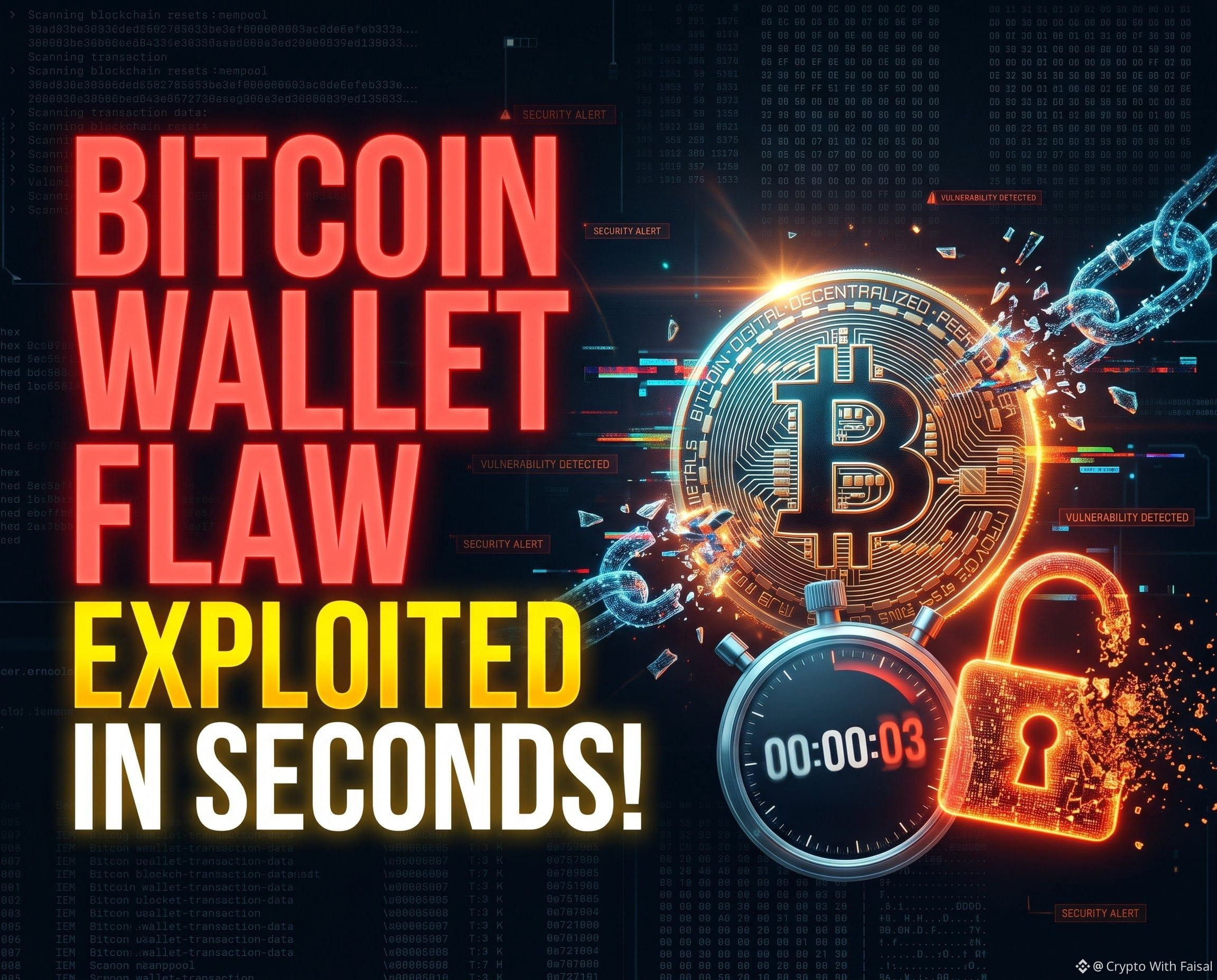
🚨 One reused signature number can empty a Bitcoin wallet in seconds.
Fresh research from the University of Liège (Vincent Jacquot & Benoît Donnet) proves automated bots are scanning the mempool 24/7 for weak wallet signatures.
Here is what their experiment uncovered:
• The Flaw: Under ECDSA signing, every transaction needs a unique random number (a nonce). When faulty or outdated wallet software reuses that number, anyone watching the blockchain can calculate the private key.
• The Speed: Researchers funded bait wallets with a few dollars and intentionally reused a nonce. Within seconds, competing bots spotted the error and raced to drain the funds.
• The Scale: Scanning six blockchains revealed 3,620 exposed keys (3,278 on Bitcoin alone)—linked to addresses that once held roughly $106M at peak prices.
Trader’s Takeaway:
Bitcoin’s protocol isn’t broken, but legacy wallet code still is. Stick to reputable, updated wallets using deterministic signing (RFC 6979) and never reuse old, unmaintained software for self-custody.
Are you still using any legacy wallets from previous cycles? Drop your setup below 👇
$BTC $ETH $EVAA
{future}(EVAAUSDT)
{future}(BTCUSDT)
{future}(ETHUSDT)
#bitcoinwalletsignatureflawexploitablewithinseconds
#CryptoSecurity #BitcoinWallet #SelfCustody
🚨 One reused signature number can empty a Bitcoin wallet in seconds.
Fresh research from the University of Liège (Vincent Jacquot & Benoît Donnet) proves automated bots are scanning the mempool 24/7 for weak wallet signatures.
Here is what their experiment uncovered:
• The Flaw: Under ECDSA signing, every transaction needs a unique random number (a nonce). When faulty or outdated wallet software reuses that number, anyone watching the blockchain can calculate the private key.
• The Speed: Researchers funded bait wallets with a few dollars and intentionally reused a nonce. Within seconds, competing bots spotted the error and raced to drain the funds.
• The Scale: Scanning six blockchains revealed 3,620 exposed keys (3,278 on Bitcoin alone)—linked to addresses that once held roughly $106M at peak prices.
Trader’s Takeaway:
Bitcoin’s protocol isn’t broken, but legacy wallet code still is. Stick to reputable, updated wallets using deterministic signing (RFC 6979) and never reuse old, unmaintained software for self-custody.
Are you still using any legacy wallets from previous cycles? Drop your setup below 👇
$BTC $ETH $EVAA
#bitcoinwalletsignatureflawexploitablewithinseconds
#CryptoSecurity #BitcoinWallet #SelfCustody
Fresh research from the University of Liège (Vincent Jacquot & Benoît Donnet) proves automated bots are scanning the mempool 24/7 for weak wallet signatures.
Here is what their experiment uncovered:
• The Flaw: Under ECDSA signing, every transaction needs a unique random number (a nonce). When faulty or outdated wallet software reuses that number, anyone watching the blockchain can calculate the private key.
• The Speed: Researchers funded bait wallets with a few dollars and intentionally reused a nonce. Within seconds, competing bots spotted the error and raced to drain the funds.
• The Scale: Scanning six blockchains revealed 3,620 exposed keys (3,278 on Bitcoin alone)—linked to addresses that once held roughly $106M at peak prices.
Trader’s Takeaway:
Bitcoin’s protocol isn’t broken, but legacy wallet code still is. Stick to reputable, updated wallets using deterministic signing (RFC 6979) and never reuse old, unmaintained software for self-custody.
Are you still using any legacy wallets from previous cycles? Drop your setup below 👇
$BTC $ETH $EVAA
#bitcoinwalletsignatureflawexploitablewithinseconds
#CryptoSecurity #BitcoinWallet #SelfCustody
9
15k
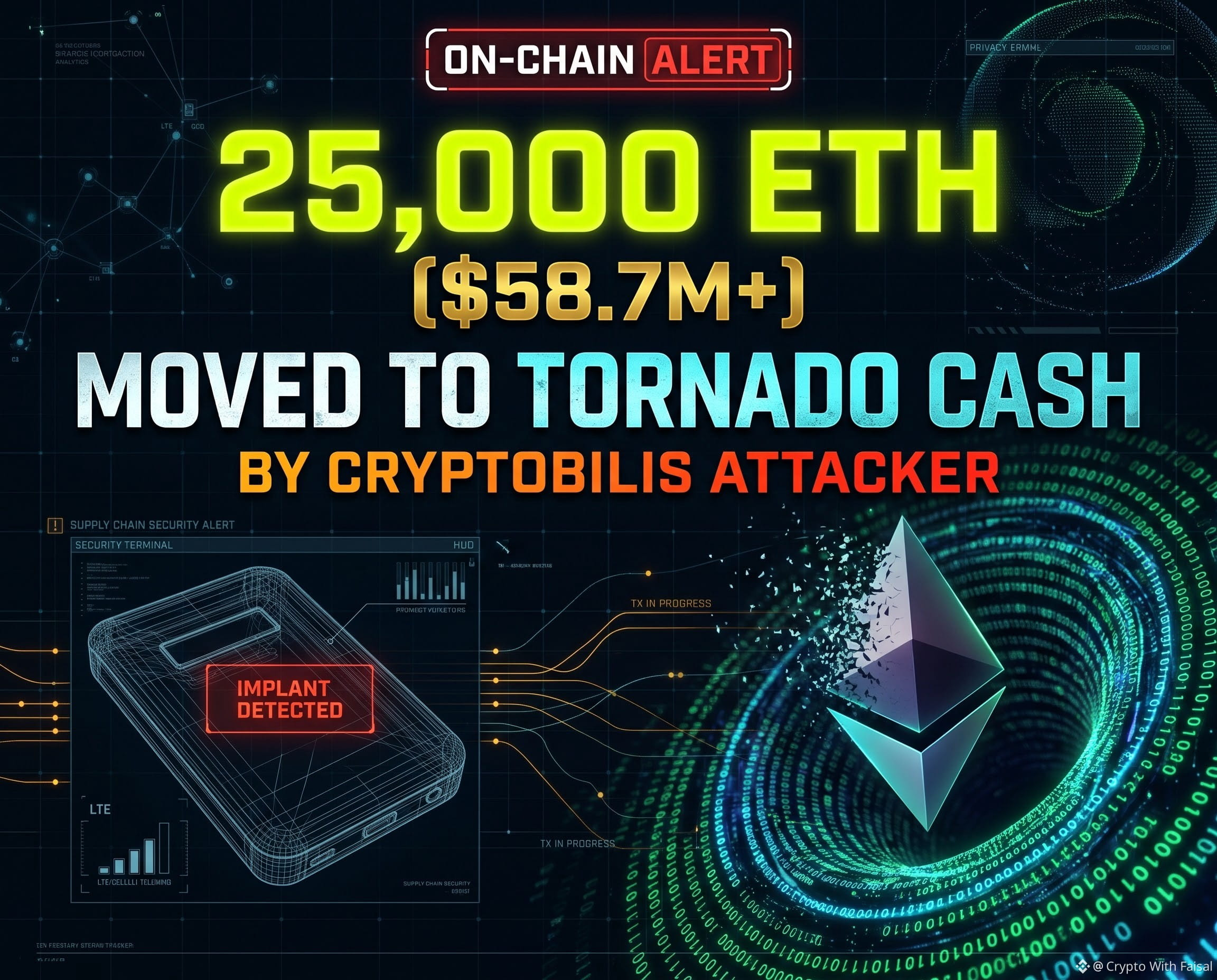
🚨 Over 25,000 ETH ($58.74M) from the CryptoBilis Ledger breach has now been funneled into Tornado Cash, according to Arkham Intelligence.
While traders watch short-term volatility, on-chain trackers just flagged a major laundering milestone from one of 2026's largest supply-chain exploits.
📊 Verified On-Chain Breakdown:
• Laundered: 25,017.31 ETH (~$58.74M) routed into Tornado Cash
• Total Stolen: $95.35M drained across 1,486 Ledger addresses
• Attack Vector: Physical LTE implants hidden inside tampered Ledger devices sold via reseller CryptoBilis
• Frozen Funds: $10M in USDT blacklisted by Tether on Tron
🛡️ Trader & Custody Takeaway:
Your keys are only as safe as your supply chain. Never buy hardware wallets from third-party resellers—order direct from official manufacturers and verify device authenticity before moving size.
Do you strictly buy direct from manufacturers, or rely on multi-sig setups for cold storage? Drop your take below 👇
$BTC $ETH $EVAA
{future}(EVAAUSDT)
{future}(BTCUSDT)
{future}(ETHUSDT)
#cryptobilisattackermoves25000ethtotornadocash #CryptoSecurity #OnChainData #Ethereum
🚨 Over 25,000 ETH ($58.74M) from the CryptoBilis Ledger breach has now been funneled into Tornado Cash, according to Arkham Intelligence.
While traders watch short-term volatility, on-chain trackers just flagged a major laundering milestone from one of 2026's largest supply-chain exploits.
📊 Verified On-Chain Breakdown:
• Laundered: 25,017.31 ETH (~$58.74M) routed into Tornado Cash
• Total Stolen: $95.35M drained across 1,486 Ledger addresses
• Attack Vector: Physical LTE implants hidden inside tampered Ledger devices sold via reseller CryptoBilis
• Frozen Funds: $10M in USDT blacklisted by Tether on Tron
🛡️ Trader & Custody Takeaway:
Your keys are only as safe as your supply chain. Never buy hardware wallets from third-party resellers—order direct from official manufacturers and verify device authenticity before moving size.
Do you strictly buy direct from manufacturers, or rely on multi-sig setups for cold storage? Drop your take below 👇
$BTC $ETH $EVAA
#cryptobilisattackermoves25000ethtotornadocash #CryptoSecurity #OnChainData #Ethereum
While traders watch short-term volatility, on-chain trackers just flagged a major laundering milestone from one of 2026's largest supply-chain exploits.
📊 Verified On-Chain Breakdown:
• Laundered: 25,017.31 ETH (~$58.74M) routed into Tornado Cash
• Total Stolen: $95.35M drained across 1,486 Ledger addresses
• Attack Vector: Physical LTE implants hidden inside tampered Ledger devices sold via reseller CryptoBilis
• Frozen Funds: $10M in USDT blacklisted by Tether on Tron
🛡️ Trader & Custody Takeaway:
Your keys are only as safe as your supply chain. Never buy hardware wallets from third-party resellers—order direct from official manufacturers and verify device authenticity before moving size.
Do you strictly buy direct from manufacturers, or rely on multi-sig setups for cold storage? Drop your take below 👇
$BTC $ETH $EVAA
#cryptobilisattackermoves25000ethtotornadocash #CryptoSecurity #OnChainData #Ethereum
4.7k

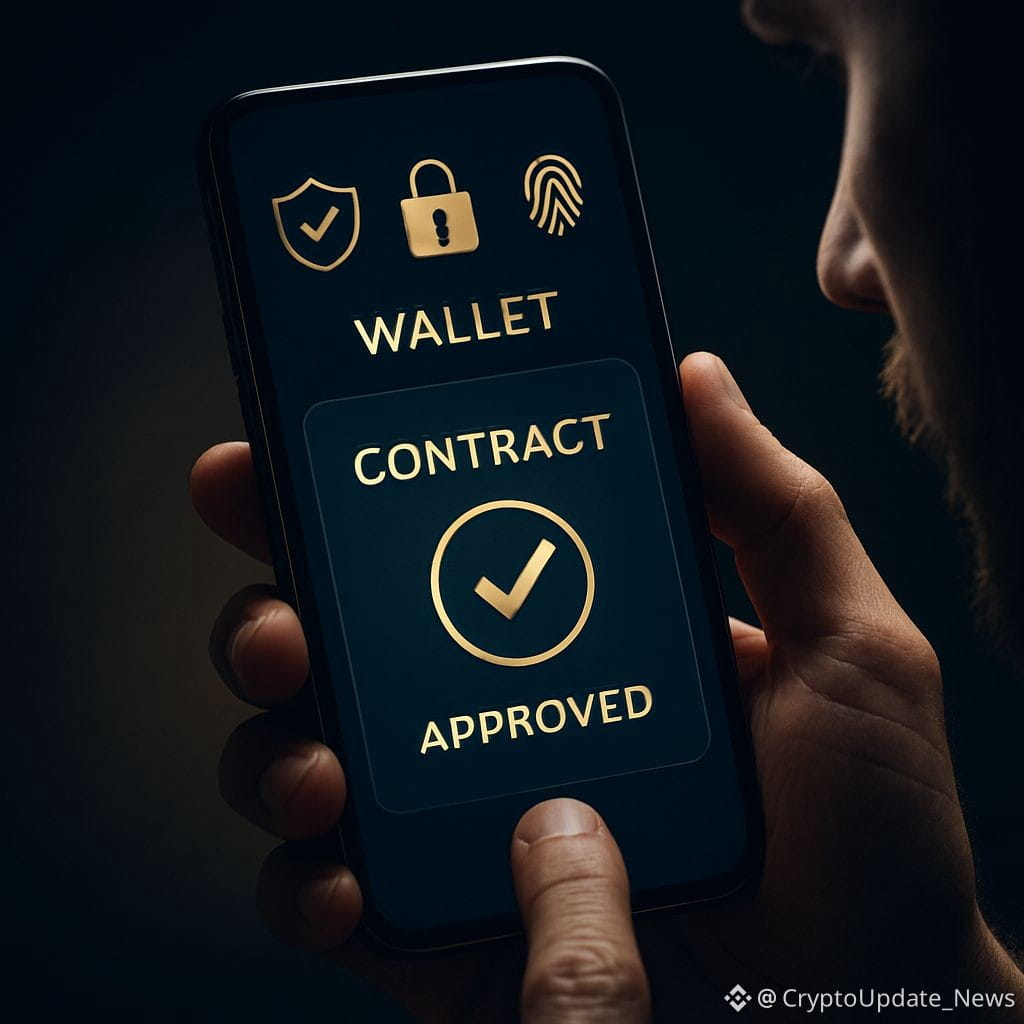
Avoid Fake Approval-Revoke Scams to Protect Your Crypto Wallet
Unsolicited messages may direct you to fake approval-revocation sites. Always verify contract and token allowances using trusted wallets or blockchain explorers before signing. Independently verify approvals to prevent unauthorized token spending.
Source: https://www.binance.com/en/support/faq/detail/78def429ca0c470abb60a852f8fbef75
AI illustration
#cryptosecurity #blockchainsecurity #digitalsafety #crypto
Avoid Fake Approval-Revoke Scams to Protect Your Crypto Wallet
Unsolicited messages may direct you to fake approval-revocation sites. Always verify contract and token allowances using trusted wallets or blockchain explorers before signing. Independently verify approvals to prevent unauthorized token spending.
Source: https://www.binance.com/en/support/faq/detail/78def429ca0c470abb60a852f8fbef75
AI illustration
#cryptosecurity #blockchainsecurity #digitalsafety #crypto
Unsolicited messages may direct you to fake approval-revocation sites. Always verify contract and token allowances using trusted wallets or blockchain explorers before signing. Independently verify approvals to prevent unauthorized token spending.
Source: https://www.binance.com/en/support/faq/detail/78def429ca0c470abb60a852f8fbef75
AI illustration
#cryptosecurity #blockchainsecurity #digitalsafety #crypto

·
--
#BitcoinCorePatchesAIDiscoveredVulnerability
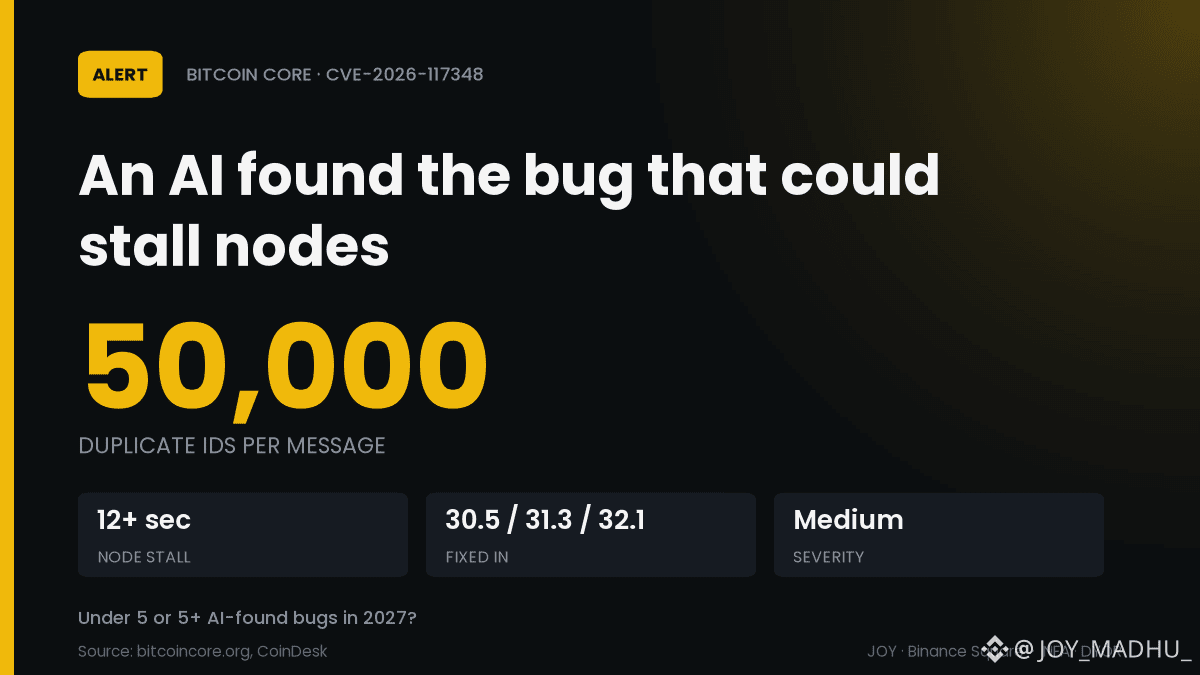
🤖 One ID Sent 50,000 Times: The Bug an AI Found First
Bitcoin Core disclosed a node-stall flaw caught by an LLM scan; older nodes should upgrade.
📊 One inv message could repeat an orphan ID up to 50,000 times
⚠️ Each message froze a node 12+ seconds, blocks included
🏦 Fixed in 30.5, 31.3 and 32.1; 29.x is end of life, no patch
📅 AI scan flagged it in July; public disclosure Nov 20
Why it matters: Medium severity, no funds at risk, but AI now finds bugs first.
More AI-found Bitcoin Core bugs in 2027: under 5 or 5+? 👇
$BTC
#BitcoinCorePatchesAIDiscoveredVulnerability #Bitcoin #CryptoSecurity
#BitcoinCorePatchesAIDiscoveredVulnerability
🤖 One ID Sent 50,000 Times: The Bug an AI Found First
Bitcoin Core disclosed a node-stall flaw caught by an LLM scan; older nodes should upgrade.
📊 One inv message could repeat an orphan ID up to 50,000 times
⚠️ Each message froze a node 12+ seconds, blocks included
🏦 Fixed in 30.5, 31.3 and 32.1; 29.x is end of life, no patch
📅 AI scan flagged it in July; public disclosure Nov 20
Why it matters: Medium severity, no funds at risk, but AI now finds bugs first.
More AI-found Bitcoin Core bugs in 2027: under 5 or 5+? 👇
$BTC
#BitcoinCorePatchesAIDiscoveredVulnerability #Bitcoin #CryptoSecurity
🤖 One ID Sent 50,000 Times: The Bug an AI Found First
Bitcoin Core disclosed a node-stall flaw caught by an LLM scan; older nodes should upgrade.
📊 One inv message could repeat an orphan ID up to 50,000 times
⚠️ Each message froze a node 12+ seconds, blocks included
🏦 Fixed in 30.5, 31.3 and 32.1; 29.x is end of life, no patch
📅 AI scan flagged it in July; public disclosure Nov 20
Why it matters: Medium severity, no funds at risk, but AI now finds bugs first.
More AI-found Bitcoin Core bugs in 2027: under 5 or 5+? 👇
$BTC
#BitcoinCorePatchesAIDiscoveredVulnerability #Bitcoin #CryptoSecurity
96

If you're still treating Bitcoin Core like it can never have a bug, stop now.
Traders keep getting wrecked by panic, not by actual hacks. They dump $BTC on every security headline and watch it grind back up without them.
An AI just found a bug in Bitcoin Core that had been sitting there since July. Critics are already using this to argue that nothing is truly safe, not even the original chain.
I see it the opposite way. Human reviewers missed it for months. An AI did not. That is a net positive for the whole space.
Bitcoin has gone 15 years without a protocol-level exploit. $ETH and $SOL have had their own close calls and patches. The difference is Bitcoin's slow, conservative culture actually reduced the blast radius here.
Is AI finding old bugs a sign of weakness or the new standard we should all want?
#Bitcoin #CryptoSecurity #AI
If you're still treating Bitcoin Core like it can never have a bug, stop now.
Traders keep getting wrecked by panic, not by actual hacks. They dump $BTC on every security headline and watch it grind back up without them.
An AI just found a bug in Bitcoin Core that had been sitting there since July. Critics are already using this to argue that nothing is truly safe, not even the original chain.
I see it the opposite way. Human reviewers missed it for months. An AI did not. That is a net positive for the whole space.
Bitcoin has gone 15 years without a protocol-level exploit. $ETH and $SOL have had their own close calls and patches. The difference is Bitcoin's slow, conservative culture actually reduced the blast radius here.
Is AI finding old bugs a sign of weakness or the new standard we should all want?
#Bitcoin #CryptoSecurity #AI
Traders keep getting wrecked by panic, not by actual hacks. They dump $BTC on every security headline and watch it grind back up without them.
An AI just found a bug in Bitcoin Core that had been sitting there since July. Critics are already using this to argue that nothing is truly safe, not even the original chain.
I see it the opposite way. Human reviewers missed it for months. An AI did not. That is a net positive for the whole space.
Bitcoin has gone 15 years without a protocol-level exploit. $ETH and $SOL have had their own close calls and patches. The difference is Bitcoin's slow, conservative culture actually reduced the blast radius here.
Is AI finding old bugs a sign of weakness or the new standard we should all want?
#Bitcoin #CryptoSecurity #AI
93

·
--
Here's what happened when an AI started digging through Bitcoin Core and uncovered a bug that had been hiding since July.
The real headache for traders is these discoveries often trigger knee-jerk selling in $BTC. People who panic-sold end up regretting it days later when nothing actually breaks.
This isn't some theoretical issue. The bug sat in the code since a July commit, slipping past the usual open-source scrutiny that Bitcoin is famous for. It echoes the 2018 inflation vulnerability that a human spotted just before it could have been catastrophic, but this time the finder was an algorithm rather than a developer pulling an all-nighter.
What we can learn from comparing it to other chains is that $ETH has poured resources into formal verification after its own history of exploits, while newer projects like $SOL still deal with frequent outages from similar oversights. Bitcoin's slow, conservative approach kept this one contained, but it also meant the flaw lingered longer than it might have on a more aggressively audited network.
The bigger picture is that AI tools are now capable of scanning code at a scale humans cannot match. That changes the security equation for everyone holding $BTC.
Where do you think this goes from here for protocol security?
#Bitcoin #AI #CryptoSecurity
Here's what happened when an AI started digging through Bitcoin Core and uncovered a bug that had been hiding since July.
The real headache for traders is these discoveries often trigger knee-jerk selling in $BTC . People who panic-sold end up regretting it days later when nothing actually breaks.
This isn't some theoretical issue. The bug sat in the code since a July commit, slipping past the usual open-source scrutiny that Bitcoin is famous for. It echoes the 2018 inflation vulnerability that a human spotted just before it could have been catastrophic, but this time the finder was an algorithm rather than a developer pulling an all-nighter.
What we can learn from comparing it to other chains is that $ETH has poured resources into formal verification after its own history of exploits, while newer projects like $SOL still deal with frequent outages from similar oversights. Bitcoin's slow, conservative approach kept this one contained, but it also meant the flaw lingered longer than it might have on a more aggressively audited network.
The bigger picture is that AI tools are now capable of scanning code at a scale humans cannot match. That changes the security equation for everyone holding $BTC .
Where do you think this goes from here for protocol security?
#Bitcoin #AI #CryptoSecurity
The real headache for traders is these discoveries often trigger knee-jerk selling in $BTC . People who panic-sold end up regretting it days later when nothing actually breaks.
This isn't some theoretical issue. The bug sat in the code since a July commit, slipping past the usual open-source scrutiny that Bitcoin is famous for. It echoes the 2018 inflation vulnerability that a human spotted just before it could have been catastrophic, but this time the finder was an algorithm rather than a developer pulling an all-nighter.
What we can learn from comparing it to other chains is that $ETH has poured resources into formal verification after its own history of exploits, while newer projects like $SOL still deal with frequent outages from similar oversights. Bitcoin's slow, conservative approach kept this one contained, but it also meant the flaw lingered longer than it might have on a more aggressively audited network.
The bigger picture is that AI tools are now capable of scanning code at a scale humans cannot match. That changes the security equation for everyone holding $BTC .
Where do you think this goes from here for protocol security?
#Bitcoin #AI #CryptoSecurity
41

·
--
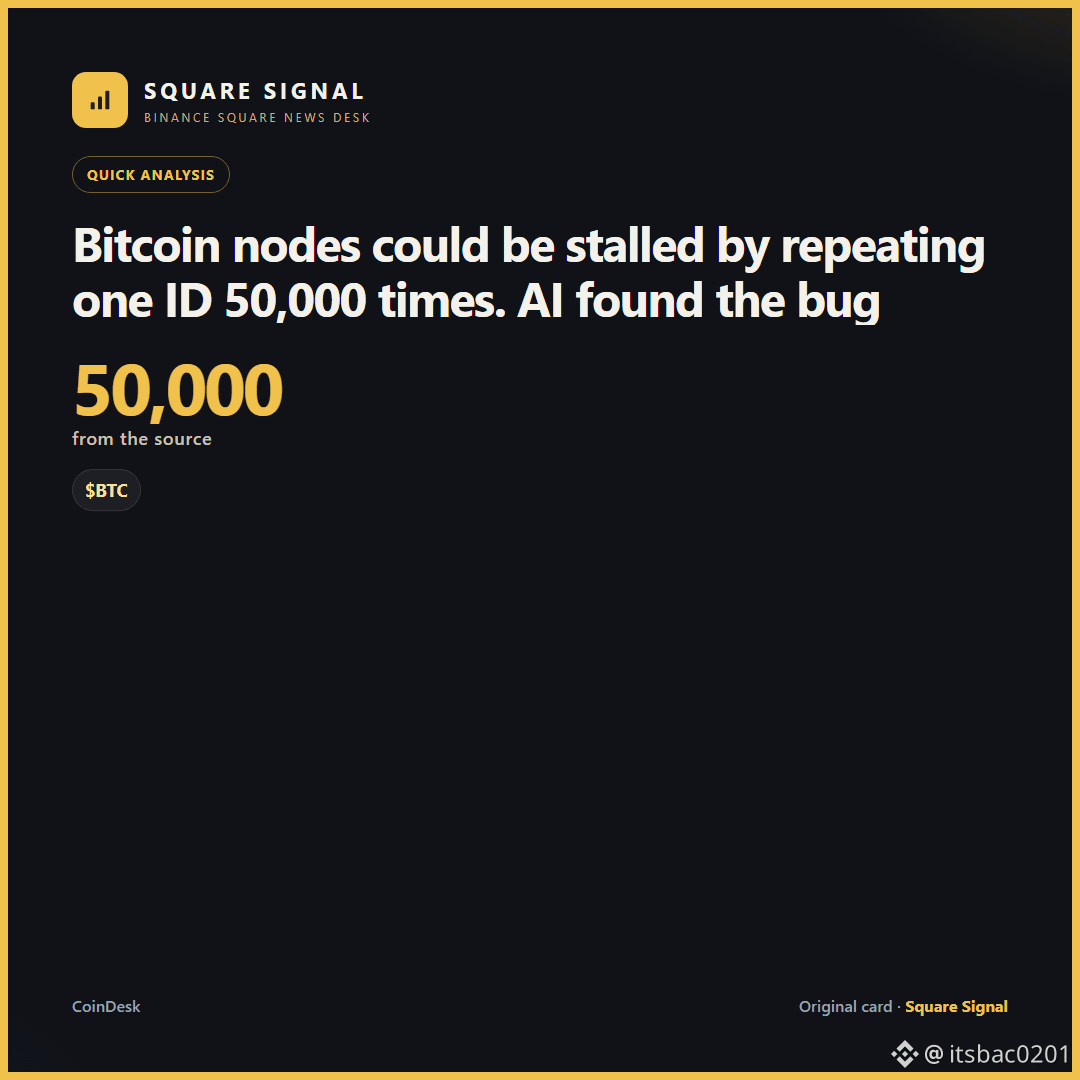
Bitcoin Core addressed a disruptive bug flagged by an AI scanner developed by Block’s Spiral. The flaw involved a repeating ID used 50,000 times that could potentially stall Bitcoin nodes.
The issue was uncovered by Loupe, an open-source tool employing AI agents to scrutinize Bitcoin’s code base for vulnerabilities. Friday's release includes the necessary fixes to prevent node stalls caused by this bug.
This AI-driven discovery spotlights the increasing role of advanced automated audits in safeguarding critical cryptocurrency infrastructure. Keeping nodes stable and secure is vital for $BTC network health.
#Bitcoin #AI #CryptoSecurity
Source: https://www.coindesk.com/markets/2026/11/21/bitcoin-nodes-could-be-stalled-by-repeating-one-id-50-000-times-ai-found-the-bug
Follow for sourced crypto updates and what matters next.
Bitcoin Core addressed a disruptive bug flagged by an AI scanner developed by Block’s Spiral. The flaw involved a repeating ID used 50,000 times that could potentially stall Bitcoin nodes.
The issue was uncovered by Loupe, an open-source tool employing AI agents to scrutinize Bitcoin’s code base for vulnerabilities. Friday's release includes the necessary fixes to prevent node stalls caused by this bug.
This AI-driven discovery spotlights the increasing role of advanced automated audits in safeguarding critical cryptocurrency infrastructure. Keeping nodes stable and secure is vital for $BTC network health.
#Bitcoin #AI #CryptoSecurity
Source: https://www.coindesk.com/markets/2026/11/21/bitcoin-nodes-could-be-stalled-by-repeating-one-id-50-000-times-ai-found-the-bug
Follow for sourced crypto updates and what matters next.
The issue was uncovered by Loupe, an open-source tool employing AI agents to scrutinize Bitcoin’s code base for vulnerabilities. Friday's release includes the necessary fixes to prevent node stalls caused by this bug.
This AI-driven discovery spotlights the increasing role of advanced automated audits in safeguarding critical cryptocurrency infrastructure. Keeping nodes stable and secure is vital for $BTC network health.
#Bitcoin #AI #CryptoSecurity
Source: https://www.coindesk.com/markets/2026/11/21/bitcoin-nodes-could-be-stalled-by-repeating-one-id-50-000-times-ai-found-the-bug
Follow for sourced crypto updates and what matters next.
25

·
--
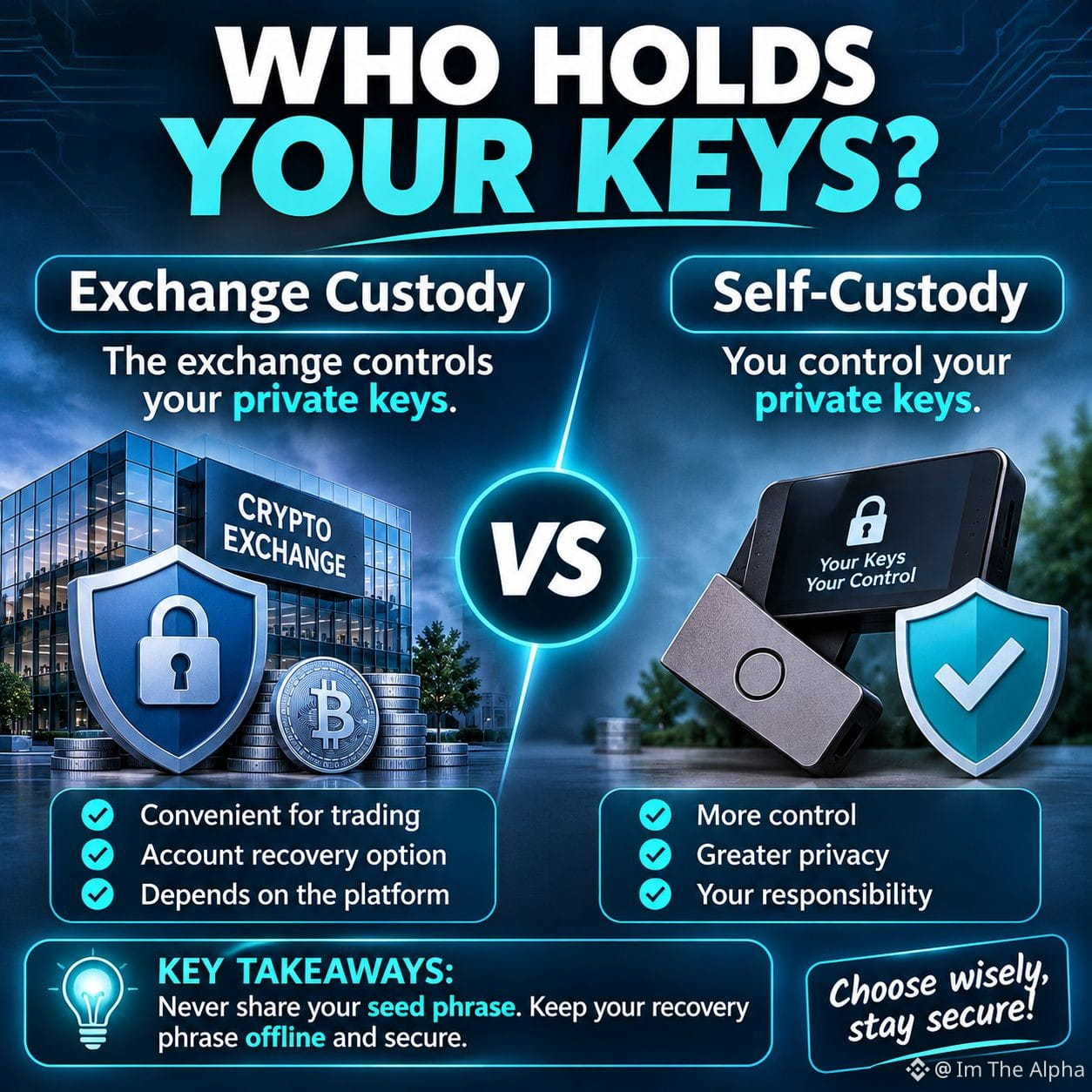
🔐 WHO HOLDS YOUR KEYS?
Where do you keep your crypto? 🤔
🏦 Exchange Custody
The exchange holds your private keys.
It's convenient for trading, but you depend on the platform.
👛 Self Custody
You control your own private keys.
More freedom, but more responsibility!
⚠️ Remember:
Never share your seed phrase with anyone.
Keep it safe and offline!
Your crypto, your choice, but security always comes first. 🛡️
#CryptoSecurity #CryptoEducation #CanBTCReboundAfterFallingBelow60K? #Web3 #LearnCrypto $BTC $ETH $BNB
🔐 WHO HOLDS YOUR KEYS?
Where do you keep your crypto? 🤔
🏦 Exchange Custody
The exchange holds your private keys.
It's convenient for trading, but you depend on the platform.
👛 Self Custody
You control your own private keys.
More freedom, but more responsibility!
⚠️ Remember:
Never share your seed phrase with anyone.
Keep it safe and offline!
Your crypto, your choice, but security always comes first. 🛡️
#CryptoSecurity #CryptoEducation #CanBTCReboundAfterFallingBelow60K? #Web3 #LearnCrypto $BTC $ETH $BNB
Where do you keep your crypto? 🤔
🏦 Exchange Custody
The exchange holds your private keys.
It's convenient for trading, but you depend on the platform.
👛 Self Custody
You control your own private keys.
More freedom, but more responsibility!
⚠️ Remember:
Never share your seed phrase with anyone.
Keep it safe and offline!
Your crypto, your choice, but security always comes first. 🛡️
#CryptoSecurity #CryptoEducation #CanBTCReboundAfterFallingBelow60K? #Web3 #LearnCrypto $BTC $ETH $BNB
2
128

🚨 ONE CLICK CAN COST YOU YOUR CRYPTO! 🔐
Imagine waking up and discovering that your crypto wallet is empty. 😨
How does it happen?
Scammers often use fake websites, fake support accounts and attractive giveaway links to trick crypto users.
🛡️ 5 SECURITY RULES EVERY CRYPTO USER SHOULD FOLLOW:
1️⃣ Never share your password or 2FA codes. 2️⃣ Never reveal your wallet Seed Phrase. 3️⃣ Verify suspicious links before clicking. 4️⃣ Enable Two-Factor Authentication (2FA). 5️⃣ Check whether a Binance contact is genuine using Binance Verify.
⚠️ IMPORTANT: Real Binance Support will never ask you to reveal your password or send funds to a so-called safe account.
💡 Remember: Protecting your crypto is just as important as making profits!
👇 QUESTION FOR THE COMMUNITY:
Have you ever received a suspicious crypto message or fake giveaway link?
Share your experience. Your story might protect another trader!
🦋 QUEEN CRYPTO
#BinanceSquare #CryptoSecurity #bitcoin #Web3 #ScamAlert #CryptoEducation #QueenCrypto
🚨 ONE CLICK CAN COST YOU YOUR CRYPTO! 🔐
Imagine waking up and discovering that your crypto wallet is empty. 😨
How does it happen?
Scammers often use fake websites, fake support accounts and attractive giveaway links to trick crypto users.
🛡️ 5 SECURITY RULES EVERY CRYPTO USER SHOULD FOLLOW:
1️⃣ Never share your password or 2FA codes. 2️⃣ Never reveal your wallet Seed Phrase. 3️⃣ Verify suspicious links before clicking. 4️⃣ Enable Two-Factor Authentication (2FA). 5️⃣ Check whether a Binance contact is genuine using Binance Verify.
⚠️ IMPORTANT: Real Binance Support will never ask you to reveal your password or send funds to a so-called safe account.
💡 Remember: Protecting your crypto is just as important as making profits!
👇 QUESTION FOR THE COMMUNITY:
Have you ever received a suspicious crypto message or fake giveaway link?
Share your experience. Your story might protect another trader!
🦋 QUEEN CRYPTO
#BinanceSquare #CryptoSecurity #bitcoin #Web3 #ScamAlert #CryptoEducation #QueenCrypto
Imagine waking up and discovering that your crypto wallet is empty. 😨
How does it happen?
Scammers often use fake websites, fake support accounts and attractive giveaway links to trick crypto users.
🛡️ 5 SECURITY RULES EVERY CRYPTO USER SHOULD FOLLOW:
1️⃣ Never share your password or 2FA codes. 2️⃣ Never reveal your wallet Seed Phrase. 3️⃣ Verify suspicious links before clicking. 4️⃣ Enable Two-Factor Authentication (2FA). 5️⃣ Check whether a Binance contact is genuine using Binance Verify.
⚠️ IMPORTANT: Real Binance Support will never ask you to reveal your password or send funds to a so-called safe account.
💡 Remember: Protecting your crypto is just as important as making profits!
👇 QUESTION FOR THE COMMUNITY:
Have you ever received a suspicious crypto message or fake giveaway link?
Share your experience. Your story might protect another trader!
🦋 QUEEN CRYPTO
#BinanceSquare #CryptoSecurity #bitcoin #Web3 #ScamAlert #CryptoEducation #QueenCrypto

63
·
--
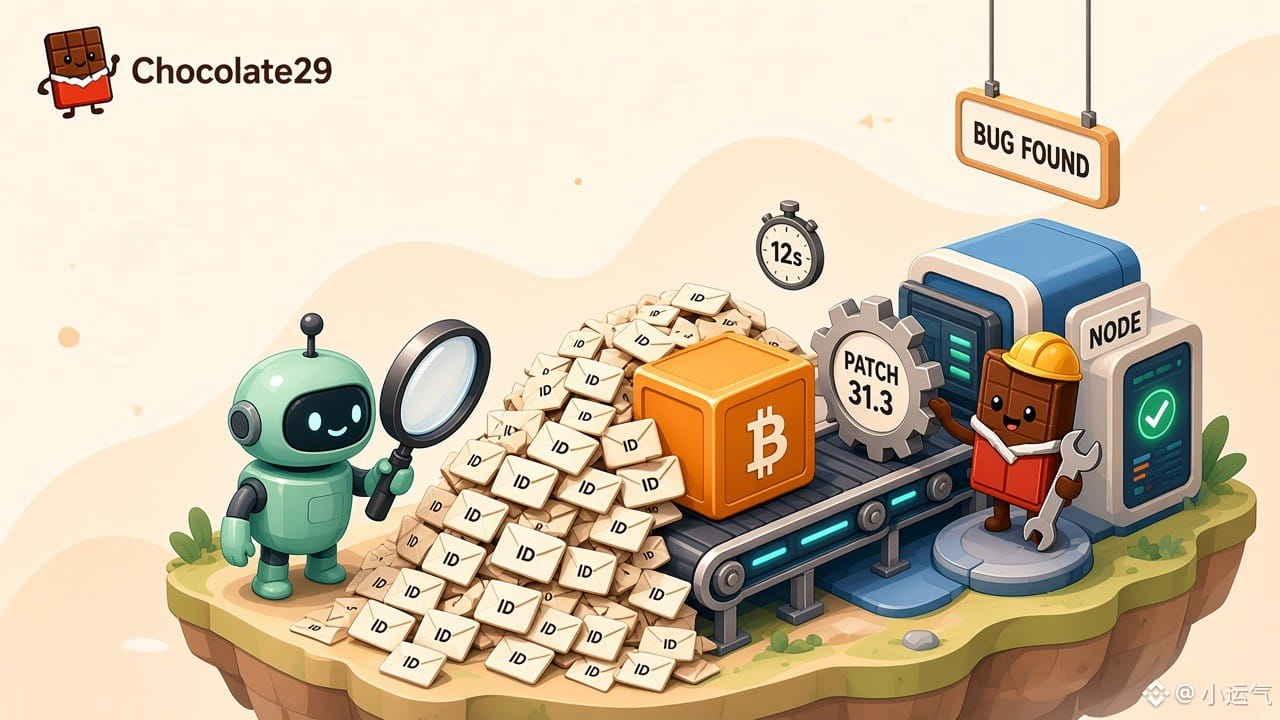
An AI-powered code scanner helped catch a Bitcoin Core bug that could freeze a node for more than 12 seconds at a time.
On November 20, 2026, Bitcoin Core disclosed CVE-2026-117348, rated medium severity, and released fixes in versions 30.5 and 31.3 (version 32.1 already carried the fix from October 27). An attacker could send an orphan transaction with thousands of missing parents, then repeat its ID up to 50,000 times in a single announcement. Each such message stalled the node for over a dozen seconds, and during that time it processed no blocks or transactions from other peers.
The flaw was first reported on July 8, 2026 by an automated LLM scan from Project Loupe at Spiral. Versions 29.0 through 31.2 are affected, and the end-of-life 29.x line will not get a patch, so anyone running $BTC nodes may want to check their version.
#Bitcoin #BitcoinCore #CryptoSecurity
DYOR. Not financial advice.
An AI-powered code scanner helped catch a Bitcoin Core bug that could freeze a node for more than 12 seconds at a time.
On November 20, 2026, Bitcoin Core disclosed CVE-2026-117348, rated medium severity, and released fixes in versions 30.5 and 31.3 (version 32.1 already carried the fix from October 27). An attacker could send an orphan transaction with thousands of missing parents, then repeat its ID up to 50,000 times in a single announcement. Each such message stalled the node for over a dozen seconds, and during that time it processed no blocks or transactions from other peers.
The flaw was first reported on July 8, 2026 by an automated LLM scan from Project Loupe at Spiral. Versions 29.0 through 31.2 are affected, and the end-of-life 29.x line will not get a patch, so anyone running $BTC nodes may want to check their version.
#Bitcoin #BitcoinCore #CryptoSecurity
DYOR. Not financial advice.
On November 20, 2026, Bitcoin Core disclosed CVE-2026-117348, rated medium severity, and released fixes in versions 30.5 and 31.3 (version 32.1 already carried the fix from October 27). An attacker could send an orphan transaction with thousands of missing parents, then repeat its ID up to 50,000 times in a single announcement. Each such message stalled the node for over a dozen seconds, and during that time it processed no blocks or transactions from other peers.
The flaw was first reported on July 8, 2026 by an automated LLM scan from Project Loupe at Spiral. Versions 29.0 through 31.2 are affected, and the end-of-life 29.x line will not get a patch, so anyone running $BTC nodes may want to check their version.
#Bitcoin #BitcoinCore #CryptoSecurity
DYOR. Not financial advice.
74

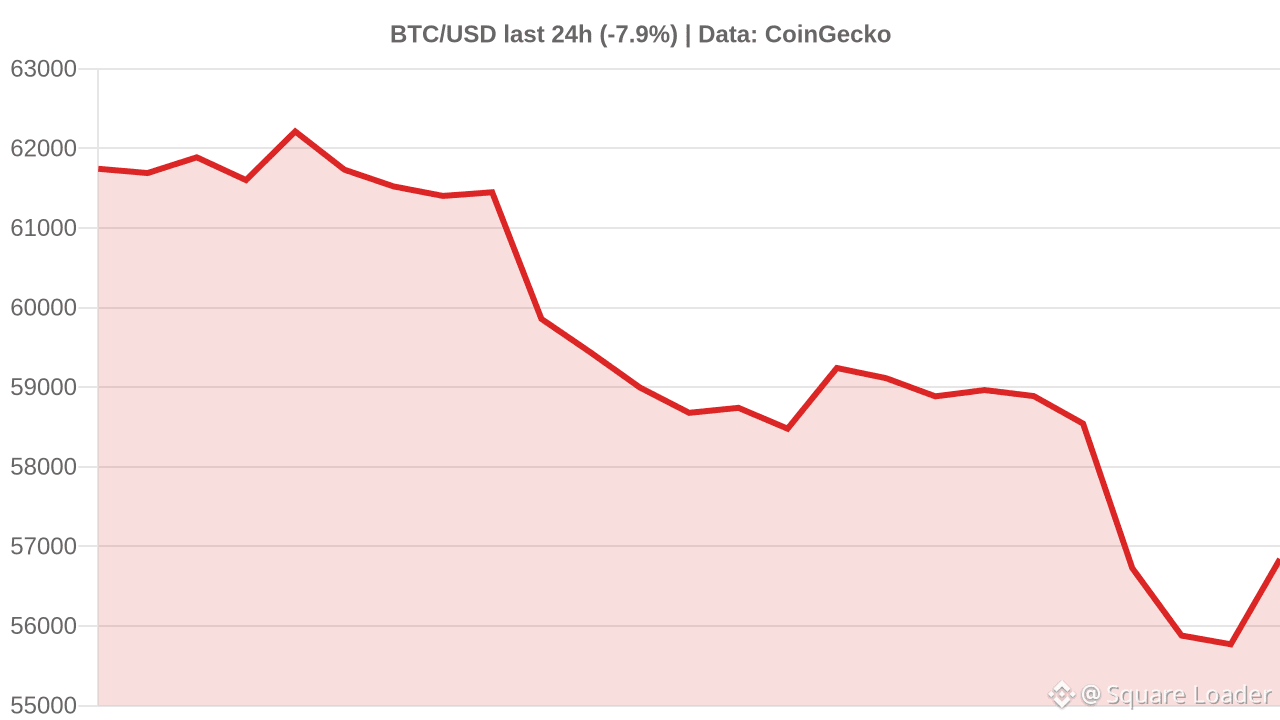
Bitcoin’s resilience is once again in the spotlight. Recent reports highlight a potential bug identified by AI agents, which could have allowed nodes to be stalled by flooding them with a specific ID. Thankfully, the Bitcoin Core team has already deployed the necessary patches. With BTC currently trading at $56840.91, down 7.9% in the last 24 hours, this event serves as a stark reminder that even the most robust networks require constant vigilance and code evolution. $BTC #Bitcoin #CryptoSecurity #Blockchain
Bitcoin’s resilience is once again in the spotlight. Recent reports highlight a potential bug identified by AI agents, which could have allowed nodes to be stalled by flooding them with a specific ID. Thankfully, the Bitcoin Core team has already deployed the necessary patches. With BTC currently trading at $56840.91, down 7.9% in the last 24 hours, this event serves as a stark reminder that even the most robust networks require constant vigilance and code evolution. $BTC #Bitcoin #CryptoSecurity #Blockchain
39
Wrapped Monero Token Drops 99.8% After $13.5M Security Breach
Suspicious sales of wrapped Monero triggered a 99.8% crash, as the operator confirmed a security breach and pledged reimbursements. Traders should verify wallet security to avoid losses. Always confirm wallet security after token exploit reports.
Source: Cointelegraph · 05:07 UTC
AI illustration
#cryptosecurity #blockchainsecurity #digitalsafety #crypto
Wrapped Monero Token Drops 99.8% After $13.5M Security Breach
Suspicious sales of wrapped Monero triggered a 99.8% crash, as the operator confirmed a security breach and pledged reimbursements. Traders should verify wallet security to avoid losses. Always confirm wallet security after token exploit reports.
Source: Cointelegraph · 05:07 UTC
AI illustration
#cryptosecurity #blockchainsecurity #digitalsafety #crypto
Suspicious sales of wrapped Monero triggered a 99.8% crash, as the operator confirmed a security breach and pledged reimbursements. Traders should verify wallet security to avoid losses. Always confirm wallet security after token exploit reports.
Source: Cointelegraph · 05:07 UTC
AI illustration
#cryptosecurity #blockchainsecurity #digitalsafety #crypto

51
·
--
🔐 Crypto Security in 2026: Protect Your Digital Assets!
Cryptocurrency offers exciting opportunities, but security should always come first. 🚀
Here are 5 essential rules every crypto beginner should follow:
1️⃣ Use strong and unique passwords. 2️⃣ Enable Two-Factor Authentication (2FA). 3️⃣ Never share your wallet's seed phrase. 4️⃣ Always verify crypto website URLs. 5️⃣ Research before investing in any cryptocurrency.
⚠️ Remember: No legitimate support team needs your seed phrase or private keys.
💡 Your first priority should be protecting your crypto, not chasing profits.
Let's build a safer and smarter crypto community together!
👇 Question: What is the most important crypto security rule according to you?
#CryptoSecurity #bitcoin #Binance #Web3
🔐 Crypto Security in 2026: Protect Your Digital Assets!
Cryptocurrency offers exciting opportunities, but security should always come first. 🚀
Here are 5 essential rules every crypto beginner should follow:
1️⃣ Use strong and unique passwords. 2️⃣ Enable Two-Factor Authentication (2FA). 3️⃣ Never share your wallet's seed phrase. 4️⃣ Always verify crypto website URLs. 5️⃣ Research before investing in any cryptocurrency.
⚠️ Remember: No legitimate support team needs your seed phrase or private keys.
💡 Your first priority should be protecting your crypto, not chasing profits.
Let's build a safer and smarter crypto community together!
👇 Question: What is the most important crypto security rule according to you?
#CryptoSecurity #bitcoin #Binance #Web3
Cryptocurrency offers exciting opportunities, but security should always come first. 🚀
Here are 5 essential rules every crypto beginner should follow:
1️⃣ Use strong and unique passwords. 2️⃣ Enable Two-Factor Authentication (2FA). 3️⃣ Never share your wallet's seed phrase. 4️⃣ Always verify crypto website URLs. 5️⃣ Research before investing in any cryptocurrency.
⚠️ Remember: No legitimate support team needs your seed phrase or private keys.
💡 Your first priority should be protecting your crypto, not chasing profits.
Let's build a safer and smarter crypto community together!
👇 Question: What is the most important crypto security rule according to you?
#CryptoSecurity #bitcoin #Binance #Web3
63
The recent Fluidkey breach proves that self-custody alone isn't a silver bullet. Even when private keys remain securely on user devices, systemic vulnerabilities in protocol logic can still drain funds across multiple chains. As cross-chain activity grows, security audits must evolve beyond just key management to focus heavily on interaction flows. Developers need to prioritize rigorous validation layers to protect users from these sophisticated exploit vectors. #CryptoSecurity #Web3 #SelfCustody
The recent Fluidkey breach proves that self-custody alone isn't a silver bullet. Even when private keys remain securely on user devices, systemic vulnerabilities in protocol logic can still drain funds across multiple chains. As cross-chain activity grows, security audits must evolve beyond just key management to focus heavily on interaction flows. Developers need to prioritize rigorous validation layers to protect users from these sophisticated exploit vectors. #CryptoSecurity #Web3 #SelfCustody

·
--
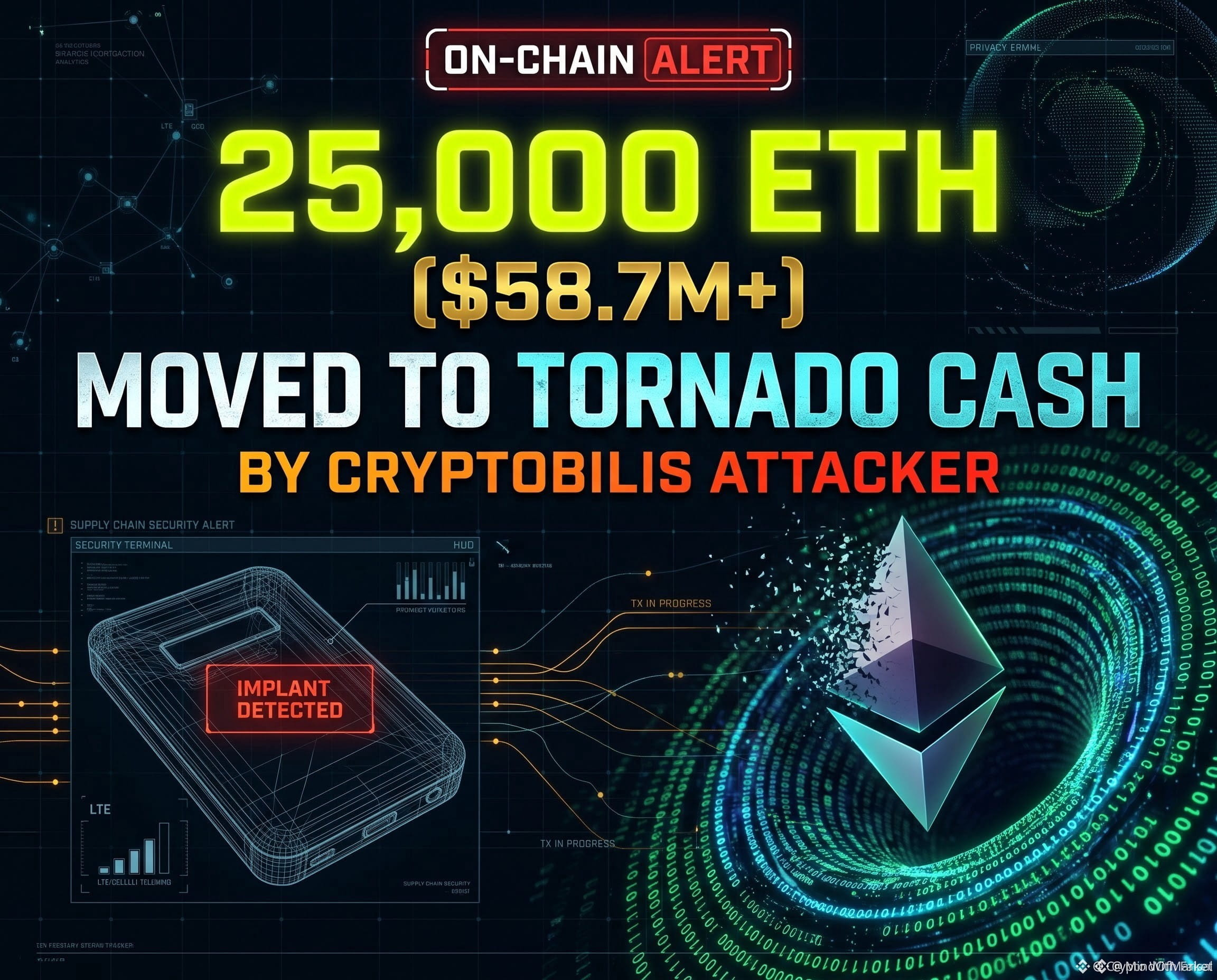
🦈 25,000 $ETH REDISTRIBUTED ACROSS PRIVACY POOLS FOLLOWING MAJOR SUPPLY CHAIN COMPROMISE 🚨
On-chain intelligence reveals a staggering capital migration stemming from historical hardware vulnerabilities, with institutional tracking highlighting significant volume hitting privacy protocols. 📊 This massive distribution event underscores why supply chain integrity remains an absolute cornerstone for cold storage security. ⚡
When physical vectors are compromised at the manufacturing tier, even sophisticated participants face latent custody exposure. 💡 Do you source your cold storage exclusively from primary manufacturers, or do you deploy multi-sig frameworks to neutralize single-point risk? 💬
⚠️ Not financial advice. Always manage your risk. 🛡️
🏷️ #ETH #OnChainData #CryptoSecurity #SmartMoney
🦈 🔒
🦈 25,000 $ETH REDISTRIBUTED ACROSS PRIVACY POOLS FOLLOWING MAJOR SUPPLY CHAIN COMPROMISE 🚨
On-chain intelligence reveals a staggering capital migration stemming from historical hardware vulnerabilities, with institutional tracking highlighting significant volume hitting privacy protocols. 📊 This massive distribution event underscores why supply chain integrity remains an absolute cornerstone for cold storage security. ⚡
When physical vectors are compromised at the manufacturing tier, even sophisticated participants face latent custody exposure. 💡 Do you source your cold storage exclusively from primary manufacturers, or do you deploy multi-sig frameworks to neutralize single-point risk? 💬
⚠️ Not financial advice. Always manage your risk. 🛡️
🏷️ #ETH #OnChainData #CryptoSecurity #SmartMoney
🦈 🔒
On-chain intelligence reveals a staggering capital migration stemming from historical hardware vulnerabilities, with institutional tracking highlighting significant volume hitting privacy protocols. 📊 This massive distribution event underscores why supply chain integrity remains an absolute cornerstone for cold storage security. ⚡
When physical vectors are compromised at the manufacturing tier, even sophisticated participants face latent custody exposure. 💡 Do you source your cold storage exclusively from primary manufacturers, or do you deploy multi-sig frameworks to neutralize single-point risk? 💬
⚠️ Not financial advice. Always manage your risk. 🛡️
🏷️ #ETH #OnChainData #CryptoSecurity #SmartMoney
🦈 🔒
7

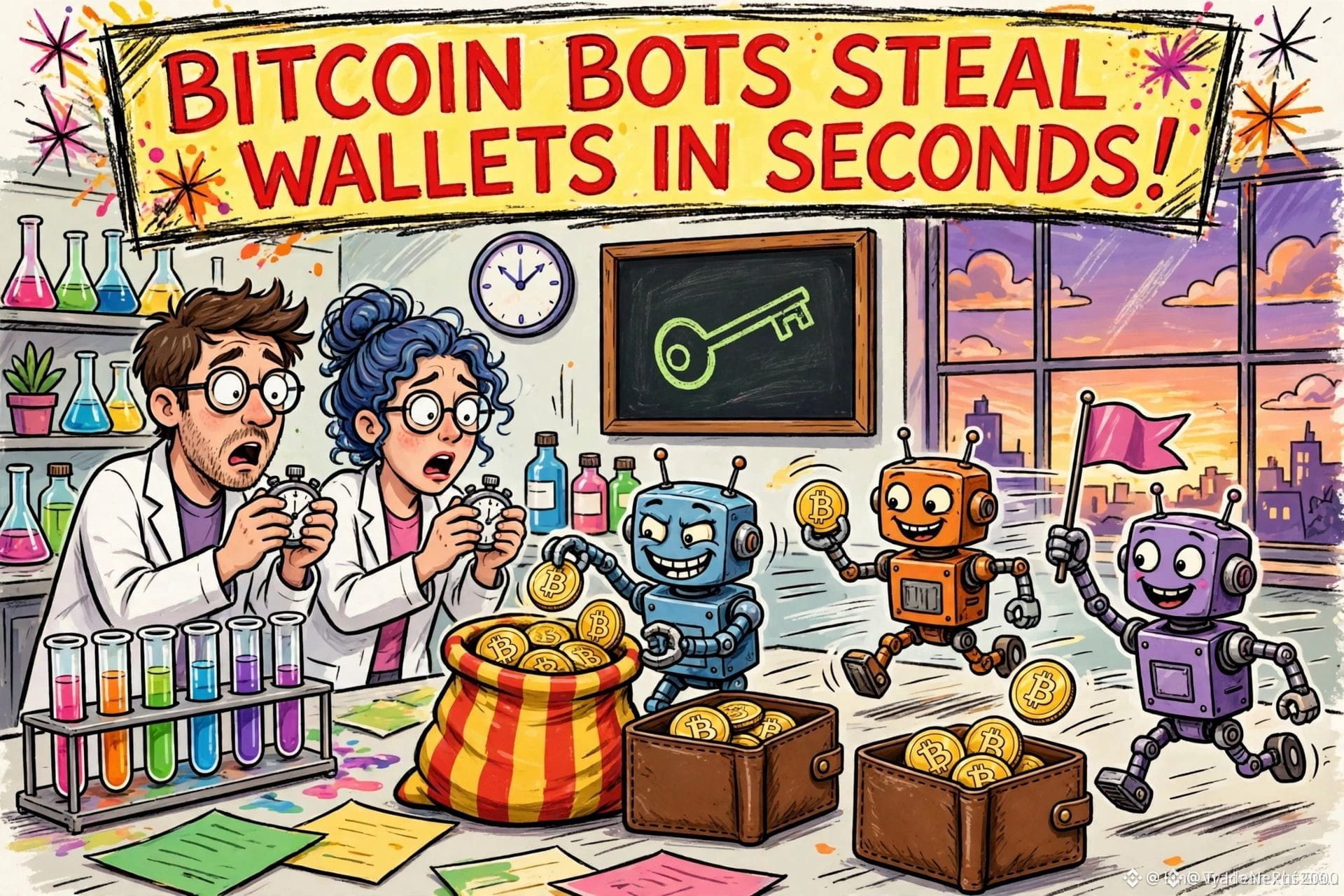
🚨 $BTC VULNERABILITY EXPOSES MILLIONS IN LIQUIDITY AS NONCE REUSE LEAKS DERIVATIONS! ⚠️
Entry: 58,600 ⚡
Recent cryptographic research highlights a critical structural flaw across major blockchain networks, where recurring signature derivation flaws expose vulnerable accounts to automated liquidity sweeps within seconds. 📊 Institutional custody standards demand absolute cryptographic hygiene, especially as $BTC defends the 58,600 structural demand zone amid broader market friction. ⚡ Are you auditing your cold storage derivation paths and signature protocols to ensure institutional-grade security? 🤔
⚠️ Not financial advice. Always manage your risk. 🛡️
🏷️ #BTC #CryptoSecurity #MarketStructure #OrderFlow
🔥 💎
🚨 $BTC VULNERABILITY EXPOSES MILLIONS IN LIQUIDITY AS NONCE REUSE LEAKS DERIVATIONS! ⚠️
Entry: 58,600 ⚡
Recent cryptographic research highlights a critical structural flaw across major blockchain networks, where recurring signature derivation flaws expose vulnerable accounts to automated liquidity sweeps within seconds. 📊 Institutional custody standards demand absolute cryptographic hygiene, especially as $BTC defends the 58,600 structural demand zone amid broader market friction. ⚡ Are you auditing your cold storage derivation paths and signature protocols to ensure institutional-grade security? 🤔
⚠️ Not financial advice. Always manage your risk. 🛡️
🏷️ #BTC #CryptoSecurity #MarketStructure #OrderFlow
🔥 💎
Entry: 58,600 ⚡
Recent cryptographic research highlights a critical structural flaw across major blockchain networks, where recurring signature derivation flaws expose vulnerable accounts to automated liquidity sweeps within seconds. 📊 Institutional custody standards demand absolute cryptographic hygiene, especially as $BTC defends the 58,600 structural demand zone amid broader market friction. ⚡ Are you auditing your cold storage derivation paths and signature protocols to ensure institutional-grade security? 🤔
⚠️ Not financial advice. Always manage your risk. 🛡️
🏷️ #BTC #CryptoSecurity #MarketStructure #OrderFlow
🔥 💎
3
Another day, another brutal reminder that wrapped tokens are ticking time bombs. Wagyu's XMR1 just crashed 99% after a massive exploit drained millions from the deployer account, netting hackers $13.5 million. While the project blames a compromised web host, this incident highlights the immense counterparty risk of holding wrapped assets instead of native coins. True decentralization means never trusting a bridge or third-party custodian with your keys. Stay safe out there. $XMR #CryptoSecurity #Monero #Altcoins
Another day, another brutal reminder that wrapped tokens are ticking time bombs. Wagyu's XMR1 just crashed 99% after a massive exploit drained millions from the deployer account, netting hackers $13.5 million. While the project blames a compromised web host, this incident highlights the immense counterparty risk of holding wrapped assets instead of native coins. True decentralization means never trusting a bridge or third-party custodian with your keys. Stay safe out there. $XMR #CryptoSecurity #Monero #Altcoins
27
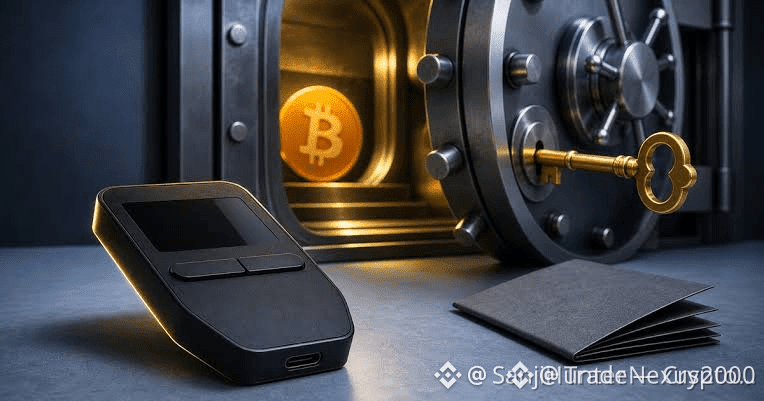
🚨 SUPPLY CHAIN INTEGRITY IS THE ULTIMATE TEST FOR $BTC SELF-CUSTODY! 🔒
True institutional security extends far beyond the software layer into the physical distribution pipeline. Recent revelations regarding compromised hardware units underscore that supply chain vectors remain a primary attack surface for unsuspecting participants. 🔍
Owning your cryptographic keys means little if the vault itself was intercepted and mirrored before arrival. Sourcing directly from verified manufacturers is no longer an optional procedure—it is the baseline defense for safeguarding long-term capital accumulation. 🛡️
💡 Are you auditing the origin of your cold storage devices, or are you assuming your supply chain is bulletproof? 🤔
⚠️ Not financial advice. Always manage your risk. 🛡️
🏷️ #BTC #CryptoSecurity #SelfCustody #Ledger
🔒 ⚡
🚨 SUPPLY CHAIN INTEGRITY IS THE ULTIMATE TEST FOR $BTC SELF-CUSTODY! 🔒
True institutional security extends far beyond the software layer into the physical distribution pipeline. Recent revelations regarding compromised hardware units underscore that supply chain vectors remain a primary attack surface for unsuspecting participants. 🔍
Owning your cryptographic keys means little if the vault itself was intercepted and mirrored before arrival. Sourcing directly from verified manufacturers is no longer an optional procedure—it is the baseline defense for safeguarding long-term capital accumulation. 🛡️
💡 Are you auditing the origin of your cold storage devices, or are you assuming your supply chain is bulletproof? 🤔
⚠️ Not financial advice. Always manage your risk. 🛡️
🏷️ #BTC #CryptoSecurity #SelfCustody #Ledger
🔒 ⚡
True institutional security extends far beyond the software layer into the physical distribution pipeline. Recent revelations regarding compromised hardware units underscore that supply chain vectors remain a primary attack surface for unsuspecting participants. 🔍
Owning your cryptographic keys means little if the vault itself was intercepted and mirrored before arrival. Sourcing directly from verified manufacturers is no longer an optional procedure—it is the baseline defense for safeguarding long-term capital accumulation. 🛡️
💡 Are you auditing the origin of your cold storage devices, or are you assuming your supply chain is bulletproof? 🤔
⚠️ Not financial advice. Always manage your risk. 🛡️
🏷️ #BTC #CryptoSecurity #SelfCustody #Ledger
🔒 ⚡
4


·
--
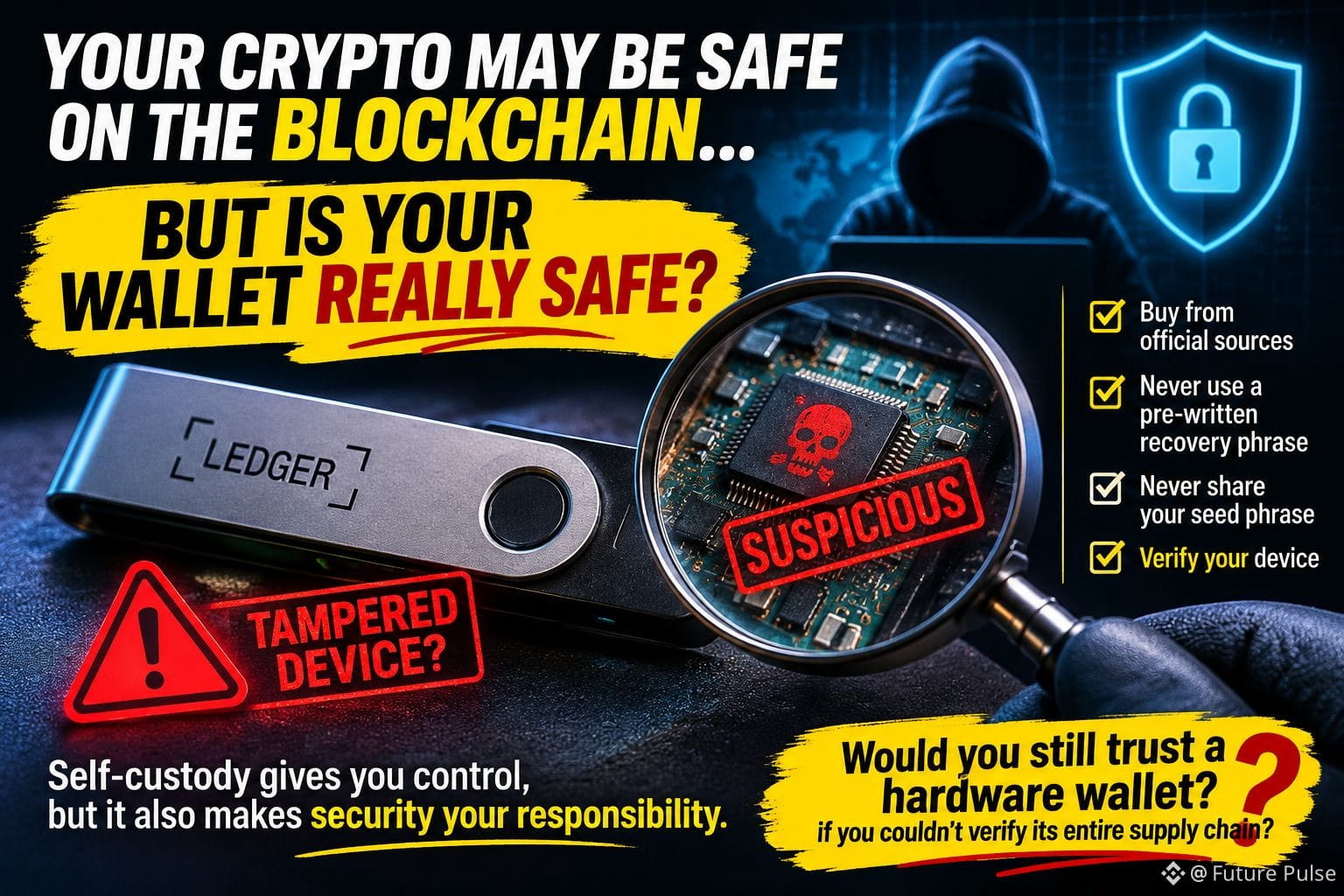
🚨 YOUR CRYPTO MAY BE SAFE ON THE BLOCKCHAIN… BUT IS YOUR WALLET REALLY SAFE?
A hardware wallet is supposed to be your last line of defense against crypto theft. But what happens when the device itself becomes the weak point?
Recent reports about potentially tampered hardware wallets have raised an important question about crypto security.
Many investors focus on choosing the right wallet, but overlook something equally important: Where did the device come from, and can you trust its supply chain?
Remember:
🔐 Always purchase hardware wallets from official sources.
🔐 Never use a pre-written recovery phrase.
🔐 Never share your seed phrase with anyone.
🔐 Verify your device before transferring significant funds.
Self-custody gives you control over your assets, but it also makes security your responsibility.
Here's the real question:
Would you still trust a hardware wallet if you couldn't verify its entire supply chain?
$EVAA
{future}(EVAAUSDT)
$MMT
{future}(MMTUSDT)
$ONE
{future}(ONEUSDT)
#CryptoSecurity
#Ledger
#SelfCustody
#BinanceSquare
#crypto
🚨 YOUR CRYPTO MAY BE SAFE ON THE BLOCKCHAIN… BUT IS YOUR WALLET REALLY SAFE?
A hardware wallet is supposed to be your last line of defense against crypto theft. But what happens when the device itself becomes the weak point?
Recent reports about potentially tampered hardware wallets have raised an important question about crypto security.
Many investors focus on choosing the right wallet, but overlook something equally important: Where did the device come from, and can you trust its supply chain?
Remember:
🔐 Always purchase hardware wallets from official sources.
🔐 Never use a pre-written recovery phrase.
🔐 Never share your seed phrase with anyone.
🔐 Verify your device before transferring significant funds.
Self-custody gives you control over your assets, but it also makes security your responsibility.
Here's the real question:
Would you still trust a hardware wallet if you couldn't verify its entire supply chain?
$EVAA
$MMT
$ONE
#CryptoSecurity
#Ledger
#SelfCustody
#BinanceSquare
#crypto
A hardware wallet is supposed to be your last line of defense against crypto theft. But what happens when the device itself becomes the weak point?
Recent reports about potentially tampered hardware wallets have raised an important question about crypto security.
Many investors focus on choosing the right wallet, but overlook something equally important: Where did the device come from, and can you trust its supply chain?
Remember:
🔐 Always purchase hardware wallets from official sources.
🔐 Never use a pre-written recovery phrase.
🔐 Never share your seed phrase with anyone.
🔐 Verify your device before transferring significant funds.
Self-custody gives you control over your assets, but it also makes security your responsibility.
Here's the real question:
Would you still trust a hardware wallet if you couldn't verify its entire supply chain?
$EVAA
$MMT
$ONE
#CryptoSecurity
#Ledger
#SelfCustody
#BinanceSquare
#crypto
4
1.6k
Log in to explore more content
Join global crypto users on Binance Square
⚡️ Get latest and useful information about crypto.
💬 Trusted by the world’s largest crypto exchange.
👍 Discover real insights from verified creators.
Email / Phone number
Trending Topics
1
#NvidiaLoses$2.7TrillionInMonthAndAHalf
2,132 views
50 Discussing
2
#CanBTCReboundAfterFallingBelow60K?
571,585 views
2,428 Discussing
3
#GlobalStocksFaceLongestLosingStreakSince2023
197,351 views
1,672 Discussing
4
#BlackRockIBITPostsRecord$541MSingleDayOutflow
17,712 views
58 Discussing
5
#AnthropicPlungesTowardIPOPriceonDay2
98,230 views
975 Discussing
6
#TwentyOneCapitalAdds172.25BTC
41,122 views
490 Discussing
7
#HKBillWouldExcludeTokenizedDepositsFromVirtualAssets
4,085 views
47 Discussing
8
#BNBDropsBelow540USDTWith8.46%DailyDecline
56,567 views
509 Discussing
9
#HKBillProposesHK$100KFineForUnauthorizedCryptoTitles
1,924 views
20 Discussing
10
#BitMineFaces$10.1BUnrealizedETHLoss
4,146 views
25 Discussing