
#huangrisksousteroverreportedaffairwithsubordinate
huangrisksousteroverreportedaffairwithsubordinate
317,705 views
1,168 Discussing
Nvidia's board met to decide CEO Jensen Huang's fate after reports of extramarital affairs, including one with a subordinate. The stock slid 8% after-hours, with ~$600B in value at risk. A prediction market puts 88% odds on his exit this year. There's no clear successor at the $4T AI giant.
Hot
Latest


·
--
Article
Nvidia Board Meets to Decide Jensen Huang's Future as Crisis DeepensNvidia's board met late Wednesday to decide whether to oust Chief Executive Officer Jensen Huang, a source familiar with the matter told Reuters, as the world's dominant AI chip supplier confronts reports of two extramarital affairs involving its longtime leader. Nvidia did not immediately respond to a request for comment.
The meeting marks a sharp reversal from Sunday, when the board expressed confidence in Huang and his leadership team. Under Nvidia's bylaws he can be removed "with or without cause" by a majority of directors. Nvidia has 11 directors and considers all but Huang independent.
The stock slid more than 8% in extended trading after the Wall Street Journal first reported the company was preparing to fire Huang. If those losses hold, Nvidia will have shed about $600 billion in market value since the board opened its investigation.
US intelligence was examining Alice Huang, a businesswoman alleged to be a Chinese spy, over facilitating shipments of Nvidia chips to Chinese firms. The disclosures prompted questions about governance and Huang's conduct, an internal probe with outside counsel, and calls from lawmakers for tighter export curbs.
Armina Rosenberg of Minotaur Capital, which holds the shares, said the market was starting to price Nvidia without its founder as the likely outcome rather than a tail risk, and that losing Jensen would be a real blow.
His departure would leave a vacuum at the roughly $4 trillion company he co-founded and built over more than three decades. Huang, 63, has no obvious successor and owns about 3.6% of the stock. Bloomberg reported the board has worked with an outside firm to identify replacements.
Rosenberg said Chief Financial Officer Colette Kress, in the role for more than a decade, would be the natural interim choice, though the harder question is who leads the technology roadmap. Polymarket put an 88% chance on Huang resigning or being removed this year, with odds favoring Ian Buck as successor.
The New York Times reported earlier Wednesday that Huang also had an affair with Kimberly Powell, Nvidia's vice president of healthcare, who reported to him. Asked about the relationship by phone, Huang said he did not think the reporter should be speaking to him directly, then hung up, the Times said. Reuters could not verify that report.
Nasdaq futures fell 1%. Micron dropped nearly 2% and CoreWeave 6% in after-hours trading, while rivals AMD and Broadcom rose 4% and 3%. In Asia, Samsung gained about 1% and SK Hynix slipped nearly 1%. Quarterly results are due Nov. 17.
Nick Ferres of Vantage Point Asset Management said Nvidia is financing its customers, and that in a boom or bubble a slowdown alone can tip the cycle into bust. US President Donald Trump has voiced support for Huang, a close ally.
Huang could face a congressional subpoena if he does not answer a request for a closed-door briefing. Axios reported that Commerce Secretary Howard Lutnick stalled Trump's crackdown on companies suspected of diverting Nvidia chips.
Nvidia Board Meets to Decide Jensen Huang's Future as Crisis Deepens
Nvidia's board met late Wednesday to decide whether to oust Chief Executive Officer Jensen Huang, a source familiar with the matter told Reuters, as the world's dominant AI chip supplier confronts reports of two extramarital affairs involving its longtime leader. Nvidia did not immediately respond to a request for comment.
The meeting marks a sharp reversal from Sunday, when the board expressed confidence in Huang and his leadership team. Under Nvidia's bylaws he can be removed "with or without cause" by a majority of directors. Nvidia has 11 directors and considers all but Huang independent.
The stock slid more than 8% in extended trading after the Wall Street Journal first reported the company was preparing to fire Huang. If those losses hold, Nvidia will have shed about $600 billion in market value since the board opened its investigation.
US intelligence was examining Alice Huang, a businesswoman alleged to be a Chinese spy, over facilitating shipments of Nvidia chips to Chinese firms. The disclosures prompted questions about governance and Huang's conduct, an internal probe with outside counsel, and calls from lawmakers for tighter export curbs.
Armina Rosenberg of Minotaur Capital, which holds the shares, said the market was starting to price Nvidia without its founder as the likely outcome rather than a tail risk, and that losing Jensen would be a real blow.
His departure would leave a vacuum at the roughly $4 trillion company he co-founded and built over more than three decades. Huang, 63, has no obvious successor and owns about 3.6% of the stock. Bloomberg reported the board has worked with an outside firm to identify replacements.
Rosenberg said Chief Financial Officer Colette Kress, in the role for more than a decade, would be the natural interim choice, though the harder question is who leads the technology roadmap. Polymarket put an 88% chance on Huang resigning or being removed this year, with odds favoring Ian Buck as successor.
The New York Times reported earlier Wednesday that Huang also had an affair with Kimberly Powell, Nvidia's vice president of healthcare, who reported to him. Asked about the relationship by phone, Huang said he did not think the reporter should be speaking to him directly, then hung up, the Times said. Reuters could not verify that report.
Nasdaq futures fell 1%. Micron dropped nearly 2% and CoreWeave 6% in after-hours trading, while rivals AMD and Broadcom rose 4% and 3%. In Asia, Samsung gained about 1% and SK Hynix slipped nearly 1%. Quarterly results are due Nov. 17.
Nick Ferres of Vantage Point Asset Management said Nvidia is financing its customers, and that in a boom or bubble a slowdown alone can tip the cycle into bust. US President Donald Trump has voiced support for Huang, a close ally.
Huang could face a congressional subpoena if he does not answer a request for a closed-door briefing. Axios reported that Commerce Secretary Howard Lutnick stalled Trump's crackdown on companies suspected of diverting Nvidia chips.
19
2
47
68.4k

#huangrisksousteroverreportedaffairwithsubordinate#huangrisksousteroverreportedaffairwithsubordinate
Former Nvidia CEO Jensen Huang resigned following a series of high-profile disclosures involving undisclosed workplace relationships and severe foreign intelligence concerns.
Chronology of Events
Initial Disclosure & Spy Allegations: Investigations revealed an extramarital relationship between Huang and Alice Huang (Huang Le), an executive at Singapore-based Megaspeed International. U.S. intelligence identified her as an alleged Chinese intelligence asset. This raised national security alarms over potential technology transfer, supply-chain risks, and export-control workarounds regarding Nvidia's AI hardware.Subordinate Involvement: Follow-up reporting uncovered that Huang engaged in an extramarital relationship with an executive reporting directly to him — Kimberly Powell, Vice President of Healthcare at Nvidia. Reports indicated security staff had previously attempted to suppress evidence of the relationship via non-disclosure agreements.Additional Relations: Subsequent findings uncovered intimate relationships involving additional company personnel, expanding internal governance and compliance liabilities.Resignation & Board Governance: Huang officially resigned as CEO. Nvidia's Chief Financial Officer, Colette Kress, took over as interim CEO while an independent board investigation led by law firm Wachtell, Lipton, Rosen & Katz proceeds.
$NVDAB $NVDA $BTC
#huangrisksousteroverreportedaffairwithsubordinate
#huangrisksousteroverreportedaffairwithsubordinate
Former Nvidia CEO Jensen Huang resigned following a series of high-profile disclosures involving undisclosed workplace relationships and severe foreign intelligence concerns.
Chronology of Events
Initial Disclosure & Spy Allegations: Investigations revealed an extramarital relationship between Huang and Alice Huang (Huang Le), an executive at Singapore-based Megaspeed International. U.S. intelligence identified her as an alleged Chinese intelligence asset. This raised national security alarms over potential technology transfer, supply-chain risks, and export-control workarounds regarding Nvidia's AI hardware.Subordinate Involvement: Follow-up reporting uncovered that Huang engaged in an extramarital relationship with an executive reporting directly to him — Kimberly Powell, Vice President of Healthcare at Nvidia. Reports indicated security staff had previously attempted to suppress evidence of the relationship via non-disclosure agreements.Additional Relations: Subsequent findings uncovered intimate relationships involving additional company personnel, expanding internal governance and compliance liabilities.Resignation & Board Governance: Huang officially resigned as CEO. Nvidia's Chief Financial Officer, Colette Kress, took over as interim CEO while an independent board investigation led by law firm Wachtell, Lipton, Rosen & Katz proceeds.
$NVDAB $NVDA $BTC
70
#huangrisksousteroverreportedaffairwithsubordinate#huangrisksousteroverreportedaffairwithsubordinate
Nvidia co-founder and CEO Jensen Huang faced a major leadership crisis following reports of extramarital affairs, including an alleged relationship with a senior executive who reported directly to him.
However, the story has developed further: Reuters and CBS reported on November 12, 2026, that Huang had resigned as CEO.
1. What happened?
The New York Times reported an alleged relationship between Huang and Kimberly Powell, Nvidia's vice president of healthcare.Powell reportedly worked under Huang.Huang had already acknowledged being unfaithful to his wife in a message to employees.Nvidia's board launched an independent investigation.The board subsequently faced pressure over Huang's leadership.
The reported relationship with Powell has not been independently verified by Reuters.
2. What happened to Nvidia's CEO?
Resignation reported
According to November 12 reporting:
Jensen Huang resigned effective immediately.CFO Colette Kress was appointed interim CEO.Nvidia's board began considering internal and external successors.The investigation also examined potential foreign intelligence risks.
3. Impact on Nvidia stock
The leadership uncertainty contributed to selling pressure:
Nvidia shares fell approximately 7% in after-hours trading following reports of the second affair.Shares subsequently declined further.Investors became concerned about leadership continuity and corporate governance.
4. Impact on Bitcoin and crypto market
Factor Potential impact
Nvidia stock decline Negative risk sentiment
AI sector uncertainty Pressure on technology stocks
Investor risk appetite Potentially bearish for BTC
Broader market sell-off Possible crypto outflows
Leadership replacement Longer-term uncertainty
5. My market outlook
Short-term bearish sentiment
This development could indirectly affect Bitcoin because Nvidia is a major component of the AI and technology investment market.
However, Nvidia's leadership crisis does not directly affect Bitcoin's blockchain, mining protocol or network security.
Key takeaway: The story has moved beyond a reported affair. Huang's reported resignation creates a significant leadership transition at one of the world's most important AI companies. Investors will now watch Nvidia's next CEO appointment and its upcoming financial results.
$NVDAB $BTC $AMZNB
#huangrisksousteroverreportedaffairwithsubordinate
#huangrisksousteroverreportedaffairwithsubordinate
Nvidia co-founder and CEO Jensen Huang faced a major leadership crisis following reports of extramarital affairs, including an alleged relationship with a senior executive who reported directly to him.
However, the story has developed further: Reuters and CBS reported on November 12, 2026, that Huang had resigned as CEO.
1. What happened?
The New York Times reported an alleged relationship between Huang and Kimberly Powell, Nvidia's vice president of healthcare.Powell reportedly worked under Huang.Huang had already acknowledged being unfaithful to his wife in a message to employees.Nvidia's board launched an independent investigation.The board subsequently faced pressure over Huang's leadership.
The reported relationship with Powell has not been independently verified by Reuters.
2. What happened to Nvidia's CEO?
Resignation reported
According to November 12 reporting:
Jensen Huang resigned effective immediately.CFO Colette Kress was appointed interim CEO.Nvidia's board began considering internal and external successors.The investigation also examined potential foreign intelligence risks.
3. Impact on Nvidia stock
The leadership uncertainty contributed to selling pressure:
Nvidia shares fell approximately 7% in after-hours trading following reports of the second affair.Shares subsequently declined further.Investors became concerned about leadership continuity and corporate governance.
4. Impact on Bitcoin and crypto market
Factor Potential impact
Nvidia stock decline Negative risk sentiment
AI sector uncertainty Pressure on technology stocks
Investor risk appetite Potentially bearish for BTC
Broader market sell-off Possible crypto outflows
Leadership replacement Longer-term uncertainty
5. My market outlook
Short-term bearish sentiment
This development could indirectly affect Bitcoin because Nvidia is a major component of the AI and technology investment market.
However, Nvidia's leadership crisis does not directly affect Bitcoin's blockchain, mining protocol or network security.
Key takeaway: The story has moved beyond a reported affair. Huang's reported resignation creates a significant leadership transition at one of the world's most important AI companies. Investors will now watch Nvidia's next CEO appointment and its upcoming financial results.
$NVDAB $BTC $AMZNB
101

·
--
Bullish
Verified
#huangrisksousteroverreportedaffairwithsubordinate
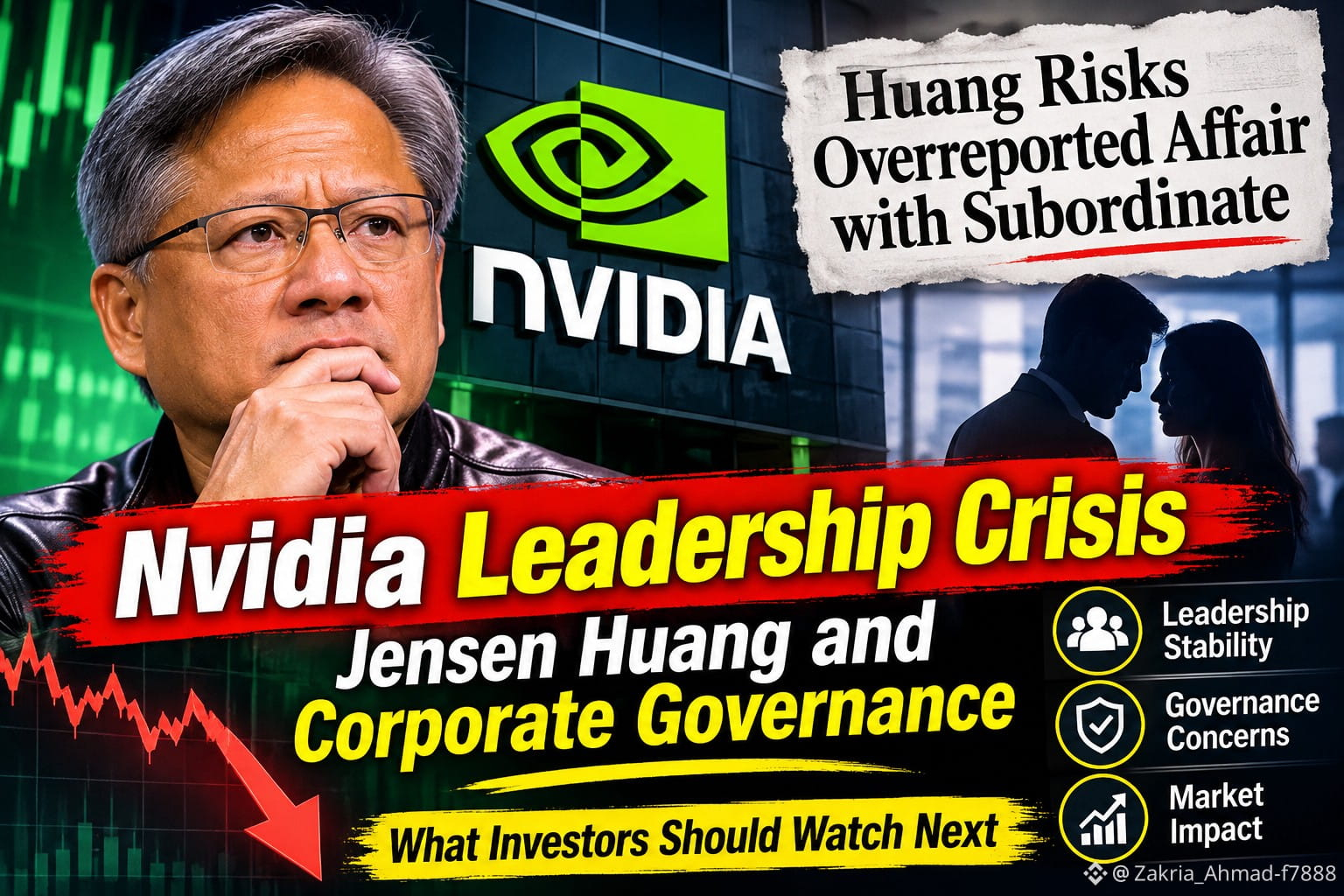
Nvidia Leadership Crisis: Jensen Huang Scandal Raises Questions About Corporate Governance
Nvidia is facing a major leadership story after reports about Jensen Huang's alleged relationships, including a reported affair with a subordinate, triggered serious questions about executive conduct and corporate governance.
The situation has moved beyond personal headlines. Investors are now looking at three important issues:
Leadership stability: Huang's reported departure after more than three decades raises questions about Nvidia's next chapter.
Corporate governance: The controversy highlights why independent oversight and workplace policies matter, even at the highest level.
Market confidence: Nvidia's future leadership and AI strategy could influence investor sentiment across the semiconductor sector.
There is also an important distinction between confirmed developments and unverified allegations. Reports about possible intelligence links should not be treated as established facts.
My view: Nvidia's long-term value is built on its technology, ecosystem, and AI demand. But leadership uncertainty can still create short-term volatility.
For investors, the key question is not just who leads Nvidia next, but whether the company can maintain its execution and momentum during a leadership transition.
Watch the governance story, but don't confuse headlines with fundamentals.
#NVIDIA #StockMarket #CorporateGovernance #TechStocks
1
1
215

·
--
It took just four days to go from admission to resignation. Last Sunday, after media reports revealed that Jensen Huang had had an affair with a woman suspected by U.S. intelligence agencies of being a Chinese spy, he publicly admitted to being “unfaithful.” That same day, the board expressed confidence in him and his leadership team. On Wednesday evening, the board met to discuss his future. That day, the media reported a second affair, this time with a company executive who reported directly to him. Before markets opened on Thursday, Nvidia announced that Huang was stepping down immediately as president, CEO, and director. Hours later, Reuters, citing two people familiar with the matter, reported a third affair allegation, again involving a current company employee. The day before his resignation, prediction markets had already put the odds of his departure by year-end at 88%. The 63-year-old founder, who held about 3.6% of the company and had led it to the top of the global market-cap rankings over 33 years, made a hurried exit that appeared almost involuntary.
The succession plan offers only half an answer: CFO Colette Kress will serve as interim CEO while retaining her current role until a permanent successor is named. The board has begun an internal and external search but has not identified a clear successor. Uncertainty also comes from outside the company: Fox News reported that Trump publicly named former Apple CEO Tim Cook; economist Mohamed El-Erian called this a “major event,” with implications extending beyond Nvidia itself. The affair is becoming politicized. The Senate Banking Committee has asked Huang to testify voluntarily on December 3, or risk a subpoena. Three House committees have requested a closed-door interview with him on December 1. Commerce Secretary Howard Lutnick has also been asked to appear in December over chip-export disputes. House Speaker Mike Johnson went further, saying Congress is building a new consensus on restricting chip exports to China. The company’s official position is that there is “no reason to believe national security or trade secrets have been compromised.” The Justice Department confirmed that the FBI is investigating reports that the woman worked for the Chinese government, but has reached no conclusion on the espionage allegation itself. Beijing has consistently denied the claim.
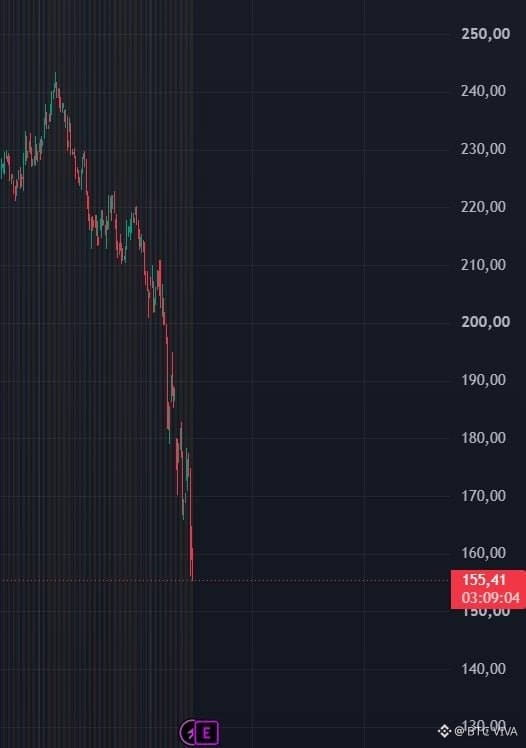
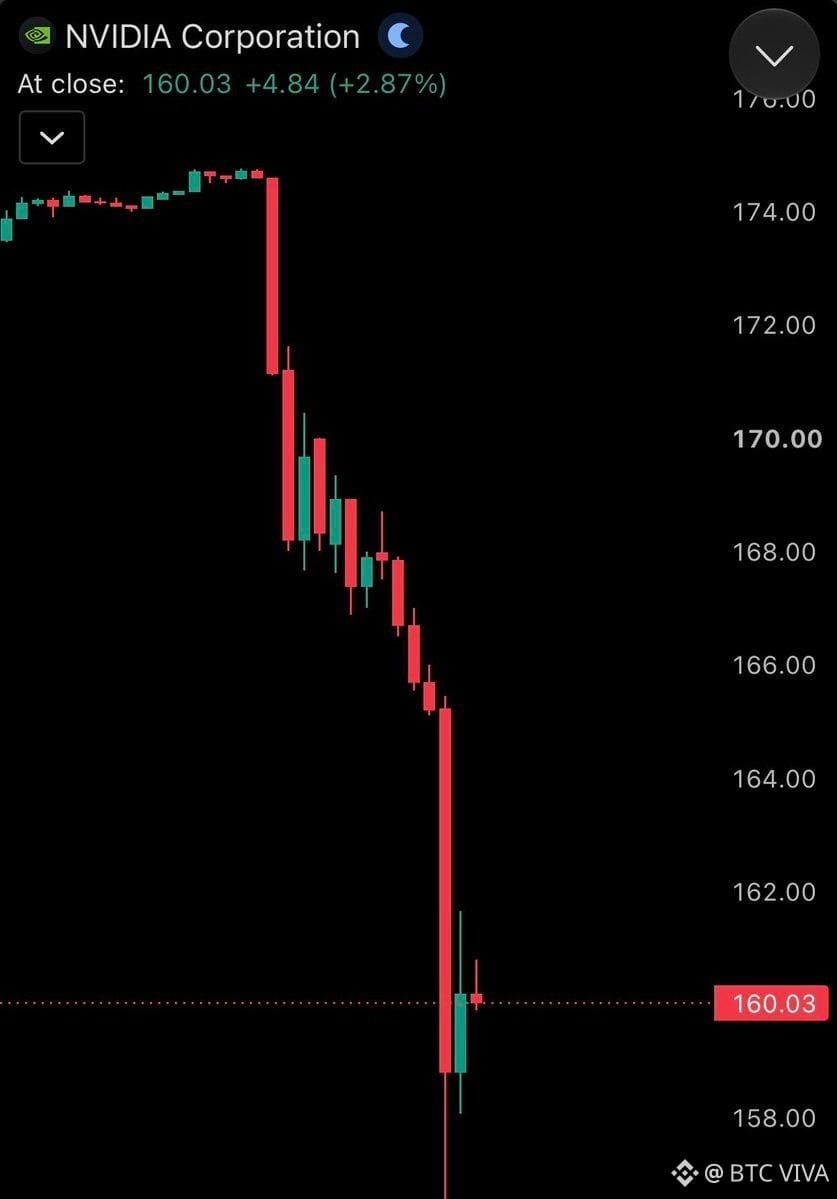
Markets voted with sharp swings. Nvidia shares fell as much as 14% intraday on Thursday, touching $148.80—exactly a new 52-week low—before paring losses to close down 4.34% at $166.19. Its market cap briefly fell below $4 trillion, the first time since 2025. According to the BBC, the company lost about $550 billion in market value over five trading days, its largest five-day decline in its 27 years as a public company. The stock is now 31% below its peak just weeks ago. The shock spread across the AI supply chain. In after-hours trading on Wednesday, rivals AMD and Broadcom were up as much as 4% and 3%, respectively. CoreWeave had just reported third-quarter revenue up 168% year over year to $3.66 billion, raised its full-year guidance to $13 billion–$13.3 billion, and reported a $132.5 billion backlog. Its shares rose as much as 10% before the market opened Wednesday, but fell nearly 7% on the day Huang resigned. The November 17 quarterly earnings report will be the interim CEO’s first major test.
The crypto market doubled the impact of the turmoil. $BTC fell below $70,000 on Friday, hitting an intraday low of $67,568, its lowest since August. The $68,000 level briefly gave way. At the time of writing, it was near $68,900, down more than 6% in 24 hours and nearly 10% for the week. $ETH hit an intraday low of $1,896 and was near $1,937 at the time of writing, down more than 5% in 24 hours. The Fear and Greed Index dropped to 20 on Friday, in “extreme fear”—its lowest reading in more than four months. The last time it reached this level was July 8. About $730 million in positions were liquidated across the market over 24 hours on Thursday. On Friday, more than $600 million was liquidated in just four hours, nearly 90% of it from long positions. With liquidity thin, leveraged longs have been repeatedly flushed out.
The real weakness lies in the flow of funds. U.S. spot Bitcoin ETFs have seen net outflows of $1.56 billion so far this year. As recently as October 29, they had recorded $1.01 billion in year-to-date net inflows; in roughly two weeks, that had completely reversed. BlackRock’s IBIT alone had logged more than $2 billion in net outflows over nine consecutive trading days through Wednesday. This is the 12th week this year with net outflows exceeding $500 million, compared with just 15 such weeks in all of 2025. Comparative data from a research firm highlights an even starker divergence: from November 5 to 12, the Nasdaq 100 rose 6.4%, while $BTC fell 5.9%, behaving more like gold, which declined 5.5% over the same period. Behind this are 10-year Treasury yields rising above 5% and a strengthening dollar, directly raising the opportunity cost of holding a zero-yield asset. Order books at exchanges are also flashing warning signs: depth for $BTC on major platforms fell to $72 million on November 9, about one-third below normal levels.
Here is my take. First, this is not a market event that can be addressed with a simple “buy the dip”; it is a governance event. The succession vacuum, congressional hearings, subpoena risk, and export controls are all intertwined, and none will be resolved within a few weeks. The November 17 earnings report and the guidance that follows will determine how the market values “Nvidia without Jensen Huang,” as well as the direction of risk appetite in the AI trade. Second, $BTC is currently being driven not by its “digital gold” narrative but by its status as a high-beta risk asset: the AI narrative is fading, structural ETF buying is withdrawing, and risk-free yields are above 5%—three forces all pushing in the same direction. A rebound requires fresh inflows, and there is no clear source of those yet. Third, near-term catalysts are piling up. U.S. October PPI is due at 9:30 p.m. Beijing time tonight. Tuesday’s CPI rose 0.4% month over month, above market expectations, and a further rate hike in December is now heavily priced in. If PPI cools significantly, Treasury yields and rate-hike expectations could fall together, giving risk assets some breathing room. If it again comes in hotter than expected, the $68,000 level—which has already been breached once intraday today—may not hold this time. It is important to distinguish fact from opinion: fund flows, volatility, and price data are facts; the idea that “the AI trade is entering its late stage” is only a market view, not yet validated by earnings. Until order-book depth and ETF flows turn around, controlling leverage is more practical than trying to call the bottom.
#HuangRisksOusterOverReportedAffairWithSubordinate #CoreWeaveJumps10%On168%RevenueGrowth #CanNvidiaEarningsEaseMarketConcerns?
82

·
--
Bearish
Verified
#huangrisksousteroverreportedaffairwithsubordinate
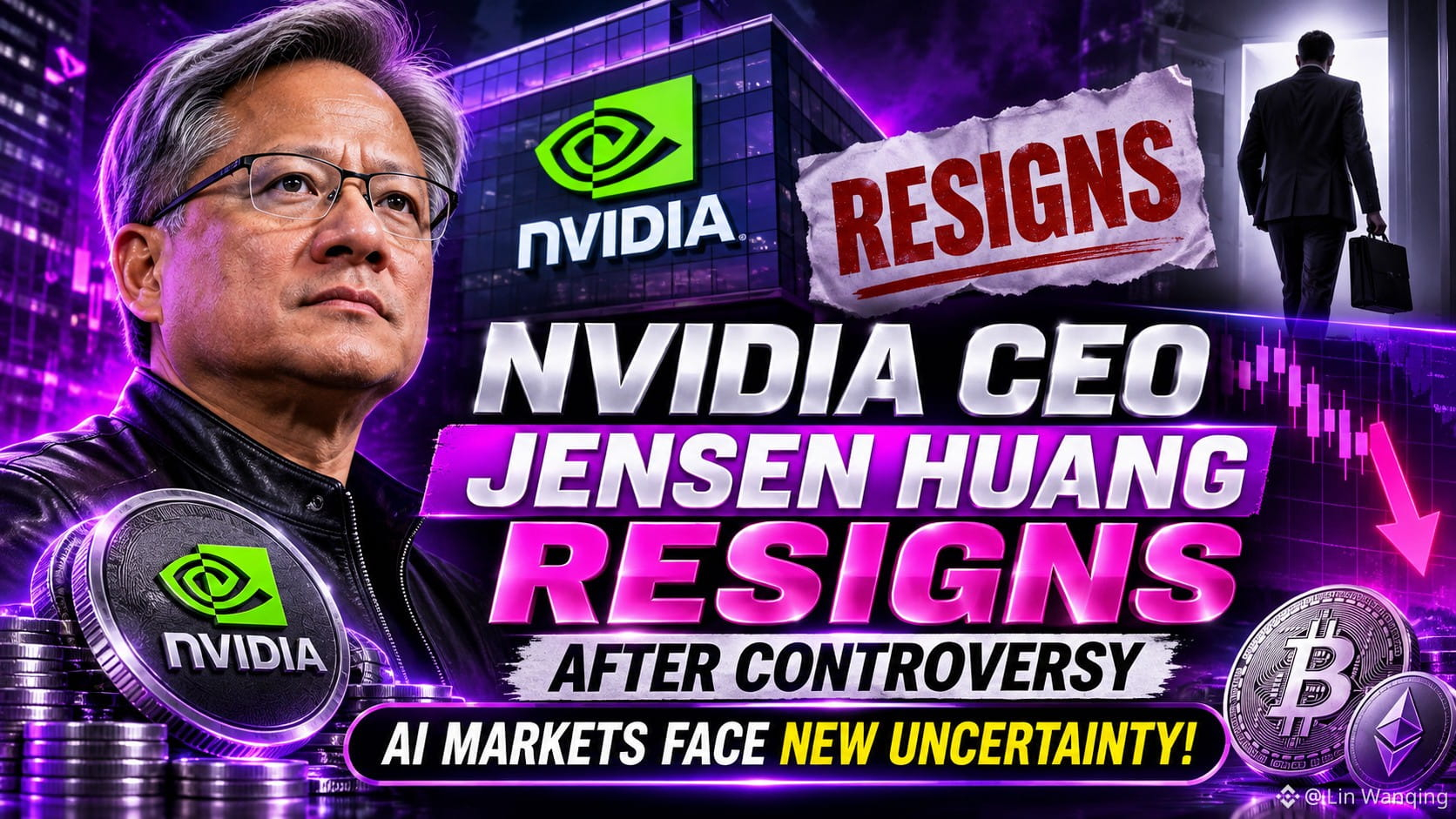
🚨 NVIDIA CEO JENSEN HUANG RESIGNS AFTER CONTROVERSY — AI MARKETS FACE NEW UNCERTAINTY!
NVIDIA CEO Jensen Huang’s reported personal relationships have triggered a major corporate governance crisis, raising questions about leadership stability at one of the world's most influential technology companies.
Reports linked Huang to an alleged relationship with a senior Nvidia executive who reportedly worked directly under him. The controversy intensified scrutiny following a separate investigation involving national security concerns.
📊 WHY DOES THIS MATTER?
The bigger issue goes beyond personal allegations. NVIDIA's leadership has played a critical role in the global AI boom, and any sudden leadership change could create uncertainty around corporate strategy, investor confidence and future AI infrastructure spending.
⚠️ MARKET IMPACT
- NVIDIA shares faced significant selling pressure.
- Investors may become more cautious toward high-valuation AI stocks.
- Technology-sector volatility could influence broader market sentiment.
- Crypto markets could also feel indirect pressure if risk appetite weakens, although no direct crypto impact is confirmed.
🔍 MY MARKET TAKE
The important question is not simply who leads NVIDIA next, but whether the company can maintain its execution, partnerships and AI growth momentum without its longtime founder.
According to reports published on November 12, Huang has stepped down, making the leadership transition a much bigger story than the original allegations.
Bottom line: Markets can handle bad headlines, but uncertainty around leadership at a company central to the AI boom deserves serious attention.
#NVIDIA #JensenHuang #AI #MarketAnalysis
$JCT
{future}(JCTUSDT)
$NVDA
{future}(NVDAUSDT)
$TWST
{future}(TWSTUSDT)
#huangrisksousteroverreportedaffairwithsubordinate
🚨 NVIDIA CEO JENSEN HUANG RESIGNS AFTER CONTROVERSY — AI MARKETS FACE NEW UNCERTAINTY!
NVIDIA CEO Jensen Huang’s reported personal relationships have triggered a major corporate governance crisis, raising questions about leadership stability at one of the world's most influential technology companies.
Reports linked Huang to an alleged relationship with a senior Nvidia executive who reportedly worked directly under him. The controversy intensified scrutiny following a separate investigation involving national security concerns.
📊 WHY DOES THIS MATTER?
The bigger issue goes beyond personal allegations. NVIDIA's leadership has played a critical role in the global AI boom, and any sudden leadership change could create uncertainty around corporate strategy, investor confidence and future AI infrastructure spending.
⚠️ MARKET IMPACT
- NVIDIA shares faced significant selling pressure.
- Investors may become more cautious toward high-valuation AI stocks.
- Technology-sector volatility could influence broader market sentiment.
- Crypto markets could also feel indirect pressure if risk appetite weakens, although no direct crypto impact is confirmed.
🔍 MY MARKET TAKE
The important question is not simply who leads NVIDIA next, but whether the company can maintain its execution, partnerships and AI growth momentum without its longtime founder.
According to reports published on November 12, Huang has stepped down, making the leadership transition a much bigger story than the original allegations.
Bottom line: Markets can handle bad headlines, but uncertainty around leadership at a company central to the AI boom deserves serious attention.
#NVIDIA #JensenHuang #AI #MarketAnalysis
$JCT
$NVDA
$TWST
623
·
--
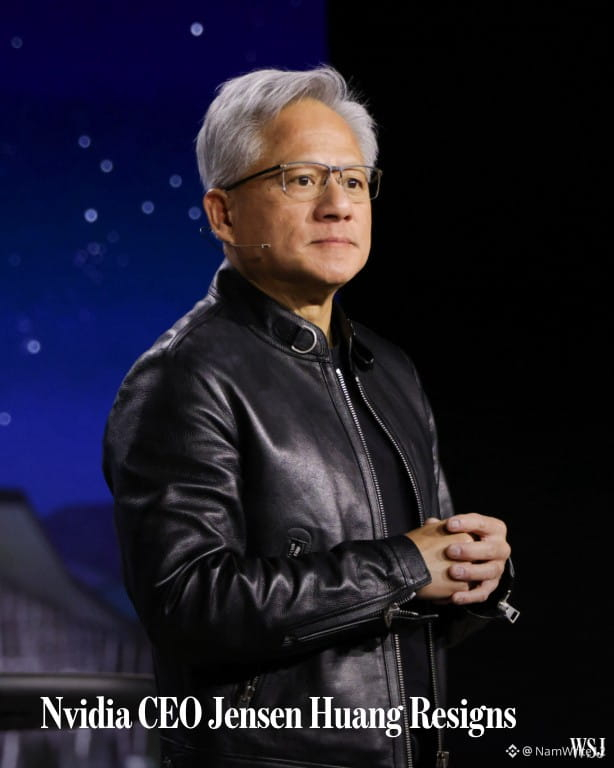
Jensen Huang Has Been Ousted as Nvidia CEO
Nvidia Chief Executive Jensen Huang has resigned after two extramarital affairs, including one with a suspected Chinese spy and another with an employee.
The company said Thursday that finance chief Colette Kress had agreed to serve as interim CEO until a permanent successor is named. The board is starting a search for the company’s next CEO and will consider internal and external candidates.
#huangrisksousteroverreportedaffairwithsubordinate $NVDAB
2
3
422


·
--
Verified
❗️❗️❗️❗️❗️❗️❗️
lNVIDIA CEO Huang steps down — reports
NVIDIA has appointed Colette Kress as interim CEO.
The company's shares are plummeting.
#CanNvidiaEarningsEaseMarketConcerns?
#HuangExitNvidiaStrategyInFocus
#HuangRisksOusterOverReportedAffairWithSubordinate
$NVDAB
{spot}(NVDABUSDT)
❗️❗️❗️❗️❗️❗️❗️
lNVIDIA CEO Huang steps down — reports
NVIDIA has appointed Colette Kress as interim CEO.
The company's shares are plummeting.
#CanNvidiaEarningsEaseMarketConcerns?
#HuangExitNvidiaStrategyInFocus
#HuangRisksOusterOverReportedAffairWithSubordinate
$NVDAB
lNVIDIA CEO Huang steps down — reports
NVIDIA has appointed Colette Kress as interim CEO.
The company's shares are plummeting.
#CanNvidiaEarningsEaseMarketConcerns?
#HuangExitNvidiaStrategyInFocus
#HuangRisksOusterOverReportedAffairWithSubordinate
$NVDAB
1
13
956

·
--
Jensen Huang Faces Possible Ouster as Nvidia Scandal Deepens
November 12, 2026 — Nvidia CEO Jensen Huang is facing growing leadership pressure following reports of a second alleged extramarital relationship, this time involving an Nvidia executive who reportedly reports directly to him.
According to media reports, Nvidia's board is considering his future as CEO amid concerns about corporate governance, leadership accountability, and potential conflicts of interest.
Huang previously acknowledged infidelity and apologized to his family and Nvidia employees. The latest allegations have intensified scrutiny of his leadership.
The situation matters because Nvidia plays a central role in the global AI industry. Any unexpected leadership change could affect investor confidence, market sentiment, and the company's strategic direction.
Key things to watch:
- Nvidia's board decision on Huang's position.
- The outcome of internal investigations.
- Potential leadership succession plans.
- NVDA stock reaction and investor confidence.
For now, the reported allegations remain under scrutiny, and no final leadership decision has been confirmed.
#NVIDIA #JensenHuang #HuangRisksOusterOverReportedAffairWithSubordinate
351

·
--
Verified
TradFi News | Nvidia Shares Slide 8% as Board Reportedly Weighs Jensen Huang’s Future
Nvidia (NASDAQ: NVDA) is facing growing leadership uncertainty after its board reportedly met on Wednesday to discuss CEO Jensen Huang’s future, according to Reuters. The developments come amid an ongoing investigation into allegations involving Huang and concerns about corporate governance and national security.
Board Considers Leadership Changes
The reported meeting marks a shift from the board’s earlier public expression of confidence in Huang. Nvidia has 11 directors, with all but Huang considered independent. Reports also indicate that the company has engaged an external firm to explore potential successors.
Stock Declines as Market Concerns Grow
Nvidia shares fell more than 8% in extended trading following reports that the company could be preparing to remove Huang. The potential departure raises concerns about leadership continuity at the approximately $4 trillion chipmaker, which Huang co-founded and has led for more than three decades.
Governance and National Security Concerns
The controversy involves reports of Huang’s alleged personal relationships and an investigation connected to Alice Huang, a businesswoman reportedly examined by US intelligence over suspected links to Chinese intelligence and Nvidia chip shipments to Chinese companies. These allegations have not been independently established by Reuters. The situation has also prompted scrutiny from lawmakers over export controls and corporate oversight.
Broader Market Impact and Upcoming Earnings
The uncertainty weighed on technology stocks, with Nasdaq futures falling 1%, while Micron and CoreWeave declined in after-hours trading. AMD and Broadcom moved higher. Investors are also looking ahead to Nvidia’s quarterly earnings report on November 17, which could provide further insight into the company’s business outlook amid the leadership uncertainty.
#HuangRisksOusterOverReportedAffairWithSubordinate
$AMD $NVDA $ETH
{future}(ETHUSDT)
{future}(NVDAUSDT)
{future}(AMDUSDT)
TradFi News | Nvidia Shares Slide 8% as Board Reportedly Weighs Jensen Huang’s Future
Nvidia (NASDAQ: NVDA) is facing growing leadership uncertainty after its board reportedly met on Wednesday to discuss CEO Jensen Huang’s future, according to Reuters. The developments come amid an ongoing investigation into allegations involving Huang and concerns about corporate governance and national security.
Board Considers Leadership Changes
The reported meeting marks a shift from the board’s earlier public expression of confidence in Huang. Nvidia has 11 directors, with all but Huang considered independent. Reports also indicate that the company has engaged an external firm to explore potential successors.
Stock Declines as Market Concerns Grow
Nvidia shares fell more than 8% in extended trading following reports that the company could be preparing to remove Huang. The potential departure raises concerns about leadership continuity at the approximately $4 trillion chipmaker, which Huang co-founded and has led for more than three decades.
Governance and National Security Concerns
The controversy involves reports of Huang’s alleged personal relationships and an investigation connected to Alice Huang, a businesswoman reportedly examined by US intelligence over suspected links to Chinese intelligence and Nvidia chip shipments to Chinese companies. These allegations have not been independently established by Reuters. The situation has also prompted scrutiny from lawmakers over export controls and corporate oversight.
Broader Market Impact and Upcoming Earnings
The uncertainty weighed on technology stocks, with Nasdaq futures falling 1%, while Micron and CoreWeave declined in after-hours trading. AMD and Broadcom moved higher. Investors are also looking ahead to Nvidia’s quarterly earnings report on November 17, which could provide further insight into the company’s business outlook amid the leadership uncertainty.
#HuangRisksOusterOverReportedAffairWithSubordinate
$AMD $NVDA $ETH
2
656

·
--
Bearish
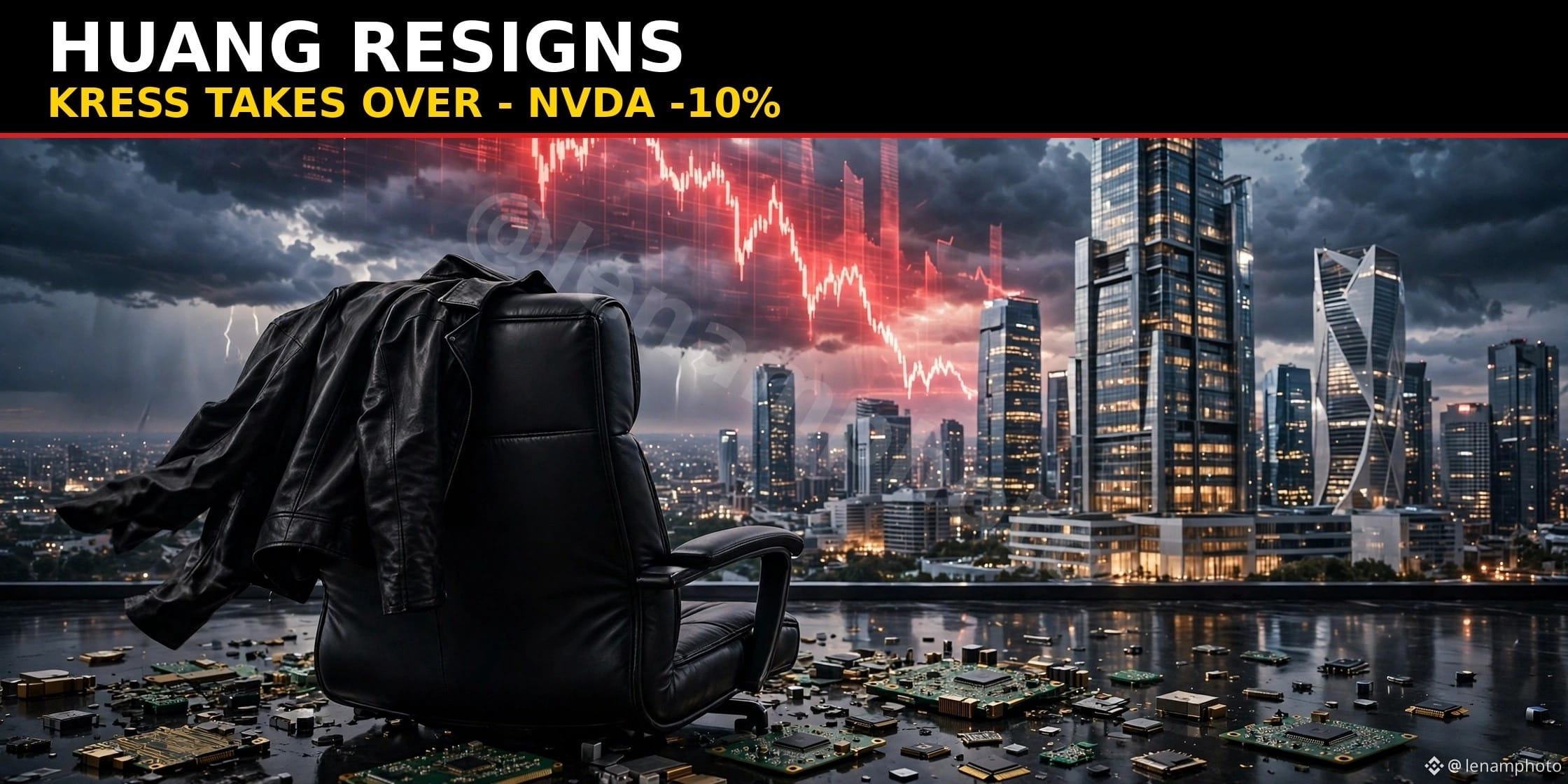
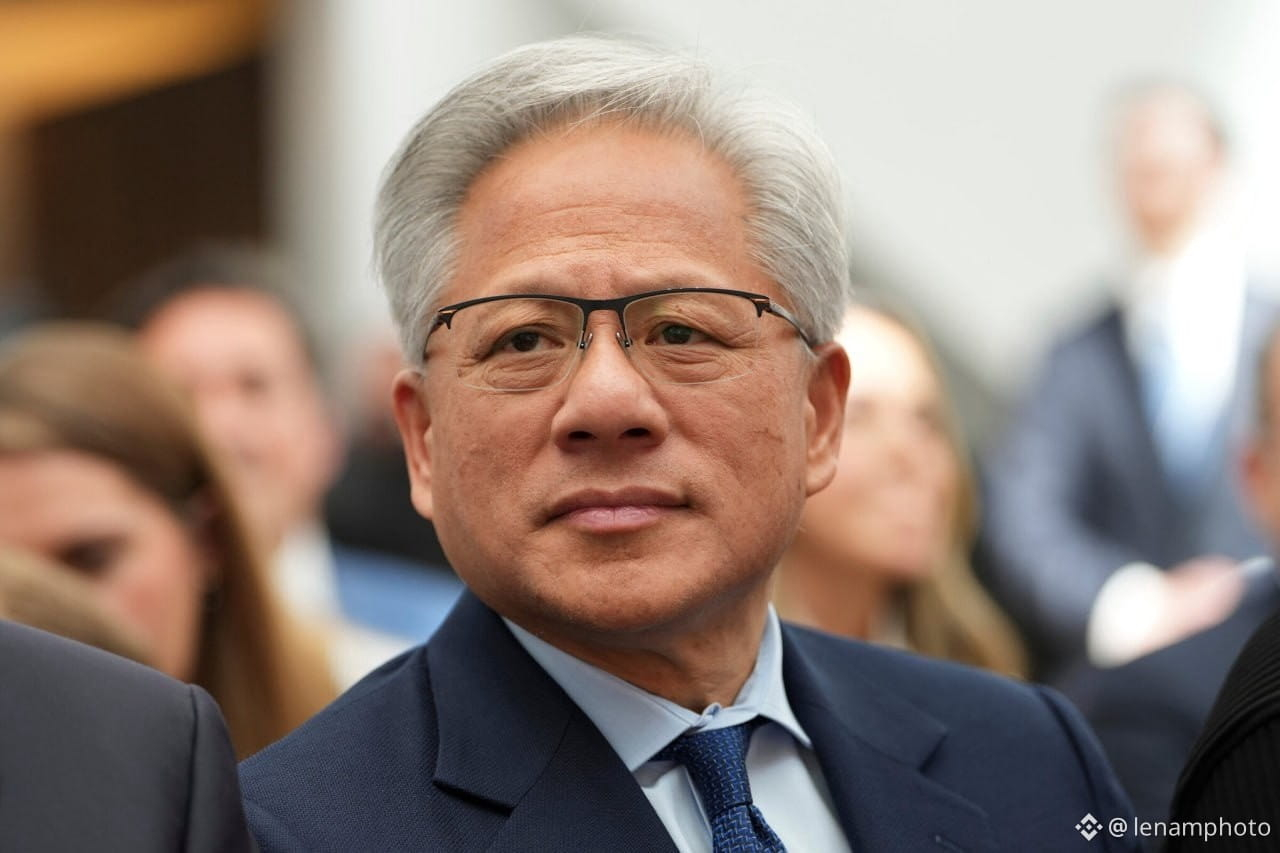
BREAKING: Jensen Huang resigns as Nvidia CEO, president and board member, effective immediately, ending his 33-year run leading the AI chip giant he co-founded. ⚡
👔 CFO Colette Kress takes over as interim CEO, while Harvey C. Jones is named board chair, as Nvidia starts the search for a permanent chief from inside and outside the company.
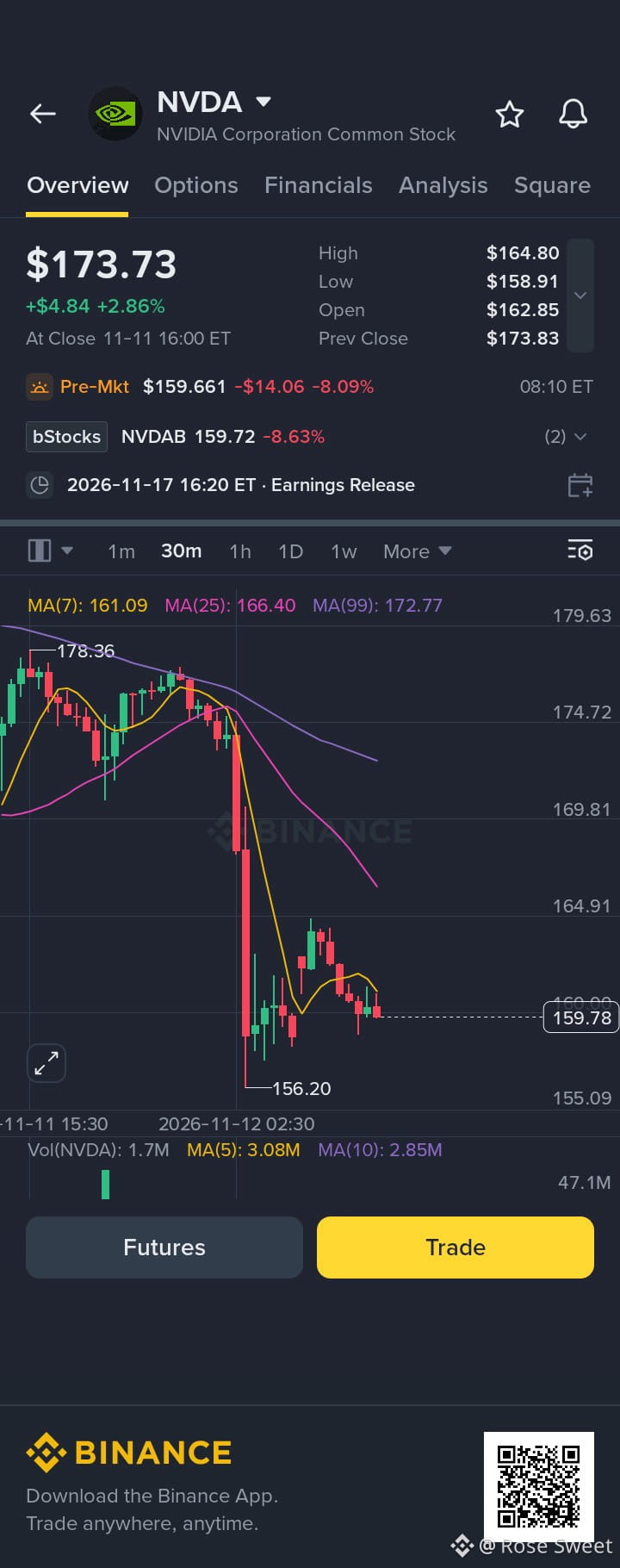
📉 Nvidia shares plunge about 10% premarket to near $157, after closing Wednesday at $173.73, as the market prices a leadership vacuum at the heart of the AI boom.
🔍 The exit follows the board probe into Huang's two affairs, including one with an executive US officials suspect of spying for China, and a second with a vice president who reported to him.
The board moved fast once it met, but the real question now is who leads the November 17 earnings call and whether Nvidia can keep its AI crown without its founder.
$NVDA #HuangRisksOusterOverReportedAffairWithSubordinate
{future}(NVDAUSDT)
BREAKING: Jensen Huang resigns as Nvidia CEO, president and board member, effective immediately, ending his 33-year run leading the AI chip giant he co-founded. ⚡
👔 CFO Colette Kress takes over as interim CEO, while Harvey C. Jones is named board chair, as Nvidia starts the search for a permanent chief from inside and outside the company.
📉 Nvidia shares plunge about 10% premarket to near $157, after closing Wednesday at $173.73, as the market prices a leadership vacuum at the heart of the AI boom.
🔍 The exit follows the board probe into Huang's two affairs, including one with an executive US officials suspect of spying for China, and a second with a vice president who reported to him.
The board moved fast once it met, but the real question now is who leads the November 17 earnings call and whether Nvidia can keep its AI crown without its founder.
$NVDA #HuangRisksOusterOverReportedAffairWithSubordinate
126

·
--
Bullish
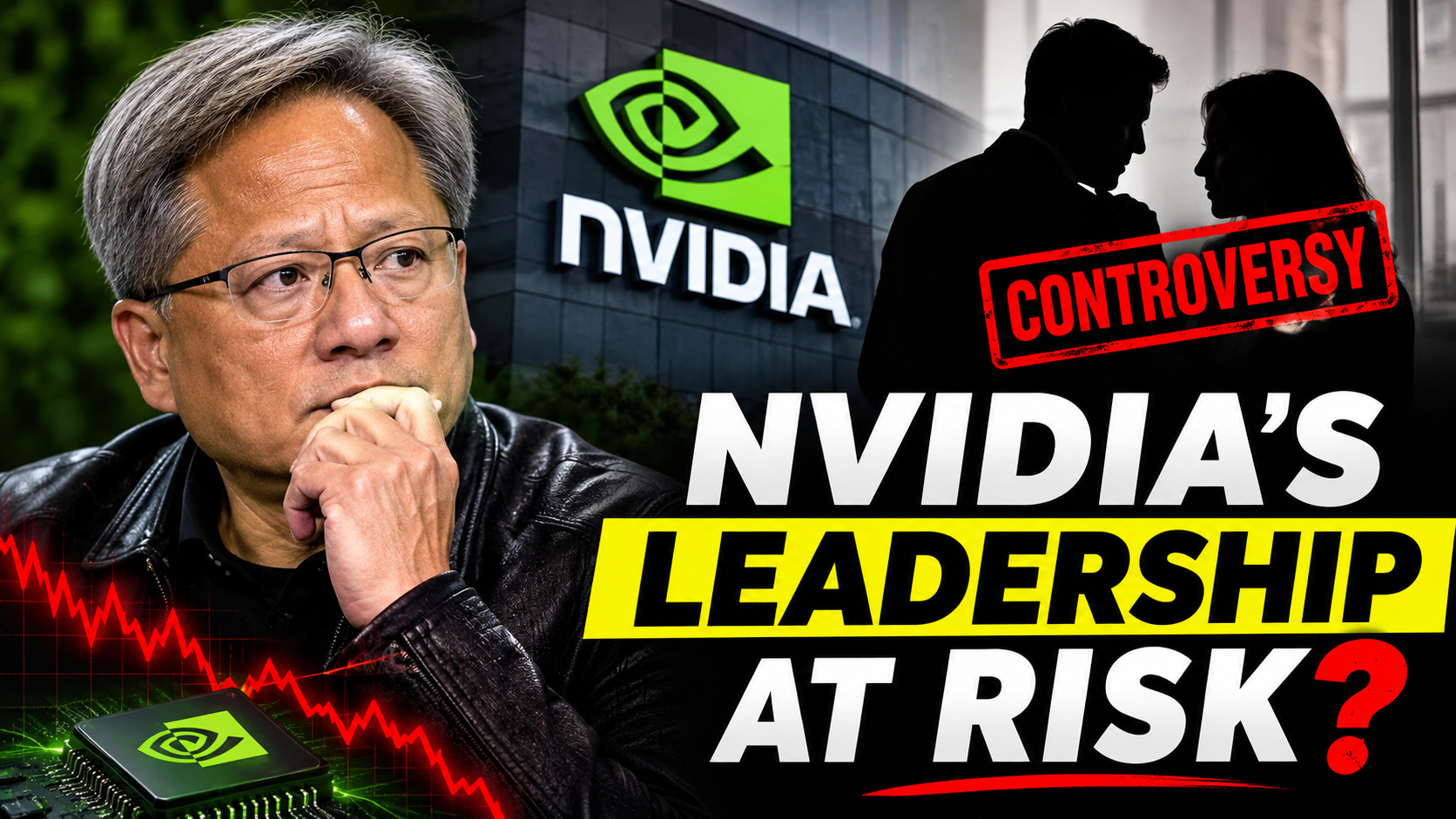
🚨 NVIDIA'S LEADERSHIP UNDER THE SPOTLIGHT
Nvidia is facing growing questions about its corporate leadership following reports involving CEO Jensen Huang and an alleged personal relationship with a senior executive who was reportedly part of his direct reporting structure.
The claims have sparked fresh discussions about internal governance, professional boundaries and executive accountability.
There is also speculation about how the board may respond, but no confirmed decision regarding Huang's position has been announced.
For investors, this story goes beyond personal allegations. Nvidia plays a central role in the global AI industry, making leadership stability an important factor in maintaining market confidence.
While the company's position in AI remains influential, any uncertainty at the top could attract closer attention from shareholders.
Will this controversy have any real impact on Nvidia's future leadership and AI ambitions?
$NVDAB $BTC
{future}(BTCUSDT)
{spot}(NVDABUSDT)
#huangrisksousteroverreportedaffairwithsubordinate
🚨 NVIDIA'S LEADERSHIP UNDER THE SPOTLIGHT
Nvidia is facing growing questions about its corporate leadership following reports involving CEO Jensen Huang and an alleged personal relationship with a senior executive who was reportedly part of his direct reporting structure.
The claims have sparked fresh discussions about internal governance, professional boundaries and executive accountability.
There is also speculation about how the board may respond, but no confirmed decision regarding Huang's position has been announced.
For investors, this story goes beyond personal allegations. Nvidia plays a central role in the global AI industry, making leadership stability an important factor in maintaining market confidence.
While the company's position in AI remains influential, any uncertainty at the top could attract closer attention from shareholders.
Will this controversy have any real impact on Nvidia's future leadership and AI ambitions?
$NVDAB $BTC
#huangrisksousteroverreportedaffairwithsubordinate
1
385

·
--
Bearish
Partly True
#huangrisksousteroverreportedaffairwithsubordinate
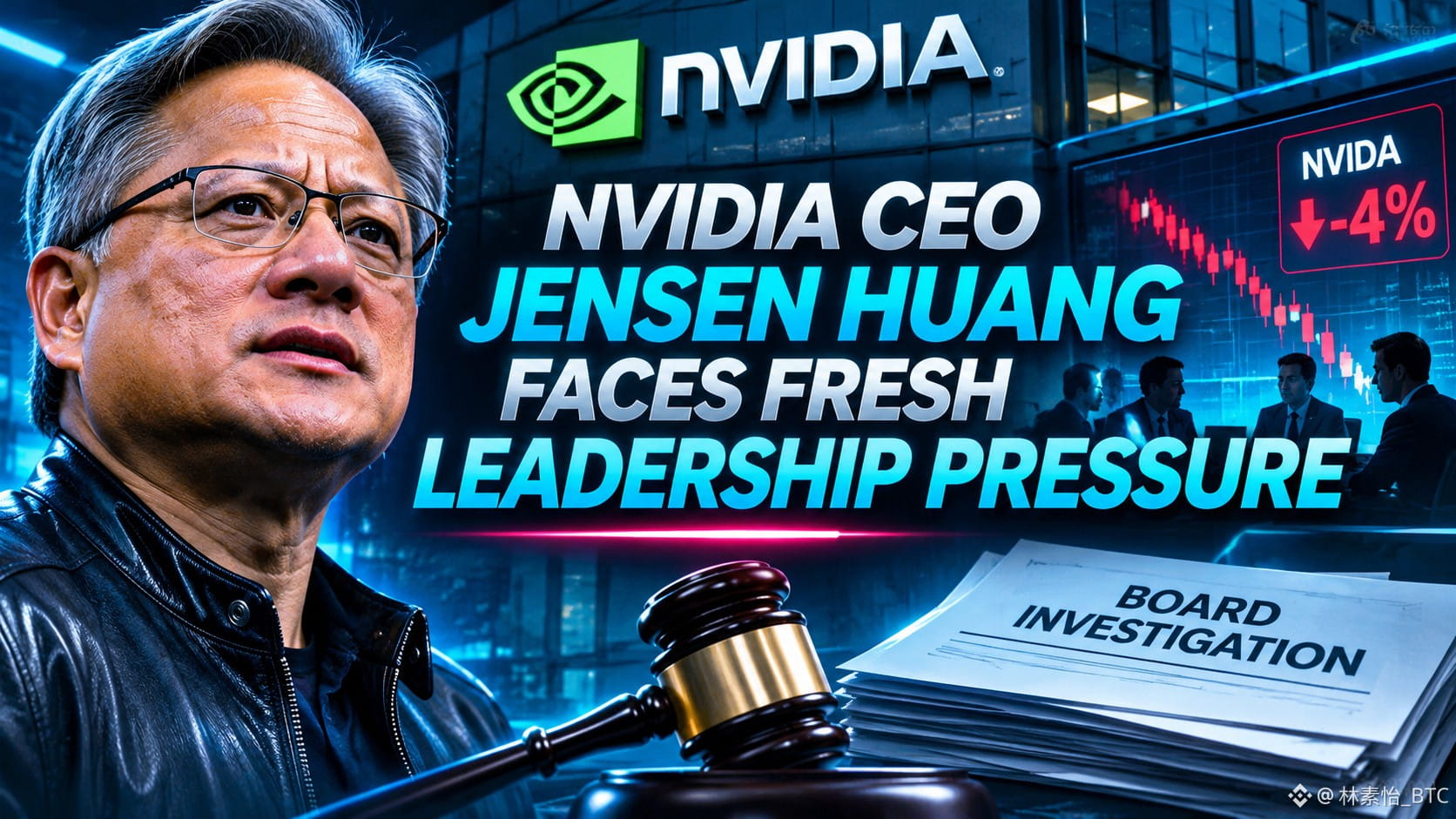
🚨 NVIDIA CEO Jensen Huang Faces Fresh Leadership Pressure
Reports say Jensen Huang had an extramarital relationship with a senior NVIDIA executive who reportedly reported directly to him. Reuters, citing the New York Times, said the allegation is based on accounts from five former NVIDIA employees. NVIDIA has not publicly confirmed the reported relationship.
The development comes as NVIDIA’s board is already investigating separate national-security concerns surrounding Huang’s previously acknowledged relationship with Alice Huang, a former Megaspeed executive.
For markets, the bigger issue is leadership and investor confidence, not the personal allegation itself. Huang is closely associated with NVIDIA’s strategy and the broader AI infrastructure boom. Reports of potential leadership changes could therefore increase volatility in NVIDIA shares and spill over into AI-related equities and broader tech sentiment.
NVIDIA shares reportedly fell nearly 4% in extended trading following the latest report.
📌 Bottom line: Traders are likely to focus on the board’s investigation, corporate-governance implications and any confirmed change to Huang’s position. Until those details become clearer, uncertainty itself could remain a source of market volatility.
#NVIDIA #JensenHuang #Aİ #Crypto
$JCT $TWST $IDOL
{future}(IDOLUSDT)
{future}(TWSTUSDT)
{future}(JCTUSDT)
#huangrisksousteroverreportedaffairwithsubordinate
🚨 NVIDIA CEO Jensen Huang Faces Fresh Leadership Pressure
Reports say Jensen Huang had an extramarital relationship with a senior NVIDIA executive who reportedly reported directly to him. Reuters, citing the New York Times, said the allegation is based on accounts from five former NVIDIA employees. NVIDIA has not publicly confirmed the reported relationship.
The development comes as NVIDIA’s board is already investigating separate national-security concerns surrounding Huang’s previously acknowledged relationship with Alice Huang, a former Megaspeed executive.
For markets, the bigger issue is leadership and investor confidence, not the personal allegation itself. Huang is closely associated with NVIDIA’s strategy and the broader AI infrastructure boom. Reports of potential leadership changes could therefore increase volatility in NVIDIA shares and spill over into AI-related equities and broader tech sentiment.
NVIDIA shares reportedly fell nearly 4% in extended trading following the latest report.
📌 Bottom line: Traders are likely to focus on the board’s investigation, corporate-governance implications and any confirmed change to Huang’s position. Until those details become clearer, uncertainty itself could remain a source of market volatility.
#NVIDIA #JensenHuang #Aİ #Crypto
$JCT $TWST $IDOL
1
3.5k

#HuangRisksOusterOverReportedAffairWithSubordinate
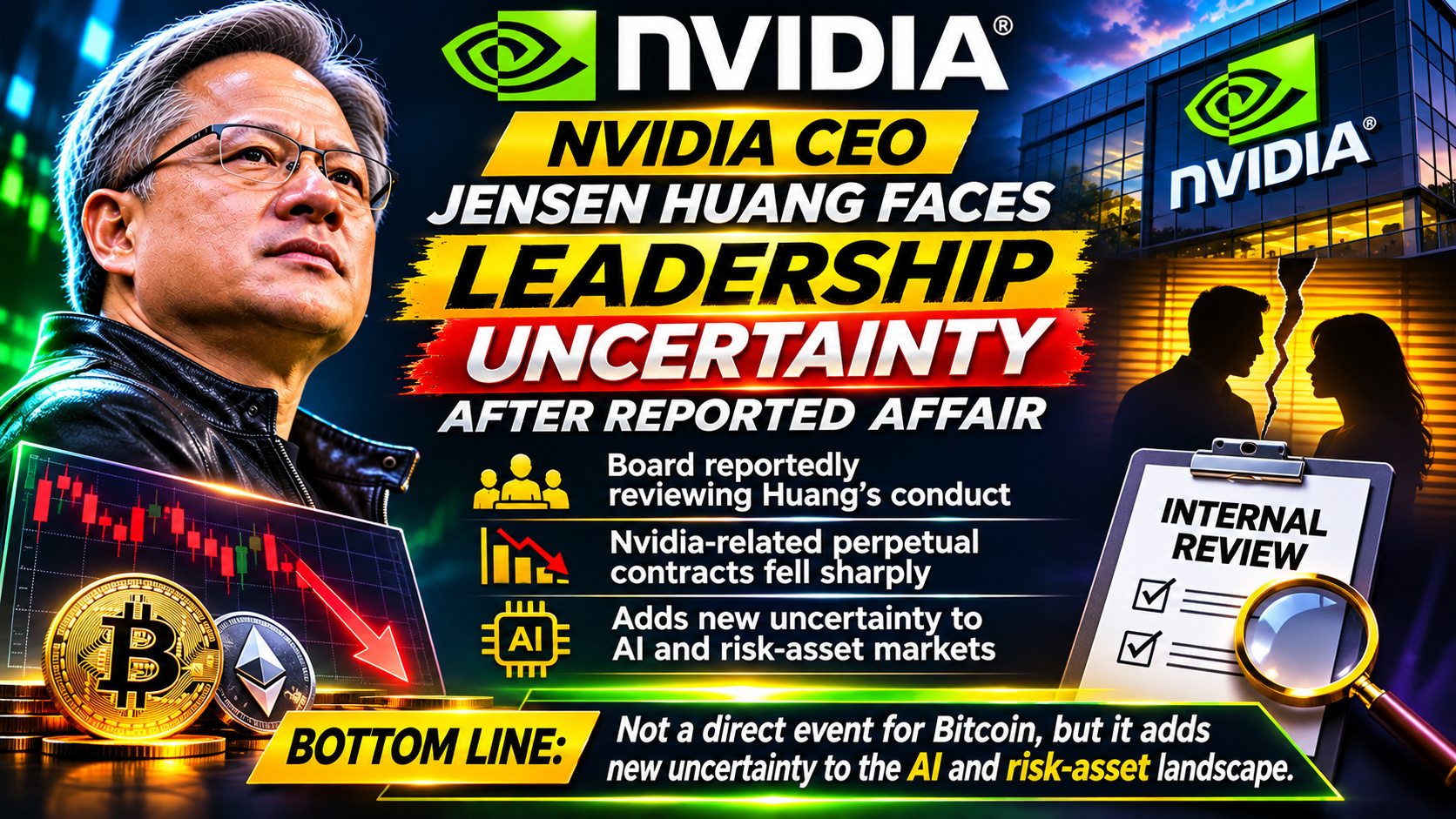
🚨 Nvidia CEO Jensen Huang Faces Leadership Uncertainty After Reported Affair
Nvidia CEO Jensen Huang is facing scrutiny after reports that the company’s board is considering his future following a reported relationship with a subordinate. The situation has reportedly triggered an internal review of Huang’s conduct.
📉 The news has also affected market sentiment. Nvidia-related perpetual contracts on Hyperliquid reportedly fell sharply, highlighting how quickly uncertainty around a major AI company can spill into high-beta markets.
For crypto traders, the bigger issue is the potential impact on AI-sector sentiment. Nvidia remains one of the most important companies behind the current AI investment cycle, so leadership uncertainty could create volatility across AI-linked crypto assets and other risk-sensitive markets.
🔎 Bottom line: This is not a direct fundamental event for Bitcoin, but it adds another source of uncertainty to the broader AI and risk-asset landscape. Traders will be watching whether the situation develops into an actual leadership change or remains a corporate governance issue.
#Nvidia #CryptoMarket #AI #CryptoNews
$B2 $ARIA $JCT
{future}(JCTUSDT)
{future}(ARIAUSDT)
{future}(B2USDT)
#HuangRisksOusterOverReportedAffairWithSubordinate
🚨 Nvidia CEO Jensen Huang Faces Leadership Uncertainty After Reported Affair
Nvidia CEO Jensen Huang is facing scrutiny after reports that the company’s board is considering his future following a reported relationship with a subordinate. The situation has reportedly triggered an internal review of Huang’s conduct.
📉 The news has also affected market sentiment. Nvidia-related perpetual contracts on Hyperliquid reportedly fell sharply, highlighting how quickly uncertainty around a major AI company can spill into high-beta markets.
For crypto traders, the bigger issue is the potential impact on AI-sector sentiment. Nvidia remains one of the most important companies behind the current AI investment cycle, so leadership uncertainty could create volatility across AI-linked crypto assets and other risk-sensitive markets.
🔎 Bottom line: This is not a direct fundamental event for Bitcoin, but it adds another source of uncertainty to the broader AI and risk-asset landscape. Traders will be watching whether the situation develops into an actual leadership change or remains a corporate governance issue.
#Nvidia #CryptoMarket #AI #CryptoNews
$B2 $ARIA $JCT
1
130
·
--
Bearish
Verified
#huangrisksousteroverreportedaffairwithsubordinate
Nvidia is facing a storm, and this time it's not about technology. Reports surrounding Jensen Huang, alleged affairs, questions about corporate governance, and concerns over sensitive chip shipments have put the company's leadership under serious scrutiny. The market has already reacted, with Nvidia losing billions in market value as its shares slide. But as someone who personally holds Nvidia shares, I see two sides to this situation. On one hand, this could be the beginning of a much bigger problem. Replacing a CEO doesn't automatically restore investor confidence, and concerns about corporate trust, business secrets, and long-term leadership could take time to resolve. Meanwhile, competitors are advancing, and companies like AMD and others could become much stronger challengers to Nvidia's dominance in the AI industry. On the other hand, what if this is simply a temporary crisis, an overreaction to negative headlines, and an opportunity to enter at a lower price before the shares recover? That's exactly what makes this situation difficult to read. Personally, I'm more concerned about Nvidia's long-term position than its current stock price. The AI race is far from over, and I believe we're going to see bigger competitors emerging. Nvidia may still be a giant today, but I wouldn't automatically assume it will remain the undisputed leader tomorrow. Sometimes the biggest risk isn't the fall in a stock's price, but the possibility that the company behind it is slowly losing the advantage that made it valuable in the first place. What's your take: buying opportunity or the beginning of Nvidia's decline?
Nvidia is facing a storm, and this time it's not about technology. Reports surrounding Jensen Huang, alleged affairs, questions about corporate governance, and concerns over sensitive chip shipments have put the company's leadership under serious scrutiny. The market has already reacted, with Nvidia losing billions in market value as its shares slide. But as someone who personally holds Nvidia shares, I see two sides to this situation. On one hand, this could be the beginning of a much bigger problem. Replacing a CEO doesn't automatically restore investor confidence, and concerns about corporate trust, business secrets, and long-term leadership could take time to resolve. Meanwhile, competitors are advancing, and companies like AMD and others could become much stronger challengers to Nvidia's dominance in the AI industry. On the other hand, what if this is simply a temporary crisis, an overreaction to negative headlines, and an opportunity to enter at a lower price before the shares recover? That's exactly what makes this situation difficult to read. Personally, I'm more concerned about Nvidia's long-term position than its current stock price. The AI race is far from over, and I believe we're going to see bigger competitors emerging. Nvidia may still be a giant today, but I wouldn't automatically assume it will remain the undisputed leader tomorrow. Sometimes the biggest risk isn't the fall in a stock's price, but the possibility that the company behind it is slowly losing the advantage that made it valuable in the first place. What's your take: buying opportunity or the beginning of Nvidia's decline?
2
732

·
--
Bearish
$NVDA The market reaction is about more than one executive. Huang has been central to Nvidia’s AI ecosystem, including customer relationships, chip-roadmap credibility, supply-chain strategy, and public debate over China export controls. Jim Cramer said he did not want to buy more shares into the scandal-driven selloff but also did not want to sell ahead of earnings. His warning that “a Jensen-less Nvidia is an Nvidia many will not want to own” explains why investors treat
{future}(NVDAUSDT)
$WLD
{future}(WLDUSDT)
$SUI
{future}(SUIUSDT)
#HuangRisksOusterOverReportedAffairWithSubordinate #HKSFCSaysTokenizationMovingToCommercialUse
$NVDA The market reaction is about more than one executive. Huang has been central to Nvidia’s AI ecosystem, including customer relationships, chip-roadmap credibility, supply-chain strategy, and public debate over China export controls. Jim Cramer said he did not want to buy more shares into the scandal-driven selloff but also did not want to sell ahead of earnings. His warning that “a Jensen-less Nvidia is an Nvidia many will not want to own” explains why investors treat
$WLD
$SUI
#HuangRisksOusterOverReportedAffairWithSubordinate #HKSFCSaysTokenizationMovingToCommercialUse
$WLD
$SUI
#HuangRisksOusterOverReportedAffairWithSubordinate #HKSFCSaysTokenizationMovingToCommercialUse
30

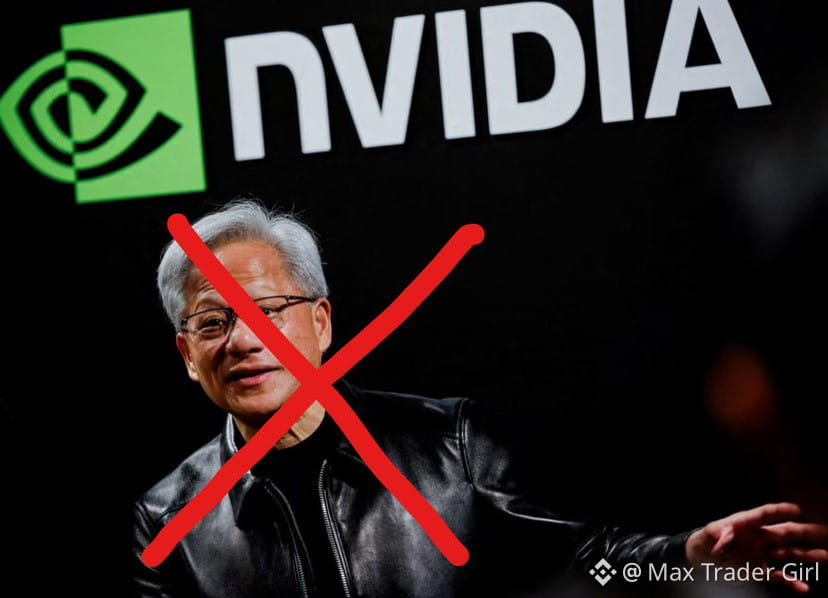
🚨 JENSEN HUANG’S JOB IS ON THE LINE!
$NVDA is facing a leadership crisis that could shake up the entire AI sector. #huangrisksousteroverreportedaffairwithsubordinate
Following Jensen Huang’s admission of infidelity toward his wife, new reports have emerged alleging that he had a second affair with an NVIDIA executive reportedly working under his supervision.
The scandal has prompted the company’s board of directors to reevaluate Huang’s future as CEO; according to reports, his removal from office is being discussed.
This is no longer just a personal matter. Investors are questioning corporate governance, leadership stability, and the future of the world’s most valuable AI chipmaker.
When the pioneer of the AI boom becomes the company’s greatest risk, the consequences could be massive.
2
641

⚖️ Leadership Uncertainty Surrounds Nvidia Chief🙄
Reports of a personal relationship involving Nvidia CEO Jensen Huang have intensified board level scrutiny and raised questions about potential leadership changes. Shares have reflected the added uncertainty even as core AI demand stays firm.
Governance developments of this nature often create short term volatility while the underlying technology franchise remains intact. Investors typically monitor both the investigation outcome and the company’s continued execution in high growth markets.
$NVDAB $NVDA #CoinVahini #HuangRisksOusterOverReportedAffairWithSubordinate #NvidiaLeadership #AIGovernance
2
108

·
--
🚨 NVIDIA CEO JENSEN HUANG FACES A POTENTIAL EXIT!
Nvidia is facing a major leadership controversy after reports alleged that CEO Jensen Huang had an undisclosed relationship with a senior executive who reportedly reported directly to him. The allegations have intensified scrutiny of corporate governance, executive accountability and Nvidia’s leadership stability. Reports also suggest the board is considering Huang’s future, although no official removal has been confirmed.
For investors, the bigger concern is uncertainty around the leadership of one of the world's most important AI companies. Nvidia’s long-term AI dominance remains significant, but leadership risk is now another factor markets must watch.
Could this controversy threaten Nvidia’s position in the AI race?
#huangrisksousteroverreportedaffairwithsubordinate $NVDAB
{spot}(NVDABUSDT)
🚨 NVIDIA CEO JENSEN HUANG FACES A POTENTIAL EXIT!
Nvidia is facing a major leadership controversy after reports alleged that CEO Jensen Huang had an undisclosed relationship with a senior executive who reportedly reported directly to him. The allegations have intensified scrutiny of corporate governance, executive accountability and Nvidia’s leadership stability. Reports also suggest the board is considering Huang’s future, although no official removal has been confirmed.
For investors, the bigger concern is uncertainty around the leadership of one of the world's most important AI companies. Nvidia’s long-term AI dominance remains significant, but leadership risk is now another factor markets must watch.
Could this controversy threaten Nvidia’s position in the AI race?
#huangrisksousteroverreportedaffairwithsubordinate $NVDAB
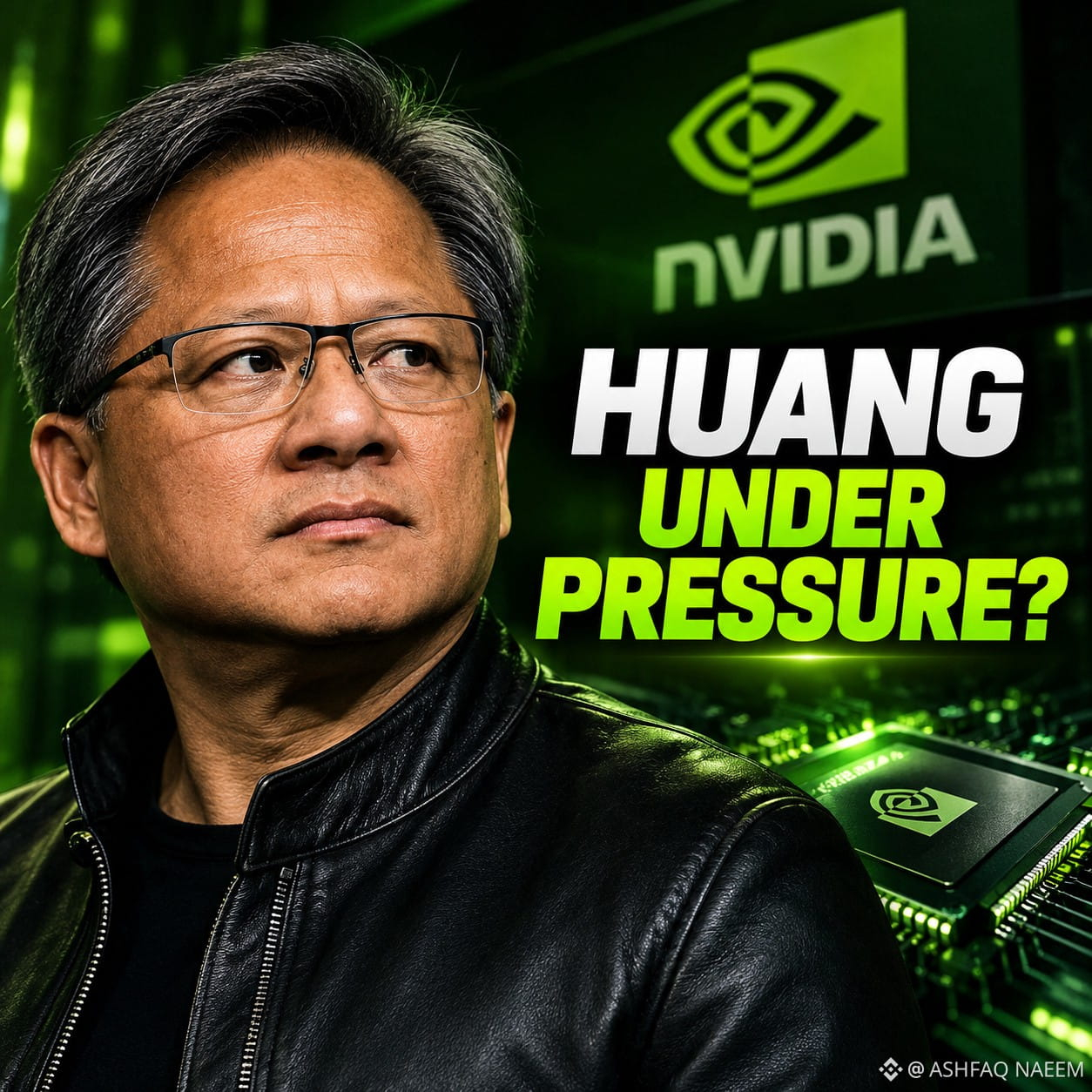
2
6
7.5k

·
--
Bearish
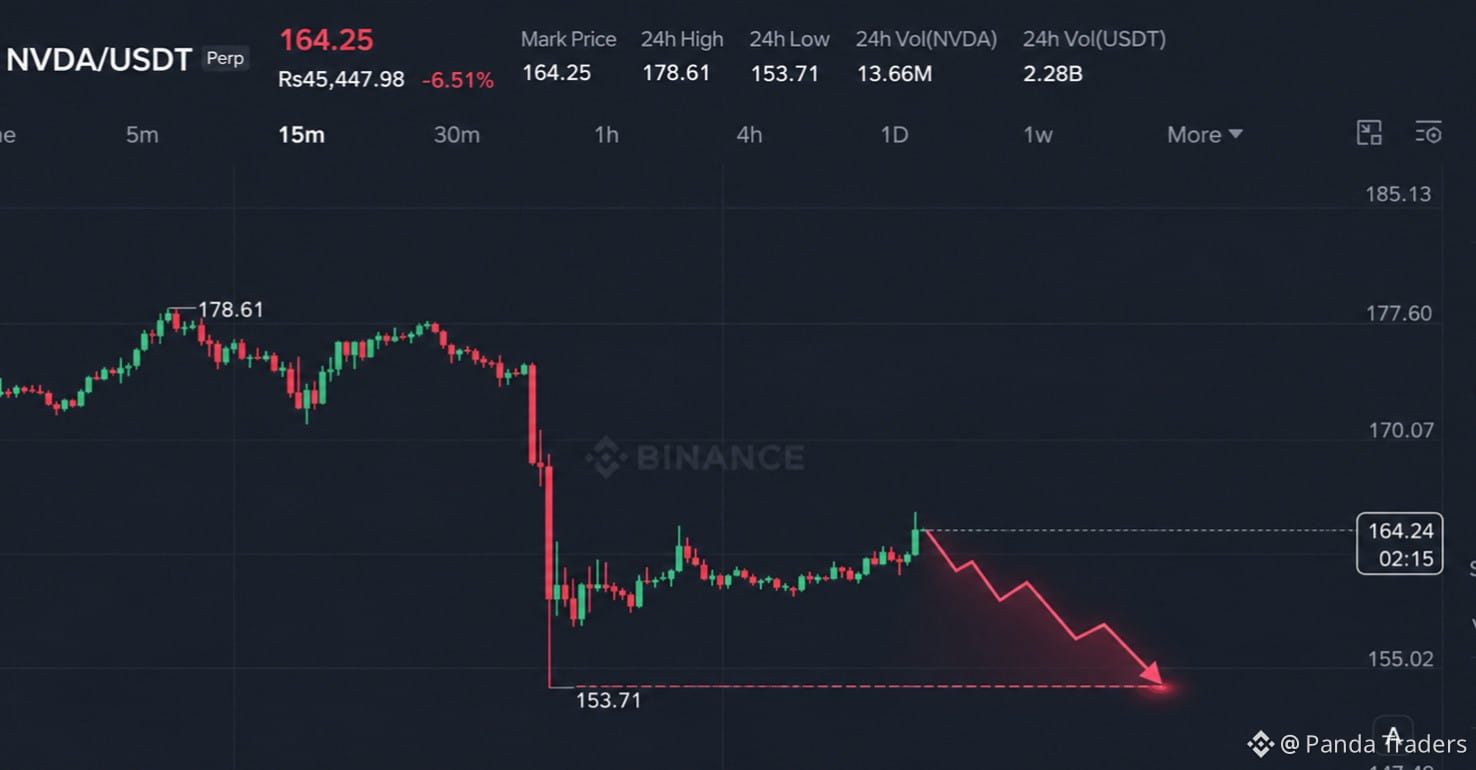
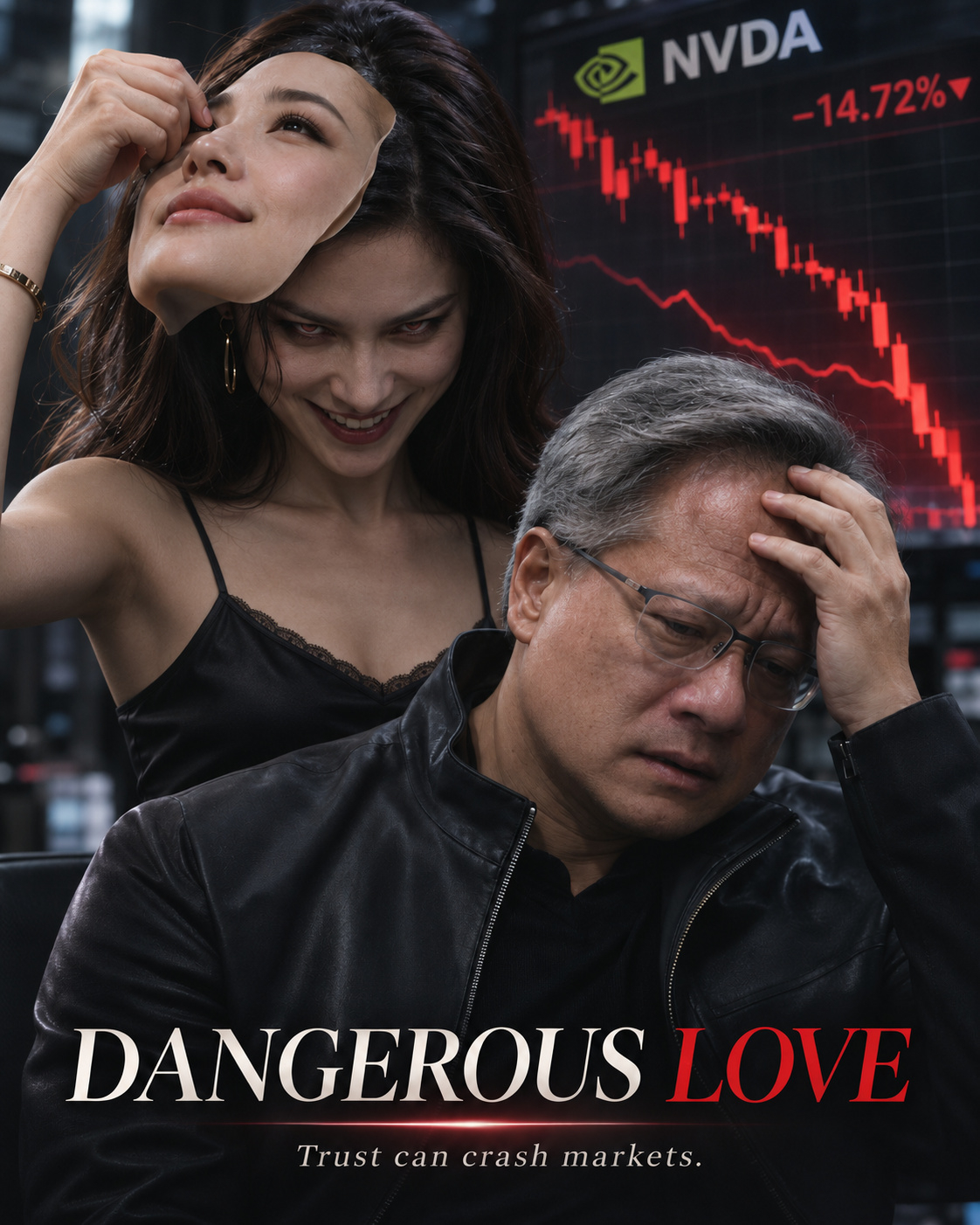
🚨 $NVDA IS CRASHING ‼️ EVERYONE IS PANICKING! YOUR GIRLFRIEND CAN BREAK YOUR HEART… AND YOUR STOCK TOO! 💀😂
{spot}(NVDABUSDT)
NVIDIA CEO Jensen Huang is caught in an alleged affair and Chinese spy controversy! 🇨🇳👀
The spying allegations remain unproven, but NVDA has already taken a massive hit! 📉
While everyone is panicking, we're looking for our next SHORT opportunity! 🐼
NVDA/USDT — SHORT SETUP
🎯 Entry (DCA):$168 – $171.50
Stop Loss: $180
TP1:$162.00
TP2: $157.20
TP3: $153.80
TP4: $146.00
Always DYOR And Never invest all in one trade
Trade 👇 $NVDA
{future}(NVDAUSDT)
#nvda #HuangRisksOusterOverReportedAffairWithSubordinate
🚨 $NVDA IS CRASHING ‼️ EVERYONE IS PANICKING! YOUR GIRLFRIEND CAN BREAK YOUR HEART… AND YOUR STOCK TOO! 💀😂
NVIDIA CEO Jensen Huang is caught in an alleged affair and Chinese spy controversy! 🇨🇳👀
The spying allegations remain unproven, but NVDA has already taken a massive hit! 📉
While everyone is panicking, we're looking for our next SHORT opportunity! 🐼
NVDA/USDT — SHORT SETUP
🎯 Entry (DCA):$168 – $171.50
Stop Loss: $180
TP1:$162.00
TP2: $157.20
TP3: $153.80
TP4: $146.00
Always DYOR And Never invest all in one trade
Trade 👇 $NVDA
#nvda #HuangRisksOusterOverReportedAffairWithSubordinate
4
11
9k
·
--
Verified
🤣🤣🤣🤣🤣🤣🤣
There are calls to oust NVIDIA CEO Huang — a second mistress has been discovered. The company's stock has fallen by more than 8%.
One of the mistresses is reportedly 48-year-old Kimberly Powell, NVIDIA’s Vice President of Healthcare. The other was a Chinese spy. The Board of Directors is currently considering Huang’s resignation.
Seduced her with a leather jacket 🤣🤣🤣
#NVIDIA
#HuangRisksOusterOverReportedAffairWithSubordinate
#CanNvidiaEarningsEaseMarketConcerns?
$NVDAB
{spot}(NVDABUSDT)
🤣🤣🤣🤣🤣🤣🤣
There are calls to oust NVIDIA CEO Huang — a second mistress has been discovered. The company's stock has fallen by more than 8%.
One of the mistresses is reportedly 48-year-old Kimberly Powell, NVIDIA’s Vice President of Healthcare. The other was a Chinese spy. The Board of Directors is currently considering Huang’s resignation.
Seduced her with a leather jacket 🤣🤣🤣
#NVIDIA
#HuangRisksOusterOverReportedAffairWithSubordinate
#CanNvidiaEarningsEaseMarketConcerns?
$NVDAB


1
10
543
Log in to explore more content
Join global crypto users on Binance Square
⚡️ Get latest and useful information about crypto.
💬 Trusted by the world’s largest crypto exchange.
👍 Discover real insights from verified creators.
Email / Phone number
Trending Topics
1
#WillMarketsStageAThanksgivingReliefRally?
20,157 views
415 Discussing
2
#BessentSoftensStanceOnHuang’sNvidiaReturn
14,374 views
283 Discussing
3
#EvolveAtBinanceBlockchainWeek
3,147 views
105 Discussing
4
#MuskWarnsOfAICashCrunch
13,726 views
211 Discussing
5
#SouthKoreaToTightenOversightOfCryptoTransfersAbroad
789 views
18 Discussing
6
#RussiaAllowsExchangesToOfferCryptoTrading
5,696 views
111 Discussing
7
#UKToBarCryptoExchangesFromMakingMarketsOnTheirOwnPlatforms
383 views
15 Discussing
8
#UKTreasurySignsCryptoMarketMakingExemptionRules
2,612 views
98 Discussing
9
#BTCReboundsAbove$60KAmidWhaleDipBuying
129,342 views
442 Discussing
10
#SolanaSets2027RoadmapToDoubleComputeCapacity
114,317 views
1,422 Discussing