wellsfargo

39,977 views
131 Discussing
CRYPTO ELITE
·
--
🏦💰 WELLS FARGO NOW THE BIGGEST BANK HOLDER OF BITCOIN ETF! 💰🏦 Wells Fargo has disclosed 49.6 million shares of BlackRock's spot Bitcoin ETF (IBIT), currently worth $1.82 billion. That makes the bank the largest institutional holder of a Bitcoin ETF. The position is up about 200% from 24.4 million shares in Q2. THE PROOF — check this news yourself here: https://nitter.jaydenha.uk/BitcoinMagazine/status/2122444965586542824 Follow @cryptoelite_786 for the fastest crypto news & updates! 🔔 $BTC #Bitcoin #ETF #WellsFargo #IBIT
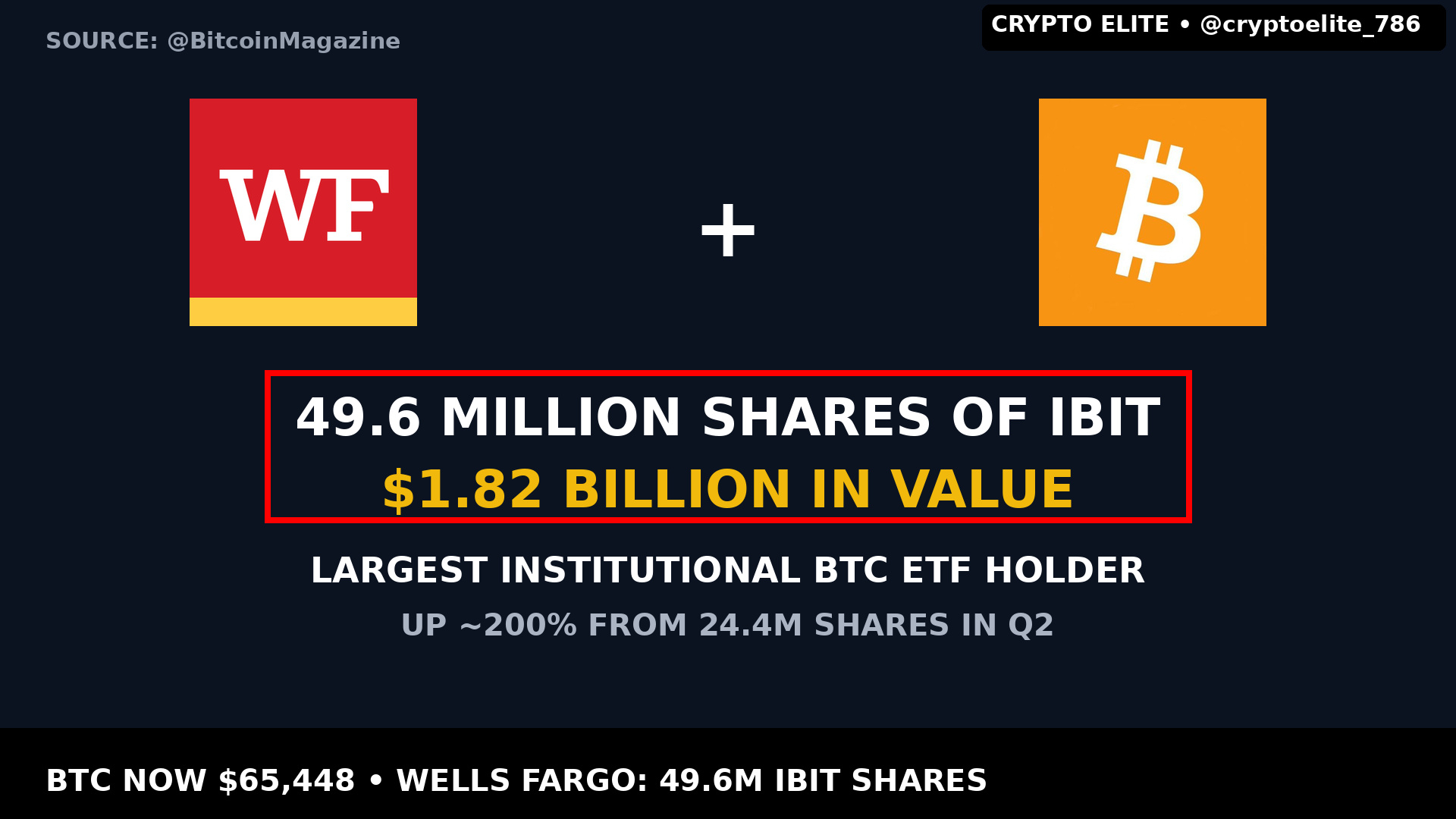
🏦💰 WELLS FARGO NOW THE BIGGEST BANK HOLDER OF BITCOIN ETF! 💰🏦

Wells Fargo has disclosed 49.6 million shares of BlackRock's spot Bitcoin ETF (IBIT), currently worth $1.82 billion.

That makes the bank the largest institutional holder of a Bitcoin ETF. The position is up about 200% from 24.4 million shares in Q2.

THE PROOF — check this news yourself here:
https://nitter.jaydenha.uk/BitcoinMagazine/status/2122444965586542824

Follow @cryptoelite_786 for the fastest crypto news & updates! 🔔

$BTC #Bitcoin #ETF #WellsFargo #IBIT
BTC-0.82%
BLKUS+0.32%
The largest reported Bitcoin ETF holder turns out to be a bank—but most of the money isn’t the bank’s own. Fact: Wells Fargo reported holding 49.58 million shares of IBIT worth $2.35 billion as of September 30 (SEC 13F filing, Nov. 16)—up from 24.4 million shares ($812 million) at the end of June, or a 103% increase in shares. Its total exposure to spot Bitcoin ETFs was equivalent to 30,553 BTC (Galaxy Research), making it the largest reported institutional holder. But around 85% of that IBIT position was recorded under its two brokerage businesses—clients’ money, not the bank’s own. My take: this is still big news, with an important caveat. The value has since fallen: BTC was around $83,700 on September 30, and is around $64,565 this morning. And this filing is a snapshot from seven weeks ago—it doesn’t show whether clients added to or sold their positions during the downturn. What I take from this: major U.S. banks now hold Bitcoin ETFs worth billions through their client channels, rather than as bets on their own balance sheets. What I’m watching: the next 13F filing (positions as of December 31, due February 16)—whether Wells Fargo clients held on through this downturn. What do you think: does a position this large mean more as institutional adoption, or is it simply a reflection of retail clients buying through a broker? This is my analysis, not financial advice—always DYOR. #WellsFargo #ETFBitcoin $BTC
The largest reported Bitcoin ETF holder turns out to be a bank—but most of the money isn’t the bank’s own.

Fact: Wells Fargo reported holding 49.58 million shares of IBIT worth $2.35 billion as of September 30 (SEC 13F filing, Nov. 16)—up from 24.4 million shares ($812 million) at the end of June, or a 103% increase in shares. Its total exposure to spot Bitcoin ETFs was equivalent to 30,553 BTC (Galaxy Research), making it the largest reported institutional holder. But around 85% of that IBIT position was recorded under its two brokerage businesses—clients’ money, not the bank’s own.

My take: this is still big news, with an important caveat. The value has since fallen: BTC was around $83,700 on September 30, and is around $64,565 this morning. And this filing is a snapshot from seven weeks ago—it doesn’t show whether clients added to or sold their positions during the downturn. What I take from this: major U.S. banks now hold Bitcoin ETFs worth billions through their client channels, rather than as bets on their own balance sheets.

What I’m watching: the next 13F filing (positions as of December 31, due February 16)—whether Wells Fargo clients held on through this downturn.

What do you think: does a position this large mean more as institutional adoption, or is it simply a reflection of retail clients buying through a broker?

This is my analysis, not financial advice—always DYOR.

#WellsFargo #ETFBitcoin $BTC
BTC-0.82%
IBITETF-0.09%
Verified
🚨Transendental Banking giant takes the step into the Blockchain Wells Fargo officially announced the launch of its tokenized deposit platform for corporate clients. They will use blockchain technology to process, schedule, and settle cross-border transactions in US dollars and pounds sterling 24 hours a day, 7 days a week, marking another milestone in large-scale institutional adoption. #WellsFargo #CBDC #Fed $COAI $XRP $BNB
🚨Transendental

Banking giant takes the step into the Blockchain

Wells Fargo officially announced the launch of its tokenized deposit platform for corporate clients. They will use blockchain technology to process, schedule, and settle cross-border transactions in US dollars and pounds sterling 24 hours a day, 7 days a week, marking another milestone in large-scale institutional adoption.

#WellsFargo #CBDC #Fed

$COAI $XRP $BNB
Verified
🚨 BREAKING NEWS: 🇺🇸 Wells Fargo, the third-largest bank in the U.S., is ready to offer tokenized deposits to corporate clients. The move marks another major step toward institutional adoption of blockchain, while tokenized banking services continue to gain momentum. Many expect that crypto adoption will accelerate even further if the U.S. CLARITY Act becomes law. $ETH $PSG $VANRY #WellsFargo #Tokenización #Blockchain #Cripto #LeyDeCLARIDAD
🚨 BREAKING NEWS: 🇺🇸 Wells Fargo, the third-largest bank in the U.S., is ready to offer tokenized deposits to corporate clients.

The move marks another major step toward institutional adoption of blockchain, while tokenized banking services continue to gain momentum.

Many expect that crypto adoption will accelerate even further if the U.S. CLARITY Act becomes law.
$ETH $PSG $VANRY

#WellsFargo #Tokenización #Blockchain #Cripto #LeyDeCLARIDAD
📌 Confirmed in SEC reports: Major banks report exposure to XRP ETFs. Recent Form 13F filings with the SEC confirm that financial giants such as Wells Fargo and Bank of America are adding assets linked to the spot XRP ETF with $XRP to their balance sheets and quarterly reports. 🔍 Key points from the news: • Official Record: The banking entities formally submitted periodic reports to the SEC, including positions in instruments such as the Bitwise XRP ETF. • Asset Recognition: The explicit inclusion of these funds in regulatory documentation reflects how institutional capital within traditional U.S. banking is already allocating resources to XRP exposure. • Market Validation: The filing with the regulator provides support for transparency and the integration of these financial vehicles into the banking circuit of the largest scale. The appearance of these tickers on the quarterly balance sheets filed with the SEC marks a clear milestone in the adoption and integration of XRP into the traditional financial system. $XRP #XRPEtf #WellsFargo #BOA #SEC
📌 Confirmed in SEC reports:
Major banks report exposure to XRP ETFs.
Recent Form 13F filings with the SEC confirm that financial giants such as Wells Fargo and Bank of America are adding assets linked to the spot XRP ETF with $XRP to their balance sheets and quarterly reports.
🔍 Key points from the news:
• Official Record: The banking entities formally submitted periodic reports to the SEC, including positions in instruments such as the Bitwise XRP ETF.
• Asset Recognition: The explicit inclusion of these funds in regulatory documentation reflects how institutional capital within traditional U.S. banking is already allocating resources to XRP exposure.
• Market Validation: The filing with the regulator provides support for transparency and the integration of these financial vehicles into the banking circuit of the largest scale.
The appearance of these tickers on the quarterly balance sheets filed with the
SEC marks a clear milestone in the adoption and integration of XRP into the traditional financial system.
$XRP #XRPEtf #WellsFargo #BOA #SEC
🚨 Breaking News: 🇺🇸 Wells Fargo, the third-largest bank in the United States, is preparing to offer digital deposit services to corporate clients. This step represents another qualitative leap toward the adoption of blockchain technology within institutions, as digital banking services continue to gain increasing momentum. Many expect even faster adoption of cryptocurrencies if the U.S. Transparency Act (CLARITY Act) is approved. Please follow up #WellsFargo #Tokenization #blockchains #CryptoWatchMay2024 #CLARITYAct $BNB {spot}(BNBUSDT)
🚨 Breaking News: 🇺🇸 Wells Fargo, the third-largest bank in the United States, is preparing to offer digital deposit services to corporate clients.

This step represents another qualitative leap toward the adoption of blockchain technology within institutions, as digital banking services continue to gain increasing momentum.

Many expect even faster adoption of cryptocurrencies if the U.S. Transparency Act (CLARITY Act) is approved.

Please follow up

#WellsFargo #Tokenization #blockchains #CryptoWatchMay2024 #CLARITYAct $BNB
🚨 BREAKING: WELLS FARGO, THIRD-LARGEST BANK IN THE U.S., IS INTRODUCING TOKENIZED DEPOSITS FOR CORPORATE CLIENTS! 🇺🇸 $XRP 🤝 WELLS FARGO #WellsFargo #xrp
🚨 BREAKING: WELLS FARGO, THIRD-LARGEST BANK IN THE U.S., IS INTRODUCING TOKENIZED DEPOSITS FOR CORPORATE CLIENTS! 🇺🇸
$XRP 🤝 WELLS FARGO
#WellsFargo #xrp
Wells Fargo in talks with Payward (Kraken) about crypto liquidity - Wells Fargo, a U.S. bank managing around $2.3 trillion in assets, is in talks with Payward, Kraken’s parent company, to provide crypto liquidity for the bank’s digital asset trading operations. - The talks are ongoing and may not result in an agreement. - Both parties declined to comment publicly. - Source: CoinGape, October 7. #WellsFargo #Kraken #CryptoNews #BinanceSquare $btc $eth #vlikevn Titanbot Source: CoinGape
Wells Fargo in talks with Payward (Kraken) about crypto liquidity

- Wells Fargo, a U.S. bank managing around $2.3 trillion in assets, is in talks with Payward, Kraken’s parent company, to provide crypto liquidity for the bank’s digital asset trading operations.
- The talks are ongoing and may not result in an agreement.
- Both parties declined to comment publicly.
- Source: CoinGape, October 7.

#WellsFargo #Kraken #CryptoNews #BinanceSquare

$btc $eth

#vlikevn Titanbot

Source: CoinGape
Wells Fargo in talks with Payward (Kraken) about crypto trading liquidity - Wells Fargo is in discussions with Payward, the parent company of the Kraken exchange, to provide liquidity for cryptocurrency trading. - The move shows that major banks are becoming increasingly involved in digital assets. - Details of the agreement have not yet been disclosed. #BinanceSquare #CryptoNews #WellsFargo #Kraken #Payward $btc $eth vlikevn Titanbot Source: CoinDesk
Wells Fargo in talks with Payward (Kraken) about crypto trading liquidity

- Wells Fargo is in discussions with Payward, the parent company of the Kraken exchange, to provide liquidity for cryptocurrency trading.
- The move shows that major banks are becoming increasingly involved in digital assets.
- Details of the agreement have not yet been disclosed.
#BinanceSquare #CryptoNews #WellsFargo #Kraken #Payward

$btc $eth

vlikevn Titanbot

Source: CoinDesk
Wells Fargo: Gold's Structural Bull Run Targets $6,000+ Despite recent volatility, gold's market correction offers a prime entry point for long-term investors. In its mid-year outlook, Wells Fargo upgraded its year-end gold target to $5,300–$5,500 an ounce, projecting prices to surpass $6,000 by late 2027. Strategy experts emphasize that this rally is driven by long-term structural shifts rather than temporary market cycles. Three Core Macro Pillars Driving Demand: Central Bank Diversification: Global institutions are actively shifting reserves away from U.S. Treasuries and cash into neutral, hard assets. Persistent Inflation: Supply chain tariffs, rising energy costs, and massive artificial intelligence infrastructure demands mean the era of low inflation is over. Sovereign Debt Risks: Exploding fiscal deficits and a lack of political spending restraint provide an ideal macroeconomic backdrop for precious metals. The Asymmetric Opportunity With the Federal Reserve balanced between managing inflation and supporting growth, real interest rates are well-positioned to favor gold. Analysts view this as a high-convexity setup, noting that gold will thrive as long as policymakers continue to rely on fiscal expansion. Additionally, the global race for strategic resources—driven by data center growth and electrification—is expected to simultaneously boost industrial commodities like copper alongside precious metals. #Gold #MacroEconomy #PreciousMetals #WellsFargo #Commodities $XAU {future}(XAUUSDT)
Wells Fargo: Gold's Structural Bull Run Targets $6,000+

Despite recent volatility, gold's market correction offers a prime entry point for long-term investors. In its mid-year outlook, Wells Fargo upgraded its year-end gold target to $5,300–$5,500 an ounce, projecting prices to surpass $6,000 by late 2027. Strategy experts emphasize that this rally is driven by long-term structural shifts rather than temporary market cycles.

Three Core Macro Pillars Driving Demand:
Central Bank Diversification: Global institutions are actively shifting reserves away from U.S. Treasuries and cash into neutral, hard assets.

Persistent Inflation: Supply chain tariffs, rising energy costs, and massive artificial intelligence infrastructure demands mean the era of low inflation is over.

Sovereign Debt Risks: Exploding fiscal deficits and a lack of political spending restraint provide an ideal macroeconomic backdrop for precious metals.

The Asymmetric Opportunity
With the Federal Reserve balanced between managing inflation and supporting growth, real interest rates are well-positioned to favor gold. Analysts view this as a high-convexity setup, noting that gold will thrive as long as policymakers continue to rely on fiscal expansion.

Additionally, the global race for strategic resources—driven by data center growth and electrification—is expected to simultaneously boost industrial commodities like copper alongside precious metals.

#Gold #MacroEconomy #PreciousMetals #WellsFargo #Commodities

$XAU
Wells Fargo plans to introduce tokenized deposits for select corporate clients in 2026, initially supporting U.S. dollars (USD) and British pounds (GBP). This move marks a significant step in traditional finance’s adoption of blockchain technology. A tokenized deposit is a digital representation of a regular bank deposit, recorded on a blockchain. Each token is backed 1:1 by funds in a Wells Fargo account, fully redeemable and carrying the same protections (like FDIC insurance for USD) as a traditional deposit. Because it lives on a blockchain, it can move 24/7 in near real-time, eliminating the delays of legacy payment systems. Unlike unregulated stablecoins, tokenized deposits are issued by a regulated bank, making them a safe bridge between conventional banking and blockchain efficiency. Why it matters: For businesses, tokenized deposits can streamline treasury management. Companies can send and receive payments instantly, automate settlements with smart contracts, and cut friction in cross-currency transactions—especially useful for the USD-GBP corridor. This can shorten the time it takes to pay suppliers, settle trades, or manage cash across multiple accounts. Industry context: Wells Fargo joins a growing list of banks exploring tokenization. JPMorgan’s JPM Coin already serves institutional clients, and other global banks are running pilots. By targeting 2026, Wells Fargo has time to ensure compliance, security, and smooth integration with existing systems. The limited rollout to select corporate clients will test the waters; if successful, it could open the door to wider availability and more currencies. In short, tokenized deposits bring the speed and programmability of blockchain to everyday business banking, keeping money fully within the regulated system. This is a practical, near-term use of blockchain that could make corporate payments as seamless as sending an email. #TokenizedDeposits #BlockchainBanking #DigitalAssets #FinTech #WellsFargo
Wells Fargo plans to introduce tokenized deposits for select corporate clients in 2026, initially supporting U.S. dollars (USD) and British pounds (GBP). This move marks a significant step in traditional finance’s adoption of blockchain technology.

A tokenized deposit is a digital representation of a regular bank deposit, recorded on a blockchain. Each token is backed 1:1 by funds in a Wells Fargo account, fully redeemable and carrying the same protections (like FDIC insurance for USD) as a traditional deposit. Because it lives on a blockchain, it can move 24/7 in near real-time, eliminating the delays of legacy payment systems.

Unlike unregulated stablecoins, tokenized deposits are issued by a regulated bank, making them a safe bridge between conventional banking and blockchain efficiency.

Why it matters:
For businesses, tokenized deposits can streamline treasury management. Companies can send and receive payments instantly, automate settlements with smart contracts, and cut friction in cross-currency transactions—especially useful for the USD-GBP corridor. This can shorten the time it takes to pay suppliers, settle trades, or manage cash across multiple accounts.

Industry context:
Wells Fargo joins a growing list of banks exploring tokenization. JPMorgan’s JPM Coin already serves institutional clients, and other global banks are running pilots. By targeting 2026, Wells Fargo has time to ensure compliance, security, and smooth integration with existing systems. The limited rollout to select corporate clients will test the waters; if successful, it could open the door to wider availability and more currencies.

In short, tokenized deposits bring the speed and programmability of blockchain to everyday business banking, keeping money fully within the regulated system. This is a practical, near-term use of blockchain that could make corporate payments as seamless as sending an email.

#TokenizedDeposits
#BlockchainBanking
#DigitalAssets
#FinTech
#WellsFargo
🚨 WELLS FARGO UNLOCKS $2.2T TOKENIZED DEPOSIT REALITY — $HOME & $AAOIB RE-PRICING IMMINENT 💥 The institutional foot is fully through the door. 🦈 Wells Fargo’s tokenized deposit rollout this fall isn’t a pilot — it’s a structural liquidity injection that bridges legacy banking rails with on-chain settlement. This is the exact type of smart money accumulation phase that precedes parabolic re-ratings in real-world asset tokens. 📊 $HOME and $AAOIB sit directly in the path of this capital flow, likely absorbing the initial shockwave as corporate treasuries seek compliant, yield-bearing tokenized exposures. Liquidity doesn’t trickle out — it hunts for the deepest, most efficient pools. 🔍 With $2.2T in corporate deposits now gaining a tokenized wrapper, the fair value gap in RWA infrastructure is glaring. The market tends to front-run the obvious, and the structural bid here is unmistakable. 💬 Are you fading the single largest tokenization catalyst of the year, or positioning before the re-pricing gap closes? 👇 ⚠️ Not financial advice. Always manage your risk. 🛡️ 🏷️ #WellsFargo #Tokenization #RWA #HOME #AAOIB 🔥 🦈
🚨 WELLS FARGO UNLOCKS $2.2T TOKENIZED DEPOSIT REALITY — $HOME & $AAOIB RE-PRICING IMMINENT 💥

The institutional foot is fully through the door. 🦈 Wells Fargo’s tokenized deposit rollout this fall isn’t a pilot — it’s a structural liquidity injection that bridges legacy banking rails with on-chain settlement. This is the exact type of smart money accumulation phase that precedes parabolic re-ratings in real-world asset tokens. 📊 $HOME and $AAOIB sit directly in the path of this capital flow, likely absorbing the initial shockwave as corporate treasuries seek compliant, yield-bearing tokenized exposures.

Liquidity doesn’t trickle out — it hunts for the deepest, most efficient pools. 🔍 With $2.2T in corporate deposits now gaining a tokenized wrapper, the fair value gap in RWA infrastructure is glaring. The market tends to front-run the obvious, and the structural bid here is unmistakable. 💬 Are you fading the single largest tokenization catalyst of the year, or positioning before the re-pricing gap closes? 👇

⚠️ Not financial advice. Always manage your risk. 🛡️

🏷️ #WellsFargo #Tokenization #RWA #HOME #AAOIB

🔥 🦈
Funny contrast on $BTC right now: retail is panicking at 64k, while the 13F filings show the big banks were adding hand over fist last quarter. CoinDesk reports Wells Fargo's IBIT position roughly doubled to $2.35B (about 49.6M shares as of Sep 30). Galaxy Research numbers cited by Crypto Briefing put its total spot ETF exposure up by roughly 14,600 BTC in Q3, and Goldman and Bank of America also reported bigger stakes. Big caveat: that's Q3 data, it's mostly client money, and a lot of it was bought way higher than here. So it's not a "banks are buying the dip" signal. But it does tell me the distribution rails are getting wider, and that's the stuff that matters when $BTC finally turns. Do you read these filings as bullish, or just old news by the time they drop? NFA, just my take. Sources: CoinDesk, Crypto Briefing (Galaxy Research data) #BTC #BitcoinETF #WellsFargo #CryptoNews
Funny contrast on $BTC right now: retail is panicking at 64k, while the 13F filings show the big banks were adding hand over fist last quarter.

CoinDesk reports Wells Fargo's IBIT position roughly doubled to $2.35B (about 49.6M shares as of Sep 30). Galaxy Research numbers cited by Crypto Briefing put its total spot ETF exposure up by roughly 14,600 BTC in Q3, and Goldman and Bank of America also reported bigger stakes.

Big caveat: that's Q3 data, it's mostly client money, and a lot of it was bought way higher than here. So it's not a "banks are buying the dip" signal. But it does tell me the distribution rails are getting wider, and that's the stuff that matters when $BTC finally turns.

Do you read these filings as bullish, or just old news by the time they drop?

NFA, just my take.
Sources: CoinDesk, Crypto Briefing (Galaxy Research data)

#BTC #BitcoinETF #WellsFargo #CryptoNews
BTC-0.82%
IBITETF-0.09%
Trong_Hatachi:
13F filings are definitely backward-looking, but Wells Fargo doubling its IBIT position to $2.35B still says a lot about ETF access widening. What’s your read? Follow me back if you’re into these discussions!
·
--
Bearish
🚨 MAJOR BANKING DISRUPTION IN THE UNITED STATES: WHAT IS HAPPENING? Several major U.S. banks, including Chase, Bank of America, Wells Fargo and U.S. Bank, are experiencing widespread service disruptions. Thousands of customers have reported difficulties accessing their accounts, checking balances and completing transfers. ⚠️ Why does this matter? When multiple major financial institutions experience technical problems at the same time, it raises serious questions about the resilience of the traditional banking infrastructure. Here's what we know so far: 🔹 Multiple banking platforms are affected. 🔹 Customers are reporting login and transaction issues. 🔹 Chase has attributed its disruption to a technical problem, not a cyberattack. 🔹 The cause of the wider disruptions remains unclear. THE BIGGER QUESTION: In an increasingly digital financial system, what happens when access to traditional banking suddenly becomes unreliable? This is where the debate around financial infrastructure, decentralization and blockchain becomes particularly interesting. But let's be clear: there is currently no confirmed evidence of a coordinated attack or systemic banking collapse. 💬 What do you think? Is this simply a technical failure, or a warning about how vulnerable our financial infrastructure has become? #Banking #USBanks #WellsFargo #FinancialSystem
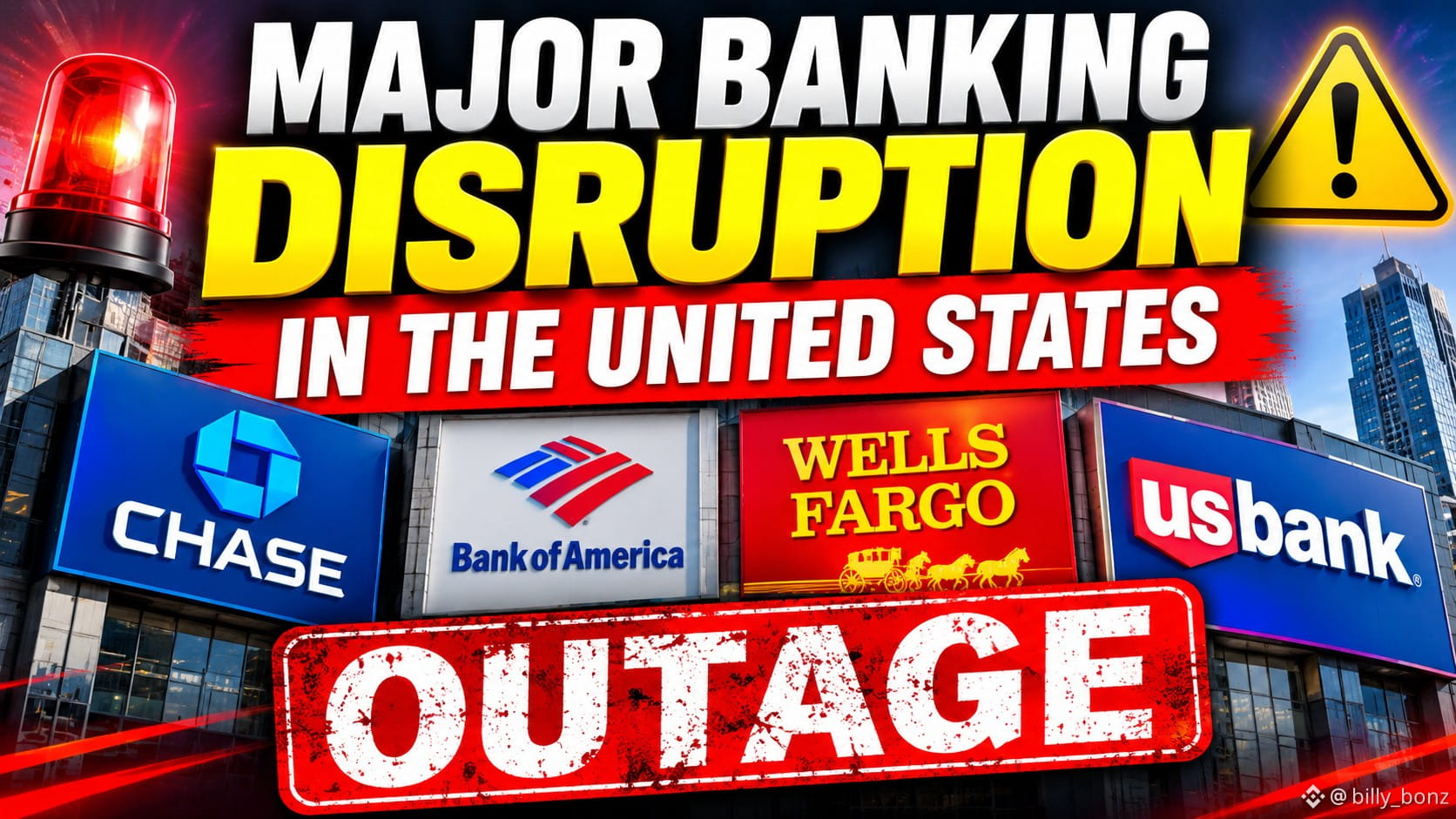
🚨 MAJOR BANKING DISRUPTION IN THE UNITED STATES: WHAT IS HAPPENING?

Several major U.S. banks, including Chase, Bank of America, Wells Fargo and U.S. Bank, are experiencing widespread service disruptions.

Thousands of customers have reported difficulties accessing their accounts, checking balances and completing transfers.

⚠️ Why does this matter?

When multiple major financial institutions experience technical problems at the same time, it raises serious questions about the resilience of the traditional banking infrastructure.

Here's what we know so far:

🔹 Multiple banking platforms are affected.
🔹 Customers are reporting login and transaction issues.
🔹 Chase has attributed its disruption to a technical problem, not a cyberattack.
🔹 The cause of the wider disruptions remains unclear.

THE BIGGER QUESTION:

In an increasingly digital financial system, what happens when access to traditional banking suddenly becomes unreliable?

This is where the debate around financial infrastructure, decentralization and blockchain becomes particularly interesting.

But let's be clear: there is currently no confirmed evidence of a coordinated attack or systemic banking collapse.

💬 What do you think? Is this simply a technical failure, or a warning about how vulnerable our financial infrastructure has become?

#Banking #USBanks #WellsFargo #FinancialSystem
HOLD bnb culture:
People keep being scared, and it’s clearly not happening for no reason...
🚨 Three days of consecutive outages in the United States Thursday, November 12: A widespread outage hits Microsoft 365 services. Friday, November 13: The Federal Aviation Administration grounds flights across the United States. Monday, November 16: Reports of online banking outages at major banks, including Bank of America, JPMorgan, and Wells Fargo. Three critical sectors experience technical problems within a short period. Are these just a series of outages, or is something bigger happening that we don’t know about yet? #BankOfAmerica #WellsFargo #JPMorgan
🚨 Three days of consecutive outages in the United States

Thursday, November 12: A widespread outage hits Microsoft 365 services.

Friday, November 13: The Federal Aviation Administration grounds flights across the United States.

Monday, November 16: Reports of online banking outages at major banks, including Bank of America, JPMorgan, and Wells Fargo.

Three critical sectors experience technical problems within a short period.

Are these just a series of outages, or is something bigger happening that we don’t know about yet?

#BankOfAmerica
#WellsFargo
#JPMorgan
Verified
#PolymarketBankFailureBetsDrawFDICConcern What if the prediction market doesn’t just predict a bank failure, but becomes part of the story? Polymarket’s bank-failure contracts have caught the attention of FDIC officials because they create a strange financial feedback loop: traders bet that a bank could fail, those probabilities become publicly visible, and a rapidly growing market could potentially amplify fear around the institution. Bloomberg reports that contracts tied to year-end failures of major banks such as JPMorgan, Wells Fargo and Bank of America had around $76,000 in combined volume, while an earlier group of contracts reached about $591,000. The deeper issue isn't whether a few thousand dollars can bring down a trillion-dollar bank it can't. The real question is what happens when information, speculation and public confidence become tradable assets. Polymarket argues these markets can reveal information that might otherwise remain inside financial institutions, while critics including former FDIC chair Sheila Bair warn that failure-focused contracts could create incentives to spread rumors or intensify panic. Prediction markets were built to measure expectations. Now regulators are asking a much harder question: can measuring fear actually create more fear? #WellsFargo #Polymarket {future}(POLYXUSDT)
#PolymarketBankFailureBetsDrawFDICConcern
What if the prediction market doesn’t just predict a bank failure, but becomes part of the story? Polymarket’s bank-failure contracts have caught the attention of FDIC officials because they create a strange financial feedback loop: traders bet that a bank could fail, those probabilities become publicly visible, and a rapidly growing market could potentially amplify fear around the institution. Bloomberg reports that contracts tied to year-end failures of major banks such as JPMorgan, Wells Fargo and Bank of America had around $76,000 in combined volume, while an earlier group of contracts reached about $591,000. The deeper issue isn't whether a few thousand dollars can bring down a trillion-dollar bank it can't. The real question is what happens when information, speculation and public confidence become tradable assets. Polymarket argues these markets can reveal information that might otherwise remain inside financial institutions, while critics including former FDIC chair Sheila Bair warn that failure-focused contracts could create incentives to spread rumors or intensify panic. Prediction markets were built to measure expectations. Now regulators are asking a much harder question: can measuring fear actually create more fear?
#WellsFargo #Polymarket
·
--
Bullish
Bitcoin Up or Down on November 17?

Bitcoin Up or Down on November 17?

1%Up99%Down
Volume $305,154.84
BTC-0.82%
BLKUS+0.32%
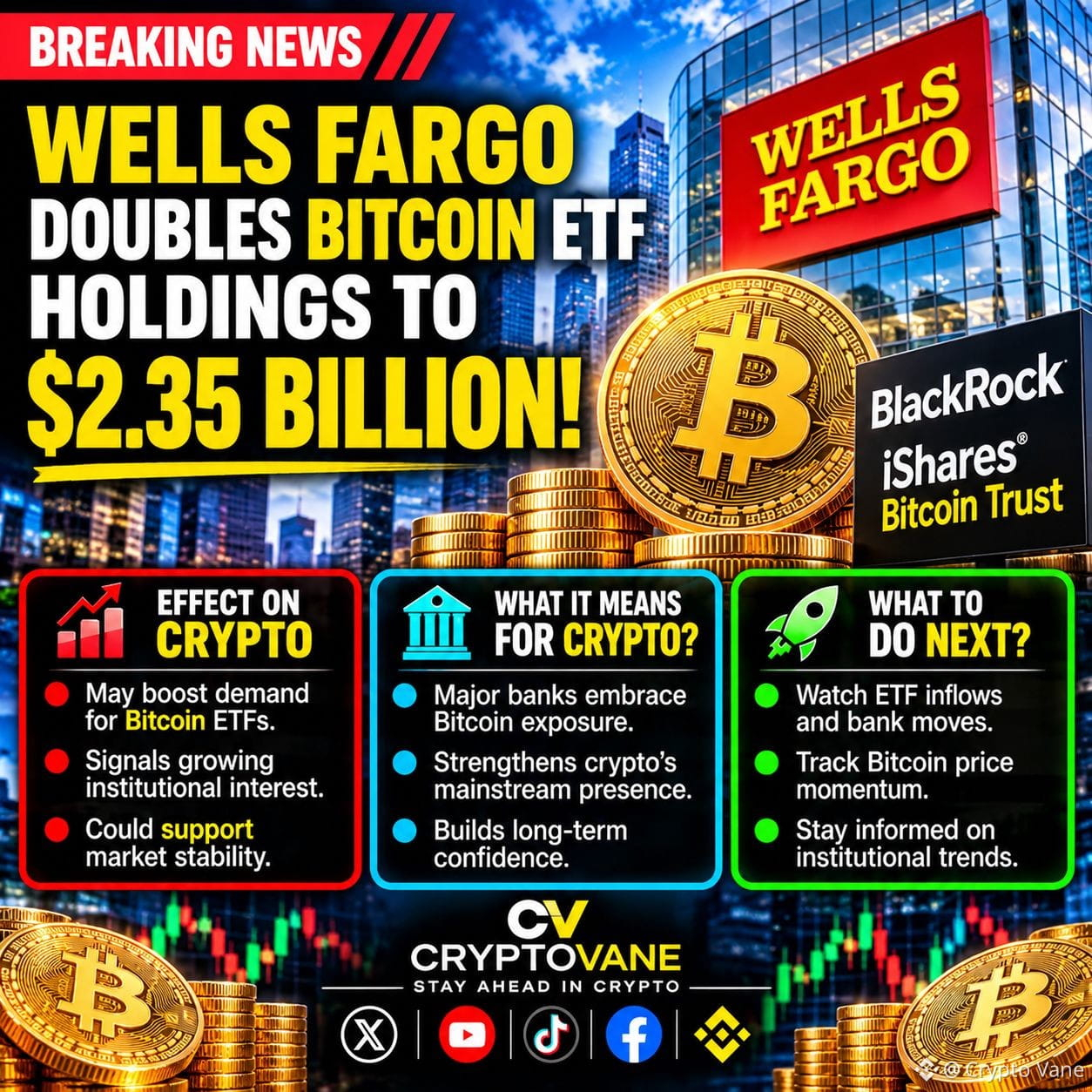
🚨 WELLS FARGO NOW HOLDS $2.35 BILLION IN BITCOIN ETF SHARES! While Bitcoin faces market pressure, one of America's largest banks has significantly increased its reported exposure. According to a new SEC filing published on November 16, Wells Fargo reported holding 49.58 million shares of BlackRock's iShares Bitcoin Trust (IBIT). 📊 HERE ARE THE NUMBERS: 🟢 $2.35 BILLION: Reported value of its IBIT shares. 🟢 49.58 MILLION: Shares held on September 30. 🟢 103%: Increase in its share count compared with June 30. 🟢 28,070 BTC: Approximate Bitcoin exposure represented by those shares. ⚠️ WHY DOES THIS MATTER? Wells Fargo's reported IBIT position increased from approximately $812 million in June to $2.35 billion in September. This suggests growing demand for Bitcoin exposure through traditional financial products. But there is an important detail: These holdings include positions managed for clients. The filing does NOT prove that Wells Fargo invested $2.35 billion of its own money. Also, the figures represent September 30 holdings, not its current position. 🌍 THE BIGGER PICTURE: Traditional financial institutions are increasingly offering customers access to Bitcoin through regulated investment products. Bitcoin adoption is no longer limited to crypto-native companies. 🔥 THE BIG QUESTION: If major banks continue expanding their Bitcoin ETF exposure, could traditional finance become one of Bitcoin's biggest sources of demand? Or is institutional interest too dependent on market conditions? Market sentiment: BULLISH for institutional Bitcoin adoption. 🟢 #Bitcoin #BTC #WellsFargo #BlackRock #CryptoAdoption
🚨 WELLS FARGO NOW HOLDS $2.35 BILLION IN BITCOIN ETF SHARES!

While Bitcoin faces market pressure, one of America's largest banks has significantly increased its reported exposure.

According to a new SEC filing published on November 16, Wells Fargo reported holding 49.58 million shares of BlackRock's iShares Bitcoin Trust (IBIT).

📊 HERE ARE THE NUMBERS:

🟢 $2.35 BILLION: Reported value of its IBIT shares.

🟢 49.58 MILLION: Shares held on September 30.

🟢 103%: Increase in its share count compared with June 30.

🟢 28,070 BTC: Approximate Bitcoin exposure represented by those shares.

⚠️ WHY DOES THIS MATTER?

Wells Fargo's reported IBIT position increased from approximately $812 million in June to $2.35 billion in September.

This suggests growing demand for Bitcoin exposure through traditional financial products.

But there is an important detail:

These holdings include positions managed for clients. The filing does NOT prove that Wells Fargo invested $2.35 billion of its own money.

Also, the figures represent September 30 holdings, not its current position.

🌍 THE BIGGER PICTURE:

Traditional financial institutions are increasingly offering customers access to Bitcoin through regulated investment products.

Bitcoin adoption is no longer limited to crypto-native companies.

🔥 THE BIG QUESTION:

If major banks continue expanding their Bitcoin ETF exposure, could traditional finance become one of Bitcoin's biggest sources of demand?

Or is institutional interest too dependent on market conditions?

Market sentiment: BULLISH for institutional Bitcoin adoption. 🟢

#Bitcoin #BTC #WellsFargo #BlackRock #CryptoAdoption

BTC-0.82%
IBITETF-0.09%
BLKUS+0.32%
🔥 #JPMorgan , #Citi and #WellsFargo are transitioning to stablecoins The payment service #Zelle is preparing to launch international transfers in stablecoins Banks will start competing with crypto projects for mass blockchain payments👨‍💻
🔥 #JPMorgan , #Citi and #WellsFargo are transitioning to stablecoins

The payment service #Zelle is preparing to launch international transfers in stablecoins

Banks will start competing with crypto projects for mass blockchain payments👨‍💻
Log in to explore more content
Join global crypto users on Binance Square
⚡️ Get latest and useful information about crypto.
💬 Trusted by the world’s largest crypto exchange.
👍 Discover real insights from verified creators.
Email / Phone number