
#futurestradingtips
futurestradingtips
56,962 views
115 Discussing
Hot
Latest

·
--
Bullish
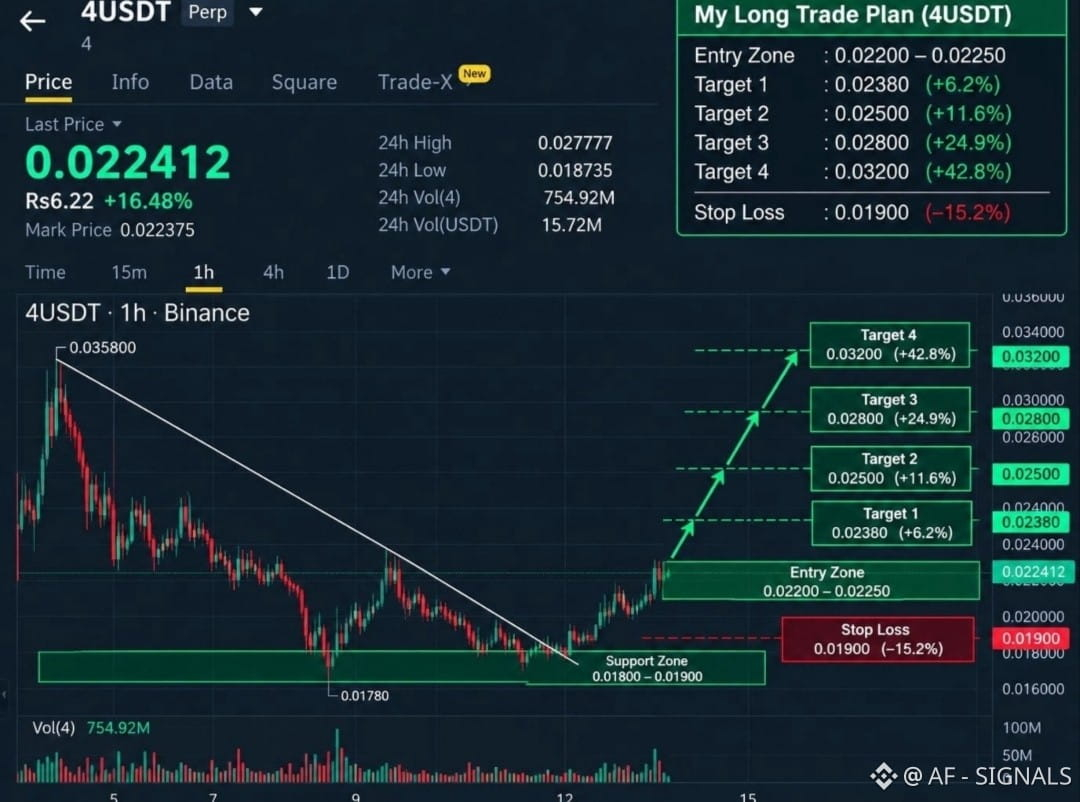
🚀 HIGH-CONVICTION LONG SETUP: $4 🚀
It is building solid bullish momentum, signaling a potential upward expansion. If price respects the entry zone, this setup presents a high-reward trade with structured targets.
Trade Execution Details
Direction: Long 🟢
Entry Zone: $0.0220 – $0.0224
Leverage: Up to 20x (Isolated)
Take-Profit (TP) Targets
TP 1: $0.0232 (Partial Profit & Move SL to Breakeven)
TP 2: $0.0240
TP 3: $0.0250 (Final Target)
Risk Management
Stop Loss (SL): $0.0212 (Strict Exit)
Risk/Reward Ratio: ~2.5+
Recommended Position Size: 2%–3% max wallet risk
⚠️ Always practice strict risk management. Secure partial profits at TP1 and adjust your stop loss to protect capital!
What's your outlook on $4 —are you entering this long or waiting for a pullback? Let me know below! 👇
#CryptoSignals #futurestradingtips #TradingSetup2026 #CryptoAnalysis
Trade it now:
$4
{future}(4USDT)
🚀 HIGH-CONVICTION LONG SETUP: $4 🚀
It is building solid bullish momentum, signaling a potential upward expansion. If price respects the entry zone, this setup presents a high-reward trade with structured targets.
Trade Execution Details
Direction: Long 🟢
Entry Zone: $0.0220 – $0.0224
Leverage: Up to 20x (Isolated)
Take-Profit (TP) Targets
TP 1: $0.0232 (Partial Profit & Move SL to Breakeven)
TP 2: $0.0240
TP 3: $0.0250 (Final Target)
Risk Management
Stop Loss (SL): $0.0212 (Strict Exit)
Risk/Reward Ratio: ~2.5+
Recommended Position Size: 2%–3% max wallet risk
⚠️ Always practice strict risk management. Secure partial profits at TP1 and adjust your stop loss to protect capital!
What's your outlook on $4 —are you entering this long or waiting for a pullback? Let me know below! 👇
#CryptoSignals #futurestradingtips #TradingSetup2026 #CryptoAnalysis
Trade it now:
$4
2
325

We saw a massive bloodbath yesterday with $1B in liquidations. The market is scared, but that is usually when the best setups appear.
{future}(BTCUSDT)
{future}(ETHUSDT)
{future}(SOLUSDT)
Where do we go from here? 👇
Vote below and let me know your target in the comments! 👇
#cryptouniverseofficial #futurestradingtips
$BTC $ETH $SOL
We saw a massive bloodbath yesterday with $1B in liquidations. The market is scared, but that is usually when the best setups appear.
Where do we go from here? 👇
Vote below and let me know your target in the comments! 👇
#cryptouniverseofficial #futurestradingtips
$BTC $ETH $SOL
Where do we go from here? 👇
Vote below and let me know your target in the comments! 👇
#cryptouniverseofficial #futurestradingtips
$BTC $ETH $SOL
🟢 BTC reclaims $76,000 Bounce
63%
🔴 BTC drops to $70,000 Fall
37%
16 votes • Voting closed
1
372

$H/USDT$H
$H Showing Recovery Momentum After Violent Sell-Off — Bulls Attempting Short-Term Trend Reversal
H has entered an important recovery phase after experiencing a sharp 16% correction earlier in the session. After hitting a deep intraday low near 0.04600, buyers stepped in aggressively and initiated a strong rebound, pushing price back toward critical short-term resistance zones.
Unlike previous charts, market structure here is showing early signs of momentum recovery, but bulls still need confirmation before a complete trend reversal can be trusted.
Complete Technical Breakdown
Market Structure Analysis
• Price formed a sharp rebound from major intraday low at 0.04600
→ Buyers defended lower demand zone aggressively, signaling active accumulation.
Moving Average Structure
• Price has successfully reclaimed MA(7) and MA(25)
• Price still trading below MA(99)
→ Short-term recovery active, but larger trend remains under pressure.
EMA Momentum Analysis
• EMA(7) now below current price and acting as dynamic support
• EMA(25) being tested during recovery
• EMA(99) remains overhead resistance
→ Momentum shifting bullish in short-term structure.
Supertrend Analysis
• Supertrend still above current price around 0.06668
→ Trend reversal not fully confirmed. Bulls need breakout above supertrend resistance.
Bollinger Band Structure
• Price rebounded strongly from lower Bollinger Band compression zone
• Candle expansion now moving toward middle and upper Bollinger region
→ Volatility expanding upward.
RSI Momentum Reading
• RSI(6): 68.01
→ Buyers have pushed momentum near overbought territory. Strong bullish pressure visible, but short-term pullback risk increasing.
MACD Signal
• Positive MACD histogram forming
• DIF beginning bullish crossover against DEA
→ Momentum reversal signal developing.
Volume Analysis
• Strong buyer-side recovery volume entered after deep correction
→ Suggests accumulation phase may be forming after panic sell-off.
Critical Trading Zones
Support Levels
• Immediate Support: $0.06120
• Secondary Support: $0.05800
• Major Demand Zone: $0.05280
Resistance Levels
• Immediate Resistance: $0.06450
• Major Resistance: $0.06668 (Supertrend Barrier)
• Breakout Resistance: $0.07020 – $0.07890
Bullish Continuation Setup (Preferred Setup)
Long Entry: 0.06280 – 0.06340
Take Profit 1: 0.06450
Take Profit 2: 0.06668
Take Profit 3: 0.07020
Stop Loss: 0.06050
Confirmation Needed:
• Break above supertrend resistance
• Sustained positive MACD crossover
• RSI holding above 60
Bearish Rejection Setup
Short Entry: Rejection near 0.06668 zone
Take Profit 1: 0.06150
Take Profit 2: 0.05800
Take Profit 3: 0.05280
Stop Loss: 0.06780
Confirmation Needed:
• RSI rejection from overbought area
• MACD weakening
• Failure to hold MA(7)
Market Outlook
H is showing the first real signs of recovery after heavy liquidation pressure earlier in the session.
Momentum indicators are improving, but price remains trapped below major supertrend and higher moving average resistance.
If bulls break above 0.06668, market sentiment could shift aggressively bullish.
Failure at resistance may trigger another corrective wave.
This is one of the more interesting recovery setups on lower timeframes right now.
#HUSDT #CryptoTrading #TechnicalAnalysis #BİNANCESQUARE #futurestradingtips
$H/USDT
$H
$H Showing Recovery Momentum After Violent Sell-Off — Bulls Attempting Short-Term Trend Reversal
H has entered an important recovery phase after experiencing a sharp 16% correction earlier in the session. After hitting a deep intraday low near 0.04600, buyers stepped in aggressively and initiated a strong rebound, pushing price back toward critical short-term resistance zones.
Unlike previous charts, market structure here is showing early signs of momentum recovery, but bulls still need confirmation before a complete trend reversal can be trusted.
Complete Technical Breakdown
Market Structure Analysis
• Price formed a sharp rebound from major intraday low at 0.04600
→ Buyers defended lower demand zone aggressively, signaling active accumulation.
Moving Average Structure
• Price has successfully reclaimed MA(7) and MA(25)
• Price still trading below MA(99)
→ Short-term recovery active, but larger trend remains under pressure.
EMA Momentum Analysis
• EMA(7) now below current price and acting as dynamic support
• EMA(25) being tested during recovery
• EMA(99) remains overhead resistance
→ Momentum shifting bullish in short-term structure.
Supertrend Analysis
• Supertrend still above current price around 0.06668
→ Trend reversal not fully confirmed. Bulls need breakout above supertrend resistance.
Bollinger Band Structure
• Price rebounded strongly from lower Bollinger Band compression zone
• Candle expansion now moving toward middle and upper Bollinger region
→ Volatility expanding upward.
RSI Momentum Reading
• RSI(6): 68.01
→ Buyers have pushed momentum near overbought territory. Strong bullish pressure visible, but short-term pullback risk increasing.
MACD Signal
• Positive MACD histogram forming
• DIF beginning bullish crossover against DEA
→ Momentum reversal signal developing.
Volume Analysis
• Strong buyer-side recovery volume entered after deep correction
→ Suggests accumulation phase may be forming after panic sell-off.
Critical Trading Zones
Support Levels
• Immediate Support: $0.06120
• Secondary Support: $0.05800
• Major Demand Zone: $0.05280
Resistance Levels
• Immediate Resistance: $0.06450
• Major Resistance: $0.06668 (Supertrend Barrier)
• Breakout Resistance: $0.07020 – $0.07890
Bullish Continuation Setup (Preferred Setup)
Long Entry: 0.06280 – 0.06340
Take Profit 1: 0.06450
Take Profit 2: 0.06668
Take Profit 3: 0.07020
Stop Loss: 0.06050
Confirmation Needed:
• Break above supertrend resistance
• Sustained positive MACD crossover
• RSI holding above 60
Bearish Rejection Setup
Short Entry: Rejection near 0.06668 zone
Take Profit 1: 0.06150
Take Profit 2: 0.05800
Take Profit 3: 0.05280
Stop Loss: 0.06780
Confirmation Needed:
• RSI rejection from overbought area
• MACD weakening
• Failure to hold MA(7)
Market Outlook
H is showing the first real signs of recovery after heavy liquidation pressure earlier in the session.
Momentum indicators are improving, but price remains trapped below major supertrend and higher moving average resistance.
If bulls break above 0.06668, market sentiment could shift aggressively bullish.
Failure at resistance may trigger another corrective wave.
This is one of the more interesting recovery setups on lower timeframes right now.
#HUSDT #CryptoTrading #TechnicalAnalysis #BİNANCESQUARE #futurestradingtips
263

Spot Allocation vs. Futures Contracts: Understanding the Basics 💡
🟢 Spot: You hold the underlying asset directly, lower liquidation exposure, suitable for long-term vision.
🔴 Futures: Involves leverage and higher volatility, requiring strict risk control.
If you are new to the market, starting with Spot and learning chart mechanics is usually recommended.
(Disclaimer: Educational content. #SpotTradingSuccess #futurestradingtips #CryptoBasics #DYOR🟢
92

·
--
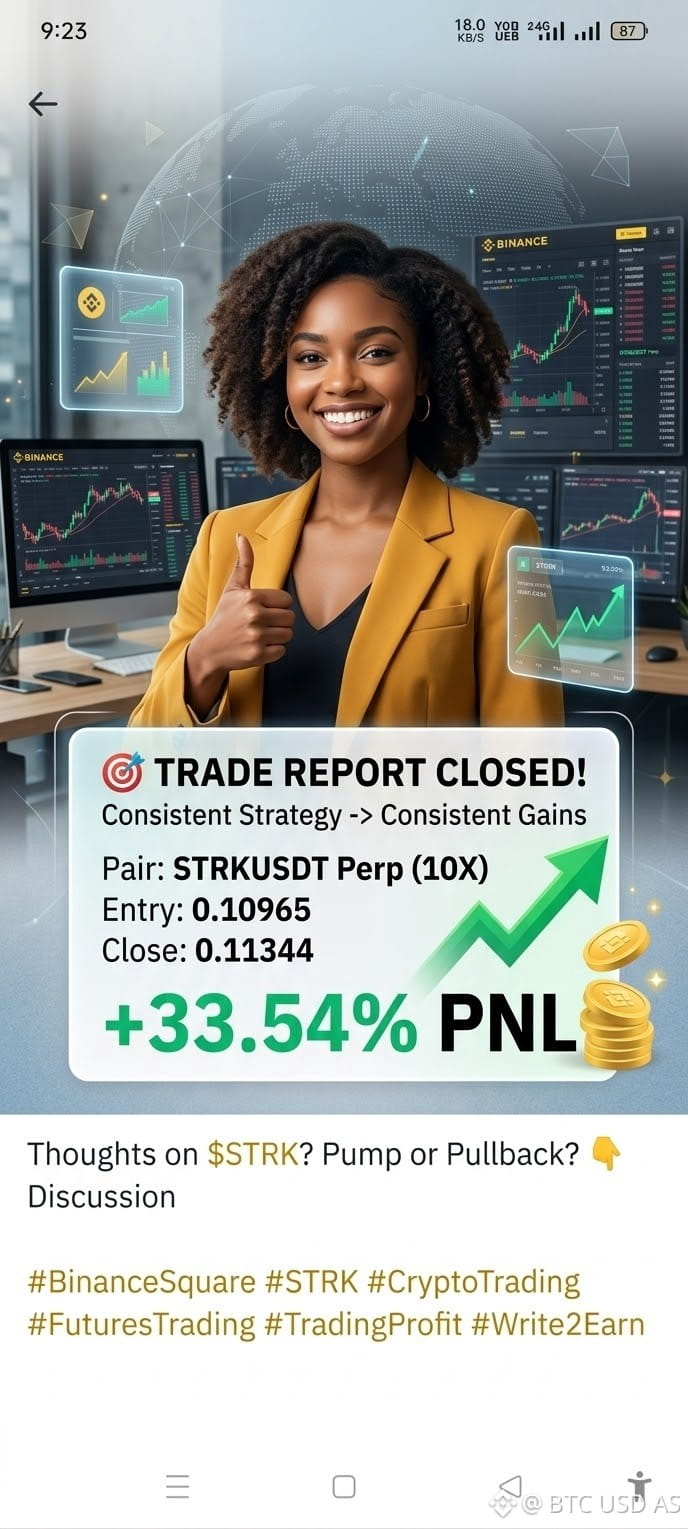
🎯 Another Successful Trade Closed! 🚀
Consistent moves lead to consistent gains. Just closed my STRK/USDT Perpetual trade with a +33.54% profit! 📈💰
Pair: STRKUSDT Perp (10X)
Entry Price: 0.10965
Close Price: 0.11344
Result: +33.54% PNL
Patience and sticking to a solid strategy always pay off in the crypto market.
What are your thoughts on $STRK right now? Is it ready for another pump, or are you waiting for a pullback? Let's discuss in the comments below! 👇
#BinanceSquareFamily #strax今天下午代币置换完成✅ #CryptoPatience #futurestradingtips #Write2Earn
237

·
--
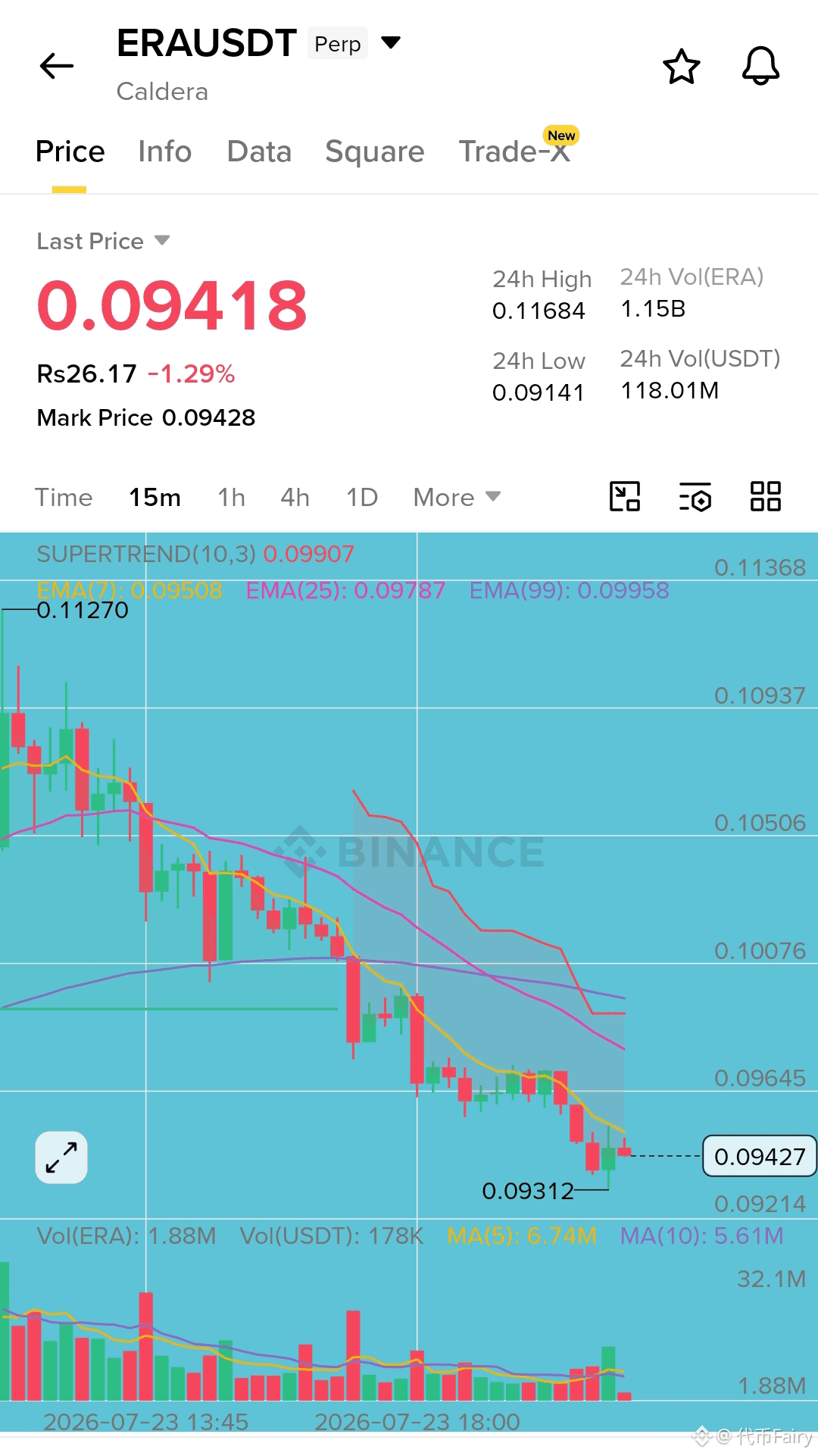
💥 🚨CRYPTO FAMS 👫 Im Taking a SHORT on $ERA 📉💥
🔻 Entry: 0.0940 – 0.0955
🎯 TP1: 0.0920
🎯 TP2: 0.0900
🎯 TP3: 0.0875
🛑 Stop Loss: 0.0978
⚠️ Trade with proper risk management. Never risk more than you can afford to lose.
$SYN $SUI
#cryptotrading #BinanceSquareTalks #futurestradingtips
💥 🚨CRYPTO FAMS 👫 Im Taking a SHORT on $ERA 📉💥
🔻 Entry: 0.0940 – 0.0955
🎯 TP1: 0.0920
🎯 TP2: 0.0900
🎯 TP3: 0.0875
🛑 Stop Loss: 0.0978
⚠️ Trade with proper risk management. Never risk more than you can afford to lose.
$SYN $SUI
#cryptotrading #BinanceSquareTalks #futurestradingtips
🔻 Entry: 0.0940 – 0.0955
🎯 TP1: 0.0920
🎯 TP2: 0.0900
🎯 TP3: 0.0875
🛑 Stop Loss: 0.0978
⚠️ Trade with proper risk management. Never risk more than you can afford to lose.
$SYN $SUI
#cryptotrading #BinanceSquareTalks #futurestradingtips
200

·
--
$EUL — SHORT 📉⚡
That long squeeze looks exhausted. Sellers are stepping in, and a pullback could be next. 👀
🔻 Entry: $1.440 – $1.455
🎯 TP1: $1.425
🎯 TP2: $1.405
🎯 TP3: $1.385
🛑 SL: $1.495
Current Price: $1.4426
Stay patient for confirmation. Risk management first, profits second. 🔥
Trade $EUL Here 👇
#EUL #EULUSDT #futurestradingtips #ShortSetup
77

·
--
BTC bears are eating today 🐻🔥
The weakness was visible… and the short setup delivered.
My BTCUSDC Perp Short:
🎯 Entry: 66,482
📉 Price now: 64,512
💰 +191 USDT (+79%) PNL
⚡ 26X leverage
Sometimes the best trade is waiting for the market to show its hand.
Stay disciplined. The market rewards patience, not FOMO.
#SECChairAtkinsReformsIPOAccess #VanceDeclaresUSGoalsInIranAchieved #futurestradingtips
61

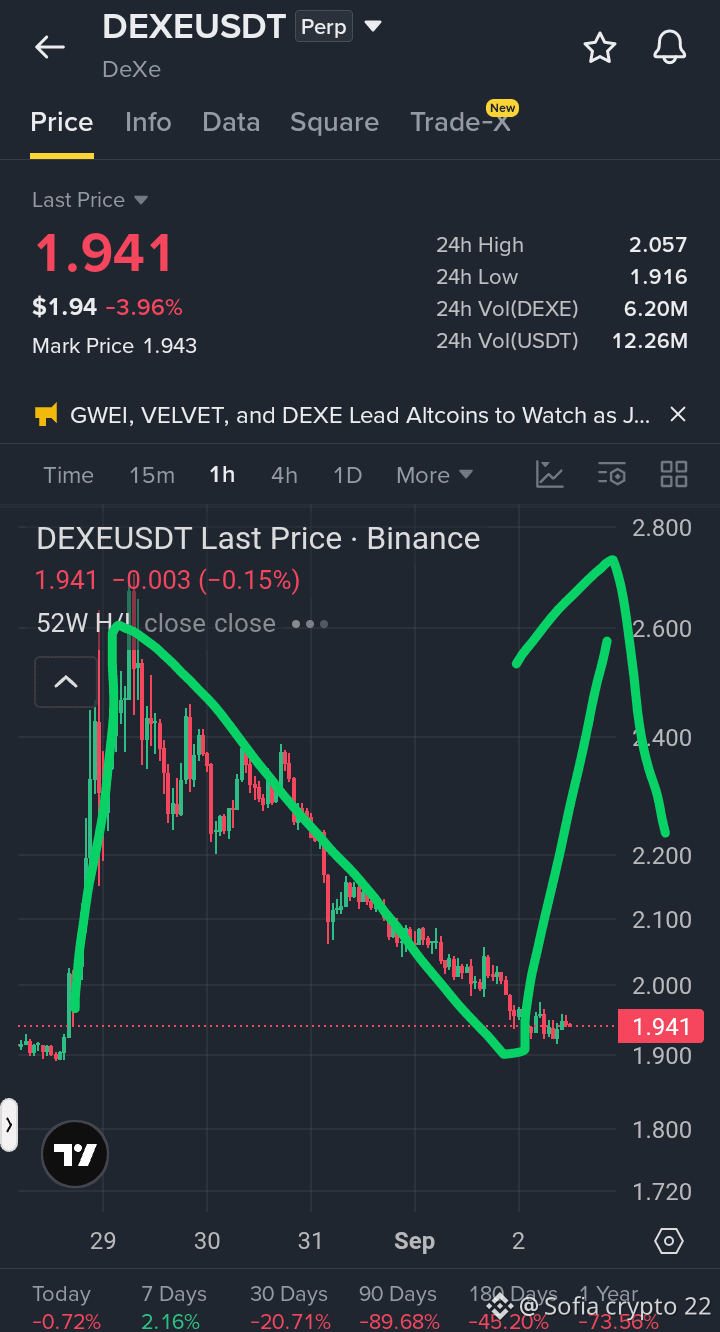
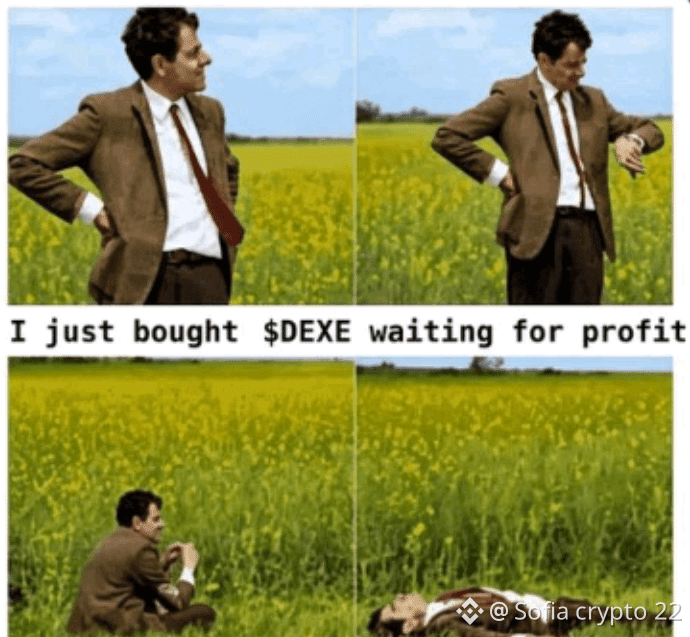
🚀 $DEXE LONG — POSITION TAKEN!
$DEXE I’ve taken the trade and now we wait for the pump 📈🔥
📍 Entry: ~1.94
🎯 TP: 2.05 / 2.20
🛑 SL: 1.89
📊 Type: LONG
Let’s see $DEXE wake up! 🚀💰
#DEXE #futurestradingtips #CryptoPatience #TradingStrategies💼💰
{spot}(DEXEUSDT)
🚀 $DEXE LONG — POSITION TAKEN!
$DEXE I’ve taken the trade and now we wait for the pump 📈🔥
📍 Entry: ~1.94
🎯 TP: 2.05 / 2.20
🛑 SL: 1.89
📊 Type: LONG
Let’s see $DEXE wake up! 🚀💰
#DEXE #futurestradingtips #CryptoPatience #TradingStrategies💼💰
$DEXE I’ve taken the trade and now we wait for the pump 📈🔥
📍 Entry: ~1.94
🎯 TP: 2.05 / 2.20
🛑 SL: 1.89
📊 Type: LONG
Let’s see $DEXE wake up! 🚀💰
#DEXE #futurestradingtips #CryptoPatience #TradingStrategies💼💰
1
200

·
--

Article
Spot Trading vs Futures Trading: What's the Difference? A Beginner's GuideIf you're new to cryptocurrency, you've probably seen two popular terms: Spot Trading and Futures Trading.
Both allow people to participate in crypto markets, but they work very differently.
Understanding these differences is important because one involves owning cryptocurrency, while the other involves trading contracts based on cryptocurrency prices.
Let's break it down simply. 👇
1. What Is Spot Trading?
Spot trading is the direct buying and selling of cryptocurrencies.
When you purchase Bitcoin through the spot market, you actually receive Bitcoin in your exchange account or wallet.
For example:
Imagine you purchase $100 worth of Bitcoin.
You pay $100.You receive the equivalent amount of BTC, minus applicable fees.If Bitcoin's price increases, your holdings become more valuable.If Bitcoin's price decreases, your holdings lose value.
There is no leverage in ordinary spot trading.
You own the cryptocurrency you purchased, although you should also understand the custody risks involved when keeping assets on an exchange.
2. What Is Futures Trading?
Futures trading is different.
Instead of directly purchasing a cryptocurrency, you trade a contract whose value is linked to the cryptocurrency's price.
For example:
Imagine you open a Bitcoin futures position using $100 as margin with 10x leverage.
Your position has approximately $1,000 in exposure.
This means:
A 1% favourable price movement could produce approximately 10% profit relative to your initial margin.A 1% unfavourable price movement could produce approximately 10% loss relative to your initial margin.
These are simplified examples before trading fees, funding payments and other costs.
Futures trading also allows traders to take long or short positions.
However, leverage magnifies losses just as much as potential gains. If the market moves against a position sufficiently, liquidation can occur.
3. Spot vs Futures: Key Differences
FeatureSpot TradingFutures TradingOwnershipOwn the crypto asset Hold a contract Leverage No leverage in ordinary spotLeverage availableLiquidationNo margin liquidationLiquidation possibleMarket directionBenefits from price increases when holdingLong and short exposureComplexityGenerally simplerMore complexRiskMarket and custody risks Market, leverage and liquidation risks
4. Which Is More Suitable for Beginners?
Spot trading is generally easier to understand because you purchase an actual cryptocurrency without borrowing funds or using leverage.
Futures trading requires a deeper understanding of:
Leverage and marginLiquidation pricesFunding ratesPosition sizingRisk management
A common mistake beginners make is focusing on potential profits without understanding how quickly leveraged positions can lose value.
Remember: A small market movement can have a much larger impact on a leveraged position.
5. An Important Lesson About Leverage
Let's use a simple example.
You have $100.
With 1x exposure, a 5% price movement against your position represents approximately a $5 loss.
With 10x exposure and $100 initial margin, a 5% adverse price movement represents approximately a $50 loss, before fees and funding.
At higher leverage, liquidation can occur before the full adverse price movement is reached.
This is why understanding leverage matters before even considering futures trading.
6. Final Thoughts
Spot and futures trading serve different purposes in cryptocurrency markets.
Spot trading provides direct ownership of digital assets, while futures provide exposure through derivative contracts.
Neither guarantees profits.
Before participating in either market, take time to understand the mechanics, costs and risks.
Education should always come before trading.
💬 Let's discuss!
If you're new to cryptocurrency, which concept would you like explained next?
Spot TradingFutures TradingUnderstanding LeverageReading Bitcoin Charts
Share your thoughts below!
#cryptoeducation #SpotTrading. #futurestradingtips #CryptoForBeginners #BinanceSquare
Spot Trading vs Futures Trading: What's the Difference? A Beginner's Guide
If you're new to cryptocurrency, you've probably seen two popular terms: Spot Trading and Futures Trading.
Both allow people to participate in crypto markets, but they work very differently.
Understanding these differences is important because one involves owning cryptocurrency, while the other involves trading contracts based on cryptocurrency prices.
Let's break it down simply. 👇
1. What Is Spot Trading?
Spot trading is the direct buying and selling of cryptocurrencies.
When you purchase Bitcoin through the spot market, you actually receive Bitcoin in your exchange account or wallet.
For example:
Imagine you purchase $100 worth of Bitcoin.
You pay $100.You receive the equivalent amount of BTC, minus applicable fees.If Bitcoin's price increases, your holdings become more valuable.If Bitcoin's price decreases, your holdings lose value.
There is no leverage in ordinary spot trading.
You own the cryptocurrency you purchased, although you should also understand the custody risks involved when keeping assets on an exchange.
2. What Is Futures Trading?
Futures trading is different.
Instead of directly purchasing a cryptocurrency, you trade a contract whose value is linked to the cryptocurrency's price.
For example:
Imagine you open a Bitcoin futures position using $100 as margin with 10x leverage.
Your position has approximately $1,000 in exposure.
This means:
A 1% favourable price movement could produce approximately 10% profit relative to your initial margin.A 1% unfavourable price movement could produce approximately 10% loss relative to your initial margin.
These are simplified examples before trading fees, funding payments and other costs.
Futures trading also allows traders to take long or short positions.
However, leverage magnifies losses just as much as potential gains. If the market moves against a position sufficiently, liquidation can occur.
3. Spot vs Futures: Key Differences
FeatureSpot TradingFutures TradingOwnershipOwn the crypto asset Hold a contract Leverage No leverage in ordinary spotLeverage availableLiquidationNo margin liquidationLiquidation possibleMarket directionBenefits from price increases when holdingLong and short exposureComplexityGenerally simplerMore complexRiskMarket and custody risks Market, leverage and liquidation risks
4. Which Is More Suitable for Beginners?
Spot trading is generally easier to understand because you purchase an actual cryptocurrency without borrowing funds or using leverage.
Futures trading requires a deeper understanding of:
Leverage and marginLiquidation pricesFunding ratesPosition sizingRisk management
A common mistake beginners make is focusing on potential profits without understanding how quickly leveraged positions can lose value.
Remember: A small market movement can have a much larger impact on a leveraged position.
5. An Important Lesson About Leverage
Let's use a simple example.
You have $100.
With 1x exposure, a 5% price movement against your position represents approximately a $5 loss.
With 10x exposure and $100 initial margin, a 5% adverse price movement represents approximately a $50 loss, before fees and funding.
At higher leverage, liquidation can occur before the full adverse price movement is reached.
This is why understanding leverage matters before even considering futures trading.
6. Final Thoughts
Spot and futures trading serve different purposes in cryptocurrency markets.
Spot trading provides direct ownership of digital assets, while futures provide exposure through derivative contracts.
Neither guarantees profits.
Before participating in either market, take time to understand the mechanics, costs and risks.
Education should always come before trading.
💬 Let's discuss!
If you're new to cryptocurrency, which concept would you like explained next?
Spot TradingFutures TradingUnderstanding LeverageReading Bitcoin Charts
Share your thoughts below!
#cryptoeducation #SpotTrading. #futurestradingtips #CryptoForBeginners #BinanceSquare
58


·
--
Bullish
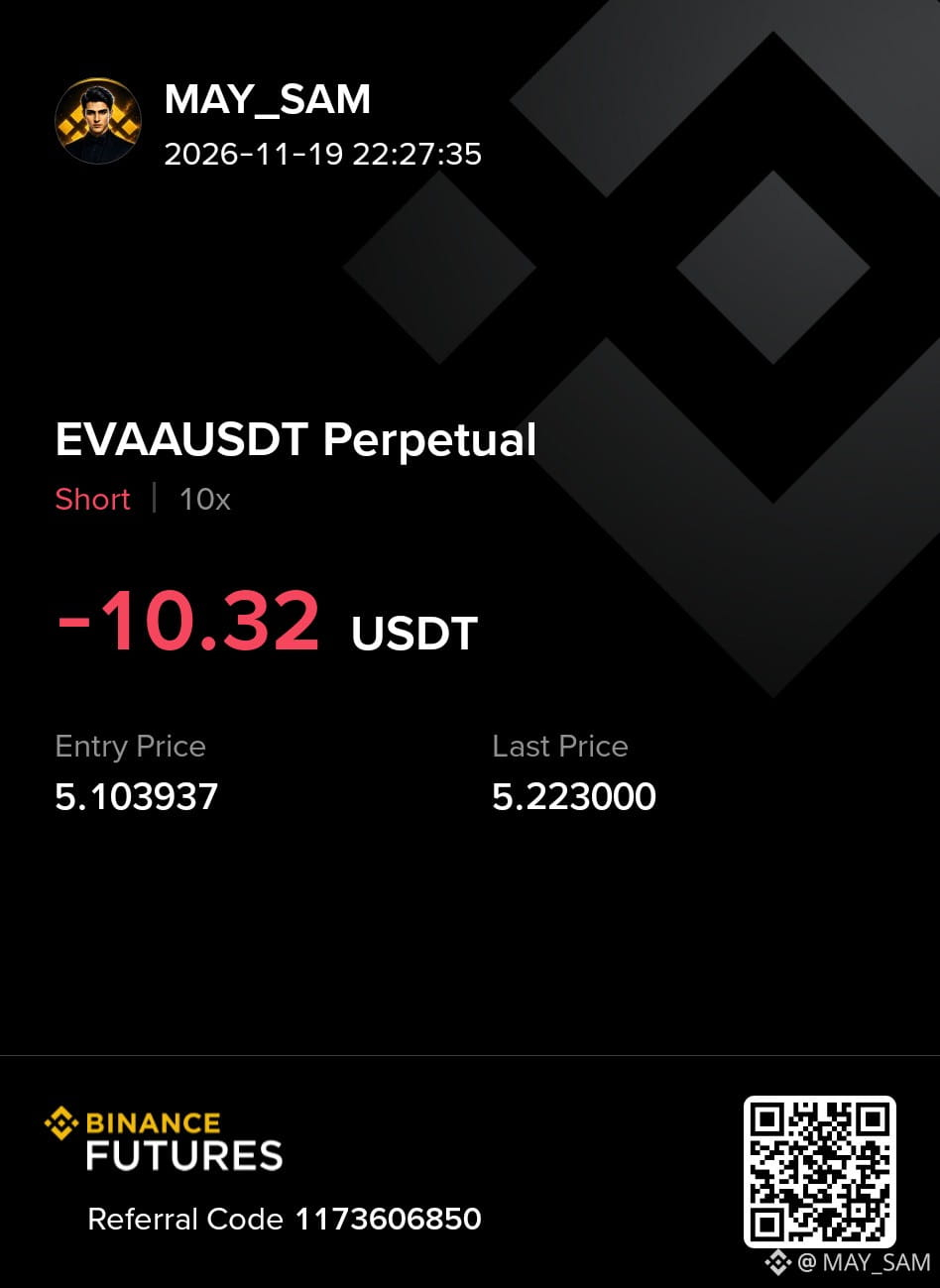
📊 $EVAA USDT PERPETUAL: A Powerful Lesson in Futures Trading & Risk Management
The latest EVAAUSDT position highlights how quickly losses can increase when the market moves against a leveraged short trade.
🔴 Trade Overview:
- Trading Pair: EVAAUSDT
- Position: Short
- Leverage: 10x
- Entry Price: 5.103937 USDT
- Last Price: 5.223000 USDT
- Unrealized P&L: -10.32 USDT
📈 Why Is This Trade in Loss?
A short position makes a profit when the asset price decreases.
In this case, EVAA moved upward from 5.103937 to 5.223000 USDT, moving against the short position and increasing the unrealized loss.
🎯 Important Lessons:
1. Leverage Risk: 10x leverage can amplify the impact of relatively small price movements.
2. Trend Confirmation: Always analyze market momentum before entering a short position.
3. Stop-Loss Protection: Define your maximum acceptable loss before trading.
4. Capital Management: Avoid risking too much capital on a single position.
5. Trading Discipline: Never let emotions control your trading decisions.
💡 The Bigger Lesson:
The crypto market can move against your expectations at any time. A good trader doesn't just focus on making profits; they also know how to protect their capital when a trade goes wrong.
Risk Management Is the Key to Long-Term Survival in Crypto Trading.
{future}(EVAAUSDT)
#EVAAUSD #BinanceFutures #CryptoTrading #futurestradingtips #CryptoMarket
📊 $EVAA USDT PERPETUAL: A Powerful Lesson in Futures Trading & Risk Management
The latest EVAAUSDT position highlights how quickly losses can increase when the market moves against a leveraged short trade.
🔴 Trade Overview:
- Trading Pair: EVAAUSDT
- Position: Short
- Leverage: 10x
- Entry Price: 5.103937 USDT
- Last Price: 5.223000 USDT
- Unrealized P&L: -10.32 USDT
📈 Why Is This Trade in Loss?
A short position makes a profit when the asset price decreases.
In this case, EVAA moved upward from 5.103937 to 5.223000 USDT, moving against the short position and increasing the unrealized loss.
🎯 Important Lessons:
1. Leverage Risk: 10x leverage can amplify the impact of relatively small price movements.
2. Trend Confirmation: Always analyze market momentum before entering a short position.
3. Stop-Loss Protection: Define your maximum acceptable loss before trading.
4. Capital Management: Avoid risking too much capital on a single position.
5. Trading Discipline: Never let emotions control your trading decisions.
💡 The Bigger Lesson:
The crypto market can move against your expectations at any time. A good trader doesn't just focus on making profits; they also know how to protect their capital when a trade goes wrong.
Risk Management Is the Key to Long-Term Survival in Crypto Trading.
#EVAAUSD #BinanceFutures #CryptoTrading #futurestradingtips #CryptoMarket
2
546

📚 Spot vs Futures Trading – Which One Is Better for Beginners?
For those just starting to learn crypto trading, it’s important to understand the difference between Spot and Futures. 💡
🔹 1. Spot Trading
- You truly own the coin you buy.
- You can make a profit when the price rises.
- There’s no risk of liquidation.
🔸 2. Futures Trading
- You can go Long if you think the price will rise.
- You can go Short if you think the price will fall.
- You can use leverage, but you could be liquidated and lose your capital.
✨ My Advice:
If you are a beginner, learn Spot Trading first. Understand the market before taking higher risks.
💬 A quick question.
Which type of trading do you prefer?
A. Spot Trading 🟢
B. Futures Trading 🔴
C. Still Learning 📖
Leave your answer in the comments. 👇
$BTC $ETH $BNB
#CryptoEducation #SpotTradingSuccess #futurestradingtips #CryptoBeginner #BinanceSquare
⚠️ Disclaimer: Educational content only. Not financial advice. Always DYOR.
62

·
--
Bullish
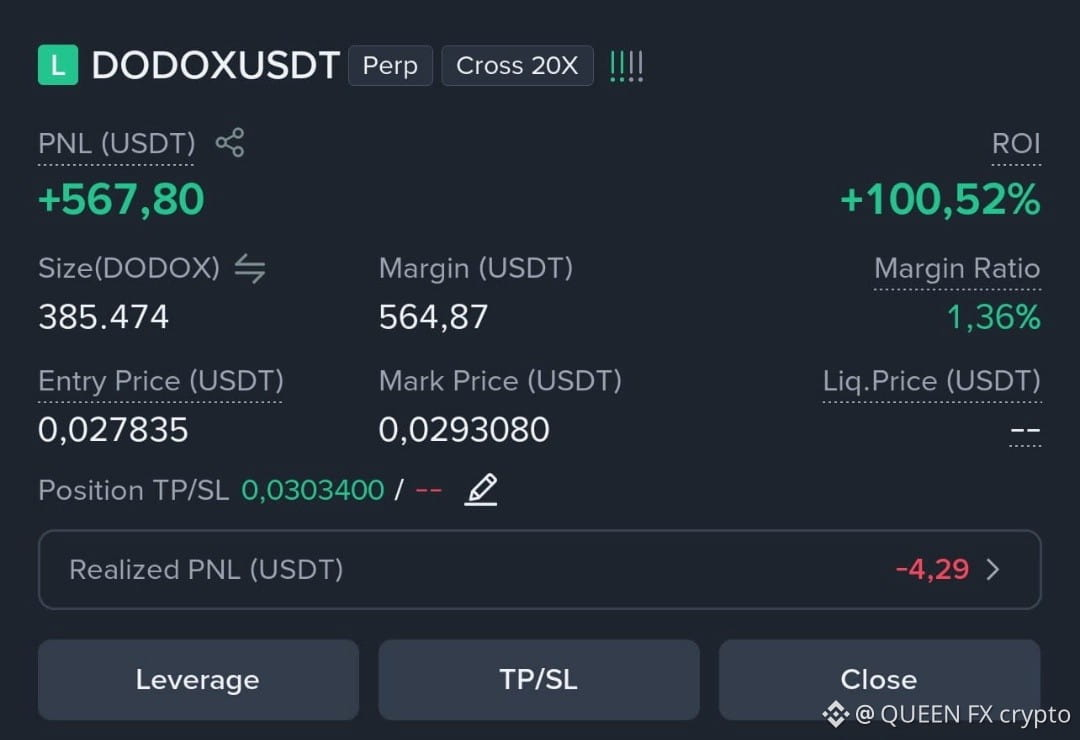
📊🔥 DODOXUSDT | FUTURES POSITION UPDATE
A strong upward move is currently reflected in the DODOXUSDT position.
🟢 Unrealized PNL: +567.80 USDT
📈 ROI: +100.52%
⚡ Leverage: 20X Cross
🎯 Entry Price: 0.027835
📍 Mark Price: 0.0293080
Market momentum remains under observation. Monitoring the position and key price levels before making the next decision.
🔍 Discipline • Patience • Risk Management
⚠️ PNL is unrealized and may change with market conditions. Trading involves significant risk, especially with leverage. DYOR.
#DODOX #CryptoTrading #futurestradingtips #MarketUpdate #BinanceSquareFamily
1
37

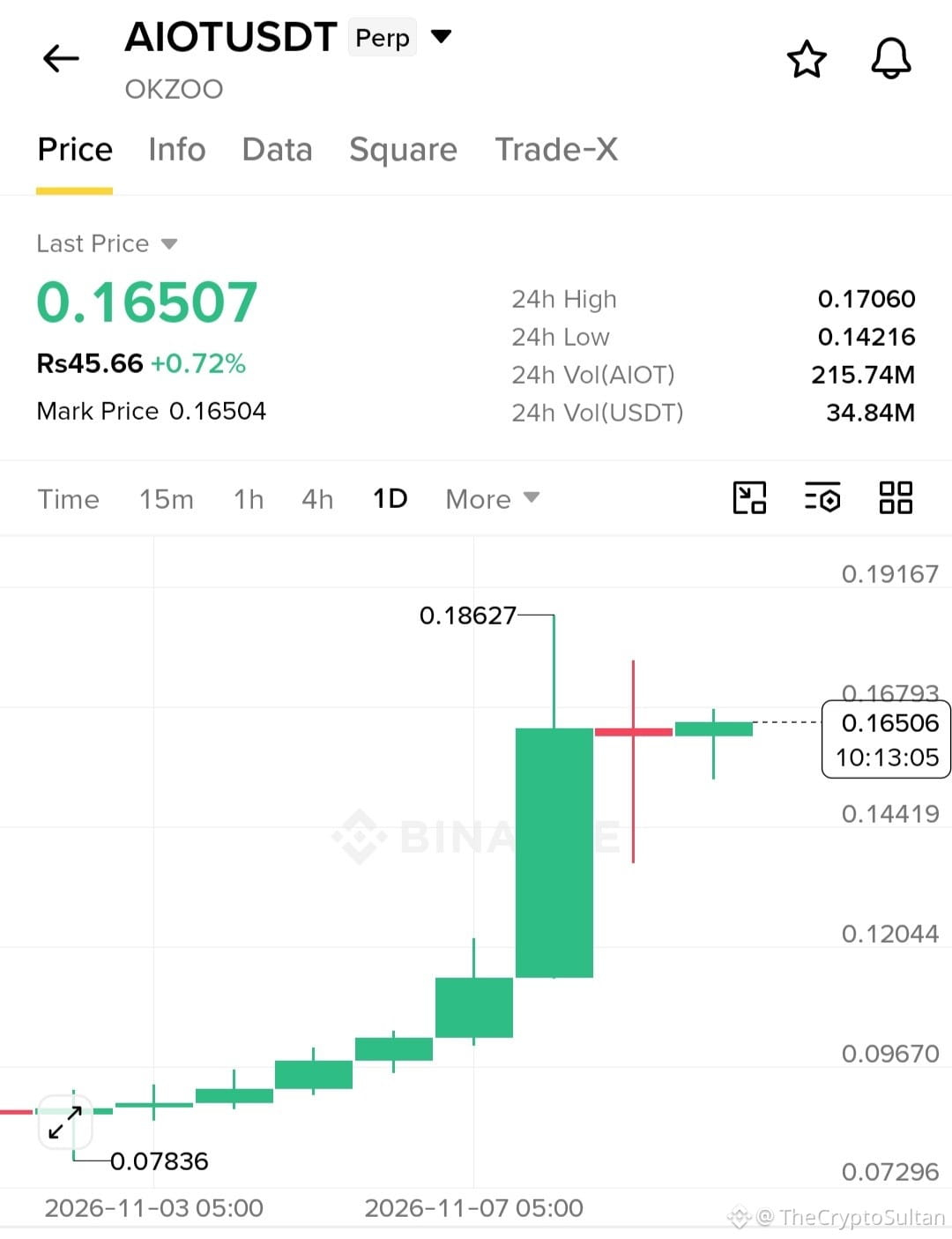
🚀 $AIOT – FUTURES LONG SETUP
$AIOT is showing strong bullish momentum following a significant weekly rally. Buyers are gaining strength, and another upside move could be on the horizon! 📈
📍 Entry Zone: $0.1580 – $0.1630
🎯 TP1: $0.1700
🎯 TP2: $0.1780
🎯 TP3: $0.1880
🛑 Stop Loss: $0.1510
⚡ Leverage: 5x Maximum
📊 Direction: LONG
Key Levels to Watch:
$0.155 remains an important support zone. A confirmed breakout above $0.1774 could trigger further bullish momentum.
Stay disciplined, use proper risk management, and never chase green candles. Trade smart!
#AIOT #AIOTUSDT #CryptoTrading. #futurestradingtips #altcoins
48

·
--
🔴 MARKET WATCH | SHORT OPPORTUNITIES
Hey traders! 👋
Two coins are on our radar after their strong upward moves. We're watching these levels closely for a possible bearish correction. Patience is key — let the market confirm the move.
📉 $BIRB USDT — SHORT SETUP
{future}(BIRBUSDT)
Entry Zone: "0.1030 – 0.1045"
🎯 TP1: "0.1000"
🎯 TP2: "0.0970"
🎯 TP3: "0.0930"
🛑 Stop Loss: "0.1065"
━━━━━━━━━━━━━━━━
📉 $UAI USDT — SHORT SETUP
{future}(UAIUSDT)
Entry Zone: "0.1580 – 0.1620"
🎯 TP1: "0.1500"
🎯 TP2: "0.1430"
🎯 TP3: "0.1350"
🛑 Stop Loss: "0.1725"
💡 A QUICK REMINDER
Don't rush into a trade. Wait for price rejection and bearish confirmation around the entry zones. Manage your risk and secure profits gradually.
Stay calm, stay focused. Let's trade smart! 🤝
#BIRB #UAİ #BinanceReopensWithdrawalsForMoreAssets #CryptoSignalsLive #futurestradingtips
🔴 MARKET WATCH | SHORT OPPORTUNITIES
Hey traders! 👋
Two coins are on our radar after their strong upward moves. We're watching these levels closely for a possible bearish correction. Patience is key — let the market confirm the move.
📉 $BIRB USDT — SHORT SETUP
Entry Zone: "0.1030 – 0.1045"
🎯 TP1: "0.1000"
🎯 TP2: "0.0970"
🎯 TP3: "0.0930"
🛑 Stop Loss: "0.1065"
━━━━━━━━━━━━━━━━
📉 $UAI USDT — SHORT SETUP
Entry Zone: "0.1580 – 0.1620"
🎯 TP1: "0.1500"
🎯 TP2: "0.1430"
🎯 TP3: "0.1350"
🛑 Stop Loss: "0.1725"
💡 A QUICK REMINDER
Don't rush into a trade. Wait for price rejection and bearish confirmation around the entry zones. Manage your risk and secure profits gradually.
Stay calm, stay focused. Let's trade smart! 🤝
#BIRB #UAİ #BinanceReopensWithdrawalsForMoreAssets #CryptoSignalsLive #futurestradingtips
BULLISH
58%
BEARISH
42%
24 votes • Voting closed
1
10
1.2k

·
--
Bullish
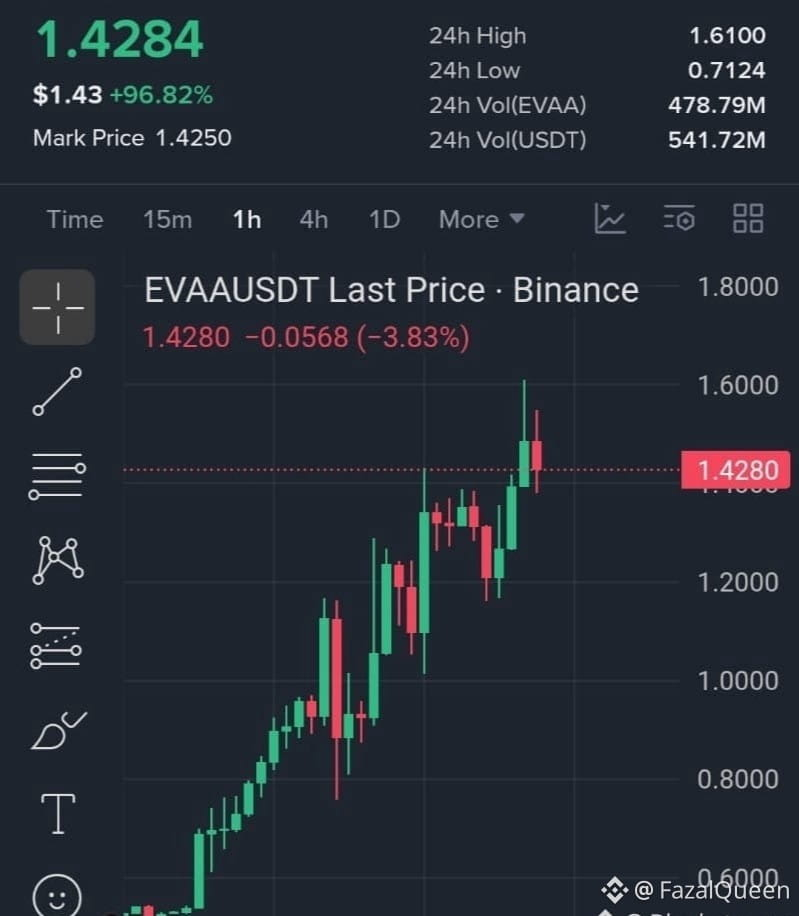
🚀🔥 $EVAA JUST EXPLODED +93% — WHAT'S NEXT?
$EVAA is showing massive momentum on Futures, but is this rally ready to continue or is a sharp pullback coming? ⚠️📈
📊 My 1H Trading Setup:
🎯 TP: $1.6100
🛡️ SL: $1.2200
💰 Current Price: $1.4358
Price touched $1.61 before pulling back toward $1.42, making this a key area to watch.
🟢 Bullish Scenario: If buyers defend the $1.22 support zone, another move toward $1.61 could be possible.
🔴 Bearish Scenario: If momentum fades and support breaks, further downside may follow.
⚠️ Volatility is extremely high, so manage your risk carefully and never trade without a clear plan.
👇 What's your move? Are you going LONG for continuation or SHORT on the pullback?
Share your thoughts below! 🚀🔥
#EVAA #CryptoTradingInsights #futurestradingtips #BinanceSquareTalks
238

·
--
Bearish
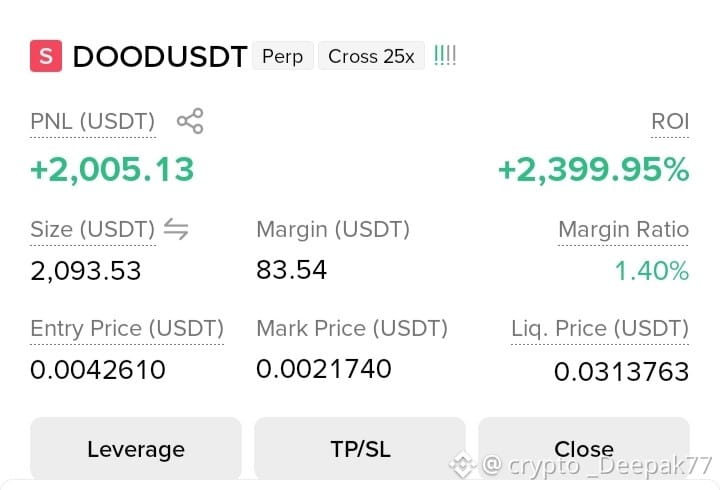
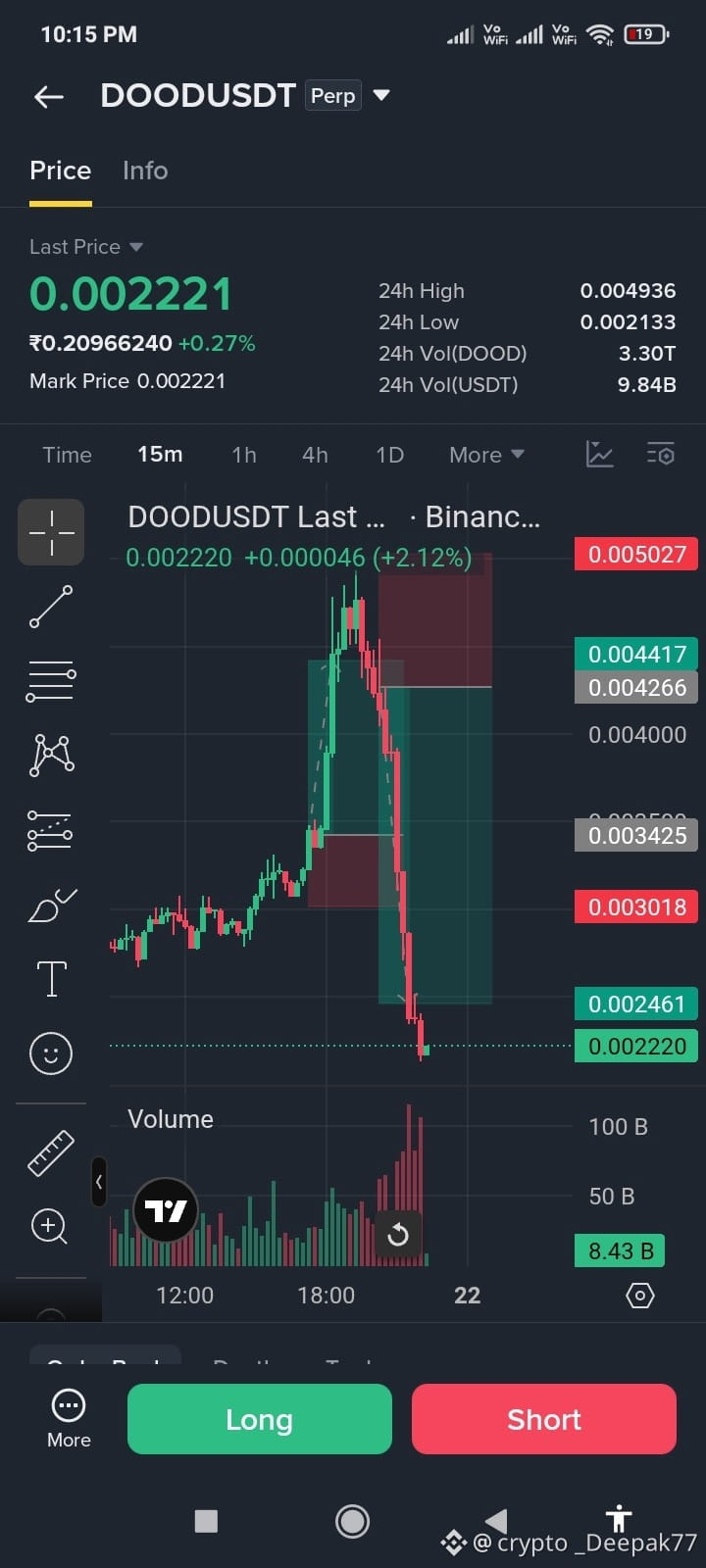
🚨 $DOOD USDT SHORT TRADE — MASSIVE PROFIT! BACK-TO-BACK TP HITS! 📉💰
Think crypto trading is easy? The market rewards those who understand its moves! 😎
🔻 Trade Details: DOODUSDT SHORT 💰 Entry Price: 0.0042610 USDT 📉 Current Price: Around 0.00222 USDT 💵 Profit: +2,005.13 USDT 🚀 ROI: +2,399.95% ⚡ Leverage: 25x
The price dropped massively from 0.0042610 to around 0.00222! 📉🔥
💎 Back-to-back take-profit targets are the mission!
Want to catch more market moves with me? 👀
✅ Follow me for more trade setups and market analysis. 🎯 Let's hunt for the next TP together!
#DOODUSDT #Binance #CryptoTrading. #ShortTrade #TPHit #futurestradingtips #CryptoAnalysis

2
12
30
·
--
Bullish
🚀 $DOOD
{alpha}(560x722294f6c97102fb0ddb5b907c8d16bdeab3f6d9)
USDT +120% | Is Another Pump Coming?
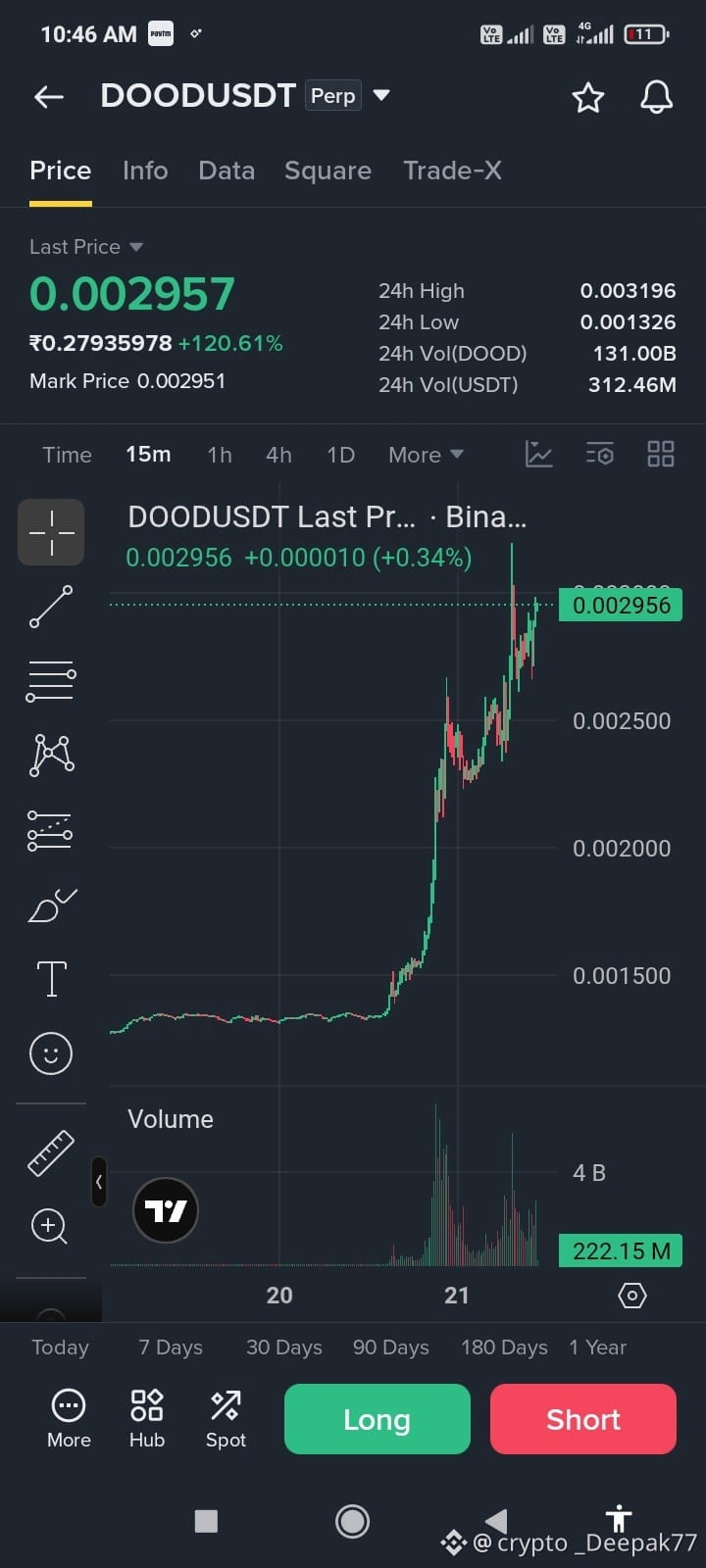
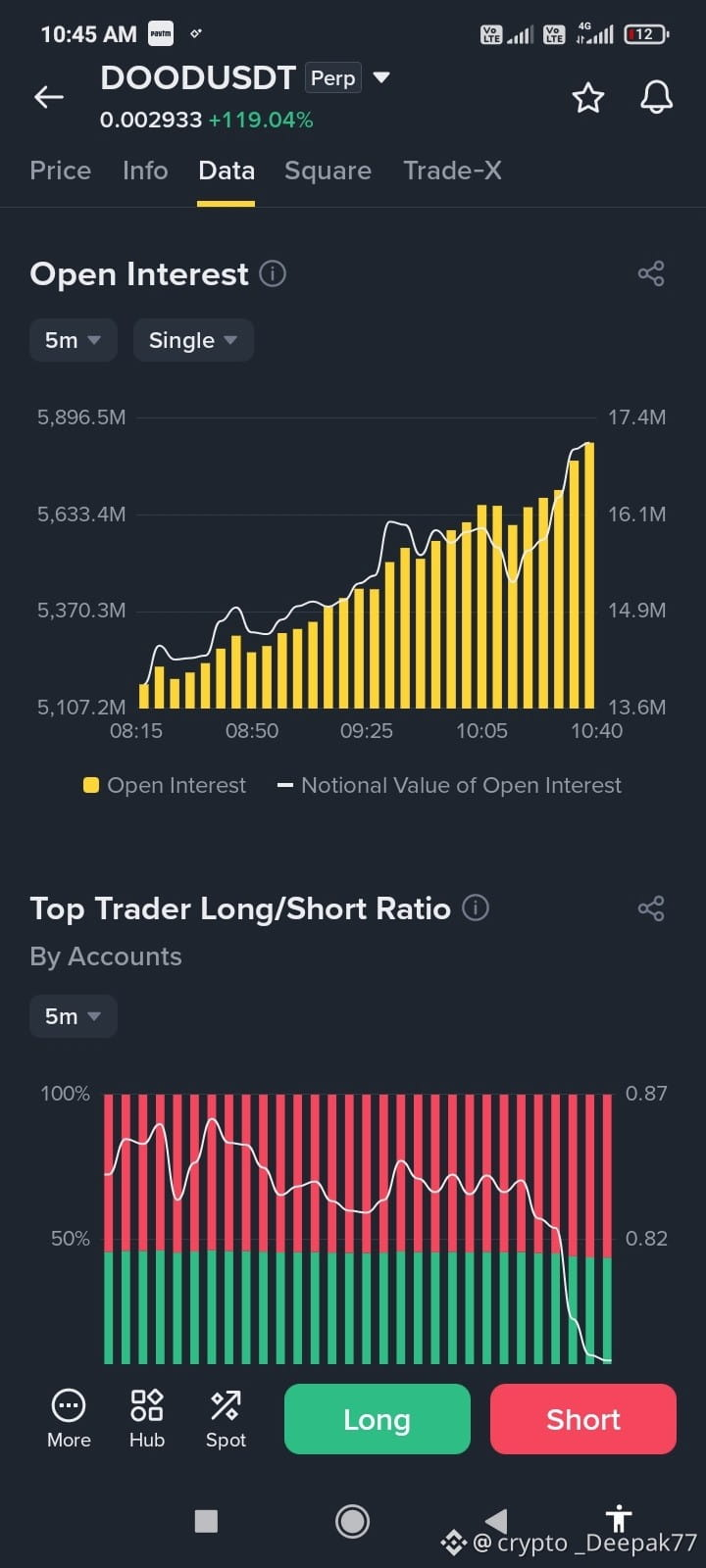
DOODUSDT is showing massive bullish momentum, surging over 120% in 24 hours. 📈
📊 Market Overview
Current Price: 0.002957 USDT
24H High: 0.003196 USDT
24H Gain: +120.61%
24H Volume: 312.46M USDT
Open Interest: Rising 📊
Funding Rate: 0.005%
🔍 My Analysis Buyers have pushed DOODUSDT sharply higher, while trading volume and Open Interest are increasing. This indicates rising market participation, but it doesn't guarantee another pump.
⚠️ After such a massive rally, a correction or liquidation-driven move is possible. Chasing the price at the top can be risky.
🎯 Key Levels to Watch
Resistance: 0.00300–0.003196
Breakout: A strong 15-minute candle close above 0.003196 could signal further upside.
Support: 0.00280–0.00270
Lower Support: Around 0.00250
My Strategy: Watch for a confirmed breakout or a healthy retest before considering an entry. Don't FOMO into a sudden pump.
📢 Will DOODUSDT break 0.0032 and continue higher, or will sellers take control? 🔥
#DOODUSDT #BinanceSquareTalks #CryptoTradingInsights #futurestradingtips #CryptoAnalysis
🚀 $DOOD
USDT +120% | Is Another Pump Coming?
DOODUSDT is showing massive bullish momentum, surging over 120% in 24 hours. 📈
📊 Market Overview
Current Price: 0.002957 USDT
24H High: 0.003196 USDT
24H Gain: +120.61%
24H Volume: 312.46M USDT
Open Interest: Rising 📊
Funding Rate: 0.005%
🔍 My Analysis Buyers have pushed DOODUSDT sharply higher, while trading volume and Open Interest are increasing. This indicates rising market participation, but it doesn't guarantee another pump.
⚠️ After such a massive rally, a correction or liquidation-driven move is possible. Chasing the price at the top can be risky.
🎯 Key Levels to Watch
Resistance: 0.00300–0.003196
Breakout: A strong 15-minute candle close above 0.003196 could signal further upside.
Support: 0.00280–0.00270
Lower Support: Around 0.00250
My Strategy: Watch for a confirmed breakout or a healthy retest before considering an entry. Don't FOMO into a sudden pump.
📢 Will DOODUSDT break 0.0032 and continue higher, or will sellers take control? 🔥
#DOODUSDT #BinanceSquareTalks #CryptoTradingInsights #futurestradingtips #CryptoAnalysis

1
104

·
--
Bearish
📉 $LAB
{future}(LABUSDT)
$LAB/USDT Short Scalp Idea
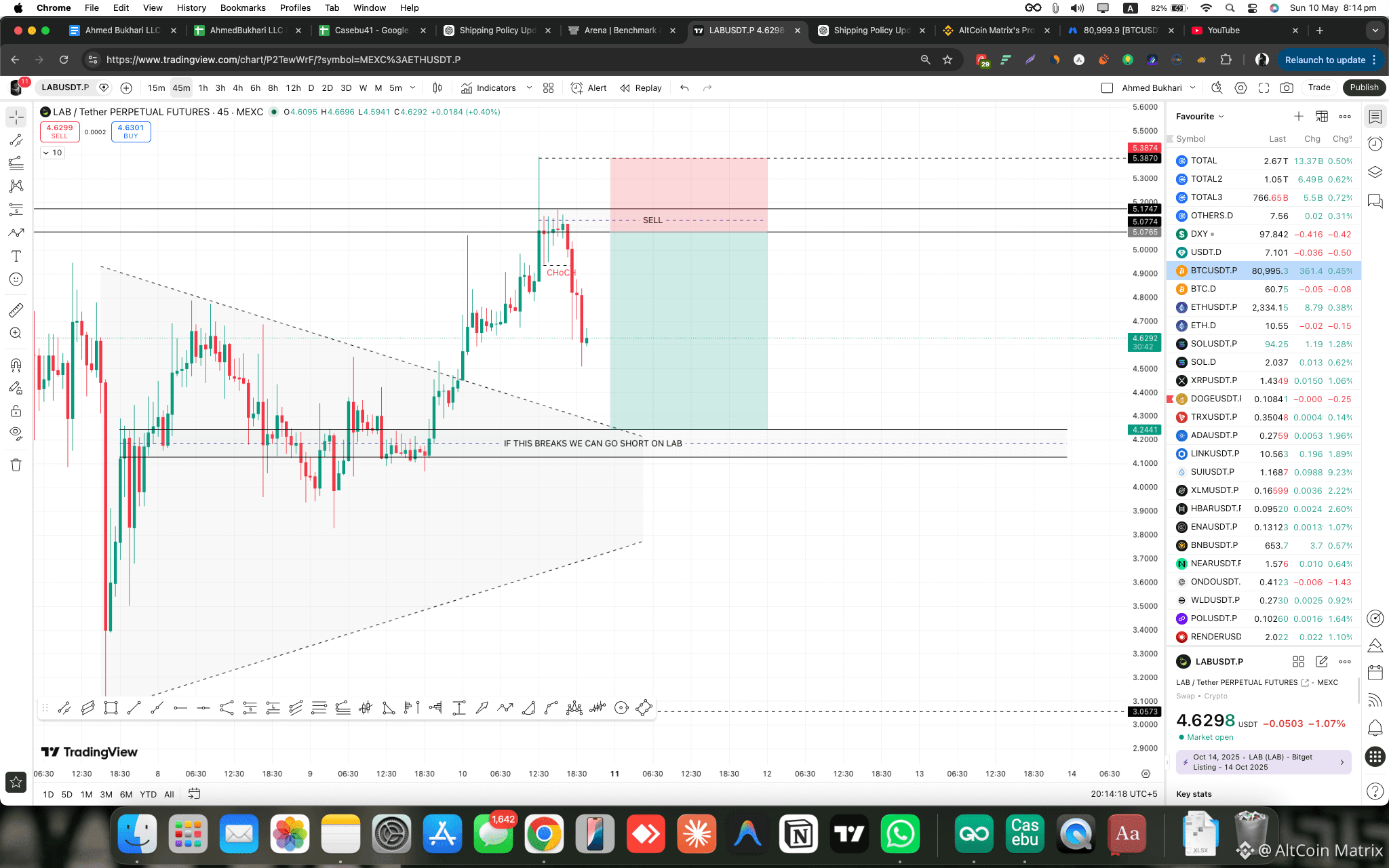
Clear CHOCH after rejection from the 5.05–5.15 resistance zone. Momentum shifting bearish on lower timeframe.
🔹 Short zone: 5.00–5.10
🔹 Target: 4.40–4.25
🔹 Invalidation: Above 5.38
Looking for continuation to the downside if structure holds. Quick scalp setup — manage risk properly.
#LAB #CryptoAnalysis #BinanceSquare #TradingSignals #Altcoins #CryptoTrading #ScalpTrade #futurestradingtips #crypt #TechnicalAnalysisCharts
📉 $LAB
$LAB /USDT Short Scalp Idea
Clear CHOCH after rejection from the 5.05–5.15 resistance zone. Momentum shifting bearish on lower timeframe.
🔹 Short zone: 5.00–5.10
🔹 Target: 4.40–4.25
🔹 Invalidation: Above 5.38
Looking for continuation to the downside if structure holds. Quick scalp setup — manage risk properly.
#LAB #CryptoAnalysis #BinanceSquare #TradingSignals #Altcoins #CryptoTrading #ScalpTrade #futurestradingtips #crypt #TechnicalAnalysisCharts
272

·
--
Bullish
Wait❗Wait❗Don't miss this massive opportunity ‼️
$RIF / USDT — Bullish Rebound Setup
$RIF LONG (68–74% Confidence)
💰 Entry: 0.06720 – 0.06820
🎯 TP1: 0.06950
🎯 TP2: 0.07100
🎯 TP3: 0.07300
🛑 SL: 0.06450
⚡ Leverage: 5x–10x
❓ Why Long?
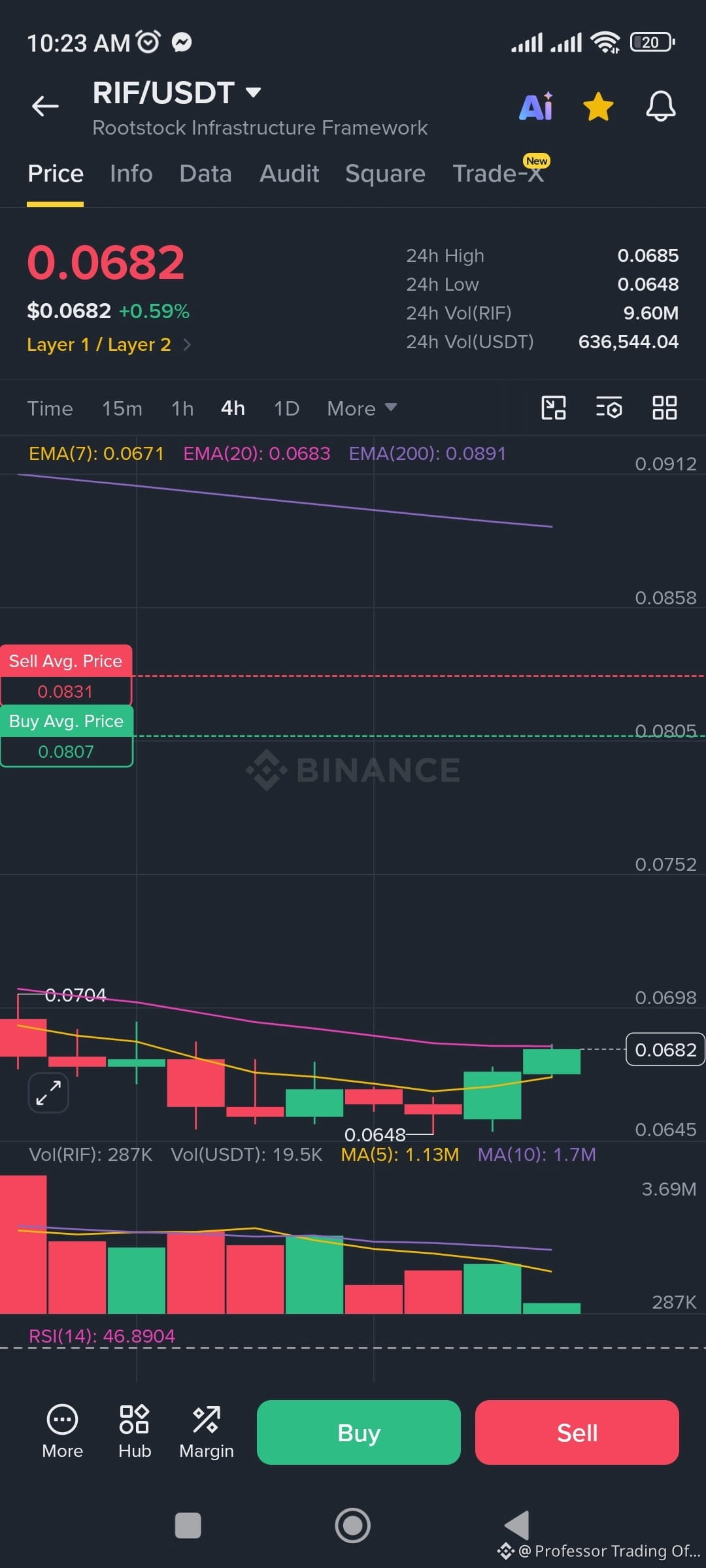
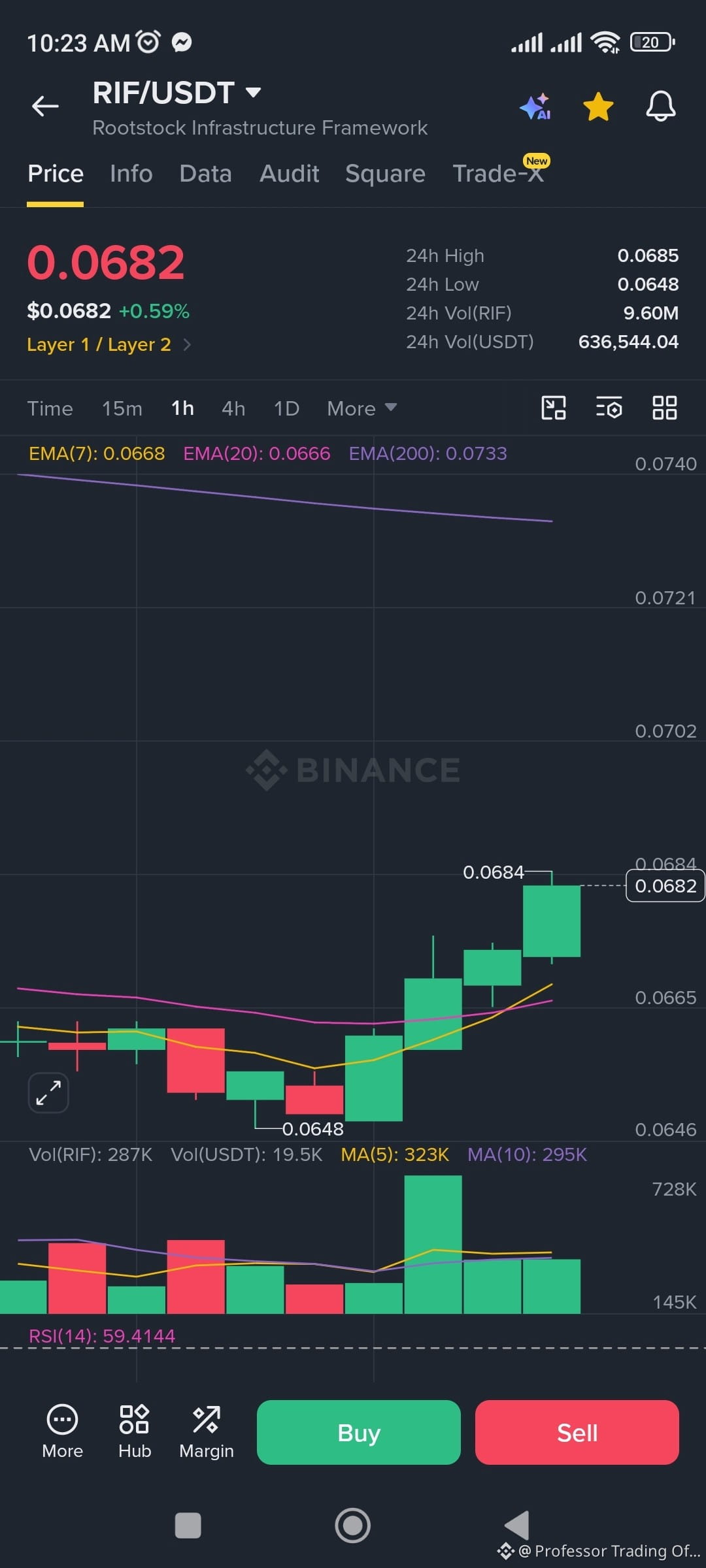
✅ Price has bounced strongly from 0.0648 support
✅ 1H EMA 7 is above EMA 20 → short-term bullish momentum
✅ RSI 1H ~59 → still has room to move higher
✅ Recent candles show higher lows + buying pressure
Click here to Trade👇
{future}(RIFUSDT)
#RIF #Binance #crypto #futurestradingtips #LongSetup
Wait❗Wait❗Don't miss this massive opportunity ‼️
$RIF / USDT — Bullish Rebound Setup
$RIF LONG (68–74% Confidence)
💰 Entry: 0.06720 – 0.06820
🎯 TP1: 0.06950
🎯 TP2: 0.07100
🎯 TP3: 0.07300
🛑 SL: 0.06450
⚡ Leverage: 5x–10x
❓ Why Long?
✅ Price has bounced strongly from 0.0648 support
✅ 1H EMA 7 is above EMA 20 → short-term bullish momentum
✅ RSI 1H ~59 → still has room to move higher
✅ Recent candles show higher lows + buying pressure
Click here to Trade👇
#RIF #Binance #crypto #futurestradingtips #LongSetup
1
142
Log in to explore more content
Join global crypto users on Binance Square
⚡️ Get latest and useful information about crypto.
💬 Trusted by the world’s largest crypto exchange.
👍 Discover real insights from verified creators.
Email / Phone number
Trending Topics
1
#CanBTCReboundAfterFallingBelow60K?
408,703 views
1,764 Discussing
2
#GlobalStocksFaceLongestLosingStreakSince2023
136,870 views
1,229 Discussing
3
#BlackRockIBITPostsRecord$541MSingleDayOutflow
2,221 views
33 Discussing
4
#AnthropicPlungesTowardIPOPriceonDay2
64,929 views
673 Discussing
5
#TwentyOneCapitalAdds172.25BTC
17,233 views
231 Discussing
6
#HKBillWouldExcludeTokenizedDepositsFromVirtualAssets
1,869 views
24 Discussing
7
#BNBDropsBelow540USDTWith8.46%DailyDecline
37,713 views
332 Discussing
8
#HKBillProposesHK$100KFineForUnauthorizedCryptoTitles
1,225 views
19 Discussing
9
#BitMineFaces$10.1BUnrealizedETHLoss
2,271 views
22 Discussing
10
#StrategyReports$35BNetReserves
2,198 views
18 Discussing