
#layer2
layer2
4.5M views
25,685 Discussing
Hot
Latest

Article
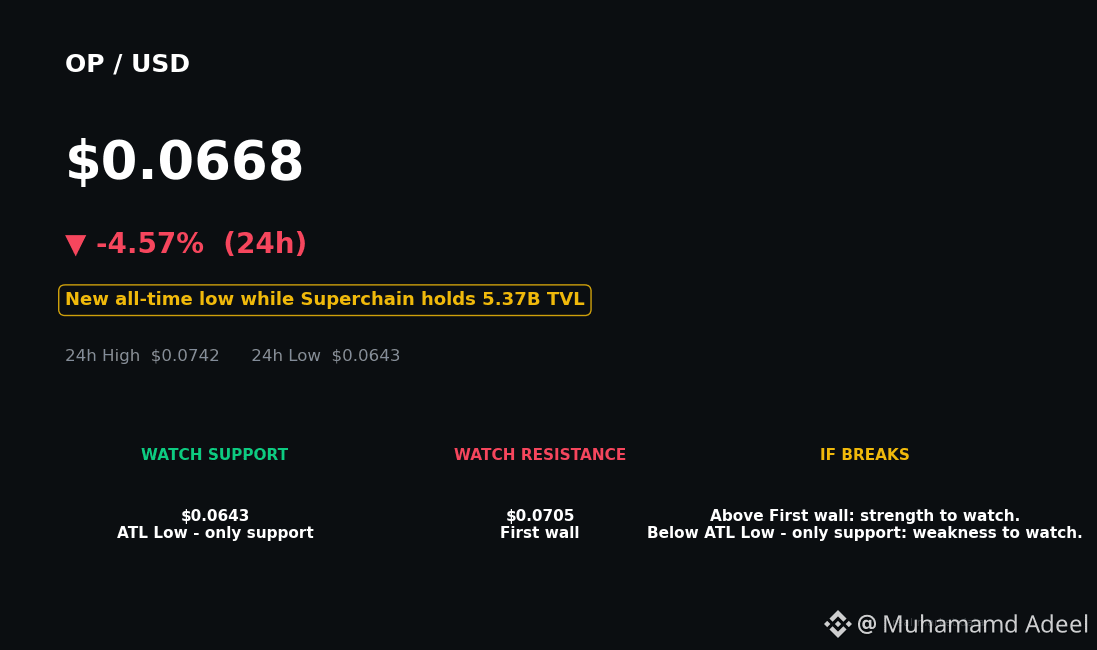
$OP at a New All-Time Low — While Its Superchain Holds $5.3B$OP just printed a brand-new all-time low at $0.0643. The chain it powers did not get the memo.
That's the whole story in one line. Optimism's token is now 98.6% below its $4.84 peak from March 2024, trading near $0.067 with Fear & Greed at 12. Meanwhile the Superchain still holds about $5.37B in DeFi TVL across 33 chains. Two realities, one ticker. Which one are you actually buying?
Here's the twist nobody puts in the headline: most of that $5.37B isn't OP Mainnet. Base alone is $4.43B of it. OP Mainnet itself sits at roughly $359M in DeFi TVL, down about 18% in 30 days. The empire is fine. The capital city is shrinking.
And this week made the split impossible to ignore. Base's Jesse Pollak said tokenized stocks on Base just crossed $1B in weekly volume. Base is printing real activity. $OP is printing new lows. Same family, opposite charts.
So why? Start with February. Base left the OP Stack and stopped sharing revenue. Before it left, Base was 96.5% of the gas fees flowing into the Optimism Collective. Read that again. One chain was nearly the entire income.
Optimism's answer was buybacks: 50% of Superchain sequencer revenue, monthly, for 12 months. Then the numbers came in. Buybacks went 1.57M $OP, then 6.95M, then 0.926M — an 87% collapse in a single month. Against that, roughly 343M OP is scheduled to enter circulation between May 2026 and April 2027. The buyback is real. It is also bringing a teaspoon to a flood.
Now the trade-relevant part. Tap $OP and look at the chart yourself: $0.0643 is today's low and the only support that exists — below it is air, no historical base. First real wall is $0.070–$0.071, then $0.075–$0.076 where the last closes clustered, then $0.079–$0.082 where this leg down started. Reclaim $0.070 and the "new low every day" script pauses. Lose $0.0643 and there's nothing technical between here and round-number psychology.
Relative strength tells the same story. Capital has been rotating toward $ARB while it quietly leaves Optimism, and $ETH beta isn't saving L2 tokens either — this whole sector is priced like governance coupons, not cash-flow assets. OP holders don't get sequencer fees. Fees are paid in ETH. That's not FUD, that's the design.
Is there a bull case? Yes, and it's narrow: OP Enterprise signing paying chains, interop shipping, and buybacks getting extended past the 12-month pilot. Upgrade 21 was targeted for Nov 16 — contracts only, no interop yet. The tech keeps shipping. The token keeps waiting for a reason to care.
My take: $OP at all-time lows with RSI near 25 and 85% of sentiment bearish is exactly where sharp bounces are born — and exactly where falling knives live. The bounce needs $0.070 back. The thesis needs revenue that actually reaches the token. Watch both, in that order.
#Layer2 #Optimism
Not financial advice. DYOR.
$OP at a New All-Time Low — While Its Superchain Holds $5.3B
$OP just printed a brand-new all-time low at $0.0643. The chain it powers did not get the memo.
That's the whole story in one line. Optimism's token is now 98.6% below its $4.84 peak from March 2024, trading near $0.067 with Fear & Greed at 12. Meanwhile the Superchain still holds about $5.37B in DeFi TVL across 33 chains. Two realities, one ticker. Which one are you actually buying?
Here's the twist nobody puts in the headline: most of that $5.37B isn't OP Mainnet. Base alone is $4.43B of it. OP Mainnet itself sits at roughly $359M in DeFi TVL, down about 18% in 30 days. The empire is fine. The capital city is shrinking.
And this week made the split impossible to ignore. Base's Jesse Pollak said tokenized stocks on Base just crossed $1B in weekly volume. Base is printing real activity. $OP is printing new lows. Same family, opposite charts.
So why? Start with February. Base left the OP Stack and stopped sharing revenue. Before it left, Base was 96.5% of the gas fees flowing into the Optimism Collective. Read that again. One chain was nearly the entire income.
Optimism's answer was buybacks: 50% of Superchain sequencer revenue, monthly, for 12 months. Then the numbers came in. Buybacks went 1.57M $OP , then 6.95M, then 0.926M — an 87% collapse in a single month. Against that, roughly 343M OP is scheduled to enter circulation between May 2026 and April 2027. The buyback is real. It is also bringing a teaspoon to a flood.
Now the trade-relevant part. Tap $OP and look at the chart yourself: $0.0643 is today's low and the only support that exists — below it is air, no historical base. First real wall is $0.070–$0.071, then $0.075–$0.076 where the last closes clustered, then $0.079–$0.082 where this leg down started. Reclaim $0.070 and the "new low every day" script pauses. Lose $0.0643 and there's nothing technical between here and round-number psychology.
Relative strength tells the same story. Capital has been rotating toward $ARB while it quietly leaves Optimism, and $ETH beta isn't saving L2 tokens either — this whole sector is priced like governance coupons, not cash-flow assets. OP holders don't get sequencer fees. Fees are paid in ETH. That's not FUD, that's the design.
Is there a bull case? Yes, and it's narrow: OP Enterprise signing paying chains, interop shipping, and buybacks getting extended past the 12-month pilot. Upgrade 21 was targeted for Nov 16 — contracts only, no interop yet. The tech keeps shipping. The token keeps waiting for a reason to care.
My take: $OP at all-time lows with RSI near 25 and 85% of sentiment bearish is exactly where sharp bounces are born — and exactly where falling knives live. The bounce needs $0.070 back. The thesis needs revenue that actually reaches the token. Watch both, in that order.
#Layer2 #Optimism
Not financial advice. DYOR.
6

·
--
$OPG
Optimism is part of the effort to scale Ethereum through Layer 2 technology. Its ecosystem growth depends on useful applications, developer activity, and user experience. Competition is intense, making real adoption more important than attention around the scaling narrative.
#OP #Optimism #Layer2
Optimism is part of the effort to scale Ethereum through Layer 2 technology. Its ecosystem growth depends on useful applications, developer activity, and user experience. Competition is intense, making real adoption more important than attention around the scaling narrative.
#OP #Optimism #Layer2
568
·
--
$POL
Polygon continues developing infrastructure aimed at making blockchain applications more accessible and scalable. Its progress depends on developer activity, network usage, and ecosystem adoption. Watch real transaction demand and application growth to understand how its technology is being used.
#POL #Polygon #Layer2
107

🔴 $OP BLEEDING HARDER THAN BTC AND ETH AFTER GIVING UP OCTOBER GAINS 📉
Entry: 0.07287 ⚡
Target: 0.09673 🚀
The market just delivered a harsh reality check as $OP took a 25 percent hit, bleeding faster than both majors and completely reversing its October surge. 📊 That flush dragged valuation down significantly over the month, washing out late retail longs.
Beneath the corrective price action, the underlying infrastructure driving the OP Stack network remains fully active. ⚡ Are you looking to accumulate near these depressed lows or waiting for a confirmed trend reversal? 🤔
⚠️ Not financial advice. Always manage your risk. 🛡️
🏷️ #OP #Optimism #Layer2 #Crypto
🔥 💎
20

Article
Will "Based Rollups" and Pre-Confirmations Finally Unify Ethereum’s Fragmented Layer-2 Ecosystem?While Layer-2 rollups have successfully lowered transaction costs, most rely on centralized sequencers—creating censorship risks, liquidity silos, and broken synchronous composability with Ethereum mainnet. Can Based Rollups paired with Pre-Confirmations solve these structural bottlenecks without sacrificing speed?
Unlike traditional rollups that run their own external sequencers, a Based Rollup delegates transaction ordering directly to Ethereum’s base-layer (L1) validators. This inherits L1’s decentralization, liveness, and censorship resistance while enabling atomic, synchronous composability between L1 and L2s. To overcome Ethereum’s 12-second block time, Pre-Confirmations allow L1 proposers to issue cryptographically backed, slashable promises that a transaction will be included—delivering sub-second UX finality.
Based rollups eliminate centralized sequencer dependencies and restore seamless L1-L2 composability, giving Ethereum a unified scaling architecture that feels like a single, hyper-fast chain.
$ETH $TAIKO #BasedRollups #EthereumScaling #Layer2 #CoinVahini
Will "Based Rollups" and Pre-Confirmations Finally Unify Ethereum’s Fragmented Layer-2 Ecosystem?
While Layer-2 rollups have successfully lowered transaction costs, most rely on centralized sequencers—creating censorship risks, liquidity silos, and broken synchronous composability with Ethereum mainnet. Can Based Rollups paired with Pre-Confirmations solve these structural bottlenecks without sacrificing speed?
Unlike traditional rollups that run their own external sequencers, a Based Rollup delegates transaction ordering directly to Ethereum’s base-layer (L1) validators. This inherits L1’s decentralization, liveness, and censorship resistance while enabling atomic, synchronous composability between L1 and L2s. To overcome Ethereum’s 12-second block time, Pre-Confirmations allow L1 proposers to issue cryptographically backed, slashable promises that a transaction will be included—delivering sub-second UX finality.
Based rollups eliminate centralized sequencer dependencies and restore seamless L1-L2 composability, giving Ethereum a unified scaling architecture that feels like a single, hyper-fast chain.
$ETH $TAIKO #BasedRollups #EthereumScaling #Layer2 #CoinVahini
71
Article
Base Did 8.6M Txns in a Day. ETH Still Can't Catch BTCEthereum's L2s have never been busier. So why is $ETH still losing to Bitcoin?
Base just cleared 8.6 million transactions in a day — and ETH/BTC is still stuck at 0.028.
That split is the whole story right now. The ecosystem is growing. The token is not capturing it. And today, Ethereum developers meet to argue about the upgrade meant to fix the scaling side of that equation.
The upgrade on hold
Glamsterdam was supposed to lift the gas limit from 60M toward 200M — a 3.3x jump. Instead, the Hoodi testnet fork has been paused since October with no new date, and core devs meet today at 14:00 UTC to discuss EIP-8037 and EIP-8038, the gas repricing at the heart of the fight.
Here's the honest version: the Ethereum Foundation says no decision is pre-committed for today. The risk estimate presented on 16 Nov was 10,000–15,000 contracts out of roughly 90M deployed, with value at risk in the low hundreds of thousands of dollars — an upper-bound estimate, not an audited broken count. Options are keep the specs, apply an accounting fix, or pull EIP-8037, which could delay Glamsterdam by 4–6 months. Pectra also stumbled on testnets before launching cleanly. A delay is not a death sentence. It is also not a catalyst.
Busy chains, quiet token
Look at the activity. On 19 Nov data, Base did 8.63M daily transactions with 444.5K daily active addresses, versus 1.11M for Arbitrum One. ETHBEAT prints stamped today put Base value secured at $14.11B and Arbitrum at $9.08B. If you want the L2 beta in one tap, check $ARB against that activity — the usage is real.
Now look at what ETH gets from it. About 36.3% of supply was staked in mid-November, a record, yet burn offsets under 3% of annual issuance while L2s keep most of the fee spread. Staking yield sits near 2.5%. Busy network, thin value capture.
The trade lens
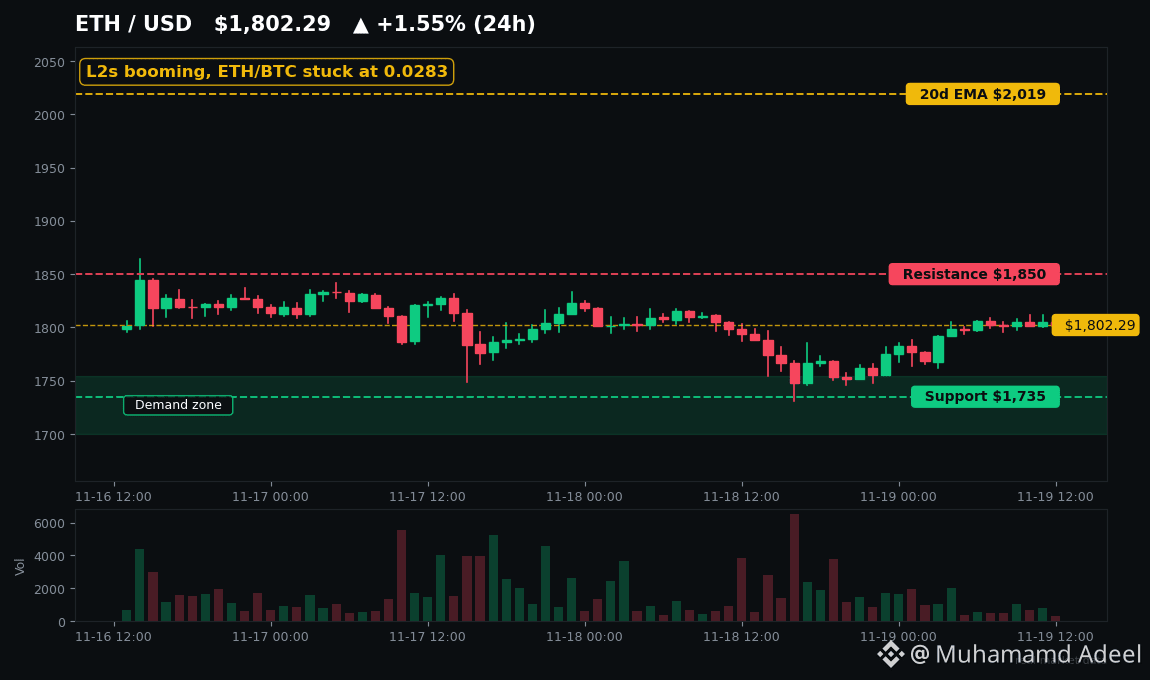
ETH is trading near $1,803 as I write this. Support sits at $1,735–$1,754, with $1,710–$1,700 as the stronger shelf below. Resistance starts at $1,838–$1,850, then the 20-day EMA near $2,019. Against Bitcoin, the ratio is 0.0283, pinned in the 0.028 area all week after failing the 0.0298 confirmation line — tap $BTC and compare the two charts yourself; that relative chart is doing more work than the dollar chart right now. A reclaim of 0.0298 would change the conversation. Another rejection keeps the pressure on.
The risks are not hidden: US spot ETH ETFs lost another $39.8M on 18 Nov, Citi cut its 12-month ETH target to $2,838, and CoinShares disclosed selling its entire 6,562 ETH corporate treasury. RSI near 27 is oversold, which cuts both ways — it has marked bounces before, and traps.
My take: watch today's call for direction, not a verdict, and watch 0.0298 for proof. Until ETH/BTC reclaims it, L2 growth alone is not lifting the token.
#ETH #Layer2
Not financial advice. DYOR.
Base Did 8.6M Txns in a Day. ETH Still Can't Catch BTC
Ethereum's L2s have never been busier. So why is $ETH still losing to Bitcoin?
Base just cleared 8.6 million transactions in a day — and ETH/BTC is still stuck at 0.028.
That split is the whole story right now. The ecosystem is growing. The token is not capturing it. And today, Ethereum developers meet to argue about the upgrade meant to fix the scaling side of that equation.
The upgrade on hold
Glamsterdam was supposed to lift the gas limit from 60M toward 200M — a 3.3x jump. Instead, the Hoodi testnet fork has been paused since October with no new date, and core devs meet today at 14:00 UTC to discuss EIP-8037 and EIP-8038, the gas repricing at the heart of the fight.
Here's the honest version: the Ethereum Foundation says no decision is pre-committed for today. The risk estimate presented on 16 Nov was 10,000–15,000 contracts out of roughly 90M deployed, with value at risk in the low hundreds of thousands of dollars — an upper-bound estimate, not an audited broken count. Options are keep the specs, apply an accounting fix, or pull EIP-8037, which could delay Glamsterdam by 4–6 months. Pectra also stumbled on testnets before launching cleanly. A delay is not a death sentence. It is also not a catalyst.
Busy chains, quiet token
Look at the activity. On 19 Nov data, Base did 8.63M daily transactions with 444.5K daily active addresses, versus 1.11M for Arbitrum One. ETHBEAT prints stamped today put Base value secured at $14.11B and Arbitrum at $9.08B. If you want the L2 beta in one tap, check $ARB against that activity — the usage is real.
Now look at what ETH gets from it. About 36.3% of supply was staked in mid-November, a record, yet burn offsets under 3% of annual issuance while L2s keep most of the fee spread. Staking yield sits near 2.5%. Busy network, thin value capture.
The trade lens
ETH is trading near $1,803 as I write this. Support sits at $1,735–$1,754, with $1,710–$1,700 as the stronger shelf below. Resistance starts at $1,838–$1,850, then the 20-day EMA near $2,019. Against Bitcoin, the ratio is 0.0283, pinned in the 0.028 area all week after failing the 0.0298 confirmation line — tap $BTC and compare the two charts yourself; that relative chart is doing more work than the dollar chart right now. A reclaim of 0.0298 would change the conversation. Another rejection keeps the pressure on.
The risks are not hidden: US spot ETH ETFs lost another $39.8M on 18 Nov, Citi cut its 12-month ETH target to $2,838, and CoinShares disclosed selling its entire 6,562 ETH corporate treasury. RSI near 27 is oversold, which cuts both ways — it has marked bounces before, and traps.
My take: watch today's call for direction, not a verdict, and watch 0.0298 for proof. Until ETH/BTC reclaims it, L2 growth alone is not lifting the token.
#ETH #Layer2
Not financial advice. DYOR.
8

·
--
Layer 2 scaling solutions improve blockchain performance. Optimistic Rollups and ZK-Rollups are popular solutions. Optimistic Rollups assume transactions are valid, then batch them. ZK-Rollups use zero-knowledge proofs to verify transactions. State Channels process transactions off-chain, then settle on-chain. For example, $ETH transactions can be processed using Optimistic Rollups, increasing throughput. Layer 2 solutions help scale blockchains, making them more efficient. The value of $ETH is sitting at a level that makes it a popular choice for scaling solutions. Blockchain technology is advancing with Layer 2 solutions. blockchainscaling #Layer2 #cryptotechnology
Layer 2 scaling solutions improve blockchain performance. Optimistic Rollups and ZK-Rollups are popular solutions. Optimistic Rollups assume transactions are valid, then batch them. ZK-Rollups use zero-knowledge proofs to verify transactions. State Channels process transactions off-chain, then settle on-chain. For example, $ETH transactions can be processed using Optimistic Rollups, increasing throughput. Layer 2 solutions help scale blockchains, making them more efficient. The value of $ETH is sitting at a level that makes it a popular choice for scaling solutions. Blockchain technology is advancing with Layer 2 solutions. blockchainscaling #Layer2 #cryptotechnology
47

🚨 $BTC AT THE CRITICAL INFLECTION POINT WHILE LAYER-2 METRICS SURGE! 📊
Entry: 63186.87 ⚡
While casual social media chatter focuses entirely on short-term noise around current levels, smart money is quietly dissecting underlying scaling efficiency and zero-knowledge rollup throughput. 💡
Daily active addresses and cross-chain bridge net inflows are painting a crystal-clear picture of where institutional capital is positioning itself ahead of the next structural shift. 🔍
💬 Are you tracking these fundamental network metrics closely this week, or staying on the sidelines until price action confirms? 👇
⚠️ Not financial advice. Always manage your risk. 🛡️
🏷️ #BTC #BlockchainScaling #Crypto #Layer2
🔥 💎
6

·
--
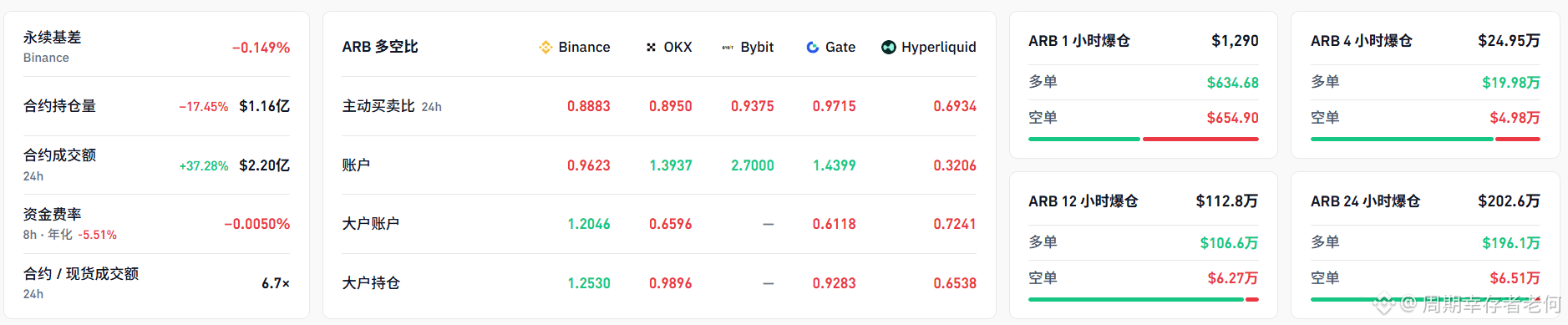
ARB is down 22.23% in seven days—Layer 2 tokens have fallen nearly 9 percentage points more than the broader market.
As a crypto veteran, I checked the figures while writing this: ARB was at $0.112, down 6.6% over 24 hours and 22.23% over seven days. From its high of $2.39, that’s a 95.3% drop, leaving it with a market cap of just $790 million. Meanwhile, Bitcoin was down 13.73% over the same seven-day period. In plain English: the Layer 2 narrative hasn’t been enough to protect prices this time around. Both applications and infrastructure are falling, and no matter how good the story sounds, it still comes down to where the money flows.
I’ve paid this tuition for you already: when the market is struggling, don’t treat a narrative like a shield. First, check whether its seven-day losses are better or worse than the broader market’s.
Do you still believe L2 can outperform the broader market? Let me know in the comments.
— Web3 retail investor Xiaokai
Disclaimer: The views above are my personal opinions only and do not constitute investment advice. Investing involves risk; please proceed with caution.
#ARB #Layer2 #Altcoins
1
353

·
--
#ARB Ethereum layer-2 networks have been developing well, so why has the token price been so disappointing?
Current reference price: $0.1061
24H: -10.35%
Arbitrum's ecosystem isn't bad, but ecosystem growth and an increase in the ARB token price aren't as directly connected as many people imagine.
The area around $0.10 is worth watching. Whether it can regain a foothold above $0.115 is one reference point for judging the strength of the rebound ahead.
Lao He believes that when researching governance tokens like this, you first need to figure out who ultimately receives the value created by the network. If the project is making more and more money, but token holders aren't sharing in much of the actual returns, then it's time to reconsider the valuation.
Lao He will continue monitoring the market in real time and sharing specific trade setups and key take-profit levels in the chatroom.
#ARB #Layer2 #以太坊生态 #zec

13
·
--
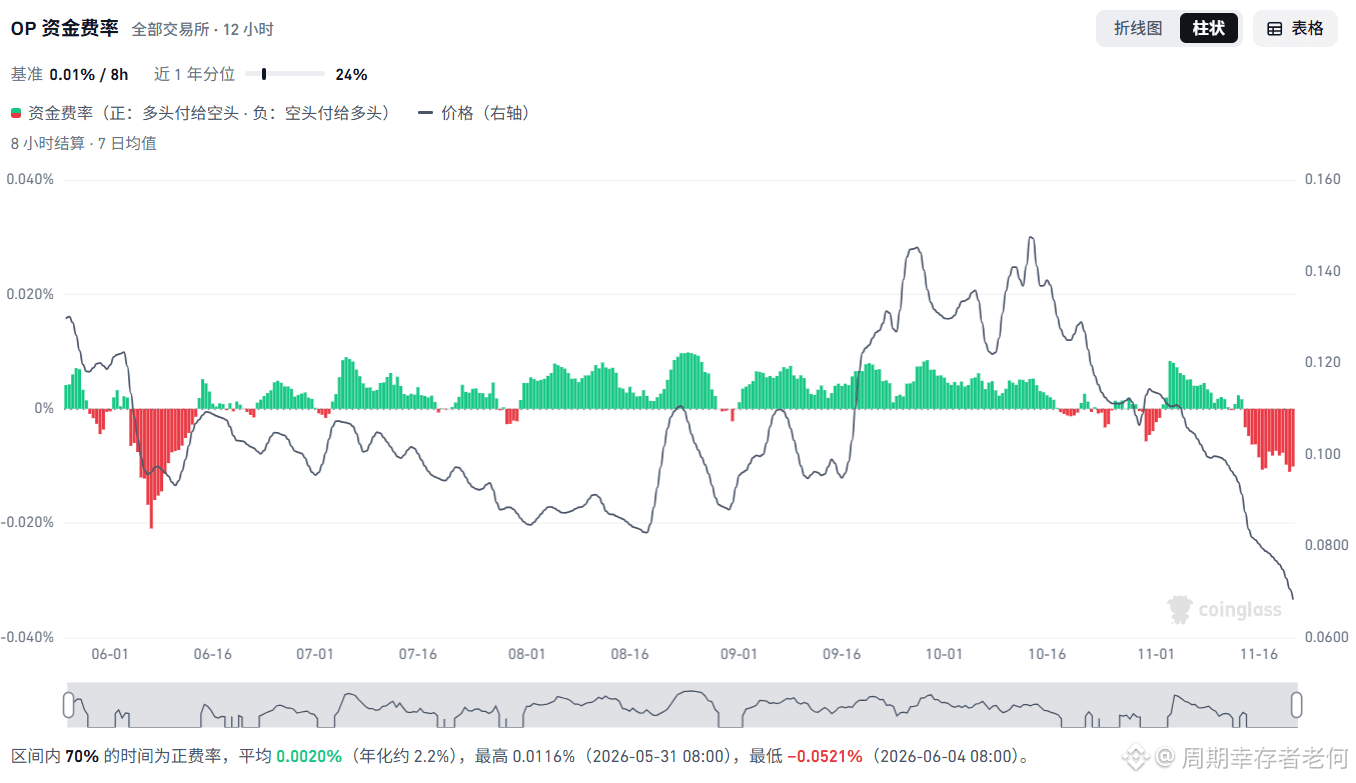
#OP The battle among Layer 2 networks—who will ultimately win?
Current reference price: $0.06821
24H: -7.46%
OP’s Superchain strategy still has room to grow, but now that Layer 2 networks have developed this far, the competition is no longer just about technology. It’s increasingly about winning users, developers, and ecosystem resources.
In the short term, watch the area around $0.063–$0.065. If the price can reclaim $0.071, then consider a rebound.
Lao He thinks that getting the technical roadmap right doesn’t necessarily mean the token will perform well. Before investing in OP, you still need to study its supply and demand separately.
Lao He will continue monitoring the market in real time and sharing specific trades and key take-profit levels in the chat room.
#OP #Layer2 #全球股市创三年来最长连跌,投资者避险情绪升温 #dodo

8

·
--
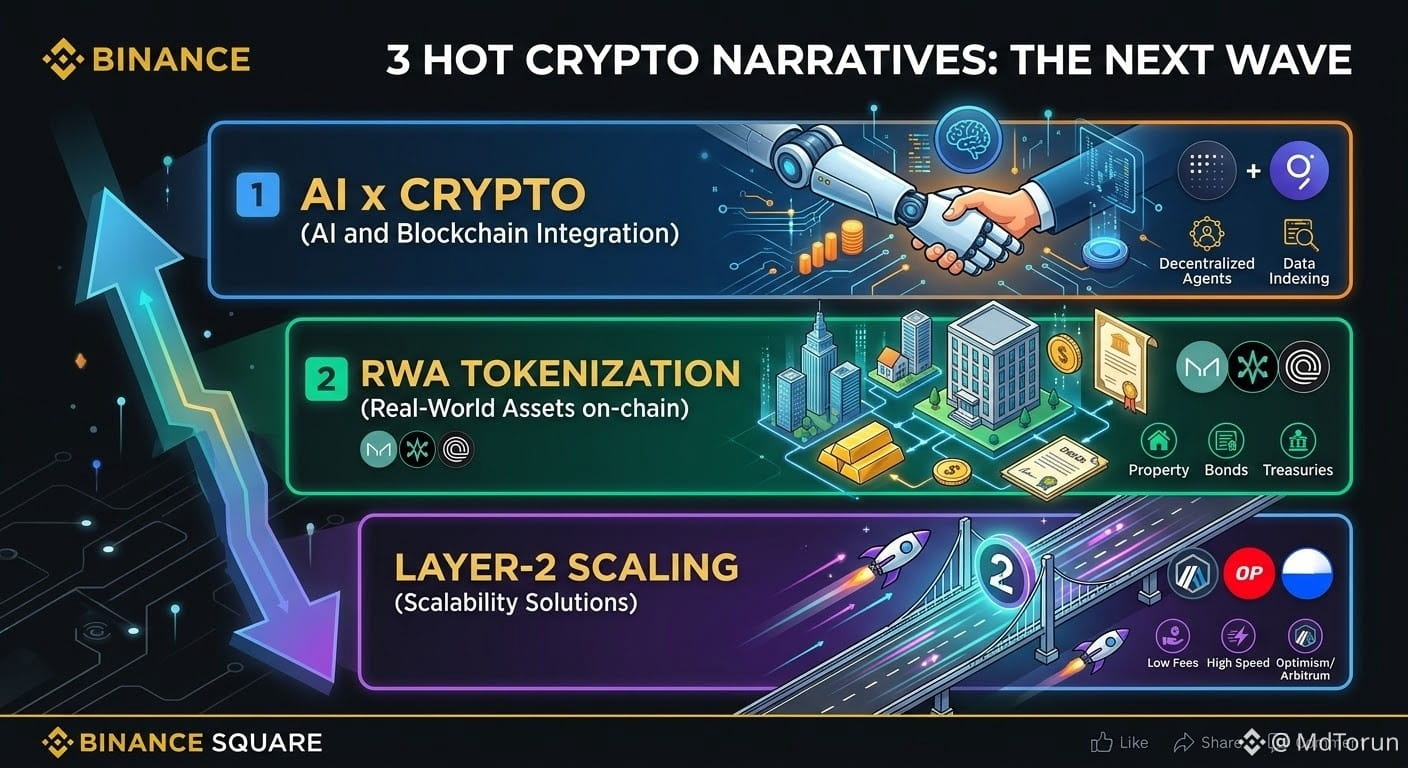
Hot Narratives Driving the Next Crypto Wave! $BTC
🔥 What's Trending Right Now?
AI x Crypto: Decentralized AI agents and smart automation are reshaping Web3 utilities.
RWA Tokenization: Real-world assets (bonds, real estate) are rapidly moving on-chain, attracting massive institutional capital.
Layer-2 Scaling: Networks like Arbitrum and Base are dominating transactions with ultra-low fees and high speed.
💡 The Big Question: Which narrative are you most bullish on for the upcoming bull run? Drop your favorite pick below! 👇
#Binance #RWATokens #Layer2 #Web3
1
546
·
--
Article
Why Layer-2 Scaling Matters When Coins Like $INIT SurgeThe market woke up with a mix of tiny optimism and stark fear, the Fear & Greed Index sits at 10, labeled "Extreme Fear". While $BTC slipped to $64,930 with a 24h change of -1.11% and $ETH nudged down to $1,825 at -0.40%, a handful of altcoins lit up the screen. I'm curious how the tech behind these moves, especially layer-2 solutions, actually works and why they can turn a modest price swing into a bigger story.
The Tech Under the Hood
Layer-2 protocols sit on top of a base blockchain, batching transactions so the main chain only records a summary. Think of it like a grocery store express lane: you still pay for the items, but the checkout line moves faster because the cashier bundles them. This reduces congestion on the base layer, which is why we often see sudden bursts of activity on coins that are heavily integrated with rollups or sidechains. When $INIT jumps +7.25% at $0.1143, it's often a sign that users are testing a new bridge or that a rollup's fee market is temporarily cheaper.
What the Gainers Are Telling Us
The top five gainers this morning, $INIT +7.25% at $0.1143, UNI +6.25% at $5.19, AAVE +5.96% at $108.00, ZEC +5.49% at $901.69, and KAVA +5.21% at $0.0307, are all projects with active layer-2 or cross-chain components. A careful observer would check the underlying transaction volume, any recent mainnet upgrades, and whether a new dApp has launched on their scaling solution. For example, a spike in UNI often follows a Uniswap V3 fee tier adjustment, which can be confirmed by looking at the 24h volume on the associated layer-2. I keep an eye on whether the price move is backed by a genuine increase in on-chain activity or just a short-term hype burst.
Why the Losers Matter
On the flip side, the biggest drop belongs to SOPH at -44.44% at $0.00125, followed by ASTER -8.51% at $0.5493, ZRO -8.48% at $1.39, INJ -4.44% at $6.94, and AVAX -2.57% at $7.24. These assets often suffer when a layer-2 experiences congestion or when a bridge is temporarily disabled. Before reacting, I'd verify if the decline coincides with a known outage, a security alert, or a sudden spike in gas fees on the base chain. The 24h range for $BTC, $62,006 - $66,132, and for $ETH, $1,711 - $1,845, hints at broader market pressure that can amplify the impact on more volatile tokens.
What I'll Keep an Eye On
Given the "Extreme Fear" reading, I'm watching whether any of the gainers sustain their momentum as the broader market tests support levels. BNB's modest rise of +0.33% at $591.87 and SOL's dip of -0.75% at $71.72 suggest that the major platforms are still relatively stable, which could provide a safety net for layer-2 projects. If the next 24-hour volume surge aligns with a new rollup launch, those coins might see another bounce. I'll also monitor the fee market on the underlying chains, a sudden drop there often precedes a price uptick for the associated layer-2 tokens.
Which of today's movers do you think is just a flash of excitement and which could be the start of a longer trend?
Not financial advice.
Tech decoded. 🛠️
#crypto #layer2 #marketanalysis #techexplainer
Why Layer-2 Scaling Matters When Coins Like $INIT Surge
The market woke up with a mix of tiny optimism and stark fear, the Fear & Greed Index sits at 10, labeled "Extreme Fear". While $BTC slipped to $64,930 with a 24h change of -1.11% and $ETH nudged down to $1,825 at -0.40%, a handful of altcoins lit up the screen. I'm curious how the tech behind these moves, especially layer-2 solutions, actually works and why they can turn a modest price swing into a bigger story.
The Tech Under the Hood
Layer-2 protocols sit on top of a base blockchain, batching transactions so the main chain only records a summary. Think of it like a grocery store express lane: you still pay for the items, but the checkout line moves faster because the cashier bundles them. This reduces congestion on the base layer, which is why we often see sudden bursts of activity on coins that are heavily integrated with rollups or sidechains. When $INIT jumps +7.25% at $0.1143, it's often a sign that users are testing a new bridge or that a rollup's fee market is temporarily cheaper.
What the Gainers Are Telling Us
The top five gainers this morning, $INIT +7.25% at $0.1143, UNI +6.25% at $5.19, AAVE +5.96% at $108.00, ZEC +5.49% at $901.69, and KAVA +5.21% at $0.0307, are all projects with active layer-2 or cross-chain components. A careful observer would check the underlying transaction volume, any recent mainnet upgrades, and whether a new dApp has launched on their scaling solution. For example, a spike in UNI often follows a Uniswap V3 fee tier adjustment, which can be confirmed by looking at the 24h volume on the associated layer-2. I keep an eye on whether the price move is backed by a genuine increase in on-chain activity or just a short-term hype burst.
Why the Losers Matter
On the flip side, the biggest drop belongs to SOPH at -44.44% at $0.00125, followed by ASTER -8.51% at $0.5493, ZRO -8.48% at $1.39, INJ -4.44% at $6.94, and AVAX -2.57% at $7.24. These assets often suffer when a layer-2 experiences congestion or when a bridge is temporarily disabled. Before reacting, I'd verify if the decline coincides with a known outage, a security alert, or a sudden spike in gas fees on the base chain. The 24h range for $BTC , $62,006 - $66,132, and for $ETH , $1,711 - $1,845, hints at broader market pressure that can amplify the impact on more volatile tokens.
What I'll Keep an Eye On
Given the "Extreme Fear" reading, I'm watching whether any of the gainers sustain their momentum as the broader market tests support levels. BNB's modest rise of +0.33% at $591.87 and SOL's dip of -0.75% at $71.72 suggest that the major platforms are still relatively stable, which could provide a safety net for layer-2 projects. If the next 24-hour volume surge aligns with a new rollup launch, those coins might see another bounce. I'll also monitor the fee market on the underlying chains, a sudden drop there often precedes a price uptick for the associated layer-2 tokens.
Which of today's movers do you think is just a flash of excitement and which could be the start of a longer trend?
Not financial advice.
Tech decoded. 🛠️
#crypto #layer2 #marketanalysis #techexplainer
1
821

⛽ L2 gas fees — a great gift of engineering.
1️⃣ Every operation on Ethereum mainnet can be costly — every node has to process everything
2️⃣ L2s (such as Arbitrum, Base): bundle transactions and send them to mainnet in a single receipt — costs go down many times over
3️⃣ Trade-off: security is "borrowed" from Ethereum, but there are also risks such as sequencer dependency
Cheaper doesn’t mean better — it’s a different design, with its own benefits and risks. 🧮
Understanding the fee structure = a happier wallet. 😄
$ETH $ARB
#Ethereum #Layer2 #CryptoEducation
1

·
--
L2 race: beyond the narrative, look at user retention first.
According to a November 14 CoinDesk report, MegaETH laid off about 20% of its workforce and is exploring an AI business direction. The report also said its DeFi TVL fell from more than $245 million to $8.8 million. These figures are as reported by the media and have not been independently verified on-chain for this post.
My take: Short-term incentives can attract capital, but may not create lasting demand. When comparing scaling projects, look at active users, fee revenue, and retention after subsidies end—not just peak TVL. #Layer2
31

·
--
"Ethereum's fastest L2 pivots to AI" sounds like a growth story. The numbers say it's a rescue.
Popular read: MEGA (the team behind MegaETH) just committed $30M to an AI inference marketplace, so it's moving to a bigger market.
Why that might be wrong:
• DeFi TVL on MegaETH is $8.8M, down from a peak above $240M (DefiLlama via CoinDesk)
• Staff cut 20% on Nov 13, mostly chain, wallet and ecosystem roles
• The token is down more than 70% this year (CoinDesk data)
• The co-founder said staying "chain-only" felt wrong; the chain's own usage had already left
The marketplace is promised for December, with no confirmed feature list. My read: a layer-2 that can't hold deposits is a product-market-fit problem, and a new product on the same chain doesn't fix it by itself. Watch whether MegaETH TVL stabilises once the product ships.
Is an AI pivot a real strategy for a struggling $ETH L2, or a way to change the subject? Not financial advice.
#MegaETH #Layer2 #AI
Disclosure: I can earn Binance Write to Earn rewards from this post.
29

What is a Layer 2, and what is it used for?
A Layer 2 is a network built on top of a main blockchain (a Layer 1 such as Ethereum or Bitcoin) that processes transactions off the base chain and then consolidates the results on it. The goal: speed and low costs without sacrificing security.
Practical example: sending USDT on Ethereum can cost several dollars and take minutes. On Arbitrum (a Layer 2), the same transaction costs pennies and is confirmed in seconds. The trick is to bundle hundreds of transactions, process them separately, and record only the final summary on the main chain.
The most common types are rollups (Optimistic and ZK), which inherit Ethereum’s security, and state channels such as Bitcoin’s Lightning Network.
If you trade frequently or use DeFi, Layer 2s save you on fees and give you access to more agile ecosystems. They’re not just a fad: they already process more volume than many Layer 1s.
Follow us for more guides that save you time and money.
#Layer2
114

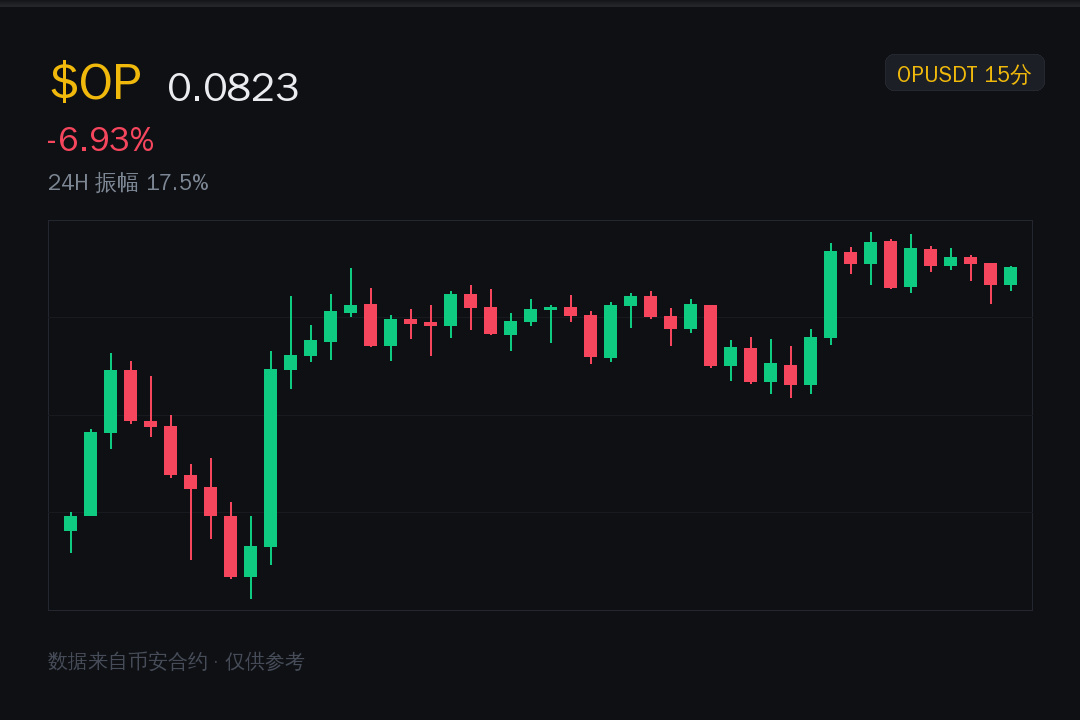
Don’t be alarmed by $OP’s 7.21% one-day drop; it’s actually a sign of a healthy market correction. Data shows that despite the price decline, $OP’s high volatility of 17.5% and $37 million in trading volume indicate very strong market activity. The 0.0755–0.0887 price range presents an opportunity for new entrants. Rather than a wave of selling, this is more like a normal rotation of profit-taking positions. As a leading Ethereum Layer 2 solution, $OP’s fundamentals have not changed due to short-term volatility. Market sentiment is often more worth watching than the price itself.$OP #Layer2
Don’t be alarmed by $OP ’s 7.21% one-day drop; it’s actually a sign of a healthy market correction. Data shows that despite the price decline, $OP ’s high volatility of 17.5% and $37 million in trading volume indicate very strong market activity. The 0.0755–0.0887 price range presents an opportunity for new entrants. Rather than a wave of selling, this is more like a normal rotation of profit-taking positions. As a leading Ethereum Layer 2 solution, $OP ’s fundamentals have not changed due to short-term volatility. Market sentiment is often more worth watching than the price itself.$OP #Layer2
9

·
--
#BinancePick Good morning, albeit late, as we wrap up our day full of opportunities! Let's end today's discussions by talking about Layer 2 scaling solutions that have made using the Ethereum network much faster and cheaper. Arbitrum and its ARB token are leading the way thanks to their substantial liquidity and wide variety of decentralized applications. Do you hold ARB in your wallets for the long term, or do you prefer other Layer 2 networks? Let's hear your thoughts in the comments!
#Binance #Arbitrum #ARB #Layer2 #CryptoCommunity
#Binance #Arbitrum #ARB #Layer2 #CryptoCommunity

1
159

$ARB
Arbitrum’s Elysium chain is live on mainnet, built for high-frequency markets and settling on HyperEVM. Hyperliquid’s perpetual markets processed over $239B in notional volume in the prior 30 days. ARB governs the Arbitrum ecosystem, but Elysium uses HYPE for gas. Can this expansion strengthen Arbitrum adoption?
#Arbitrum #ARB #Layer2
405
Log in to explore more content
Join global crypto users on Binance Square
⚡️ Get latest and useful information about crypto.
💬 Trusted by the world’s largest crypto exchange.
👍 Discover real insights from verified creators.
Email / Phone number
Trending Topics
1
#CanBTCReboundAfterFallingBelow60K?
355,715 views
1,492 Discussing
2
#GlobalStocksFaceLongestLosingStreakSince2023
117,251 views
1,060 Discussing
3
#BlackRockIBITPostsRecord$541MSingleDayOutflow
588 views
15 Discussing
4
#AnthropicPlungesTowardIPOPriceonDay2
56,610 views
572 Discussing
5
#TwentyOneCapitalAdds172.25BTC
9,276 views
146 Discussing
6
#HKBillWouldExcludeTokenizedDepositsFromVirtualAssets
819 views
14 Discussing
7
#BNBDropsBelow540USDTWith8.46%DailyDecline
30,205 views
254 Discussing
8
#HKBillProposesHK$100KFineForUnauthorizedCryptoTitles
999 views
14 Discussing
9
#BitMineFaces$10.1BUnrealizedETHLoss
1,955 views
18 Discussing
10
#StrategyReports$35BNetReserves
1,814 views
17 Discussing