
#btcs
btcs
289,912 views
455 Discussing
Hot
Latest


·
--
⚠️ BTCS warns SEC its $54M Aave loan could be liquidated
Nasdaq-listed ether treasury firm BTCS told the SEC it can't rule out liquidation of a roughly $54 million ETH-backed loan on Aave. The company has cut the debt from $64 million, but ether's slide has largely cancelled out that progress. CoinDesk estimates that, if collateral is unchanged, the whole position becomes eligible for liquidation below about $1,450 per ETH, roughly 17% under the current price. BTCS shares fell 12.2% on Friday and 28.1% for the week.
⭐ Leveraged ETH treasury firms are feeling the squeeze as prices fall, and the ~$1,450 liquidation level is now a line the market will watch closely.
#ETH #Aave #DeFi #BTCS
⚠️ BTCS warns SEC its $54M Aave loan could be liquidated
Nasdaq-listed ether treasury firm BTCS told the SEC it can't rule out liquidation of a roughly $54 million ETH-backed loan on Aave. The company has cut the debt from $64 million, but ether's slide has largely cancelled out that progress. CoinDesk estimates that, if collateral is unchanged, the whole position becomes eligible for liquidation below about $1,450 per ETH, roughly 17% under the current price. BTCS shares fell 12.2% on Friday and 28.1% for the week.
⭐ Leveraged ETH treasury firms are feeling the squeeze as prices fall, and the ~$1,450 liquidation level is now a line the market will watch closely.
#ETH #Aave #DeFi #BTCS
Nasdaq-listed ether treasury firm BTCS told the SEC it can't rule out liquidation of a roughly $54 million ETH-backed loan on Aave. The company has cut the debt from $64 million, but ether's slide has largely cancelled out that progress. CoinDesk estimates that, if collateral is unchanged, the whole position becomes eligible for liquidation below about $1,450 per ETH, roughly 17% under the current price. BTCS shares fell 12.2% on Friday and 28.1% for the week.
⭐ Leveraged ETH treasury firms are feeling the squeeze as prices fall, and the ~$1,450 liquidation level is now a line the market will watch closely.
#ETH #Aave #DeFi #BTCS

205



Paid back $10 million for nothing? BTCS laid its cards on the table with the SEC: $54 million in Aave loans, with no guarantee against liquidation. The debt was cut from $64.1 million to $54 million, but $ETH fell from $2,127 to $1,775, and the health factor dropped from 1.24 to 1.23—basically as if they’d paid nothing. ETH hit a low of $1,538 today, just 6% above the estimated liquidation price of $1,446; even at the current price of $1,687, there’s only a 14% buffer. Aave doesn’t call to demand payment—it sells your coins automatically when the threshold is hit. Is $1,446 a chance to scoop up a publicly traded company’s collateral, or the first shot in a wave of liquidations? A: Hold above $1,687 and wait for a rebound; B: If it breaks $1,538, wait for $1,446. Pick a side in the comments.
$ETH #BTCS #Aave
Paid back $10 million for nothing? BTCS laid its cards on the table with the SEC: $54 million in Aave loans, with no guarantee against liquidation. The debt was cut from $64.1 million to $54 million, but $ETH fell from $2,127 to $1,775, and the health factor dropped from 1.24 to 1.23—basically as if they’d paid nothing. ETH hit a low of $1,538 today, just 6% above the estimated liquidation price of $1,446; even at the current price of $1,687, there’s only a 14% buffer. Aave doesn’t call to demand payment—it sells your coins automatically when the threshold is hit. Is $1,446 a chance to scoop up a publicly traded company’s collateral, or the first shot in a wave of liquidations? A: Hold above $1,687 and wait for a rebound; B: If it breaks $1,538, wait for $1,446. Pick a side in the comments.
$ETH #BTCS #Aave
$ETH #BTCS #Aave
1

The key thing to look at in BTCS's 8-K isn't that “Aave borrowed $54 million”—it's what exactly the $18 million in “senior secured” convertible bonds are secured by.
First, the facts. On 11/19, after investors asked about its Aave position, BTCS filed an 8-K: approximately $54 million owed to Aave, approximately $18 million in convertible bond principal, and crypto assets with a market value of about $111 million (assuming ETH at $1,775). The filing was also candid: there's no assurance it won't be liquidated.
Then I went back to its Q3 10-Q, filed on 11/12. The convertible bonds are “secured by substantially all of the Company's assets, excluding ETH pledged as collateral on Aave.” And on 9/30, 46,607 of its 49,571 ETH were sitting on Aave as collateral—that's 94%.
Put simply: the main collateral available to the senior secured creditors had already been pledged to Aave's liquidation bots first. If it comes to that, on-chain liquidation is executed according to the contract; it doesn't wait for a court or get in line. That so-called senior security sits behind a piece of code.
Let's calculate the threshold. The 10-Q says the ETH liquidation threshold is generally 80%. Assuming the collateral is still the 46,607 ETH held on 9/30 (that may have changed by November; this is just an estimate): $54 million ÷ (46,607 × 0.8) ≈ $1,448. ETH is now at $1,669 on Binance (11/21, 20:37 Beijing time), putting the health factor at about 1.15, or roughly 13% above the liquidation threshold. It's not about to blow up tomorrow, but it's definitely not comfortable.
There's another detail most people missed: the company itself says it may borrow more if ETH rises, and borrow less if it falls. That's procyclical leverage. It owed $63.01 million on 9/30, down to about $54 million on 11/19. It was paying down debt as prices fell—but where did the money come from? Pulling liquidity from LPs, selling coins, or issuing shares: it has to choose one. An ETH treasury company forced to deleverage as ETH falls is moving in the opposite direction from the “HODL ETH long-term” story.
The net asset buffer is thin, too: $111 million - $54 million - $18 million ≈ $39 million (as of 11/19). If ETH falls another 10%, that buffer could shrink by as much as about $11 million—nearly a third.
My take: BTCS is small and is actively reducing debt, so it's not exactly the next big blowup. But its disclosures put the real structure of the ETH treasury model on paper: borrow stablecoins, provide liquidity to earn that yield, and in return take on double exposure to ETH—while putting convertible bondholders behind Aave. When looking at treasury companies, don't just count how much ETH they hold. First ask who that ETH has been pledged to.
#ETH #BTCS
The key thing to look at in BTCS's 8-K isn't that “Aave borrowed $54 million”—it's what exactly the $18 million in “senior secured” convertible bonds are secured by.
First, the facts. On 11/19, after investors asked about its Aave position, BTCS filed an 8-K: approximately $54 million owed to Aave, approximately $18 million in convertible bond principal, and crypto assets with a market value of about $111 million (assuming ETH at $1,775). The filing was also candid: there's no assurance it won't be liquidated.
Then I went back to its Q3 10-Q, filed on 11/12. The convertible bonds are “secured by substantially all of the Company's assets, excluding ETH pledged as collateral on Aave.” And on 9/30, 46,607 of its 49,571 ETH were sitting on Aave as collateral—that's 94%.
Put simply: the main collateral available to the senior secured creditors had already been pledged to Aave's liquidation bots first. If it comes to that, on-chain liquidation is executed according to the contract; it doesn't wait for a court or get in line. That so-called senior security sits behind a piece of code.
Let's calculate the threshold. The 10-Q says the ETH liquidation threshold is generally 80%. Assuming the collateral is still the 46,607 ETH held on 9/30 (that may have changed by November; this is just an estimate): $54 million ÷ (46,607 × 0.8) ≈ $1,448. ETH is now at $1,669 on Binance (11/21, 20:37 Beijing time), putting the health factor at about 1.15, or roughly 13% above the liquidation threshold. It's not about to blow up tomorrow, but it's definitely not comfortable.
There's another detail most people missed: the company itself says it may borrow more if ETH rises, and borrow less if it falls. That's procyclical leverage. It owed $63.01 million on 9/30, down to about $54 million on 11/19. It was paying down debt as prices fell—but where did the money come from? Pulling liquidity from LPs, selling coins, or issuing shares: it has to choose one. An ETH treasury company forced to deleverage as ETH falls is moving in the opposite direction from the “HODL ETH long-term” story.
The net asset buffer is thin, too: $111 million - $54 million - $18 million ≈ $39 million (as of 11/19). If ETH falls another 10%, that buffer could shrink by as much as about $11 million—nearly a third.
My take: BTCS is small and is actively reducing debt, so it's not exactly the next big blowup. But its disclosures put the real structure of the ETH treasury model on paper: borrow stablecoins, provide liquidity to earn that yield, and in return take on double exposure to ETH—while putting convertible bondholders behind Aave. When looking at treasury companies, don't just count how much ETH they hold. First ask who that ETH has been pledged to.
#ETH #BTCS
First, the facts. On 11/19, after investors asked about its Aave position, BTCS filed an 8-K: approximately $54 million owed to Aave, approximately $18 million in convertible bond principal, and crypto assets with a market value of about $111 million (assuming ETH at $1,775). The filing was also candid: there's no assurance it won't be liquidated.
Then I went back to its Q3 10-Q, filed on 11/12. The convertible bonds are “secured by substantially all of the Company's assets, excluding ETH pledged as collateral on Aave.” And on 9/30, 46,607 of its 49,571 ETH were sitting on Aave as collateral—that's 94%.
Put simply: the main collateral available to the senior secured creditors had already been pledged to Aave's liquidation bots first. If it comes to that, on-chain liquidation is executed according to the contract; it doesn't wait for a court or get in line. That so-called senior security sits behind a piece of code.
Let's calculate the threshold. The 10-Q says the ETH liquidation threshold is generally 80%. Assuming the collateral is still the 46,607 ETH held on 9/30 (that may have changed by November; this is just an estimate): $54 million ÷ (46,607 × 0.8) ≈ $1,448. ETH is now at $1,669 on Binance (11/21, 20:37 Beijing time), putting the health factor at about 1.15, or roughly 13% above the liquidation threshold. It's not about to blow up tomorrow, but it's definitely not comfortable.
There's another detail most people missed: the company itself says it may borrow more if ETH rises, and borrow less if it falls. That's procyclical leverage. It owed $63.01 million on 9/30, down to about $54 million on 11/19. It was paying down debt as prices fell—but where did the money come from? Pulling liquidity from LPs, selling coins, or issuing shares: it has to choose one. An ETH treasury company forced to deleverage as ETH falls is moving in the opposite direction from the “HODL ETH long-term” story.
The net asset buffer is thin, too: $111 million - $54 million - $18 million ≈ $39 million (as of 11/19). If ETH falls another 10%, that buffer could shrink by as much as about $11 million—nearly a third.
My take: BTCS is small and is actively reducing debt, so it's not exactly the next big blowup. But its disclosures put the real structure of the ETH treasury model on paper: borrow stablecoins, provide liquidity to earn that yield, and in return take on double exposure to ETH—while putting convertible bondholders behind Aave. When looking at treasury companies, don't just count how much ETH they hold. First ask who that ETH has been pledged to.
#ETH #BTCS
7

·
--
Bearish
Verified
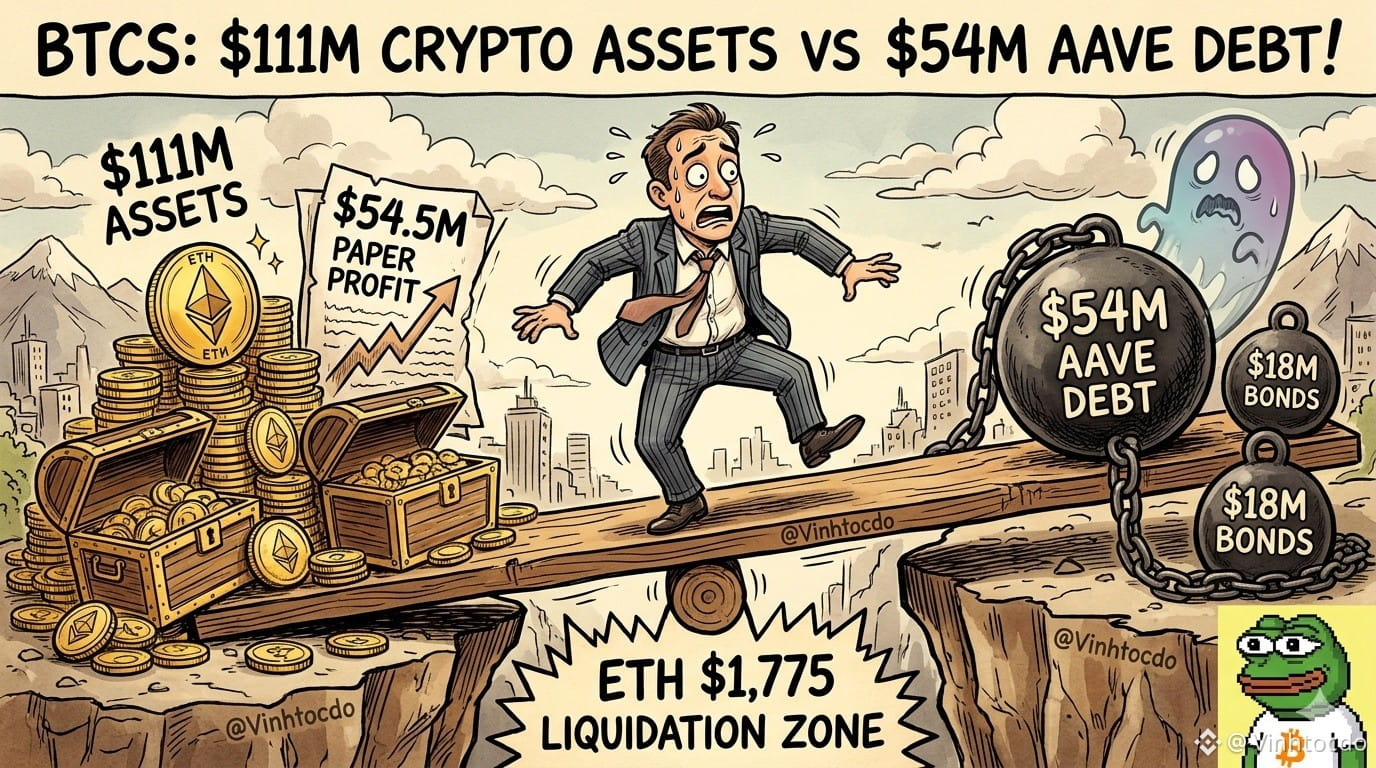
BTCS OWES $54 MILLION ON AAVE: CAN IT HANDLE $111 MILLION IN ASSETS? 😱💸
Just the other day, it bragged about a $54.5 million profit, but in reality, that was only a “paper profit.” Today, BTCS has revealed it’s carrying $54 million in Aave debt (plus $18 million in bonds), using ETH as collateral!
So, can it actually pay it off? With $111 million in crypto assets (based on an ETH price of $1,775), BTCS can still comfortably cover its debt for now. But this kind of DeFi leverage is extremely sensitive: if ETH plunges, it could trigger a cascade of liquidations!
What should traders do? Don’t FOMO just by looking at total assets. Keep a close eye on ETH’s price levels to avoid the liquidation storm on Aave, and manage risk carefully.
This is not financial advice.
👇 Click below to trade and support me:
$ETH
{future}(ETHUSDT)
| $AAVE
{future}(AAVEUSDT)
| $EVAA
{future}(EVAAUSDT)
#BTCS #Aave #Ethereum #DeFi #CryptoNews #RiskManagement #VINHTOCDO
BTCS OWES $54 MILLION ON AAVE: CAN IT HANDLE $111 MILLION IN ASSETS? 😱💸
Just the other day, it bragged about a $54.5 million profit, but in reality, that was only a “paper profit.” Today, BTCS has revealed it’s carrying $54 million in Aave debt (plus $18 million in bonds), using ETH as collateral!
So, can it actually pay it off? With $111 million in crypto assets (based on an ETH price of $1,775), BTCS can still comfortably cover its debt for now. But this kind of DeFi leverage is extremely sensitive: if ETH plunges, it could trigger a cascade of liquidations!
What should traders do? Don’t FOMO just by looking at total assets. Keep a close eye on ETH’s price levels to avoid the liquidation storm on Aave, and manage risk carefully.
This is not financial advice.
👇 Click below to trade and support me:
$ETH
| $AAVE
| $EVAA
#BTCS #Aave #Ethereum #DeFi #CryptoNews #RiskManagement #VINHTOCDO
Just the other day, it bragged about a $54.5 million profit, but in reality, that was only a “paper profit.” Today, BTCS has revealed it’s carrying $54 million in Aave debt (plus $18 million in bonds), using ETH as collateral!
So, can it actually pay it off? With $111 million in crypto assets (based on an ETH price of $1,775), BTCS can still comfortably cover its debt for now. But this kind of DeFi leverage is extremely sensitive: if ETH plunges, it could trigger a cascade of liquidations!
What should traders do? Don’t FOMO just by looking at total assets. Keep a close eye on ETH’s price levels to avoid the liquidation storm on Aave, and manage risk carefully.
This is not financial advice.
👇 Click below to trade and support me:
$ETH
| $AAVE
| $EVAA
#BTCS #Aave #Ethereum #DeFi #CryptoNews #RiskManagement #VINHTOCDO
Farzanahameed01:
😔😔😔
3
3
922

·
--
Partly True
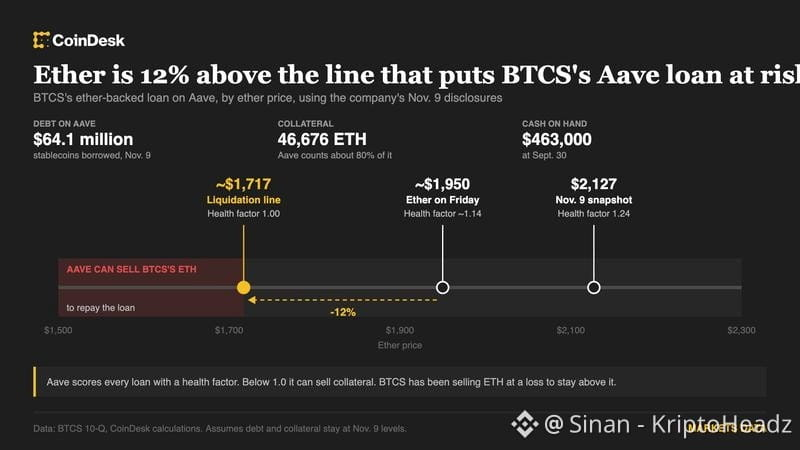
【Estimated to be just 8% away from liquidation! US-listed Ethereum treasury company BTCS sells ETH at a loss to hold on to its $64 million Aave loan】
BTCS disclosed in its quarterly report on November 13 that it had sold some ETH below its purchase price to maintain the health of its Aave loan. As of November 9, it owed about $64.1 million on Aave, collateralized by about 46,676 ETH. Assuming Aave's liquidation threshold of about 80% and no change in the position, it would be forcibly liquidated if ETH fell below about $1,717. ETH is currently trading at about $1,850 on Binance, down about 4.6% over 24 hours—only about 8% above the threshold—while BTCS had just about $460,000 in cash on its books at the end of September.
$ETH $AAVE
#BTCS #以太坊财库 #Aave
【Estimated to be just 8% away from liquidation! US-listed Ethereum treasury company BTCS sells ETH at a loss to hold on to its $64 million Aave loan】
BTCS disclosed in its quarterly report on November 13 that it had sold some ETH below its purchase price to maintain the health of its Aave loan. As of November 9, it owed about $64.1 million on Aave, collateralized by about 46,676 ETH. Assuming Aave's liquidation threshold of about 80% and no change in the position, it would be forcibly liquidated if ETH fell below about $1,717. ETH is currently trading at about $1,850 on Binance, down about 4.6% over 24 hours—only about 8% above the threshold—while BTCS had just about $460,000 in cash on its books at the end of September.
$ETH $AAVE
#BTCS #以太坊财库 #Aave
BTCS disclosed in its quarterly report on November 13 that it had sold some ETH below its purchase price to maintain the health of its Aave loan. As of November 9, it owed about $64.1 million on Aave, collateralized by about 46,676 ETH. Assuming Aave's liquidation threshold of about 80% and no change in the position, it would be forcibly liquidated if ETH fell below about $1,717. ETH is currently trading at about $1,850 on Binance, down about 4.6% over 24 hours—only about 8% above the threshold—while BTCS had just about $460,000 in cash on its books at the end of September.
$ETH $AAVE
#BTCS #以太坊财库 #Aave
1.1k

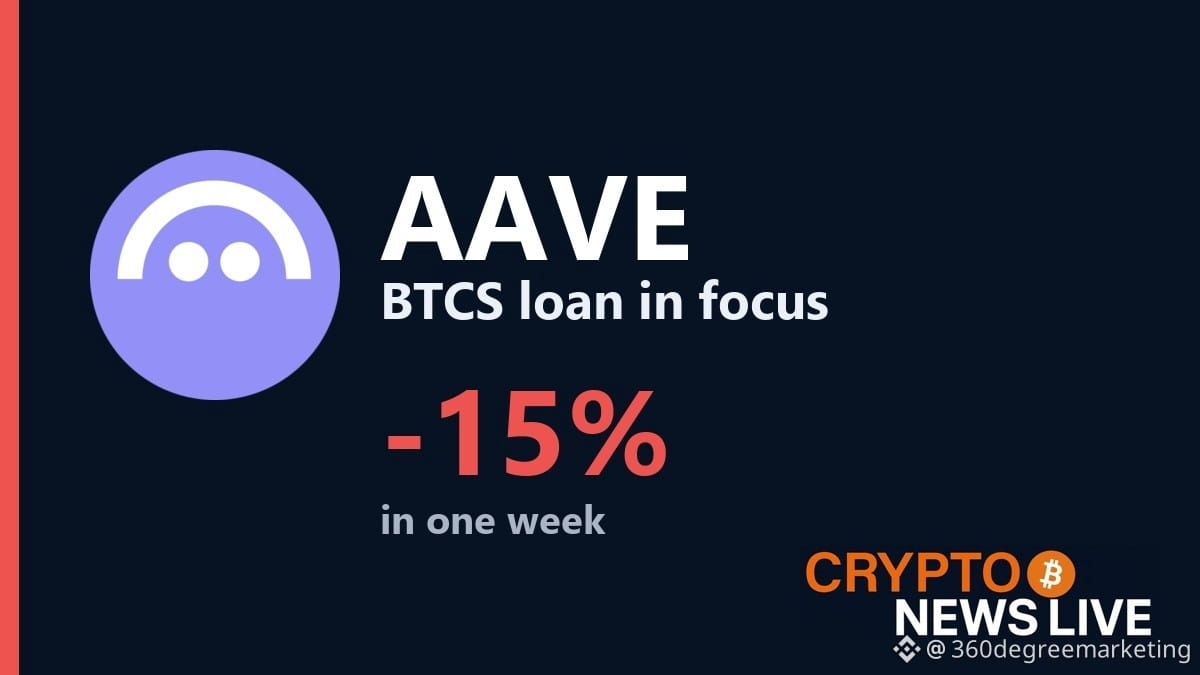
Aave Liquidation Threshold: BTCS Filing Implies 11% Cushion on ETH
Aave liquidation threshold explained for BTCS's $64.1M loan, plus AAVE's 15% weekly drop, its 200-day average test and Aave's TVL and loans.
Full article: https://www.cryptonewslive.org/article/aave-liquidation-threshold-btcs-loan/
#Aave #AaveLiquidationThreshold #BTCS #DeFiLending
Aave Liquidation Threshold: BTCS Filing Implies 11% Cushion on ETH
Aave liquidation threshold explained for BTCS's $64.1M loan, plus AAVE's 15% weekly drop, its 200-day average test and Aave's TVL and loans.
Full article: https://www.cryptonewslive.org/article/aave-liquidation-threshold-btcs-loan/
#Aave #AaveLiquidationThreshold #BTCS #DeFiLending
Aave liquidation threshold explained for BTCS's $64.1M loan, plus AAVE's 15% weekly drop, its 200-day average test and Aave's TVL and loans.
Full article: https://www.cryptonewslive.org/article/aave-liquidation-threshold-btcs-loan/
#Aave #AaveLiquidationThreshold #BTCS #DeFiLending
59

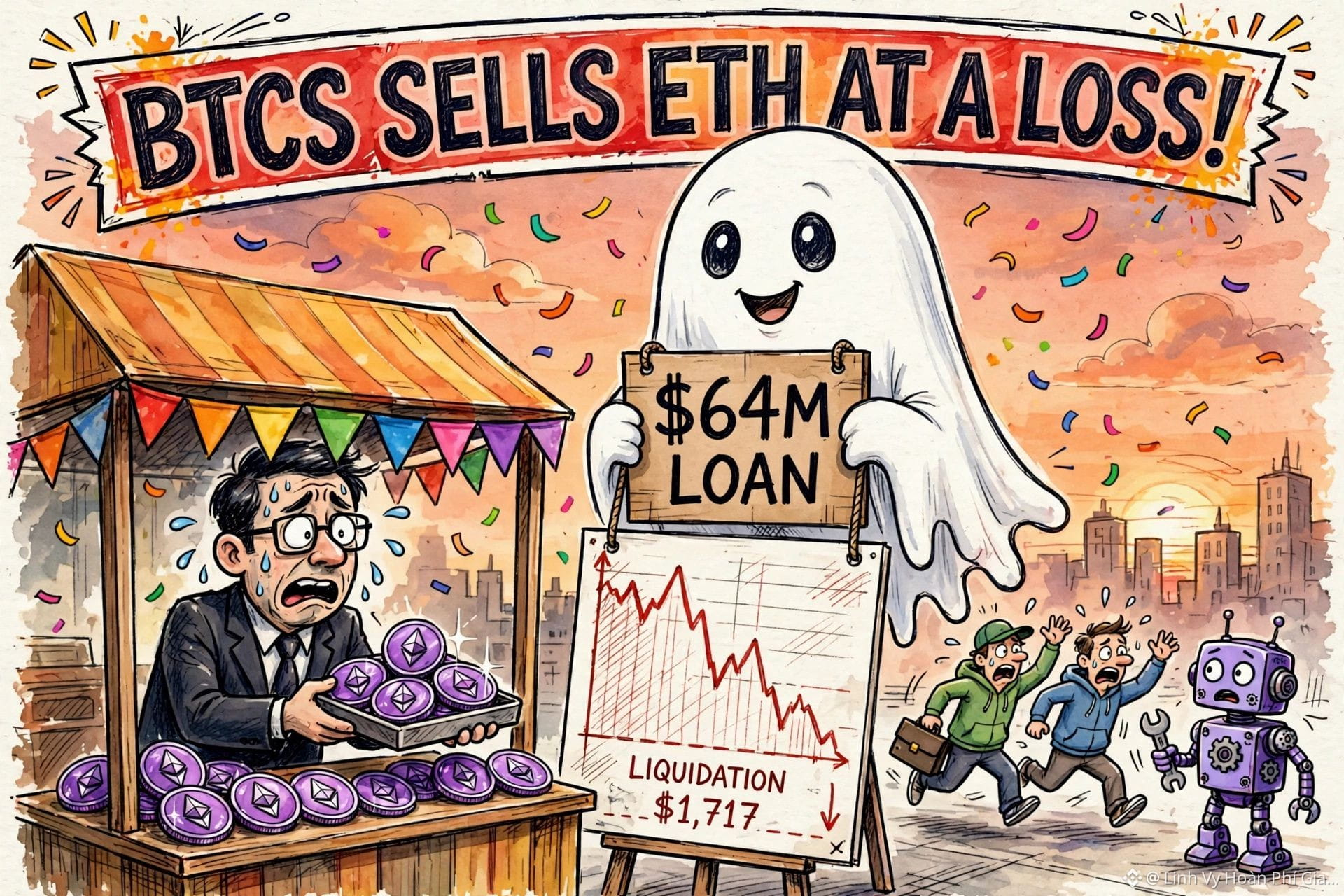
🚨 BTCS SELLS ETH AT A LOSS TO PROTECT ITS $64 MILLION AAVE LOAN!
Nasdaq-listed Ethereum treasury firm BTCS has reportedly sold some of its ETH holdings at a loss to maintain the health of its $64 million loan on Aave.
📊 Here are the key details:
- BTCS holds approximately 46,676 ETH backing its borrowings.
- The company is actively managing its collateral to avoid liquidation risks.
- If ETH drops toward $1,700, the loan could become eligible for liquidation.
- Selling ETH at a loss highlights the pressure crypto treasury companies can face during market volatility.
⚠️ Why does this matter?
This situation highlights the risks of using crypto assets as collateral for large DeFi loans. Even major companies can face serious pressure when the market moves against their positions.
👀 The big question: Will Ethereum recover before liquidation pressure increases, or could more ETH selling follow?
What do you think? Is BTCS making a smart risk-management move, or is this a warning sign for the Ethereum market?
#Ethereum #ETH #BTCS #Aave #DeFi #CryptoNews #Binance #CryptoMarket
🚨 BTCS SELLS ETH AT A LOSS TO PROTECT ITS $64 MILLION AAVE LOAN!
Nasdaq-listed Ethereum treasury firm BTCS has reportedly sold some of its ETH holdings at a loss to maintain the health of its $64 million loan on Aave.
📊 Here are the key details:
- BTCS holds approximately 46,676 ETH backing its borrowings.
- The company is actively managing its collateral to avoid liquidation risks.
- If ETH drops toward $1,700, the loan could become eligible for liquidation.
- Selling ETH at a loss highlights the pressure crypto treasury companies can face during market volatility.
⚠️ Why does this matter?
This situation highlights the risks of using crypto assets as collateral for large DeFi loans. Even major companies can face serious pressure when the market moves against their positions.
👀 The big question: Will Ethereum recover before liquidation pressure increases, or could more ETH selling follow?
What do you think? Is BTCS making a smart risk-management move, or is this a warning sign for the Ethereum market?
#Ethereum #ETH #BTCS #Aave #DeFi #CryptoNews #Binance #CryptoMarket
Nasdaq-listed Ethereum treasury firm BTCS has reportedly sold some of its ETH holdings at a loss to maintain the health of its $64 million loan on Aave.
📊 Here are the key details:
- BTCS holds approximately 46,676 ETH backing its borrowings.
- The company is actively managing its collateral to avoid liquidation risks.
- If ETH drops toward $1,700, the loan could become eligible for liquidation.
- Selling ETH at a loss highlights the pressure crypto treasury companies can face during market volatility.
⚠️ Why does this matter?
This situation highlights the risks of using crypto assets as collateral for large DeFi loans. Even major companies can face serious pressure when the market moves against their positions.
👀 The big question: Will Ethereum recover before liquidation pressure increases, or could more ETH selling follow?
What do you think? Is BTCS making a smart risk-management move, or is this a warning sign for the Ethereum market?
#Ethereum #ETH #BTCS #Aave #DeFi #CryptoNews #Binance #CryptoMarket
237

$64 million in debt forced Ethereum treasury firm BTCS to dump ETH at a loss. Defending their Aave loan health ratio took priority over holding spot, proving corporate treasury leverage cuts both ways in volatile markets. 📉 Watch BTCS loan health metrics and secondary market ETH selling pressure if dips continue. 🚨📊 $ETH #Write2Earn #Ethereum #BTCS #DeFi
$64 million in debt forced Ethereum treasury firm BTCS to dump ETH at a loss. Defending their Aave loan health ratio took priority over holding spot, proving corporate treasury leverage cuts both ways in volatile markets. 📉 Watch BTCS loan health metrics and secondary market ETH selling pressure if dips continue. 🚨📊 $ETH #Write2Earn #Ethereum #BTCS #DeFi
126

#BTCSSellsETHAtLoss
🚨 ETHEREUM TREASURY COMPANY SELLS AT A LOSS TO KEEP ITS $64 MILLION LOAN
Folks, Ethereum treasury company BTCS just admitted to the SEC that it sold ETH below its purchase price to keep its $64.1 million loan on Aave from being liquidated. As of 9/11, the loan was collateralized by 46,676 ETH worth $99.3 million, with a health factor of just 1.24. CoinDesk estimates that if ETH falls to around $1,717, Aave will automatically liquidate the loan, while $ETH Eternity is only around $1,953, about 12% above that threshold. At the end of September, the company had only $463,000 in cash, and most of its digital assets had been pledged to Aave.
Biggest perpetual movement today: $$ZEC 947, $$ICP 2.61
#Ethereum #BTCS #Aave
#BTCSSellsETHAtLoss
🚨 ETHEREUM TREASURY COMPANY SELLS AT A LOSS TO KEEP ITS $64 MILLION LOAN
Folks, Ethereum treasury company BTCS just admitted to the SEC that it sold ETH below its purchase price to keep its $64.1 million loan on Aave from being liquidated. As of 9/11, the loan was collateralized by 46,676 ETH worth $99.3 million, with a health factor of just 1.24. CoinDesk estimates that if ETH falls to around $1,717, Aave will automatically liquidate the loan, while $ETH Eternity is only around $1,953, about 12% above that threshold. At the end of September, the company had only $463,000 in cash, and most of its digital assets had been pledged to Aave.
Biggest perpetual movement today: $$ZEC 947, $$ICP 2.61
#Ethereum #BTCS #Aave
🚨 ETHEREUM TREASURY COMPANY SELLS AT A LOSS TO KEEP ITS $64 MILLION LOAN
Folks, Ethereum treasury company BTCS just admitted to the SEC that it sold ETH below its purchase price to keep its $64.1 million loan on Aave from being liquidated. As of 9/11, the loan was collateralized by 46,676 ETH worth $99.3 million, with a health factor of just 1.24. CoinDesk estimates that if ETH falls to around $1,717, Aave will automatically liquidate the loan, while $ETH Eternity is only around $1,953, about 12% above that threshold. At the end of September, the company had only $463,000 in cash, and most of its digital assets had been pledged to Aave.
Biggest perpetual movement today: $$ZEC 947, $$ICP 2.61
#Ethereum #BTCS #Aave
14
·
--
Bearish
Verified
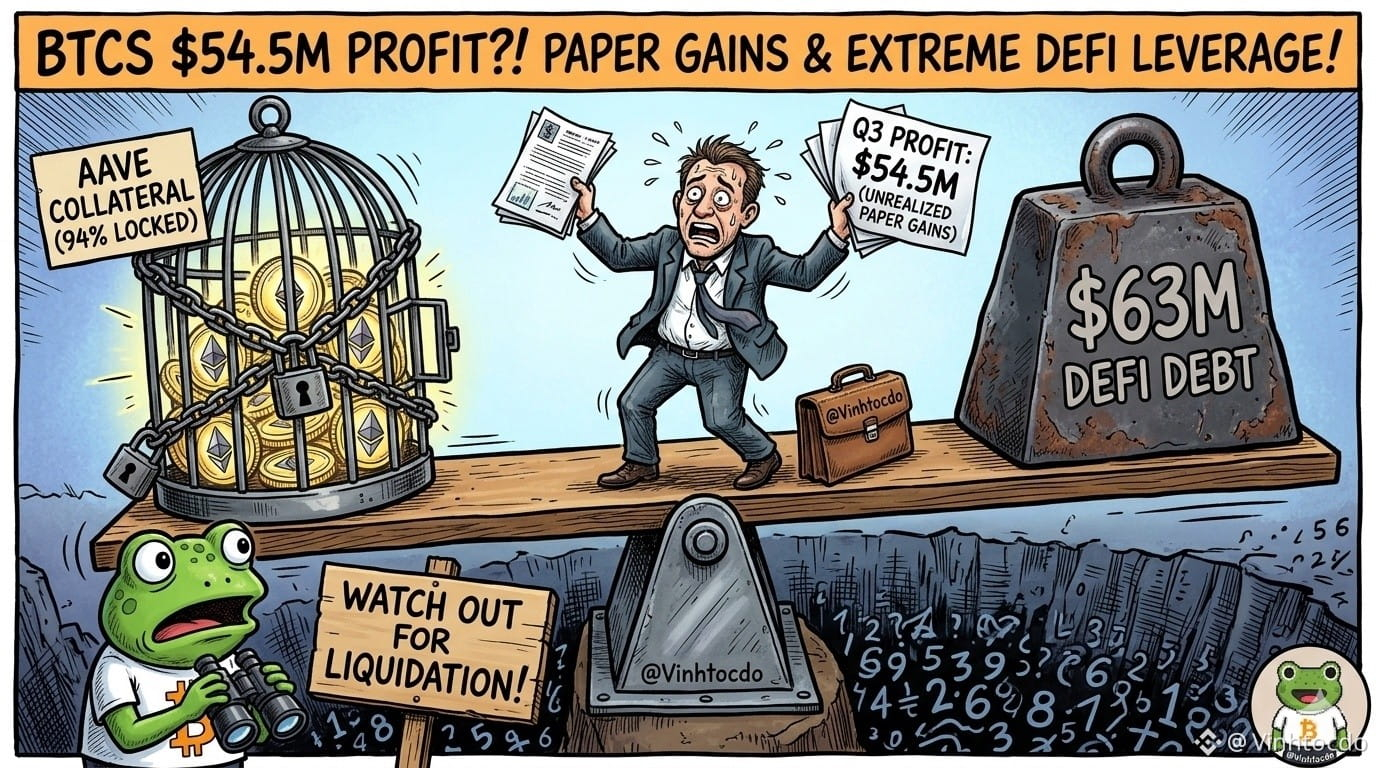
📊 #btcs #earningsseason : Reported a profit of $54.5 million, but it’s really just “paper profit” and extremely aggressive leverage!
A closer look at BTCS’s Q3/2026 report reveals some startling reversals: its ETH holdings fell from 70,787 to just 49,571 ETH. Even more concerning, 94% of this ETH is being used as collateral in DeFi (mainly on Aave) to back loans totaling $63.01 million! The $54.53 million in net profit actually came from $58.35 million in unrealized gains as ETH prices recovered, while core revenue fell 17.1%.
💡 What should traders do? Don’t just see the “massive profit” headline and FOMO! Be alert to the risk of cascading liquidations in DeFi if ETH moves sharply. Manage your capital carefully and limit excessive leverage like the big players are using!
⚠️ This is not financial advice.
👇 Click below to trade and support me: $ETH
{spot}(ETHUSDT)
$AAVE
{spot}(AAVEUSDT)
$AGT
{future}(AGTUSDT)
#Ethereum #DeFi #CryptoNews #StockMarket #RiskManagement #VINHTOCDO
📊 #btcs #earningsseason : Reported a profit of $54.5 million, but it’s really just “paper profit” and extremely aggressive leverage!
A closer look at BTCS’s Q3/2026 report reveals some startling reversals: its ETH holdings fell from 70,787 to just 49,571 ETH. Even more concerning, 94% of this ETH is being used as collateral in DeFi (mainly on Aave) to back loans totaling $63.01 million! The $54.53 million in net profit actually came from $58.35 million in unrealized gains as ETH prices recovered, while core revenue fell 17.1%.
💡 What should traders do? Don’t just see the “massive profit” headline and FOMO! Be alert to the risk of cascading liquidations in DeFi if ETH moves sharply. Manage your capital carefully and limit excessive leverage like the big players are using!
⚠️ This is not financial advice.
👇 Click below to trade and support me: $ETH
$AAVE
$AGT
#Ethereum #DeFi #CryptoNews #StockMarket #RiskManagement #VINHTOCDO
A closer look at BTCS’s Q3/2026 report reveals some startling reversals: its ETH holdings fell from 70,787 to just 49,571 ETH. Even more concerning, 94% of this ETH is being used as collateral in DeFi (mainly on Aave) to back loans totaling $63.01 million! The $54.53 million in net profit actually came from $58.35 million in unrealized gains as ETH prices recovered, while core revenue fell 17.1%.
💡 What should traders do? Don’t just see the “massive profit” headline and FOMO! Be alert to the risk of cascading liquidations in DeFi if ETH moves sharply. Manage your capital carefully and limit excessive leverage like the big players are using!
⚠️ This is not financial advice.
👇 Click below to trade and support me: $ETH
$AAVE
$AGT
#Ethereum #DeFi #CryptoNews #StockMarket #RiskManagement #VINHTOCDO
5
462

·
--
$BTCS.US
{stock_us}(BTCS.US)
🚀 $BTCS.US — Is BTCS Ready for Another Move? 📈
is currently trading around $1.36, up +3.81% 🔥
📊 What I’m watching: • Price holding strong around $1.36 • Positive momentum 📈 • Buyers showing interest 👀 • Potential for another move 🚀
🔥 Keep watching $BTCS.US closely!
Bullish 🟢 or Bearish 🔴?
#BTCSUS #BTCS #Binance #trading #Bullish
$BTCS.US
🚀 $BTCS.US — Is BTCS Ready for Another Move? 📈
is currently trading around $1.36, up +3.81% 🔥
📊 What I’m watching: • Price holding strong around $1.36 • Positive momentum 📈 • Buyers showing interest 👀 • Potential for another move 🚀
🔥 Keep watching $BTCS.US closely!
Bullish 🟢 or Bearish 🔴?
#BTCSUS #BTCS #Binance #trading #Bullish
🚀 $BTCS.US — Is BTCS Ready for Another Move? 📈
is currently trading around $1.36, up +3.81% 🔥
📊 What I’m watching: • Price holding strong around $1.36 • Positive momentum 📈 • Buyers showing interest 👀 • Potential for another move 🚀
🔥 Keep watching $BTCS.US closely!
Bullish 🟢 or Bearish 🔴?
#BTCSUS #BTCS #Binance #trading #Bullish
BTCSUS-12.06%
79

·
--
$BTCS.US
{stock_us}(BTCS.US)
SHORT
$BTCS is showing bearish momentum, with recent trading data indicating selling pressure and a decline toward $1.13. A weak bounce may face resistance; confirm volume and price action before entry. <Cite refs={["turn465148search2","turn465148search4"]}/>
Entry $1.15–$1.18
TP 1 $1.12
TP2 $1.08
TP3 $1.03
SL. $1.21
#btcs
$BTCS.US
SHORT
$BTCS is showing bearish momentum, with recent trading data indicating selling pressure and a decline toward $1.13. A weak bounce may face resistance; confirm volume and price action before entry. <Cite refs={["turn465148search2","turn465148search4"]}/>
Entry $1.15–$1.18
TP 1 $1.12
TP2 $1.08
TP3 $1.03
SL. $1.21
#btcs
SHORT
$BTCS is showing bearish momentum, with recent trading data indicating selling pressure and a decline toward $1.13. A weak bounce may face resistance; confirm volume and price action before entry. <Cite refs={["turn465148search2","turn465148search4"]}/>
Entry $1.15–$1.18
TP 1 $1.12
TP2 $1.08
TP3 $1.03
SL. $1.21
#btcs
BTCSUS-12.06%
1
121
·
--
$BTC
Everyone focuses on the BTCS plan, but a bigger story may be unfolding behind the scenes.
Open Standard has launched an open-dollar coin (#OUSD ), a stablecoin backed by the Union, supported by more than 140 partners, including Visa, Stripe, Mastercard, BlackRock, and Coinbase.
This isn’t just another stablecoin launch—it's a battle for distribution.
When major payment networks and financial institutions come together around a common standard, they create the infrastructure that can support everyday transactions at a global scale.
Stablecoins are evolving rapidly from a niche in crypto into essential financial infrastructure.
The biggest winners won’t be the traditional crypto coin companies, but established players that already dominate payments, banks, and global user networks.
While #BTCS trades around current levels, developments like this could have a far longer-lasting impact than the current price move.
$BTC
Everyone focuses on the BTCS plan, but a bigger story may be unfolding behind the scenes.
Open Standard has launched an open-dollar coin (#OUSD ), a stablecoin backed by the Union, supported by more than 140 partners, including Visa, Stripe, Mastercard, BlackRock, and Coinbase.
This isn’t just another stablecoin launch—it's a battle for distribution.
When major payment networks and financial institutions come together around a common standard, they create the infrastructure that can support everyday transactions at a global scale.
Stablecoins are evolving rapidly from a niche in crypto into essential financial infrastructure.
The biggest winners won’t be the traditional crypto coin companies, but established players that already dominate payments, banks, and global user networks.
While #BTCS trades around current levels, developments like this could have a far longer-lasting impact than the current price move.
Everyone focuses on the BTCS plan, but a bigger story may be unfolding behind the scenes.
Open Standard has launched an open-dollar coin (#OUSD ), a stablecoin backed by the Union, supported by more than 140 partners, including Visa, Stripe, Mastercard, BlackRock, and Coinbase.
This isn’t just another stablecoin launch—it's a battle for distribution.
When major payment networks and financial institutions come together around a common standard, they create the infrastructure that can support everyday transactions at a global scale.
Stablecoins are evolving rapidly from a niche in crypto into essential financial infrastructure.
The biggest winners won’t be the traditional crypto coin companies, but established players that already dominate payments, banks, and global user networks.
While #BTCS trades around current levels, developments like this could have a far longer-lasting impact than the current price move.
BTC+1.91%
COINUS-6.06%
89


🚨 $ETH WHALE TREASURY LOAN NEARS CRITICAL LIQUIDATION WATERMARK AT $1,450! ⚠️
On-chain leverage is starting to wobble as a major Nasdaq-listed treasury firm faces a steep squeeze on its multi-million dollar $ETH debt position. 📊 With price action softening, the collateral buffer is thinning out rapidly, bringing the $1,450 liquidation threshold uncomfortably close into view. ⚡
When corporate balance sheets get cornered by falling valuations, cascading liquidations can trigger aggressive volatility spikes across decentralized lending markets. 🔍 Smart money is tracking order books closely to see if opportunistic buyers will step in or if forced liquidations will sweep lower liquidity pools. Are you expecting a sharp bounce off these structural levels or deeper downside? 👇
⚠️ Not financial advice. Always manage your risk. 🛡️
🏷️ #ETH #DeFi #Aave #BTCS #Crypto
🦈 🌊
🚨 $ETH WHALE TREASURY LOAN NEARS CRITICAL LIQUIDATION WATERMARK AT $1,450! ⚠️
On-chain leverage is starting to wobble as a major Nasdaq-listed treasury firm faces a steep squeeze on its multi-million dollar $ETH debt position. 📊 With price action softening, the collateral buffer is thinning out rapidly, bringing the $1,450 liquidation threshold uncomfortably close into view. ⚡
When corporate balance sheets get cornered by falling valuations, cascading liquidations can trigger aggressive volatility spikes across decentralized lending markets. 🔍 Smart money is tracking order books closely to see if opportunistic buyers will step in or if forced liquidations will sweep lower liquidity pools. Are you expecting a sharp bounce off these structural levels or deeper downside? 👇
⚠️ Not financial advice. Always manage your risk. 🛡️
🏷️ #ETH #DeFi #Aave #BTCS #Crypto
🦈 🌊
On-chain leverage is starting to wobble as a major Nasdaq-listed treasury firm faces a steep squeeze on its multi-million dollar $ETH debt position. 📊 With price action softening, the collateral buffer is thinning out rapidly, bringing the $1,450 liquidation threshold uncomfortably close into view. ⚡
When corporate balance sheets get cornered by falling valuations, cascading liquidations can trigger aggressive volatility spikes across decentralized lending markets. 🔍 Smart money is tracking order books closely to see if opportunistic buyers will step in or if forced liquidations will sweep lower liquidity pools. Are you expecting a sharp bounce off these structural levels or deeper downside? 👇
⚠️ Not financial advice. Always manage your risk. 🛡️
🏷️ #ETH #DeFi #Aave #BTCS #Crypto
🦈 🌊

11
Article
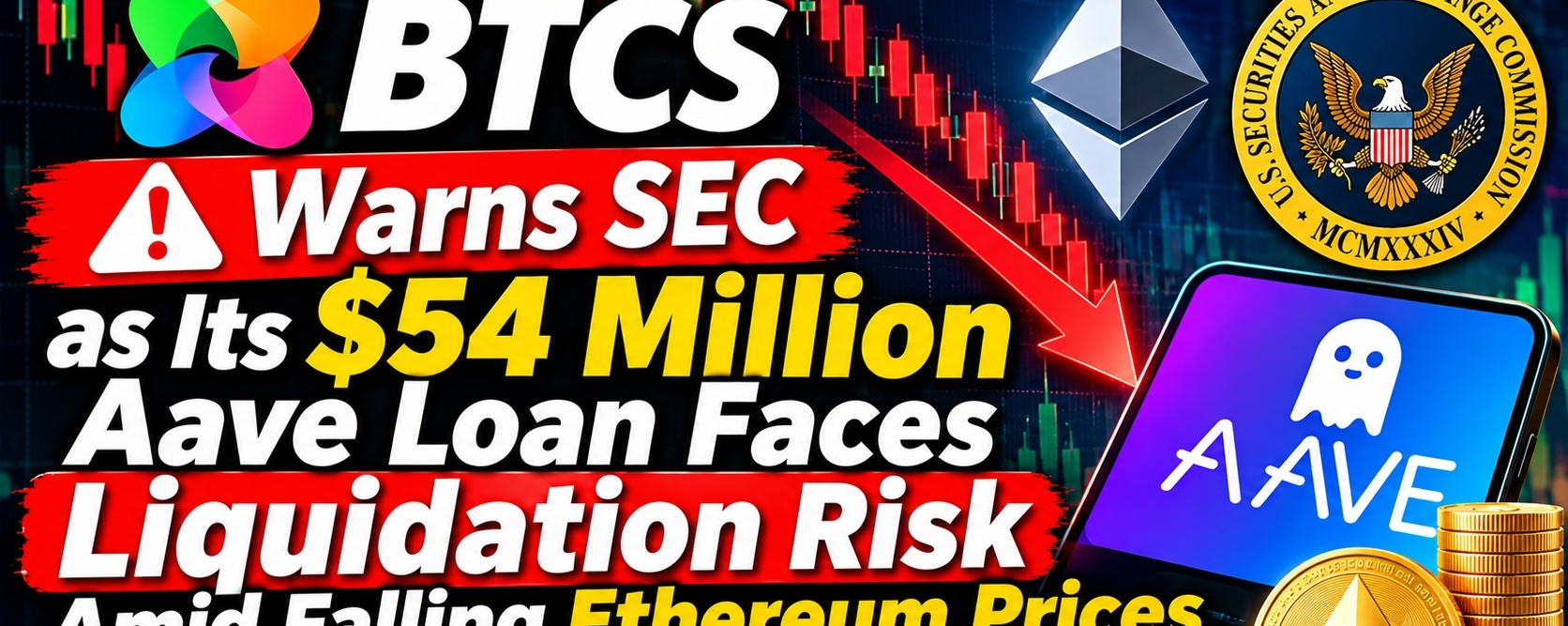
BTCS Warns SEC as Its $54 Million Aave Loan Faces Liquidation Risk Amid Falling Ethereum Prices🚨 BTCS Warns SEC: $54 Million Aave Loan Faces Liquidation Risk as Ethereum Prices Decline
Crypto treasury firm BTCS has warned the U.S. Securities and Exchange Commission (SEC) that its approximately $54 million loan on the Aave DeFi lending platform could face liquidation if Ethereum (ETH) prices continue to fall.
The company has reportedly reduced its Aave debt by around $10 million in just ten days. However, declining ETH prices continue to put pressure on its collateral, increasing the risk of liquidation.
⚠️ Why Does This Matter?
BTCS uses Ethereum as part of its crypto treasury strategy, but borrowing against volatile digital assets comes with significant risks. When ETH prices drop, collateral values decrease, potentially pushing loan positions closer to liquidation thresholds.
If the market continues moving downward, BTCS may need to add more collateral or repay additional debt to protect its position.
📉 What Could Happen Next?
- Further ETH price declines could increase liquidation risks.
- BTCS may need to reduce its debt further.
- Additional collateral could help protect its Aave position.
- The situation highlights the risks of leveraged crypto treasury strategies.
My Take:
This situation is another reminder that even institutional crypto companies are not immune to market volatility. Borrowing against ETH can be profitable during bullish conditions, but a sharp market correction can quickly turn into a serious financial challenge.
The coming days could be important for BTCS as investors watch Ethereum's price action and the company's efforts to manage its debt.
🔥 Stay alert, manage risk, and always DYOR!
#BTCS #Ethereum #ETH #Aave #DeFi #CryptoNews #BinanceSquare
BTCS Warns SEC as Its $54 Million Aave Loan Faces Liquidation Risk Amid Falling Ethereum Prices
🚨 BTCS Warns SEC: $54 Million Aave Loan Faces Liquidation Risk as Ethereum Prices Decline
Crypto treasury firm BTCS has warned the U.S. Securities and Exchange Commission (SEC) that its approximately $54 million loan on the Aave DeFi lending platform could face liquidation if Ethereum (ETH) prices continue to fall.
The company has reportedly reduced its Aave debt by around $10 million in just ten days. However, declining ETH prices continue to put pressure on its collateral, increasing the risk of liquidation.
⚠️ Why Does This Matter?
BTCS uses Ethereum as part of its crypto treasury strategy, but borrowing against volatile digital assets comes with significant risks. When ETH prices drop, collateral values decrease, potentially pushing loan positions closer to liquidation thresholds.
If the market continues moving downward, BTCS may need to add more collateral or repay additional debt to protect its position.
📉 What Could Happen Next?
- Further ETH price declines could increase liquidation risks.
- BTCS may need to reduce its debt further.
- Additional collateral could help protect its Aave position.
- The situation highlights the risks of leveraged crypto treasury strategies.
My Take:
This situation is another reminder that even institutional crypto companies are not immune to market volatility. Borrowing against ETH can be profitable during bullish conditions, but a sharp market correction can quickly turn into a serious financial challenge.
The coming days could be important for BTCS as investors watch Ethereum's price action and the company's efforts to manage its debt.
🔥 Stay alert, manage risk, and always DYOR!
#BTCS #Ethereum #ETH #Aave #DeFi #CryptoNews #BinanceSquare
Crypto treasury firm BTCS has warned the U.S. Securities and Exchange Commission (SEC) that its approximately $54 million loan on the Aave DeFi lending platform could face liquidation if Ethereum (ETH) prices continue to fall.
The company has reportedly reduced its Aave debt by around $10 million in just ten days. However, declining ETH prices continue to put pressure on its collateral, increasing the risk of liquidation.
⚠️ Why Does This Matter?
BTCS uses Ethereum as part of its crypto treasury strategy, but borrowing against volatile digital assets comes with significant risks. When ETH prices drop, collateral values decrease, potentially pushing loan positions closer to liquidation thresholds.
If the market continues moving downward, BTCS may need to add more collateral or repay additional debt to protect its position.
📉 What Could Happen Next?
- Further ETH price declines could increase liquidation risks.
- BTCS may need to reduce its debt further.
- Additional collateral could help protect its Aave position.
- The situation highlights the risks of leveraged crypto treasury strategies.
My Take:
This situation is another reminder that even institutional crypto companies are not immune to market volatility. Borrowing against ETH can be profitable during bullish conditions, but a sharp market correction can quickly turn into a serious financial challenge.
The coming days could be important for BTCS as investors watch Ethereum's price action and the company's efforts to manage its debt.
🔥 Stay alert, manage risk, and always DYOR!
#BTCS #Ethereum #ETH #Aave #DeFi #CryptoNews #BinanceSquare
85

·
--
Bullish
🚨 BREAKING: BTCS WARNS SEC OVER $54 MILLION AAVE LOAN LIQUIDATION RISK!
A major warning from Ethereum treasury firm BTCS has raised concerns about DeFi lending risks.
BTCS has reportedly informed the U.S. Securities and Exchange Commission (SEC) that its $54 million loan on Aave could face liquidation under certain market conditions.
🔥 Why Does This Matter?
🔹 DeFi Risk: Large crypto-backed loans can become vulnerable during market volatility.
🔹 Ethereum Exposure: The situation highlights the risks faced by companies holding ETH-related assets.
🔹 Aave Under Spotlight: The development puts attention on lending protocols and their liquidation mechanisms.
🔹 Market Confidence: Investors may pay closer attention to leverage and collateral management in DeFi.
📊 The Bigger Picture
DeFi offers powerful financial opportunities, but borrowing against volatile crypto assets comes with significant risks. Even established companies are not immune to liquidation pressure.
💬 COMMUNITY DISCUSSION
Do you think large institutional borrowers should reduce their DeFi leverage, or is liquidation simply part of the crypto lending ecosystem?
👇 Share your thoughts!
#Ethereum #ETH #AAVE #DEFİ #BTCS
$ETH $BTC $AAVE
{spot}(AAVEUSDT)
{spot}(BTCUSDT)
{spot}(ETHUSDT)
🚨 BREAKING: BTCS WARNS SEC OVER $54 MILLION AAVE LOAN LIQUIDATION RISK!
A major warning from Ethereum treasury firm BTCS has raised concerns about DeFi lending risks.
BTCS has reportedly informed the U.S. Securities and Exchange Commission (SEC) that its $54 million loan on Aave could face liquidation under certain market conditions.
🔥 Why Does This Matter?
🔹 DeFi Risk: Large crypto-backed loans can become vulnerable during market volatility.
🔹 Ethereum Exposure: The situation highlights the risks faced by companies holding ETH-related assets.
🔹 Aave Under Spotlight: The development puts attention on lending protocols and their liquidation mechanisms.
🔹 Market Confidence: Investors may pay closer attention to leverage and collateral management in DeFi.
📊 The Bigger Picture
DeFi offers powerful financial opportunities, but borrowing against volatile crypto assets comes with significant risks. Even established companies are not immune to liquidation pressure.
💬 COMMUNITY DISCUSSION
Do you think large institutional borrowers should reduce their DeFi leverage, or is liquidation simply part of the crypto lending ecosystem?
👇 Share your thoughts!
#Ethereum #ETH #AAVE #DEFİ #BTCS
$ETH $BTC $AAVE
A major warning from Ethereum treasury firm BTCS has raised concerns about DeFi lending risks.
BTCS has reportedly informed the U.S. Securities and Exchange Commission (SEC) that its $54 million loan on Aave could face liquidation under certain market conditions.
🔥 Why Does This Matter?
🔹 DeFi Risk: Large crypto-backed loans can become vulnerable during market volatility.
🔹 Ethereum Exposure: The situation highlights the risks faced by companies holding ETH-related assets.
🔹 Aave Under Spotlight: The development puts attention on lending protocols and their liquidation mechanisms.
🔹 Market Confidence: Investors may pay closer attention to leverage and collateral management in DeFi.
📊 The Bigger Picture
DeFi offers powerful financial opportunities, but borrowing against volatile crypto assets comes with significant risks. Even established companies are not immune to liquidation pressure.
💬 COMMUNITY DISCUSSION
Do you think large institutional borrowers should reduce their DeFi leverage, or is liquidation simply part of the crypto lending ecosystem?
👇 Share your thoughts!
#Ethereum #ETH #AAVE #DEFİ #BTCS
$ETH $BTC $AAVE
FEDAT - sport digital assets marketplace:
"Тот, кто жадно сжимает горсть песка, теряет его сквозь пальцы". 🏜️ Жажда сверхприбыли через леверидж создает иллюзию контроля над рынком. Но смарт-контракты беспристрастны, как сама природа. Они не делают скидок на размер кошелька. Истинная мудрость в DeFi — это управление рисками, а не погоня за максимальным плечом 🏯💎🤝👍😀
1
2
85

·
--
Verified
A U.S.-listed company can only sell the ETH it has been hoarding at a loss to avoid liquidation
It has pledged more than 46,000 ETH on Aave and borrowed about $64 million
Based on figures from November 9, ETH falling to just over $1,700 would trigger liquidation. It’s now only about 10% away from that level
With less than $500,000 in cash on its books, all it can do is sell at a loss to protect its position
This shows that in a bear market, companies that hoard crypto may go from supporting the market to driving it down
Do you think these companies are supporting the market or planting a time bomb?
#ETH #Aave #BTCS #Binance Square
A U.S.-listed company can only sell the ETH it has been hoarding at a loss to avoid liquidation
It has pledged more than 46,000 ETH on Aave and borrowed about $64 million
Based on figures from November 9, ETH falling to just over $1,700 would trigger liquidation. It’s now only about 10% away from that level
With less than $500,000 in cash on its books, all it can do is sell at a loss to protect its position
This shows that in a bear market, companies that hoard crypto may go from supporting the market to driving it down
Do you think these companies are supporting the market or planting a time bomb?
#ETH #Aave #BTCS #Binance Square
It has pledged more than 46,000 ETH on Aave and borrowed about $64 million
Based on figures from November 9, ETH falling to just over $1,700 would trigger liquidation. It’s now only about 10% away from that level
With less than $500,000 in cash on its books, all it can do is sell at a loss to protect its position
This shows that in a bear market, companies that hoard crypto may go from supporting the market to driving it down
Do you think these companies are supporting the market or planting a time bomb?
#ETH #Aave #BTCS #Binance Square
上馬殺賊下馬念經:
那肯定能砸穿1600
2
1
2.2k
Log in to explore more content
Join global crypto users on Binance Square
⚡️ Get latest and useful information about crypto.
💬 Trusted by the world’s largest crypto exchange.
👍 Discover real insights from verified creators.
Email / Phone number
Trending Topics
1
#NvidiaLoses$2.7TrillionInMonthAndAHalf
18,385 views
116 Discussing
2
#CanBTCReboundAfterFallingBelow60K?
754,532 views
2,962 Discussing
3
#GlobalStocksFaceLongestLosingStreakSince2023
273,897 views
1,980 Discussing
4
#BlackRockIBITPostsRecord$541MSingleDayOutflow
32,265 views
88 Discussing
5
#AnthropicPlungesTowardIPOPriceonDay2
139,854 views
1,206 Discussing
6
#TwentyOneCapitalAdds172.25BTC
63,858 views
656 Discussing
7
#HKBillWouldExcludeTokenizedDepositsFromVirtualAssets
8,097 views
50 Discussing
8
#BNBDropsBelow540USDTWith8.46%DailyDecline
76,509 views
649 Discussing
9
#HKBillProposesHK$100KFineForUnauthorizedCryptoTitles
2,555 views
22 Discussing
10
#BitMineFaces$10.1BUnrealizedETHLoss
5,386 views
28 Discussing