financialhistory

71,857 views
56 Discussing
BLOCKMACRO
·
--
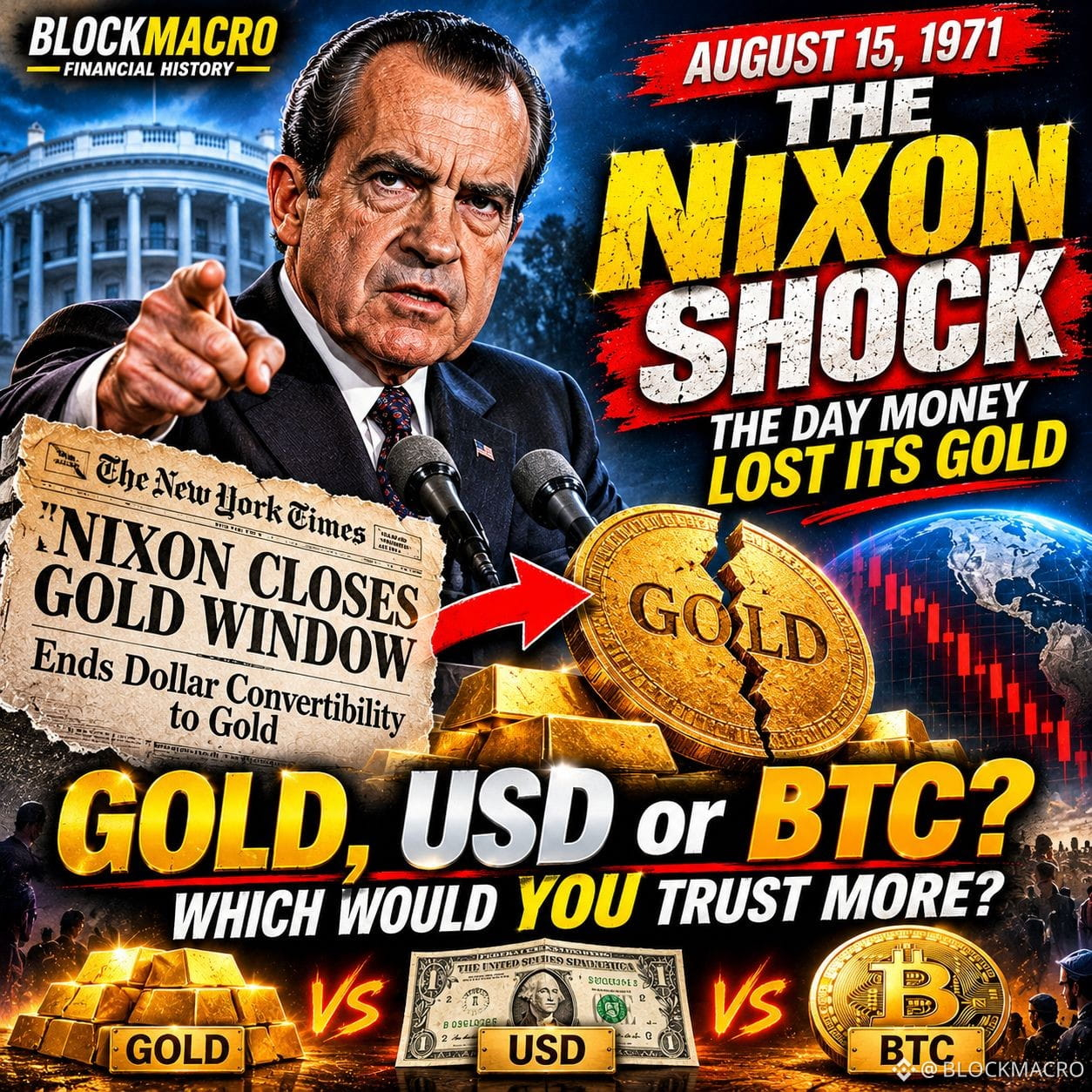
FINANCIAL HISTORY: THE DAY MONEY LOST ITS GOLD August 15, 1971 — One Decision Changed the World's Financial System Forever. Imagine a world where the US dollar was linked to gold. Under the Bretton Woods system, foreign governments could exchange their dollars for gold at $35 per ounce. But there was a problem: America had issued far more dollars than its gold reserves could comfortably support. Confidence was fading. Countries were demanding gold. Then President Richard Nixon made a historic announcement. He closed the "Gold Window." Foreign governments could no longer convert their US dollar reserves into gold. The decision became known as THE NIXON SHOCK. It marked the beginning of the end of the Bretton Woods system and the transition toward today's fiat-money world. WHY DOES THIS MATTER TO CRYPTO? Bitcoin was created decades later, in a world where government-issued currencies were no longer redeemable for gold. Its supporters see Bitcoin's fixed supply of 21 million coins as an alternative to a monetary system based on trust in governments and central banks. But here's the controversial question: If money no longer needs gold backing, what should give it value — government trust, economic power, or mathematical scarcity? History changed in 1971. Could Bitcoin change the next chapter? — BLOCKMACRO $BTC $ETH #FinancialHistory #bitcoin #GOLD #FederalReserve
FINANCIAL HISTORY: THE DAY MONEY LOST ITS GOLD

August 15, 1971 — One Decision Changed the World's Financial System Forever.

Imagine a world where the US dollar was linked to gold.

Under the Bretton Woods system, foreign governments could exchange their dollars for gold at $35 per ounce.

But there was a problem: America had issued far more dollars than its gold reserves could comfortably support.

Confidence was fading. Countries were demanding gold.

Then President Richard Nixon made a historic announcement.

He closed the "Gold Window."

Foreign governments could no longer convert their US dollar reserves into gold.

The decision became known as THE NIXON SHOCK.

It marked the beginning of the end of the Bretton Woods system and the transition toward today's fiat-money world.

WHY DOES THIS MATTER TO CRYPTO?

Bitcoin was created decades later, in a world where government-issued currencies were no longer redeemable for gold.

Its supporters see Bitcoin's fixed supply of 21 million coins as an alternative to a monetary system based on trust in governments and central banks.

But here's the controversial question:

If money no longer needs gold backing, what should give it value — government trust, economic power, or mathematical scarcity?

History changed in 1971.

Could Bitcoin change the next chapter?

— BLOCKMACRO

$BTC $ETH #FinancialHistory #bitcoin #GOLD #FederalReserve
FINANCIAL HISTORY: The Trader Who Turned $10,775 Into $18 Million Meet Dan Zanger — One of the Most Remarkable Traders in Market History. Before becoming a millionaire, Dan Zanger was a swimming-pool contractor in Los Angeles. His fascination with the stock market began early, but he spent years studying charts and learning from his mistakes. In 1989, he became serious about technical analysis, studying chart patterns for 25–30 hours every week. His strategy was surprisingly simple: Focus on leading, high-momentum stocks. Identify breakouts using chart patterns. Follow price and volume rather than relying on dozens of indicators. Cut losing positions quickly. Ride powerful winners while momentum remained strong. In June 1998, he started with approximately $10,775. During the dot-com boom, he reportedly transformed that amount into $18 million in just 18 months, eventually reaching around $42 million in 23 months. What Can Crypto Traders Learn From His Story? Bitcoin and altcoins may be different from 1990s technology stocks, but market psychology never changes. Study price action before chasing hype. Wait for confirmed breakouts. Pay attention to volume. Cut losses before they become disasters. Let winning trades run, but never confuse confidence with recklessness. The biggest lesson? Dan Zanger didn't become successful simply because he found the next big stock. He spent years developing the skills to recognize opportunities when they appeared. In crypto, everyone wants the next 100x coin. Very few are willing to put in the work to become better traders. Question for Crypto Traders: If you had $10,775 today, would you try to turn it into $1 million through crypto trading, or would you focus on protecting your capital first? #FinancialHistory #Bitcoin #CryptoTrading. #tradingpsychology #TechnicalAnalysis $BTC $ETH $SOL
FINANCIAL HISTORY: The Trader Who Turned $10,775 Into $18 Million

Meet Dan Zanger — One of the Most Remarkable Traders in Market History.

Before becoming a millionaire, Dan Zanger was a swimming-pool contractor in Los Angeles. His fascination with the stock market began early, but he spent years studying charts and learning from his mistakes.

In 1989, he became serious about technical analysis, studying chart patterns for 25–30 hours every week.

His strategy was surprisingly simple:

Focus on leading, high-momentum stocks.

Identify breakouts using chart patterns.

Follow price and volume rather than relying on dozens of indicators.

Cut losing positions quickly.

Ride powerful winners while momentum remained strong.

In June 1998, he started with approximately $10,775.

During the dot-com boom, he reportedly transformed that amount into $18 million in just 18 months, eventually reaching around $42 million in 23 months.

What Can Crypto Traders Learn From His Story?

Bitcoin and altcoins may be different from 1990s technology stocks, but market psychology never changes.

Study price action before chasing hype.

Wait for confirmed breakouts.

Pay attention to volume.

Cut losses before they become disasters.

Let winning trades run, but never confuse confidence with recklessness.

The biggest lesson?

Dan Zanger didn't become successful simply because he found the next big stock. He spent years developing the skills to recognize opportunities when they appeared.

In crypto, everyone wants the next 100x coin. Very few are willing to put in the work to become better traders.

Question for Crypto Traders:

If you had $10,775 today, would you try to turn it into $1 million through crypto trading, or would you focus on protecting your capital first?

#FinancialHistory #Bitcoin #CryptoTrading. #tradingpsychology #TechnicalAnalysis $BTC $ETH $SOL
When money became paper, value stopped traveling by weight. Song-dynasty Jiaozi transformed deposits into portable claims—proof that currency is ultimately a system of shared trust. #PaperMoney #FinancialHistory #ROOFUND
When money became paper, value stopped traveling by weight. Song-dynasty Jiaozi transformed deposits into portable claims—proof that currency is ultimately a system of shared trust.

#PaperMoney #FinancialHistory #ROOFUND
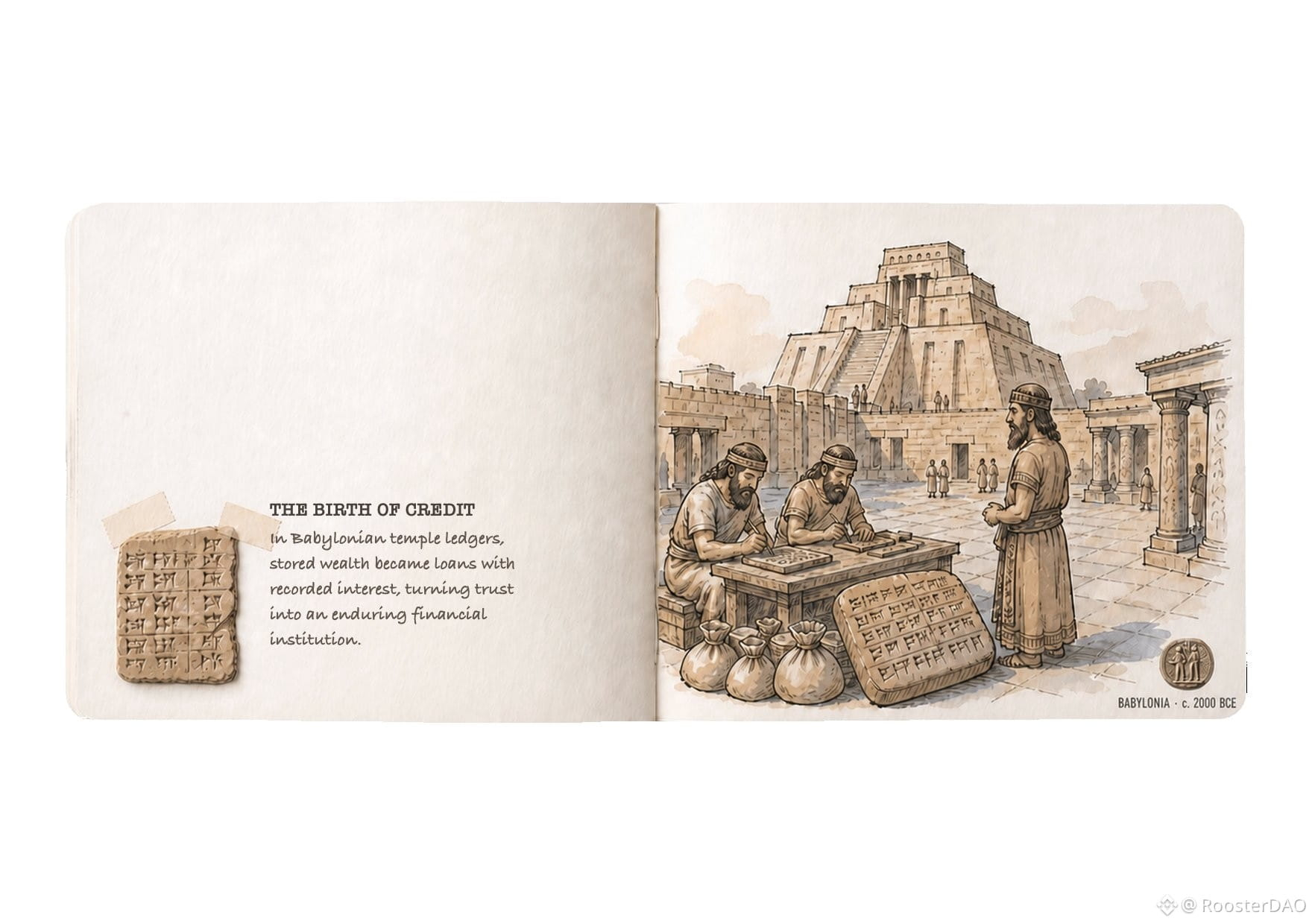
Before banks had marble halls, temples kept silver, grain, and promises. Babylon’s clay ledgers turned stored wealth into recorded loans—and trust into an institution. The first chapter of finance was written in mud. #FinancialHistory #Credit #Babylon #ROOFUND
Before banks had marble halls, temples kept silver, grain, and promises.

Babylon’s clay ledgers turned stored wealth into recorded loans—and trust into an institution. The first chapter of finance was written in mud.

#FinancialHistory #Credit #Babylon #ROOFUND
📉💥 The History of Financial Crashes & Why People Never Learn 💰🧠 📜 From the Tulip Mania (1637) 🌷 to the Great Depression (1929) 📉, the Dot-Com Bubble (2000) 🌐, the Global Financial Crisis (2008) 🏦, and the Crypto Market Crashes ₿⚡—history keeps repeating itself. 🔍 Why? 😨 Fear replaces logic. 🤩 Greed overrides discipline. 📈 Investors chase hype at market tops. 📉 Panic selling happens at market bottoms. 💡 The biggest lesson isn't predicting the next crash—it's managing risk, emotions, and capital. Successful investors focus on long-term strategies, diversification, and continuous learning instead of following the crowd. 🚀 Markets recover, but only patient and disciplined investors are positioned to benefit. ⚠️ Disclaimer: This post is for educational and informational purposes only and should not be considered financial, investment, or trading advice. Always conduct your own research (DYOR) and consult a qualified financial advisor before making investment decisions. #BinanceSquare #CryptoEducation #RiskManagement #Investing #FinancialHistory $NVDAB {spot}(NVDABUSDT) $AAPL.US {stock_us}(AAPL.US) $GOOG.US {stock_us}(GOOG.US) #DowRisesOver500Points #SheinDisclosesFTCProbeInHKIPOFiling #MorganStanleySolanaETFBeginsTrading #KOSPITriggersSidecarOnTechSelloff
📉💥 The History of Financial Crashes & Why People Never Learn 💰🧠

📜 From the Tulip Mania (1637) 🌷 to the Great Depression (1929) 📉, the Dot-Com Bubble (2000) 🌐, the Global Financial Crisis (2008) 🏦, and the Crypto Market Crashes ₿⚡—history keeps repeating itself.

🔍 Why?
😨 Fear replaces logic.
🤩 Greed overrides discipline.
📈 Investors chase hype at market tops.
📉 Panic selling happens at market bottoms.

💡 The biggest lesson isn't predicting the next crash—it's managing risk, emotions, and capital. Successful investors focus on long-term strategies, diversification, and continuous learning instead of following the crowd.

🚀 Markets recover, but only patient and disciplined investors are positioned to benefit.

⚠️ Disclaimer: This post is for educational and informational purposes only and should not be considered financial, investment, or trading advice. Always conduct your own research (DYOR) and consult a qualified financial advisor before making investment decisions.

#BinanceSquare #CryptoEducation #RiskManagement #Investing #FinancialHistory $NVDAB
$AAPL.US
$GOOG.US
#DowRisesOver500Points #SheinDisclosesFTCProbeInHKIPOFiling #MorganStanleySolanaETFBeginsTrading #KOSPITriggersSidecarOnTechSelloff
Article
Stocks were invented for business. But why did people start trading them?Last time, we got to the point where entrepreneurs realized a simple thing: a large undertaking can be financed not only with debt. A business can be divided into shares and sold to many people. That’s how the stock was created. But here comes the next question. If the business already received the money from the sale of shares, then why does someone buy and sell them on the stock exchange every second today?

Stocks were invented for business. But why did people start trading them?

Last time, we got to the point where entrepreneurs realized a simple thing: a large undertaking can be financed not only with debt.
A business can be divided into shares and sold to many people.
That’s how the stock was created.
But here comes the next question.
If the business already received the money from the sale of shares, then why does someone buy and sell them on the stock exchange every second today?
·
--
Bearish
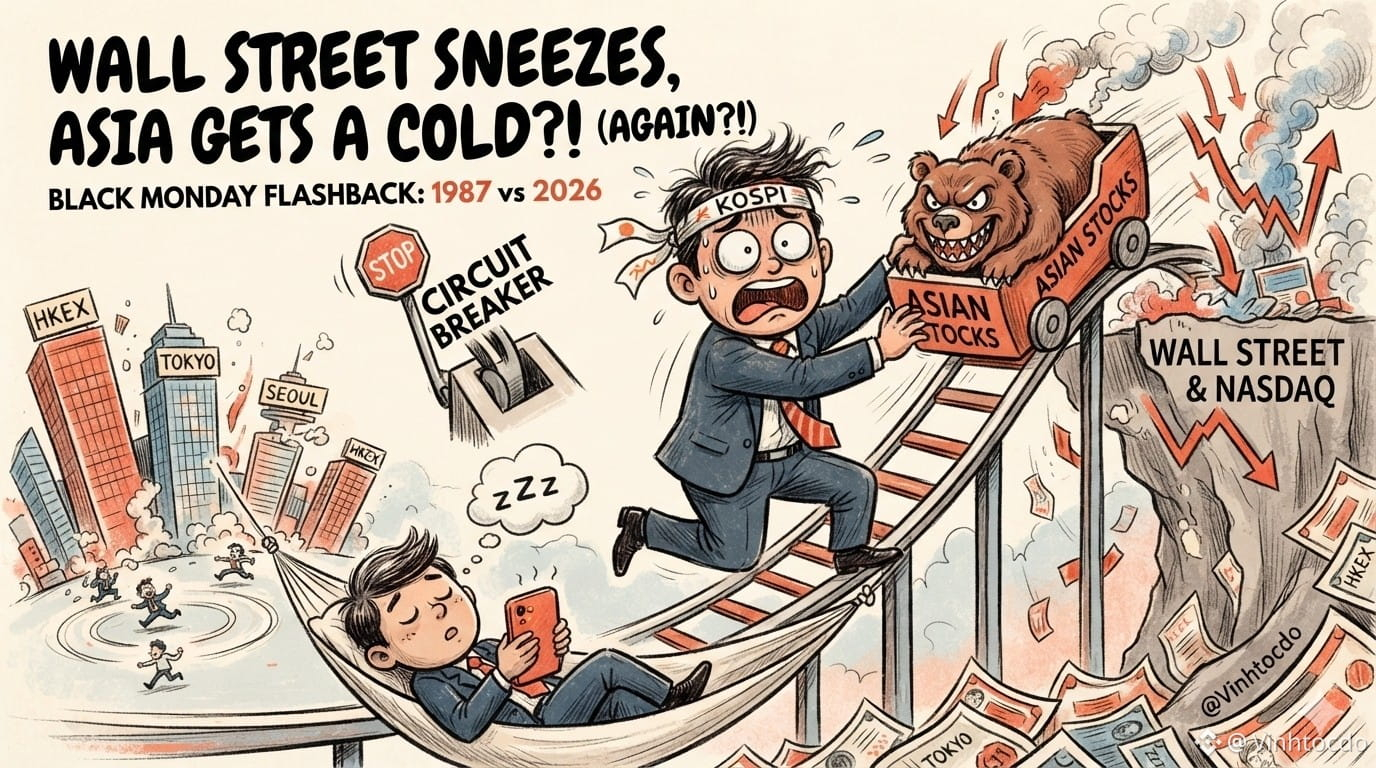
Last Friday, 16/10/2026, Wall Street and NASDAQ took a jaw-dropping nosedive, leaving Kospi and Asian stock investors heading into the first trading session of the week with their hearts pounding and knees shaking—stunned and wondering if the Black Monday of 39 years ago (19/10/1987) had come back to life! In 1987, the Dow Jones plunged a record 22.61% as automated trading systems triggered massive sell-offs. Today, despite heavy psychological pressure, the market has Circuit Breakers to stop the destructive slide in its tracks. History shows that after panic comes opportunity: smart, long-term money always finds a chance to scoop up bargains. What should traders do? Turn off the app and get some sleep, or buckle up—don’t let trading bots or herd mentality lead you by the nose! This is not financial advice. 👉 Enter code VINHTOCDO or sign up at: [https://www.binance.com/register?ref=VINHTOCDO](https://www.binance.com/register?ref=VINHTOCDO) to claim your offer! Click Trade below to support me: $SKHYB {spot}(SKHYBUSDT) $SAMSUNG {future}(SAMSUNGUSDT) $HYUNDAI {future}(HYUNDAIUSDT) #AsianStocks #Kospi #Wallstreet #NASDAQ #VINHTOCDO #CryptoInvesting #MarketCrash #TradingTips #FinancialHistory #BinanceSquare
Last Friday, 16/10/2026, Wall Street and NASDAQ took a jaw-dropping nosedive, leaving Kospi and Asian stock investors heading into the first trading session of the week with their hearts pounding and knees shaking—stunned and wondering if the Black Monday of 39 years ago (19/10/1987) had come back to life!
In 1987, the Dow Jones plunged a record 22.61% as automated trading systems triggered massive sell-offs. Today, despite heavy psychological pressure, the market has Circuit Breakers to stop the destructive slide in its tracks. History shows that after panic comes opportunity: smart, long-term money always finds a chance to scoop up bargains.
What should traders do? Turn off the app and get some sleep, or buckle up—don’t let trading bots or herd mentality lead you by the nose!
This is not financial advice.
👉 Enter code VINHTOCDO or sign up at: https://www.binance.com/register?ref=VINHTOCDO to claim your offer!
Click Trade below to support me:
$SKHYB

$SAMSUNG

$HYUNDAI

#AsianStocks #Kospi #Wallstreet #NASDAQ #VINHTOCDO #CryptoInvesting #MarketCrash #TradingTips #FinancialHistory #BinanceSquare
SK Hynix Inc. Up or Down on October 19, 2026?

SK Hynix Inc. Up or Down on October 19, 2026?

99%Up1%Down
Volume $6,680.23
Lessons from History: Why Fiat Currencies Always Collapse ​Post Content: Throughout history, every major fiat currency has eventually followed the same lifecycle. From the Roman Denarius devaluation to the hyperinflation of the Weimar Republic, government-issued money without hard backing has a consistent track record over the long term. ​The Roman Empire: Emperor Nero debased the silver purity of the denarius to fund expenses, sparking centuries of runaway inflation and economic decay. ​The Weimar Republic (1923): Printing money to pay off massive debts led to a wheelbarrow economy where basic goods cost billions of marks. ​The Modern Parallel: Today, with global debt at record highs and central banks expanding liquidity, history offers a stark reminder of why decentralized, scarce assets matter. ​Digital assets and cryptocurrencies were engineered precisely as a hedge against this historical cycle—introducing programmatic scarcity instead of political control. ​What are your thoughts? Is history about to repeat itself? Drop your perspective in the comments below! 👇 ​#BinanceSquare #cryptouniverseofficial toEducation #FinancialHistory #Bitcoin❗ #Inflation
Lessons from History: Why Fiat Currencies Always Collapse

​Post Content:

Throughout history, every major fiat currency has eventually followed the same lifecycle. From the Roman Denarius devaluation to the hyperinflation of the Weimar Republic, government-issued money without hard backing has a consistent track record over the long term.

​The Roman Empire: Emperor Nero debased the silver purity of the denarius to fund expenses, sparking centuries of runaway inflation and economic decay.

​The Weimar Republic (1923): Printing money to pay off massive debts led to a wheelbarrow economy where basic goods cost billions of marks.

​The Modern Parallel: Today, with global debt at record highs and central banks expanding liquidity, history offers a stark reminder of why decentralized, scarce assets matter.

​Digital assets and cryptocurrencies were engineered precisely as a hedge against this historical cycle—introducing programmatic scarcity instead of political control.

​What are your thoughts? Is history about to repeat itself? Drop your perspective in the comments below! 👇

​#BinanceSquare #cryptouniverseofficial toEducation #FinancialHistory #Bitcoin❗ #Inflation
Log in to explore more content
Join global crypto users on Binance Square
⚡️ Get latest and useful information about crypto.
💬 Trusted by the world’s largest crypto exchange.
👍 Discover real insights from verified creators.
Email / Phone number