
#tradingforbeginners
tradingforbeginners
171,039 views
161 Discussing
Hot
Latest

·
--
New traders, master the 24h price change on Binance! It reflects how a coin's price has moved (up 📈 or down 📉) over the last 24 hours from the current moment.
A positive percentage (+%) indicates an increase, while a negative percentage (-%) signifies a decrease. This offers a quick snapshot of short-term market sentiment and volatility.
Crucially, don't view this in isolation! Always combine it with trading volume 🔥. High volume accompanying a significant price change suggests a more robust and meaningful move. Low volume might indicate less sustainable action.
Think of it as one vital piece of your analysis puzzle. Integrate it with other indicators for a comprehensive market view. How do you use this metric? Share below! 👇
#CryptoBasics #BinanceTips #TradingForBeginners #MarketAnalysis
Not financial advice. DYOR.
3

🚀 NEW TO TRADING? START SMART, NOT BIG! 📊🔥
Entering the crypto market can be exciting, but making quick profits should never be your first goal. As a beginner, building the right habits is far more important than chasing big trades.
Here are a few rules I believe every new trader should follow:
🔹 Protect Your Capital: Never risk money you cannot afford to lose.
🔹 Manage Your Risk: Try keeping your risk around 1% of your total trading balance per trade.
🔹 Choose One Market: Don't jump between multiple markets. Start with one and understand how it moves.
🔹 Practice First: Use a demo account to test your strategies before putting real money at risk.
🔹 Control Your Emotions: Avoid FOMO, panic selling, and revenge trading.
🔹 Keep Learning: Study market trends, improve your strategy, and stay consistent.
💡 My Take: Successful trading isn't about winning every trade. It's about managing losses, staying disciplined, and making better decisions over time.
Start small, stay patient, and let experience build your confidence. Remember, protecting your capital is your first win!
#TradingForBeginners #CryptoTrading #RiskManagement #BTC☀️ #ETH🔥🔥🔥🔥🔥🔥 #sol

80
This Is Why You Always Become Exit Liquidity
This is the beginner psychology cycle:
- Price goes up a little: "Ah, maybe later. I'm scared."
- Price goes up a lot: "Whoa, I'm missing out. FOMO!"
- Price skyrockets (RSI 80+): "Buy now, it's definitely going to the moon!"
- Price dumps: "I'll hold on. It'll bounce back."
- Price dumps hard: "Cut my losses. I'm done trading!"
But the right approach is the opposite:
- Buy when others are scared, when the price is at Support.
- Sell when others are greedy, when the price is at Resistance and RSI is overbought.
- If you buy because you see other people making money on Square, you're already too late. You're their liquidity.
Pre-Entry Checklist (You Must Screenshot This):
- Do I know the nearest Support and Resistance levels?
- Is my Risk : Reward at least 1 : 2?
- Have I set a Stop Loss?
- Am I entering because of a setup, not because of FOMO?
- If even one answer is NO, don't enter.
Trading is a skill, not luck. Skills are developed through practice, not bought through signals.
If you're a beginner, save this post. Don't trade with borrowed money, money for food, or money you can't afford to lose. Use money you're prepared to lose.
Follow for daily signal analysis and education!!
#BelajarTrading #CryptoPemula #TradingForBeginners
183

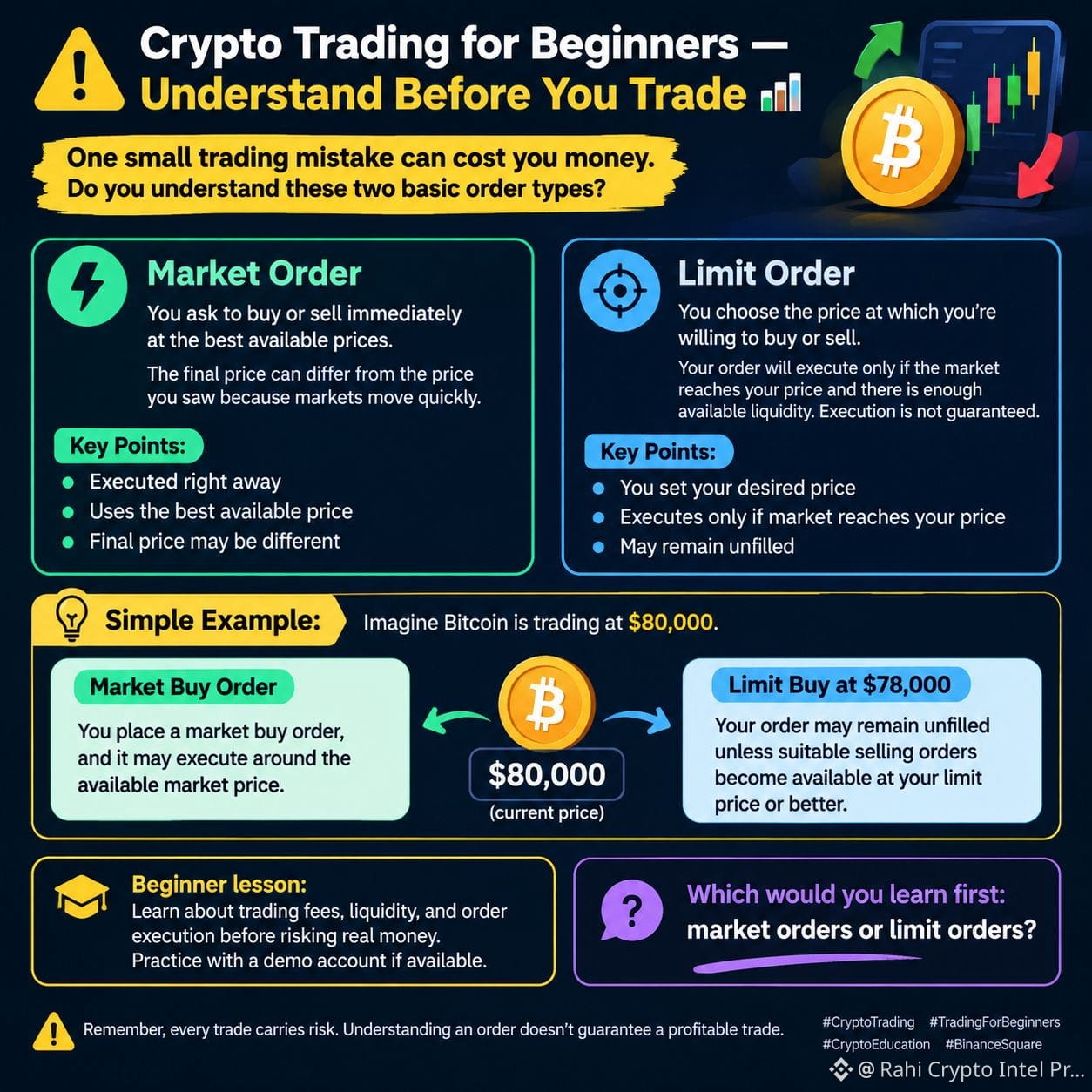
Crypto Trading for Beginners — Understand Before You Trade 📊
Hook: ⚠️ One small trading mistake can cost you money. Do you understand these two basic order types?
Post:
If you're new to crypto trading, start by learning the difference between market orders and limit orders.
🔹 Market Order: You ask to buy or sell immediately at the best available prices. The final price can differ from the price you saw because markets move quickly.
🔹 Limit Order: You choose the price at which you're willing to buy or sell. Your order will execute only if the market reaches your price and there is enough available liquidity. Execution is not guaranteed.
Here's a simple example:
Imagine Bitcoin is trading at $80,000.
You place a market buy order, and it may execute around the available market price.
Alternatively, you place a limit buy at $78,000. Your order may remain unfilled unless suitable selling orders become available at your limit price or better.
💡 Beginner lesson: Learn about trading fees, liquidity, and order execution before risking real money. Practice with a demo account if available.
Remember, every trade carries risk. Understanding an order doesn't guarantee a profitable trade.
Question: Which would you learn first: market orders or limit orders?
#CryptoTrading #TradingForBeginners #CryptoEducation #BinanceSquare
$NEAR
{future}(NEARUSDT)
$AVA
{future}(AVAUSDT)
$CVX
{future}(CVXUSDT)
Crypto Trading for Beginners — Understand Before You Trade 📊
Hook: ⚠️ One small trading mistake can cost you money. Do you understand these two basic order types?
Post:
If you're new to crypto trading, start by learning the difference between market orders and limit orders.
🔹 Market Order: You ask to buy or sell immediately at the best available prices. The final price can differ from the price you saw because markets move quickly.
🔹 Limit Order: You choose the price at which you're willing to buy or sell. Your order will execute only if the market reaches your price and there is enough available liquidity. Execution is not guaranteed.
Here's a simple example:
Imagine Bitcoin is trading at $80,000.
You place a market buy order, and it may execute around the available market price.
Alternatively, you place a limit buy at $78,000. Your order may remain unfilled unless suitable selling orders become available at your limit price or better.
💡 Beginner lesson: Learn about trading fees, liquidity, and order execution before risking real money. Practice with a demo account if available.
Remember, every trade carries risk. Understanding an order doesn't guarantee a profitable trade.
Question: Which would you learn first: market orders or limit orders?
#CryptoTrading #TradingForBeginners #CryptoEducation #BinanceSquare
$NEAR
$AVA
$CVX
446

🚀 Golden Rules for Beginners on Binance
If you’re brand new to crypto trading, don’t rush. Here are 3 simple habits that will save your capital while you learn:
Never FOMO into Green Candles: If a coin is already pumping 30%–50%, you're usually buying at the top. Wait for a pullback or consolidated base.
Master Risk Management: Risk no more than 1%–2% of your total portfolio on a single spot or futures trade. Capital preservation is job NO.1
Stick to Spot First: If you’re completely new, avoid high leverage in Futures until you understand price action and market structure on Spot.
💡 Remember: C
onsistency > Quick Profits. DYOR (Do Your Own Research) and trade safe!
$BTW $FIL
#BinanceSquareFamily #TradingForBeginners #CPIWatch
821

·
--
Bearish
*Day 5 - Stop Loss: The Tool That Saves Beginners! 🛡️*
90% of new traders lose money because they don't use Stop Loss.
What is Stop Loss?
It automatically sells your coin if price goes down to your set level. So you lose small instead of losing everything.
Example: You bought at 100, you set Stop Loss at 95. If price drops, it will sell at 95 and save you from bigger loss.
Pro traders always use Stop Loss. You should too!
Do you use Stop Loss? Yes or No?
#crypto #TradingForBeginners #stoploss $BTC $ETH $BNB
1
126

·
--
Futures Trading is NOT a casino. It’s an incredible tool, but if you go in blind or believe in magic formulas, you are going to lose your money.
I've prepared super easy-to-understand content on my profile so you can learn the basics of Futures before risking a single cent. No fluff, no complex jargon.
I’ll also be uploading new content little by little, breaking down exactly what each Futures feature does whenever I get some free time between my studies.
👉 Check out my profile and read my step-by-step guides.
❤️ Like this post so this info can save more beginners.
✅ Follow me to learn real and honest trading.
See you inside! TheCryptoUpdate
#TradingForBeginners #FuturesTrading #CryptoEducation #BinanceSquare
16


·
--

Article
Why Most Traders Fail — And How You Can WinSmart Strategies & Powerful Habits to Trade Like a Professional
Trading has become one of the fastest-growing ways to build income online. But the harsh reality is:
Most beginners lose money — not because trading is impossible, but because they enter the market without knowledge, discipline, or a proper strategy.
Successful trading is not gambling. It is a skill built through patience, emotional control, risk management, and smart decision-making.
If you are starting your trading journey and want to avoid costly mistakes while improving your chances of long-term success, this guide is for you.
📈 1. Learn the Market Before Investing Real Money
Many beginners start trading after watching social media clips, flashy profit screenshots, or “get rich quick” videos.
That approach is dangerous.
Before risking your hard-earned money, understand the fundamentals of trading:
• Market trends • Candlestick patterns • Support & resistance • Risk management • Trading psychology
🔑 Professional Tip
Start with a demo account first. Practice consistently and learn how the market moves before entering real trades.
“Learn the game before you play for money.”
💰 2. Start Small — Grow Smart
One of the biggest mistakes beginners make is investing too much too early.
Professional traders focus on protecting capital first.
Smart Risk Rule
✔ Risk only 1%–2% of your trading account on a single trade.
Small, consistent gains can grow into significant profits over time through discipline and patience.
Remember:
Survival in trading is more important than fast profits.
🛡️ 3. Risk Management Is the Real Secret
Even the best traders lose trades.
The difference is that professionals know how to control losses while beginners allow emotions to destroy their accounts.
Never Trade Without:
✅ A stop-loss ✅ Proper position sizing ✅ A clear exit strategy ✅ Emotional control
“A trader who protects capital survives long enough to win.”
Risk management is not optional — it is the foundation of long-term success.
📊 4. Follow the Trend — Don’t Fight It
The market always leaves clues.
If the market is trending upward, look for buying opportunities. If the market is falling, avoid emotional trades and unnecessary risks.
⭐ Golden Trading Rule
“The trend is your best friend.”
Trying to trade against the market trend is one of the fastest ways beginners lose money.
Trade with momentum — not against it.
🧠 5. Control Your Emotions Like a Professional
Fear and greed are the two biggest enemies in trading.
Most beginners:
• Panic during losses • Become greedy after profits • Enter random emotional trades • Overtrade without discipline
Professional traders stay calm, focused, and strategic.
Powerful Mental Question
Before entering any trade, ask yourself:
“Am I following my strategy — or following my emotions?”
If emotions are making the decision, stay out of the trade.
📝 6. Create a Clear Trading Plan
Random trading creates random results.
Every successful trader follows a detailed trading plan that includes:
• Entry point • Profit target • Stop-loss level • Risk amount • Trading schedule
A proper trading plan helps you stay disciplined even during market pressure.
“Discipline turns strategies into profits.”
⚠️ 7. Stay Away from Fake Trading Gurus
Social media is full of fake experts showing luxury lifestyles, rented cars, and unrealistic profits.
Real trading success looks very different.
Professional traders focus on:
• Consistency • Education • Risk control • Long-term growth
Important Reminder
❌ There is NO guaranteed profit in trading.
Anyone promising “easy money” is usually selling dreams — not real skills.
📔 8. Keep a Trading Journal
A trading journal is one of the most powerful tools used by successful traders.
After every trade, record:
• Why you entered • Why you exited • Profit or loss • Mistakes made • Lessons learned
This habit helps you improve faster, identify weaknesses, and avoid repeating costly errors.
“What gets measured gets improved.”
🎯 9. Master One Strategy Before Learning More
Many beginners constantly switch strategies every week.
This creates confusion and inconsistency.
Instead:
✔ Choose one strategy ✔ Practice it daily ✔ Improve gradually ✔ Build confidence through repetition
“Mastery creates confidence. Confusion creates losses.”
Successful traders master simplicity.
⏳ 10. Patience Is the Key to Consistent Earnings
The market will always provide new opportunities.
You do not need to trade every day.
Professional traders wait patiently for high-quality setups instead of forcing trades out of boredom or emotion.
🔥 Important Truth
Sometimes the best trade is NO trade at all.
Patience protects your capital and improves decision-making.
🌟 Final Thoughts
Trading can become a life-changing skill when approached with discipline, patience, and continuous learning.
True success in trading comes from:
• Smart risk management • Emotional control • Consistent strategy • Long-term thinking • Continuous self-improvement
Do not chase fast money.
Focus on becoming a skilled trader — because skilled traders naturally create profits over time.
🔥 Bonus Success Tip
“Protect Your Capital First — Profits Will Follow.”
The traders who survive the longest are often the traders who earn the most.
Start smart. Stay disciplined. Grow consistently. And trade with patience — not emotion.
🚀 Your Trading Journey Starts Today
Learn slowly. Practice consistently. Respect risk. Trust the process.
Because in trading:
Consistency beats excitement every single time.
#TradingForBeginners #daytrading #cryptotrading #BinanceSquareFamily
Why Most Traders Fail — And How You Can Win
Smart Strategies & Powerful Habits to Trade Like a Professional
Trading has become one of the fastest-growing ways to build income online. But the harsh reality is:
Most beginners lose money — not because trading is impossible, but because they enter the market without knowledge, discipline, or a proper strategy.
Successful trading is not gambling. It is a skill built through patience, emotional control, risk management, and smart decision-making.
If you are starting your trading journey and want to avoid costly mistakes while improving your chances of long-term success, this guide is for you.
📈 1. Learn the Market Before Investing Real Money
Many beginners start trading after watching social media clips, flashy profit screenshots, or “get rich quick” videos.
That approach is dangerous.
Before risking your hard-earned money, understand the fundamentals of trading:
• Market trends • Candlestick patterns • Support & resistance • Risk management • Trading psychology
🔑 Professional Tip
Start with a demo account first. Practice consistently and learn how the market moves before entering real trades.
“Learn the game before you play for money.”
💰 2. Start Small — Grow Smart
One of the biggest mistakes beginners make is investing too much too early.
Professional traders focus on protecting capital first.
Smart Risk Rule
✔ Risk only 1%–2% of your trading account on a single trade.
Small, consistent gains can grow into significant profits over time through discipline and patience.
Remember:
Survival in trading is more important than fast profits.
🛡️ 3. Risk Management Is the Real Secret
Even the best traders lose trades.
The difference is that professionals know how to control losses while beginners allow emotions to destroy their accounts.
Never Trade Without:
✅ A stop-loss ✅ Proper position sizing ✅ A clear exit strategy ✅ Emotional control
“A trader who protects capital survives long enough to win.”
Risk management is not optional — it is the foundation of long-term success.
📊 4. Follow the Trend — Don’t Fight It
The market always leaves clues.
If the market is trending upward, look for buying opportunities. If the market is falling, avoid emotional trades and unnecessary risks.
⭐ Golden Trading Rule
“The trend is your best friend.”
Trying to trade against the market trend is one of the fastest ways beginners lose money.
Trade with momentum — not against it.
🧠 5. Control Your Emotions Like a Professional
Fear and greed are the two biggest enemies in trading.
Most beginners:
• Panic during losses • Become greedy after profits • Enter random emotional trades • Overtrade without discipline
Professional traders stay calm, focused, and strategic.
Powerful Mental Question
Before entering any trade, ask yourself:
“Am I following my strategy — or following my emotions?”
If emotions are making the decision, stay out of the trade.
📝 6. Create a Clear Trading Plan
Random trading creates random results.
Every successful trader follows a detailed trading plan that includes:
• Entry point • Profit target • Stop-loss level • Risk amount • Trading schedule
A proper trading plan helps you stay disciplined even during market pressure.
“Discipline turns strategies into profits.”
⚠️ 7. Stay Away from Fake Trading Gurus
Social media is full of fake experts showing luxury lifestyles, rented cars, and unrealistic profits.
Real trading success looks very different.
Professional traders focus on:
• Consistency • Education • Risk control • Long-term growth
Important Reminder
❌ There is NO guaranteed profit in trading.
Anyone promising “easy money” is usually selling dreams — not real skills.
📔 8. Keep a Trading Journal
A trading journal is one of the most powerful tools used by successful traders.
After every trade, record:
• Why you entered • Why you exited • Profit or loss • Mistakes made • Lessons learned
This habit helps you improve faster, identify weaknesses, and avoid repeating costly errors.
“What gets measured gets improved.”
🎯 9. Master One Strategy Before Learning More
Many beginners constantly switch strategies every week.
This creates confusion and inconsistency.
Instead:
✔ Choose one strategy ✔ Practice it daily ✔ Improve gradually ✔ Build confidence through repetition
“Mastery creates confidence. Confusion creates losses.”
Successful traders master simplicity.
⏳ 10. Patience Is the Key to Consistent Earnings
The market will always provide new opportunities.
You do not need to trade every day.
Professional traders wait patiently for high-quality setups instead of forcing trades out of boredom or emotion.
🔥 Important Truth
Sometimes the best trade is NO trade at all.
Patience protects your capital and improves decision-making.
🌟 Final Thoughts
Trading can become a life-changing skill when approached with discipline, patience, and continuous learning.
True success in trading comes from:
• Smart risk management • Emotional control • Consistent strategy • Long-term thinking • Continuous self-improvement
Do not chase fast money.
Focus on becoming a skilled trader — because skilled traders naturally create profits over time.
🔥 Bonus Success Tip
“Protect Your Capital First — Profits Will Follow.”
The traders who survive the longest are often the traders who earn the most.
Start smart. Stay disciplined. Grow consistently. And trade with patience — not emotion.
🚀 Your Trading Journey Starts Today
Learn slowly. Practice consistently. Respect risk. Trust the process.
Because in trading:
Consistency beats excitement every single time.
#TradingForBeginners #daytrading #cryptotrading #BinanceSquareFamily
1
2
269

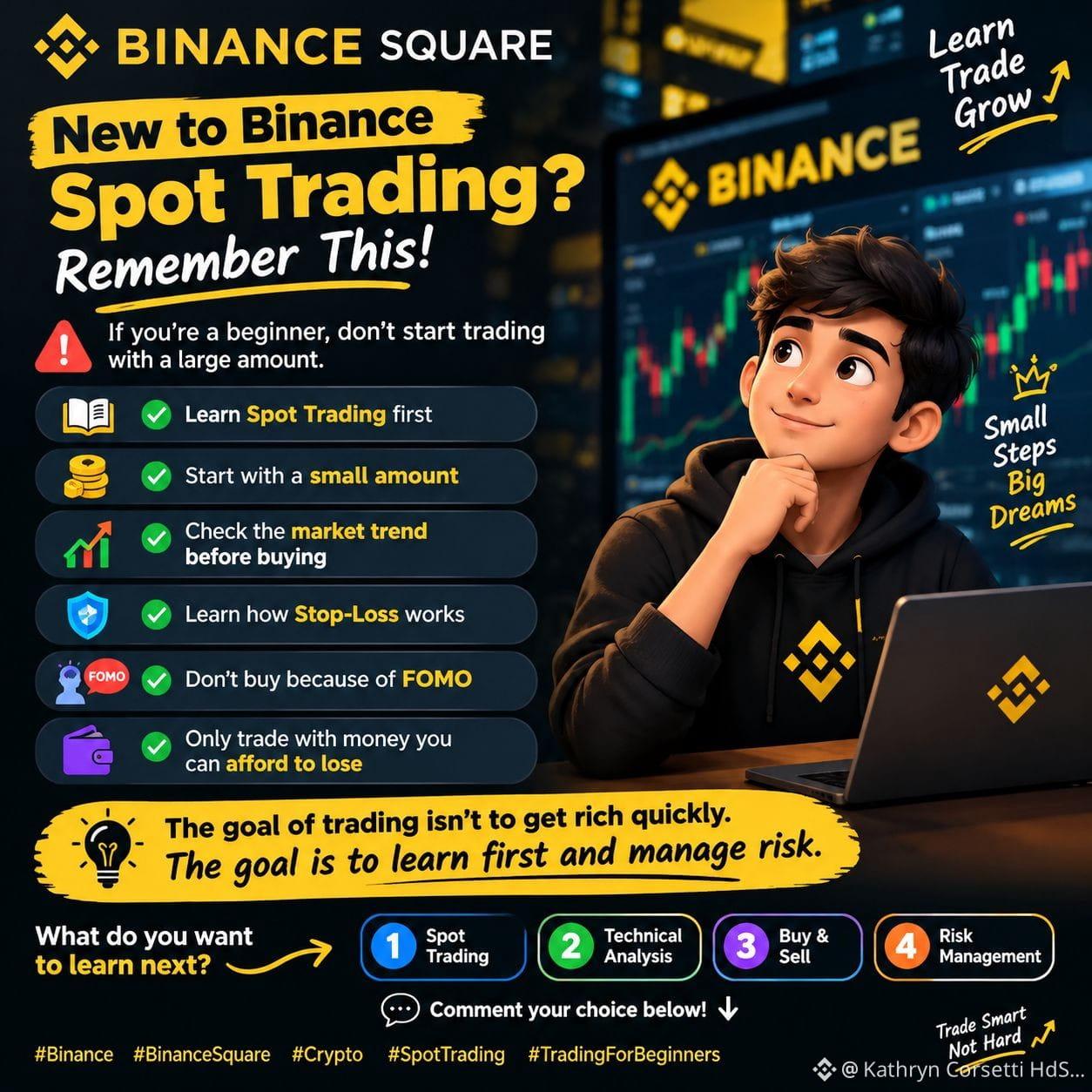
🚀 New to Binance Spot Trading? Remember This!
If you're a beginner, don't start trading with a large amount. ❌
✅ Learn Spot Trading first
✅ Start with a small amount
✅ Check the market trend before buying
✅ Learn how Stop-Loss works
✅ Don't buy because of FOMO
✅ Only trade with money you can afford to lose
💡 The goal of trading isn't to get rich quickly. The goal is to learn first and manage risk.
What do you want to learn next? 👇
1️⃣ Spot Trading
2️⃣ Technical Analysis
3️⃣ Buy & Sell
4️⃣ Risk Management
Comment your choice below! 👇
#BinanceSquareTalks #CryptoNewss
#cryptouniverseofficial #TradingForBeginners
120

·
--
Bearish
$BTC
{future}(BTCUSDT)
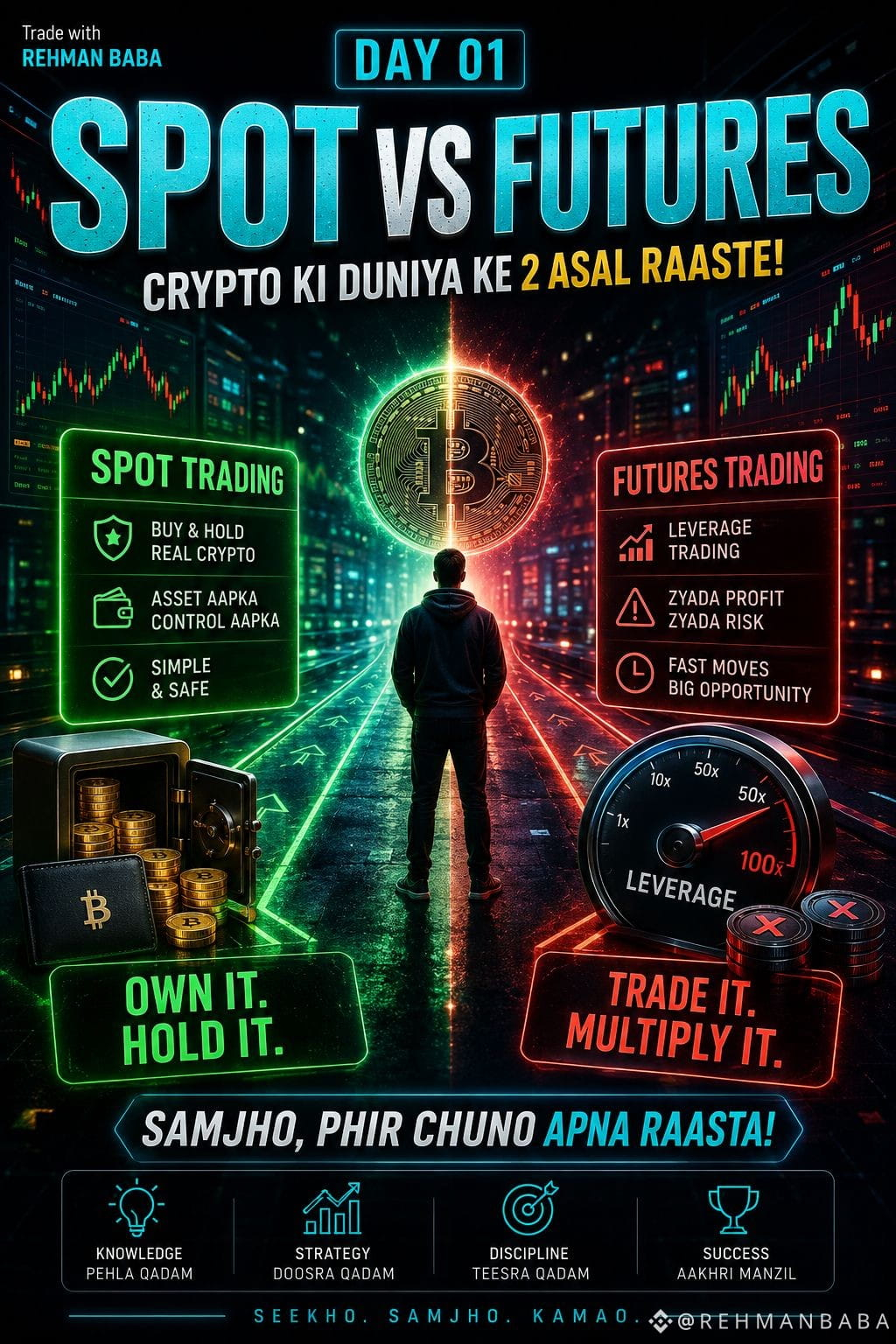
Spot Trading vs Futures Trading — What’s the Difference..?
Do you think in crypto, trading is only about “buy cheap, sell expensive”? If yes, then today will change your whole way of thinking..!! 🤯
In the crypto world, there are 02 types of trading:
Spot Trading: This is “cash trading.” You pay money and the Coin comes to your Wallet. The Coin belongs to you forever, as long as you don’t sell it yourself.
Futures Trading: In this, you don’t buy the Coin—rather, you only buy an “agreement” that the Price will go up or down. The Coin never comes into your possession—only Profit & Loss is involved.
For example:
Imagine there are 02 friends—Ahmed and Bilal.
- Ahmed in Spot Trading: Ahmed bought $100 worth of Gold from a shop. He brought the Gold home. If the Gold price falls, Ahmed isn’t worried because the Gold is already with him—he can wait.
- Bilal in Futures Trading: Bilal took a contract with $100 for “the Gold price will go up,” without actually buying Gold. If the price drops, Bilal’s entire $100 could disappear in a single moment—because he didn’t have real Gold with him, just a condition (bet).
In Spot Trading, it’s easier to stay patient because the asset is in your possession. But in Futures Trading, staying patient is harder because due to leverage, even a small adverse movement can cause big losses.
Open your Binance App. Find both tabs—“Spot” and “Futures”—and just see how different the interface is. Don’t make any trade—just observe.
Have you only done Spot Trading so far, or are you hearing about Futures Trading for the first time? Be sure to comment!
#SpotVsFutures #BinanceFuturesBeginner #CryptoBasicsUrdu #FuturesTradingPakistan #CryptoEducationUrdu #dyor #TradingForBeginners
$BTC
Spot Trading vs Futures Trading — What’s the Difference..?
Do you think in crypto, trading is only about “buy cheap, sell expensive”? If yes, then today will change your whole way of thinking..!! 🤯
In the crypto world, there are 02 types of trading:
Spot Trading: This is “cash trading.” You pay money and the Coin comes to your Wallet. The Coin belongs to you forever, as long as you don’t sell it yourself.
Futures Trading: In this, you don’t buy the Coin—rather, you only buy an “agreement” that the Price will go up or down. The Coin never comes into your possession—only Profit & Loss is involved.
For example:
Imagine there are 02 friends—Ahmed and Bilal.
- Ahmed in Spot Trading: Ahmed bought $100 worth of Gold from a shop. He brought the Gold home. If the Gold price falls, Ahmed isn’t worried because the Gold is already with him—he can wait.
- Bilal in Futures Trading: Bilal took a contract with $100 for “the Gold price will go up,” without actually buying Gold. If the price drops, Bilal’s entire $100 could disappear in a single moment—because he didn’t have real Gold with him, just a condition (bet).
In Spot Trading, it’s easier to stay patient because the asset is in your possession. But in Futures Trading, staying patient is harder because due to leverage, even a small adverse movement can cause big losses.
Open your Binance App. Find both tabs—“Spot” and “Futures”—and just see how different the interface is. Don’t make any trade—just observe.
Have you only done Spot Trading so far, or are you hearing about Futures Trading for the first time? Be sure to comment!
#SpotVsFutures #BinanceFuturesBeginner #CryptoBasicsUrdu #FuturesTradingPakistan #CryptoEducationUrdu #dyor #TradingForBeginners
99

·
--
Bullish
#BinanceSquare #cryptoeducation #TradingForBeginners
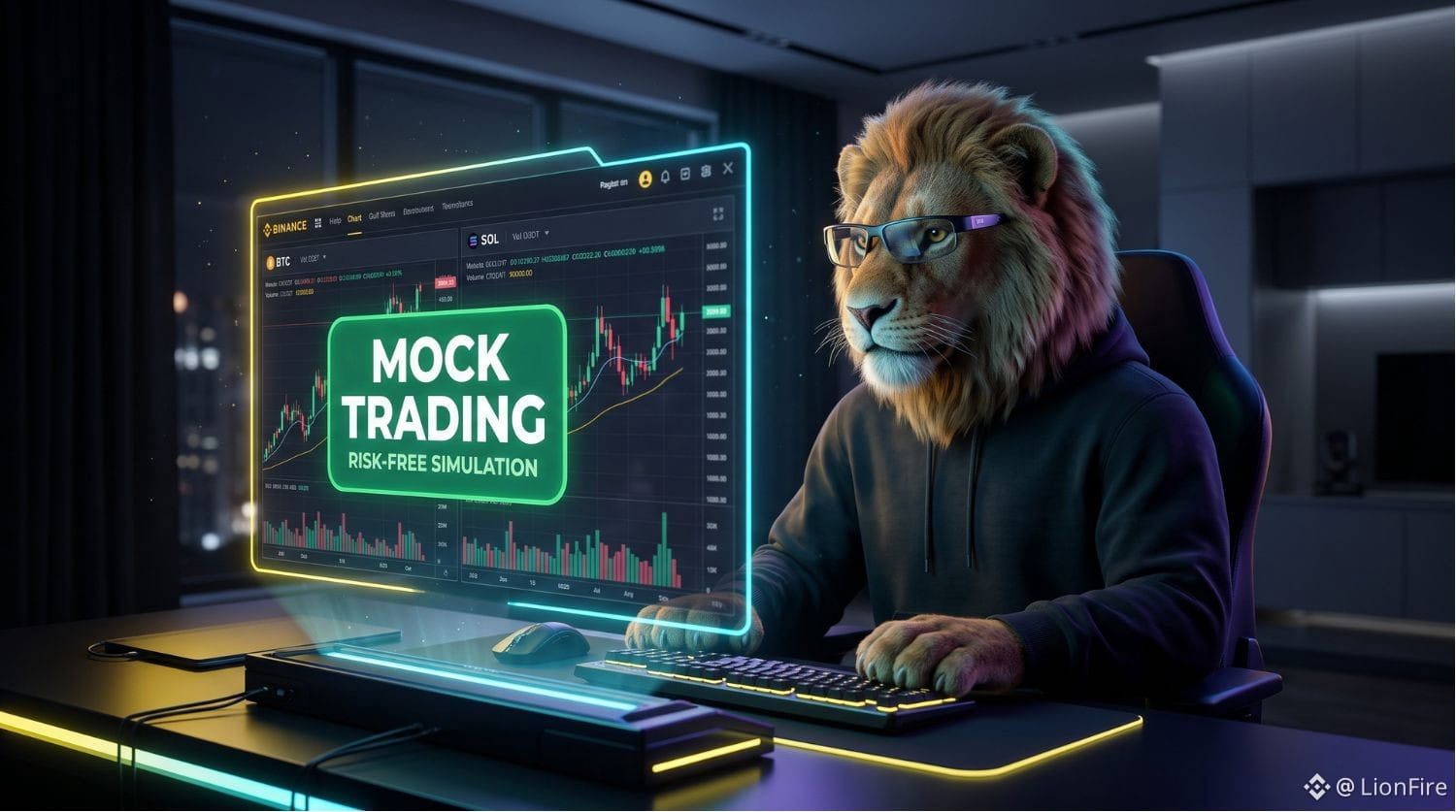
🚨 GETTING STARTED IN TRADING? Binance’s free tool that will help you avoid losing real money 🛠️📊
One of the biggest mistakes beginners make is jumping into a volatile market and risking their own capital without a proven strategy. If you’re taking your first steps, Binance offers a key feature every trader should use before risking a single dollar: Mock Trading (Trial/Demo Trading).
💡 What is it and why should you use it today?
🎮 Real-time simulation with no risk: It lets you trade in the Futures market using a fictitious balance (up to 3,000 USDT in test funds). You place orders using the same charts, order book, and live volatility as the real market.
📈 Test strategies on key assets: Want to practice reading Supertrend on a “mature giant” like $BTC to learn how to manage patience during consolidation ranges? Or do you prefer testing how to react to the high volatility and speed of a Layer 1 asset like $SOL? The simulator lets you experiment with both scenarios without financial stress.
🧠 Mastery of the interface: It helps you get familiar with leverage, margin management, and Stop Loss calculations so you don’t make execution errors from clumsiness or impulsiveness when trading with real money.
📲 How to access it from the Binance App?
Go to the Futures section.
Tap the three-dots menu (...) in the top-right corner.
Select Mock Trading.
Claim your test funds and start practicing!
💡The market doesn’t forgive improvisation. The difference between a trader who survives long-term and one who liquidates their account in weeks is preparation. Master the platform, test your bias on both stable assets and more dynamic altcoins, and validate your plan in the demo environment before you jump into the real market.
Have you already tried Mock Trading or do you prefer learning straight in the heat? I’m reading your comments! 👇⚡
74
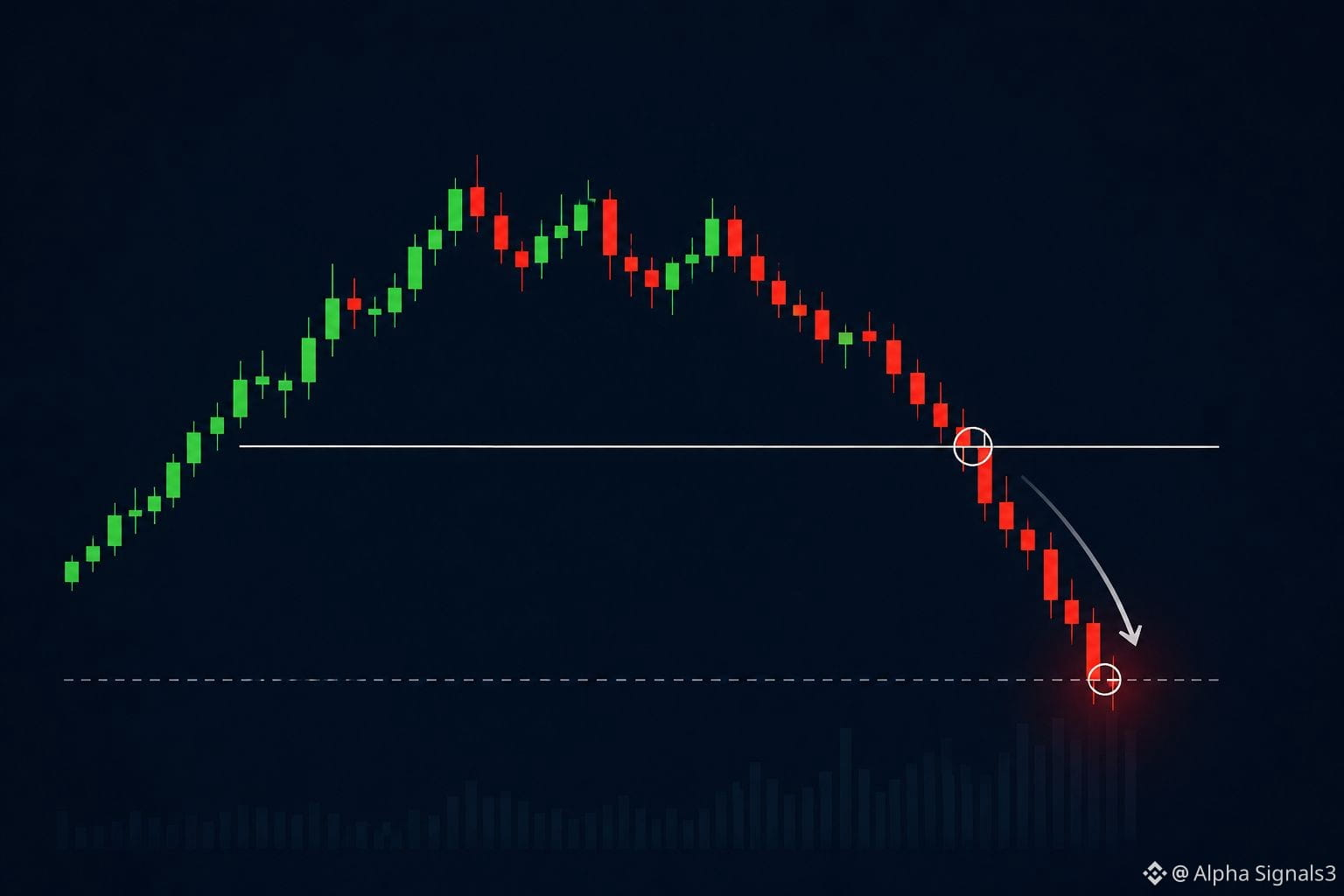
What is a Stop Loss?
A Stop Loss is the most crucial tool in trading.
It's a level where the trade automatically closes to prevent excessive losses.
📊 Example:
Buy Entry = $100
Stop Loss = $95
If the price drops to $95, the trade will close.
✅ Capital remains protected.
❌ Not setting a Stop Loss is the biggest mistake beginners make.
📌 Trading Rule: "Profit is optional, but Risk Management is mandatory."
$BNB $SOL
{future}(SOLUSDT)
{future}(BNBUSDT)
#StopLossHunting #BinanceSquareFamily #LearnTrading #RiskManagement #TradingForBeginners
What is a Stop Loss?
A Stop Loss is the most crucial tool in trading.
It's a level where the trade automatically closes to prevent excessive losses.
📊 Example:
Buy Entry = $100
Stop Loss = $95
If the price drops to $95, the trade will close.
✅ Capital remains protected.
❌ Not setting a Stop Loss is the biggest mistake beginners make.
📌 Trading Rule: "Profit is optional, but Risk Management is mandatory."
$BNB $SOL
#StopLossHunting #BinanceSquareFamily #LearnTrading #RiskManagement #TradingForBeginners
105


Article
Why Real-World Utility Wins the Long Game 🧧If you are new to the crypto market, it is easy to get caught up in green candles, massive hype, and quick-profit promises. But if you want to survive—and thrive—for the long haul, utility is your best hedge against volatility.
Here are 5 core rules for beginners looking to build a sustainable portfolio:
Seek Solvers, Not Hype: Look for projects tackling tangible, real-world problems. Whether it's cross-border payments, decentralized storage, real-world asset tokenization (RWA), or scalable smart contracts, coins with genuine usage survive brutal bear markets.Analyze the Metrics: Don’t just read the whitepaper. Check active developer activity, daily active users, transaction volume, and total value locked (TVL). Real usage creates organic demand that outlasts short-term marketing spins.Master Dollar-Cost Averaging (DCA): Trying to time market tops and bottoms usually ends in tears for beginners. Buying fixed amounts at regular intervals lowers your average entry price and takes emotion out of the equation.Understand Tokenomics: A great product with terrible tokenomics (like massive inflation or unlocking schedules that dump on retail) makes a bad investment. Ensure token distribution aligns with long-term holders.Protect Your Capital First: Use stop-loss orders, never risk more than 1–2% of your account on a single trade, and never invest money you cannot afford to lose. Capital preservation is job number one.
Building wealth in crypto isn't about chasing overnight pumps—it's about backing the infrastructure of the future.
What is your favorite utility-driven project right now? Drop your thoughts below! 👇
#CryptoTips #TradingForBeginners #BinanceSquare #CryptoEducation
Why Real-World Utility Wins the Long Game 🧧
If you are new to the crypto market, it is easy to get caught up in green candles, massive hype, and quick-profit promises. But if you want to survive—and thrive—for the long haul, utility is your best hedge against volatility.
Here are 5 core rules for beginners looking to build a sustainable portfolio:
Seek Solvers, Not Hype: Look for projects tackling tangible, real-world problems. Whether it's cross-border payments, decentralized storage, real-world asset tokenization (RWA), or scalable smart contracts, coins with genuine usage survive brutal bear markets.Analyze the Metrics: Don’t just read the whitepaper. Check active developer activity, daily active users, transaction volume, and total value locked (TVL). Real usage creates organic demand that outlasts short-term marketing spins.Master Dollar-Cost Averaging (DCA): Trying to time market tops and bottoms usually ends in tears for beginners. Buying fixed amounts at regular intervals lowers your average entry price and takes emotion out of the equation.Understand Tokenomics: A great product with terrible tokenomics (like massive inflation or unlocking schedules that dump on retail) makes a bad investment. Ensure token distribution aligns with long-term holders.Protect Your Capital First: Use stop-loss orders, never risk more than 1–2% of your account on a single trade, and never invest money you cannot afford to lose. Capital preservation is job number one.
Building wealth in crypto isn't about chasing overnight pumps—it's about backing the infrastructure of the future.
What is your favorite utility-driven project right now? Drop your thoughts below! 👇
#CryptoTips #TradingForBeginners #BinanceSquare #CryptoEducation
261
16
261

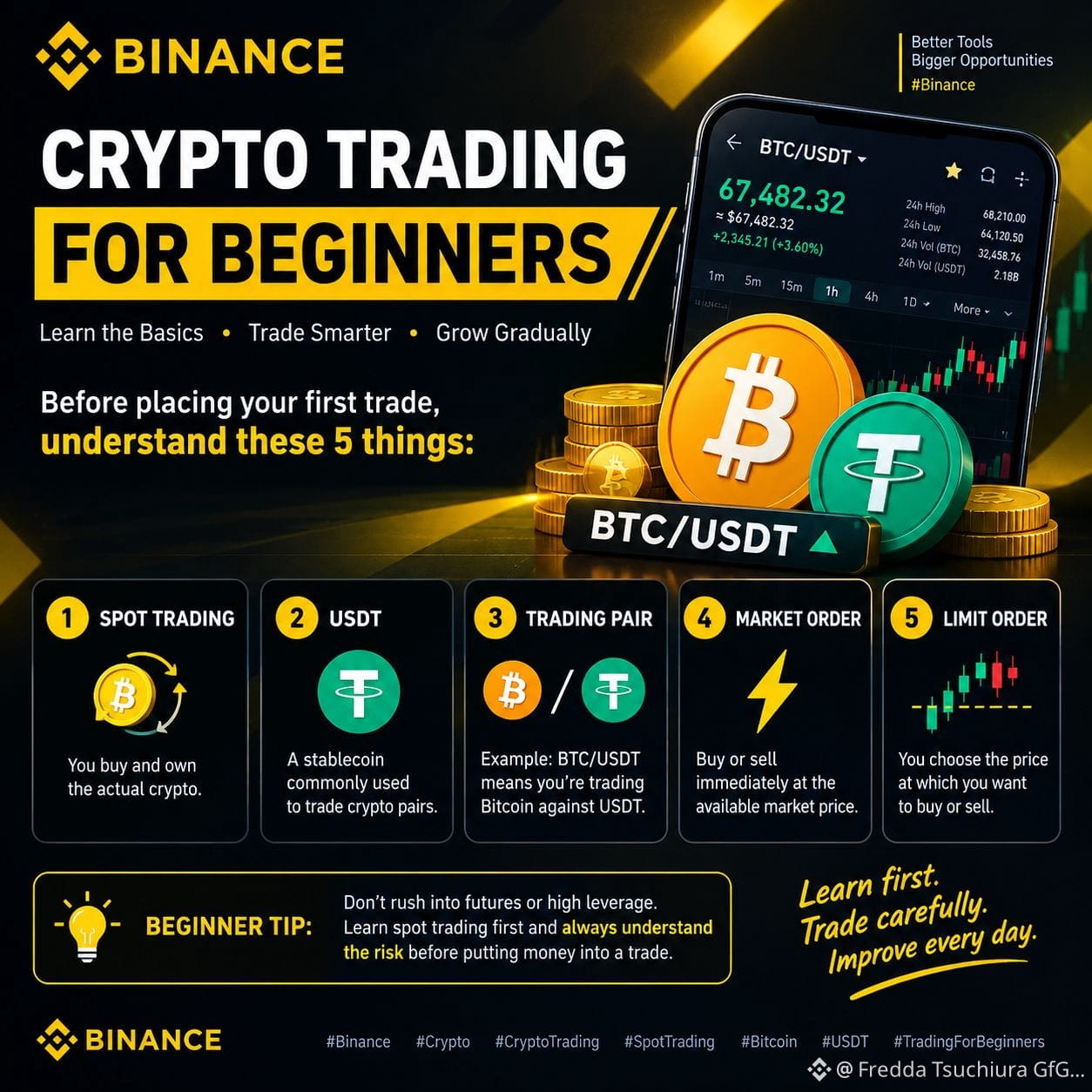
📚 Learn first. Trade carefully. Improve every day.
🚀 New to Crypto Trading? Start With the Basics!
Before placing your first trade, understand these 5 things:
1️⃣ Spot Trading — You buy and own the actual crypto.
2️⃣ USDT — A stablecoin commonly used to trade crypto pairs.
3️⃣ Trading Pair — BTC/USDT means you’re trading Bitcoin against USDT.
4️⃣ Market Order — Buy or sell immediately at the available market price.
5️⃣ Limit Order — You choose the price at which you want to buy or sell.
💡 Beginner tip: Don't rush into futures or high leverage. Learn spot trading first and understand the risks before putting money into a trade.
#Binance #Crypto #CryptoTrading
#SpotTrading #Bitcoin #USDT
#TradingForBeginners $
1
123
·
--
Bullish
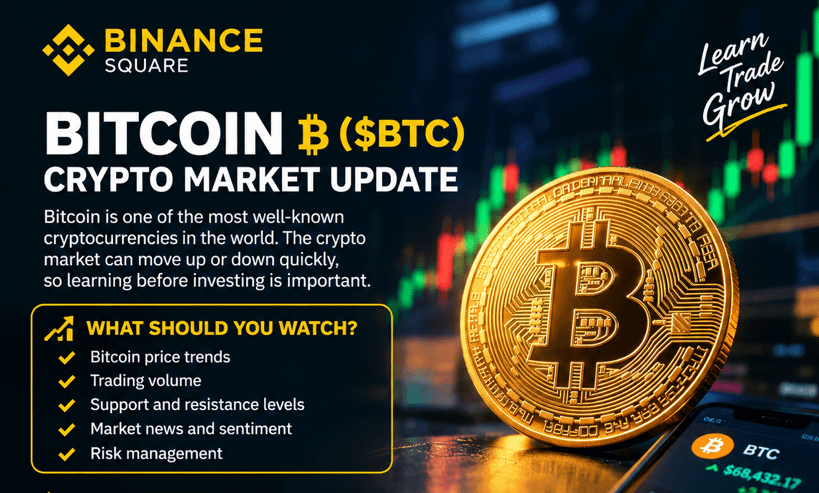
🚀 BITCOIN ($BTC) — CRYPTO MARKET UPDATE 📊
₿ Bitcoin is one of the most well-known cryptocurrencies in the world. The crypto market can move up or down quickly, so learning before investing is important.
📈 What should you watch?
🔹 Bitcoin price trends
🔹 Trading volume
🔹 Support and resistance levels
🔹 Market news and sentiment
🔹 Risk management
💡 Beginner Tip: Never make decisions based only on social media posts. Do your own research, understand the risks, and never invest money you cannot afford to lose.
👇 Let’s Discuss!
Do you think Bitcoin will rise or fall in the future? Share your thoughts respectfully in the comments!
#Bitcoin #BTC #CryptoEducation #CryptoMarket #BinanceSquare #TradingForBeginners
⚠️ Disclaimer: This post is for educational purposes only, not financial advice. Cryptocurrency prices are volatile, and losses are possible.😀#BitcoinReboundsTo$83K $BTC $BTC
{spot}(BTCUSDT)
🚀 BITCOIN ($BTC ) — CRYPTO MARKET UPDATE 📊
₿ Bitcoin is one of the most well-known cryptocurrencies in the world. The crypto market can move up or down quickly, so learning before investing is important.
📈 What should you watch?
🔹 Bitcoin price trends
🔹 Trading volume
🔹 Support and resistance levels
🔹 Market news and sentiment
🔹 Risk management
💡 Beginner Tip: Never make decisions based only on social media posts. Do your own research, understand the risks, and never invest money you cannot afford to lose.
👇 Let’s Discuss!
Do you think Bitcoin will rise or fall in the future? Share your thoughts respectfully in the comments!
#Bitcoin #BTC #CryptoEducation #CryptoMarket #BinanceSquare #TradingForBeginners
⚠️ Disclaimer: This post is for educational purposes only, not financial advice. Cryptocurrency prices are volatile, and losses are possible.😀#BitcoinReboundsTo$83K $BTC $BTC
98

·
--
Bullish
#tradfiforbeginners
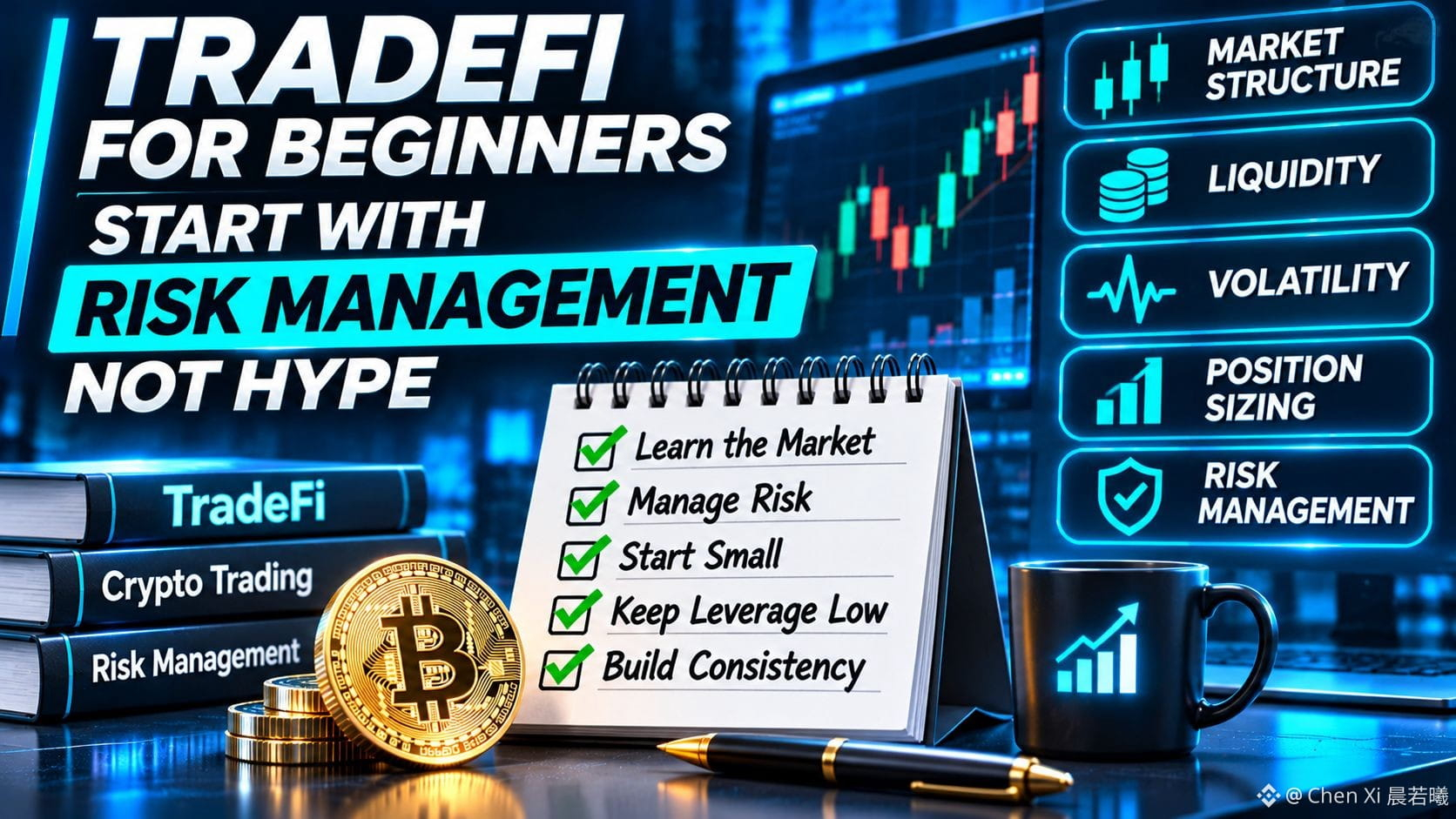
📘 TradeFi for Beginners: Start With Risk Management, Not Hype
For beginners entering crypto, TradeFi is best approached as a learning framework rather than a shortcut to profits.
The key concepts are understanding market structure, liquidity, volatility, position sizing, and risk management before focusing on potential returns. Traders who enter without a defined plan can easily make emotional decisions during sharp market moves.
A practical approach is to start small, study how different assets react to market conditions, and keep leverage limited or avoid it entirely while learning.
From a trader’s perspective, the biggest advantage for a beginner is not predicting every move — it is protecting capital and developing consistency.
Bottom line: Learn the market first, manage risk second, and only then think about increasing exposure.
#TradeFi #CryptoTrading #TradingForBeginners #RiskManagement $EVAA $UVXY $ICNT
{future}(ICNTUSDT)
{future}(UVXYUSDT)
{future}(EVAAUSDT)
#tradfiforbeginners
📘 TradeFi for Beginners: Start With Risk Management, Not Hype
For beginners entering crypto, TradeFi is best approached as a learning framework rather than a shortcut to profits.
The key concepts are understanding market structure, liquidity, volatility, position sizing, and risk management before focusing on potential returns. Traders who enter without a defined plan can easily make emotional decisions during sharp market moves.
A practical approach is to start small, study how different assets react to market conditions, and keep leverage limited or avoid it entirely while learning.
From a trader’s perspective, the biggest advantage for a beginner is not predicting every move — it is protecting capital and developing consistency.
Bottom line: Learn the market first, manage risk second, and only then think about increasing exposure.
#TradeFi #CryptoTrading #TradingForBeginners #RiskManagement $EVAA $UVXY $ICNT
1
63

·
--
Article
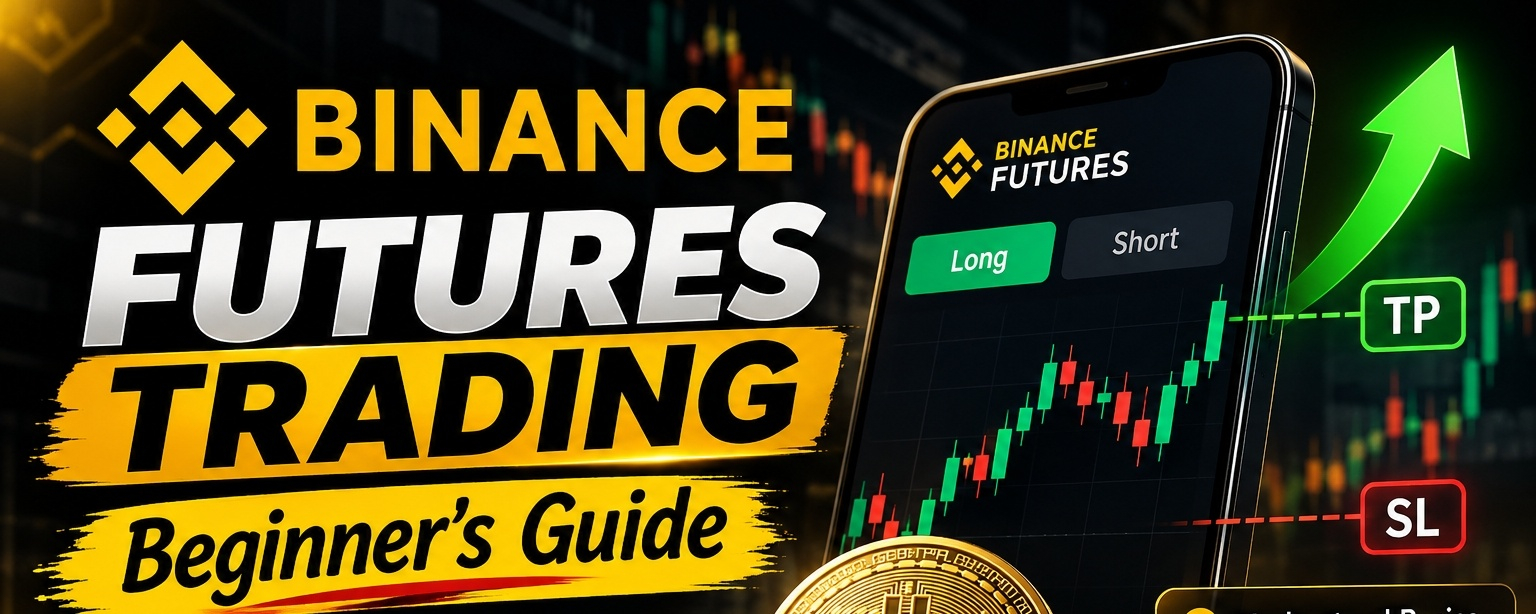
Binance Futures Trading: A Complete Beginner’s Guide — Learn Before You Trade! 📊Starting your journey in crypto trading? Binance Futures can look exciting, but understanding the basics before opening your first position is extremely important.
Let's break it down step by step.
1. What Is Binance Futures?
Futures trading allows you to speculate on cryptocurrency price movements without buying the actual asset.
You have two basic directions:
- LONG: When you expect the price to rise.
- SHORT: When you expect the price to fall.
2. Understand Leverage
Leverage allows you to control a larger position with a smaller amount of margin.
For example:
- 2x = Lower exposure
- 5x = Higher exposure
- 20x = Significantly higher risk
Remember: Leverage increases potential profits, but it also increases potential losses. Beginners should start with low leverage.
3. Learn These Important Terms
- Entry: Your position opening price.
- TP (Take Profit): Your planned profit target.
- SL (Stop Loss): Your predefined exit if the trade goes against you.
- Liquidation: When your margin becomes insufficient to maintain your position.
- Isolated Margin: Margin allocated to an individual position.
- Cross Margin: Uses available account margin to support positions.
4. Always Follow Risk Management
This is where many beginners make mistakes.
✔ Never enter without a trading plan.
✔ Always calculate your Stop Loss.
✔ Avoid excessive leverage.
✔ Don't risk money you cannot afford to lose.
✔ Never chase a pump or panic during a dump.
✔ Avoid revenge trading after a loss.
5. Learn Technical Analysis
Before entering a trade, understand:
- Support and Resistance
- Candlestick Patterns
- RSI and EMA
- Volume Analysis
- Fibonacci
- Market Structure
- Order Blocks and Liquidity
Don't depend on one indicator. Look for confirmation.
6. One Important Lesson
Your first goal should not be making $100 or $1,000.
Your first goal should be learning how to protect your capital.
A profitable trading journey is built through patience, discipline, consistency, and continuous learning.
Final Thought:
You don't need to take 20 trades every day. Sometimes the best trade is the one you decide not to take.
Trade with a plan. Respect your Stop Loss. Protect your capital.
Question for the community:
What was the biggest mistake you made when you first started Futures trading?
Share your experience. It might help another beginner avoid the same mistake. 👇
#Binance #BİNANCEFUTURES #cryptotrading #TradingForBeginners #RiskManagement $MMT
{future}(MMTUSDT)
$BABAB
{spot}(BABABUSDT)
$REN
Binance Futures Trading: A Complete Beginner’s Guide — Learn Before You Trade! 📊
Starting your journey in crypto trading? Binance Futures can look exciting, but understanding the basics before opening your first position is extremely important.
Let's break it down step by step.
1. What Is Binance Futures?
Futures trading allows you to speculate on cryptocurrency price movements without buying the actual asset.
You have two basic directions:
- LONG: When you expect the price to rise.
- SHORT: When you expect the price to fall.
2. Understand Leverage
Leverage allows you to control a larger position with a smaller amount of margin.
For example:
- 2x = Lower exposure
- 5x = Higher exposure
- 20x = Significantly higher risk
Remember: Leverage increases potential profits, but it also increases potential losses. Beginners should start with low leverage.
3. Learn These Important Terms
- Entry: Your position opening price.
- TP (Take Profit): Your planned profit target.
- SL (Stop Loss): Your predefined exit if the trade goes against you.
- Liquidation: When your margin becomes insufficient to maintain your position.
- Isolated Margin: Margin allocated to an individual position.
- Cross Margin: Uses available account margin to support positions.
4. Always Follow Risk Management
This is where many beginners make mistakes.
✔ Never enter without a trading plan.
✔ Always calculate your Stop Loss.
✔ Avoid excessive leverage.
✔ Don't risk money you cannot afford to lose.
✔ Never chase a pump or panic during a dump.
✔ Avoid revenge trading after a loss.
5. Learn Technical Analysis
Before entering a trade, understand:
- Support and Resistance
- Candlestick Patterns
- RSI and EMA
- Volume Analysis
- Fibonacci
- Market Structure
- Order Blocks and Liquidity
Don't depend on one indicator. Look for confirmation.
6. One Important Lesson
Your first goal should not be making $100 or $1,000.
Your first goal should be learning how to protect your capital.
A profitable trading journey is built through patience, discipline, consistency, and continuous learning.
Final Thought:
You don't need to take 20 trades every day. Sometimes the best trade is the one you decide not to take.
Trade with a plan. Respect your Stop Loss. Protect your capital.
Question for the community:
What was the biggest mistake you made when you first started Futures trading?
Share your experience. It might help another beginner avoid the same mistake. 👇
#Binance #BİNANCEFUTURES #cryptotrading #TradingForBeginners #RiskManagement $MMT
$BABAB
$REN
1
4
275
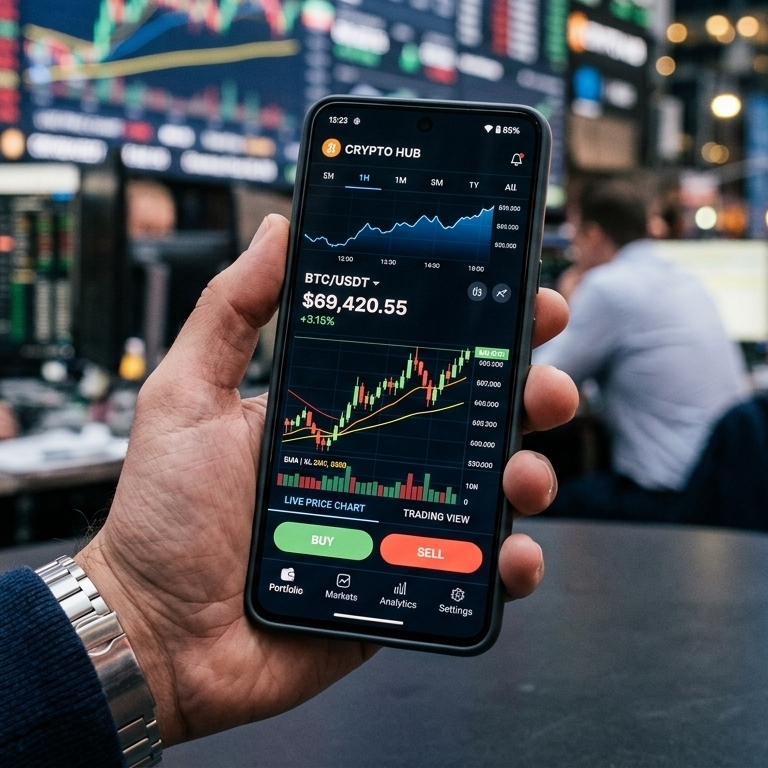
🚀 Join My Qafila — Learn, Understand, and Grow Together!
Trading alone in the crypto market can be difficult. New traders can get confused by all the news, coins, and price changes they see every day.
Join My Qafila is for people who want to learn about crypto in a simple way and understand the market alongside other traders.
$BTC
{future}(BTCUSDT)
Here, we’ll talk about:
✅ Important crypto news
✅ Market updates on Bitcoin and other coins
✅ Basic planning to help avoid losses while trading
✅ Common mistakes made by new traders
✅ Simple tips for understanding the market
✅ How to do your own research
Instead of blindly following signals, the focus here is on understanding the market and learning. Everyone should make decisions based on their own research and budget.
If you’re new to crypto or want to improve your knowledge, join My Qafila and become part of this learning community. 🔥
Comment “QAFILA” if you want to learn about crypto in simple language.
#Binance #BTC #TradingForBeginners #CryptoCommunity #JoinMyQafila
🚀 Join My Qafila — Learn, Understand, and Grow Together!
Trading alone in the crypto market can be difficult. New traders can get confused by all the news, coins, and price changes they see every day.
Join My Qafila is for people who want to learn about crypto in a simple way and understand the market alongside other traders.
$BTC
Here, we’ll talk about:
✅ Important crypto news
✅ Market updates on Bitcoin and other coins
✅ Basic planning to help avoid losses while trading
✅ Common mistakes made by new traders
✅ Simple tips for understanding the market
✅ How to do your own research
Instead of blindly following signals, the focus here is on understanding the market and learning. Everyone should make decisions based on their own research and budget.
If you’re new to crypto or want to improve your knowledge, join My Qafila and become part of this learning community. 🔥
Comment “QAFILA” if you want to learn about crypto in simple language.
#Binance #BTC #TradingForBeginners #CryptoCommunity #JoinMyQafila


1
1
12
Article
CRYPTO TRADING · LESSON 2: Markets & Players. Who Really Moves Crypto Prices, and When?🔥 TL;DR
• Crypto is one segment of the global financial markets, next to forex and stocks
• Price moves when BIG money moves: ETFs, funds, market makers, whales
• Crypto trades 24/7, but it is NOT equally active 24/7
• The most action usually comes when Europe and the US are awake at the same time
━━━━━━━━━━━━━━━━━━
🗺️ WHERE CRYPTO FITS IN THE WORLD OF MARKETS
All markets fall into two big groups:
🛢️ COMMODITY MARKETS: energy (oil, gas), gold and metals, food (wheat, coffee)
💹 FINANCIAL MARKETS: currencies (forex), stocks, and crypto
Crypto lives in the financial group, but it has 3 special features:
✅ Open 24/7, 365 days a year. No weekends, no holidays
✅ Global: anyone with internet can trade
⚠️ High volatility: a 5–10% daily move in a big altcoin is normal. In stocks, that's news.
💡 Why this matters: crypto doesn't live in a bubble. US interest rates, stock market crashes and the dollar all hit BTC too. We'll cover this in the fundamentals lessons.
━━━━━━━━━━━━━━━━━━
🐋 WHO MOVES THE PRICE?
Not every trader is equal. Here are the main players, from biggest to smallest:
🏛️ CENTRAL BANKS (like the US Fed): they don't buy BTC, but their interest rate decisions decide how much "cheap money" flows into risky assets like crypto
🏦 INSTITUTIONS & ETFs: banks, asset managers and spot Bitcoin ETFs move billions. Their daily inflows and outflows are watched by the whole market
📊 FUNDS & MARKET MAKERS: they keep the order book full (remember bids and asks from Lesson 1?) and earn on the spread
🐋 WHALES: wallets holding huge amounts of coins. One big sell order can push the price down in minutes
⛏️ MINERS & PROJECT TEAMS: they regularly sell coins to pay costs, which adds steady supply
🙋 RETAIL TRADERS: that's us. Individually small, but together we create hype, FOMO and panic
👉 Key idea: you can't move the market. Your job is to notice where big money is going, and follow it.
━━━━━━━━━━━━━━━━━━
⏰ TRADING SESSIONS: 24/7 DOESN'T MEAN "ALWAYS ACTIVE"
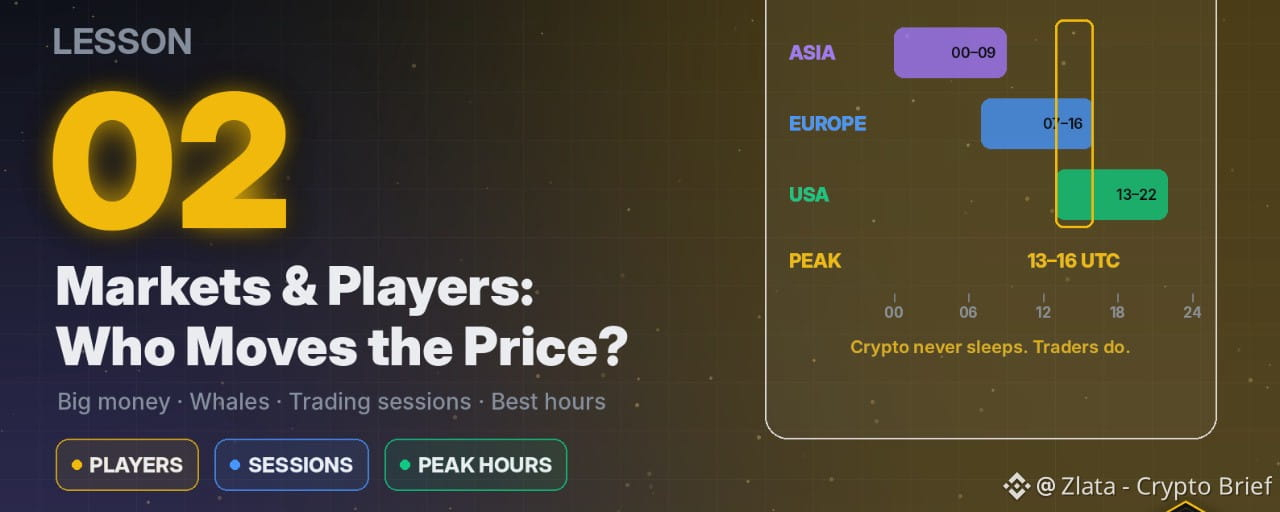
Crypto never closes, but people sleep. Activity follows the classic world trading sessions (approximate times, UTC):
🌏 ASIA: 00:00 – 09:00 UTC
Often calmer. Ranges and slow moves are common
🌍 EUROPE: 07:00 – 16:00 UTC
Volume picks up, and the first strong moves of the day often start here
🌎 USA: 13:00 – 22:00 UTC
The biggest player. The US stock market opens at 14:30 UTC (13:30 in summer), and US economic news drops in this window
🔥 EUROPE + USA OVERLAP: about 13:00 – 16:00 UTC
Typically the most liquid and most volatile hours. Big breakouts, and big fake-outs too
😴 WEEKENDS: lower volume and thinner order books. Moves can be sudden and unreliable
━━━━━━━━━━━━━━━━━━
🧭 WHAT THIS MEANS FOR YOU
• Want calm and clean levels? Quieter hours are easier for practising
• Want movement? Watch the Europe + USA overlap, but expect higher risk
• Big US news (rates, inflation, jobs) can flip BTC in seconds. Check the calendar before you trade
• Be careful with large positions on weekends
━━━━━━━━━━━━━━━━━━
📝 HOMEWORK (10 minutes)
1️⃣ Open the BTC/USDT chart on the 1-hour timeframe (1H)
2️⃣ Look at the last 3 days: at what time (UTC) were the BIGGEST candles?
3️⃣ Compare with the session times above. Do they match?
4️⃣ Bonus: convert the session times to YOUR local time and write them down
━━━━━━━━━━━━━━━━━━
❓ QUICK QUIZ (answers below)
Is crypto a commodity market or a financial market?
Which players earn money on the spread and keep the order book full?
Which hours are usually the most volatile?
👇
Answers: 1) Financial · 2) Market makers · 3) The Europe + USA overlap, about 13:00–16:00 UTC
━━━━━━━━━━━━━━━━━━
📅 NEXT, LESSON 3: How to choose a safe exchange and spot a scam 🛡️
Missed Lesson 1 (How an exchange works)? Check my profile 👆
Follow @CryptoBriefFirst so you don't miss it 🔔
💬 Tell me in the comments: what time do YOU usually trade, and which session is that? 👇
⚠️ Educational content only. Not financial advice. Crypto trading, especially with leverage, carries a high risk of loss. DYOR.
#cryptotrading #TradingForBeginners #learncrypto #Write2Earn #TradingSignals
CRYPTO TRADING · LESSON 2: Markets & Players. Who Really Moves Crypto Prices, and When?
🔥 TL;DR
• Crypto is one segment of the global financial markets, next to forex and stocks
• Price moves when BIG money moves: ETFs, funds, market makers, whales
• Crypto trades 24/7, but it is NOT equally active 24/7
• The most action usually comes when Europe and the US are awake at the same time
━━━━━━━━━━━━━━━━━━
🗺️ WHERE CRYPTO FITS IN THE WORLD OF MARKETS
All markets fall into two big groups:
🛢️ COMMODITY MARKETS: energy (oil, gas), gold and metals, food (wheat, coffee)
💹 FINANCIAL MARKETS: currencies (forex), stocks, and crypto
Crypto lives in the financial group, but it has 3 special features:
✅ Open 24/7, 365 days a year. No weekends, no holidays
✅ Global: anyone with internet can trade
⚠️ High volatility: a 5–10% daily move in a big altcoin is normal. In stocks, that's news.
💡 Why this matters: crypto doesn't live in a bubble. US interest rates, stock market crashes and the dollar all hit BTC too. We'll cover this in the fundamentals lessons.
━━━━━━━━━━━━━━━━━━
🐋 WHO MOVES THE PRICE?
Not every trader is equal. Here are the main players, from biggest to smallest:
🏛️ CENTRAL BANKS (like the US Fed): they don't buy BTC, but their interest rate decisions decide how much "cheap money" flows into risky assets like crypto
🏦 INSTITUTIONS & ETFs: banks, asset managers and spot Bitcoin ETFs move billions. Their daily inflows and outflows are watched by the whole market
📊 FUNDS & MARKET MAKERS: they keep the order book full (remember bids and asks from Lesson 1?) and earn on the spread
🐋 WHALES: wallets holding huge amounts of coins. One big sell order can push the price down in minutes
⛏️ MINERS & PROJECT TEAMS: they regularly sell coins to pay costs, which adds steady supply
🙋 RETAIL TRADERS: that's us. Individually small, but together we create hype, FOMO and panic
👉 Key idea: you can't move the market. Your job is to notice where big money is going, and follow it.
━━━━━━━━━━━━━━━━━━
⏰ TRADING SESSIONS: 24/7 DOESN'T MEAN "ALWAYS ACTIVE"
Crypto never closes, but people sleep. Activity follows the classic world trading sessions (approximate times, UTC):
🌏 ASIA: 00:00 – 09:00 UTC
Often calmer. Ranges and slow moves are common
🌍 EUROPE: 07:00 – 16:00 UTC
Volume picks up, and the first strong moves of the day often start here
🌎 USA: 13:00 – 22:00 UTC
The biggest player. The US stock market opens at 14:30 UTC (13:30 in summer), and US economic news drops in this window
🔥 EUROPE + USA OVERLAP: about 13:00 – 16:00 UTC
Typically the most liquid and most volatile hours. Big breakouts, and big fake-outs too
😴 WEEKENDS: lower volume and thinner order books. Moves can be sudden and unreliable
━━━━━━━━━━━━━━━━━━
🧭 WHAT THIS MEANS FOR YOU
• Want calm and clean levels? Quieter hours are easier for practising
• Want movement? Watch the Europe + USA overlap, but expect higher risk
• Big US news (rates, inflation, jobs) can flip BTC in seconds. Check the calendar before you trade
• Be careful with large positions on weekends
━━━━━━━━━━━━━━━━━━
📝 HOMEWORK (10 minutes)
1️⃣ Open the BTC/USDT chart on the 1-hour timeframe (1H)
2️⃣ Look at the last 3 days: at what time (UTC) were the BIGGEST candles?
3️⃣ Compare with the session times above. Do they match?
4️⃣ Bonus: convert the session times to YOUR local time and write them down
━━━━━━━━━━━━━━━━━━
❓ QUICK QUIZ (answers below)
Is crypto a commodity market or a financial market?
Which players earn money on the spread and keep the order book full?
Which hours are usually the most volatile?
👇
Answers: 1) Financial · 2) Market makers · 3) The Europe + USA overlap, about 13:00–16:00 UTC
━━━━━━━━━━━━━━━━━━
📅 NEXT, LESSON 3: How to choose a safe exchange and spot a scam 🛡️
Missed Lesson 1 (How an exchange works)? Check my profile 👆
Follow @Zlata - Crypto Brief so you don't miss it 🔔
💬 Tell me in the comments: what time do YOU usually trade, and which session is that? 👇
⚠️ Educational content only. Not financial advice. Crypto trading, especially with leverage, carries a high risk of loss. DYOR.
#cryptotrading #TradingForBeginners #learncrypto #Write2Earn #TradingSignals
1
40
Article
CRYPTO TRADING 101 · LESSON 1: How a Crypto Exchange Really Works (Order Book, Market vs Limit)🎓 CRYPTO TRADING 101 · LESSON 1: How a Crypto Exchange Really Works (Order Book, Market vs Limit) 📚
A free beginner course by @CryptoBriefFirst : two lessons every week, from your very first order to futures and leverage.
#cryptotrading #TradingForBeginners #Binance #learncrypto #BTC
$BTC $BNB
━━━━━━━━━━━━━━━━━━
🔥 TL;DR
• Trading = buying and selling an asset to profit from its price moving
• Every trade happens in a PAIR, e.g. BTC/USDT: you swap one asset for another
• The ORDER BOOK shows who wants to buy (bids 🟢) and who wants to sell (asks 🔴)
• MARKET order = right now at the best available price · LIMIT order = only at YOUR price
━━━━━━━━━━━━━━━━━━
🧭 WHAT IS TRADING?
Investing usually means buying and holding for years.
Trading means opening and closing positions more often, to profit from price moves.
There are two big worlds on Binance, and this course covers both:
🟡 SPOT: you buy the real coin. If BTC goes up, you earn. If it goes down, you lose part of the value, but you still own the coin.
🟣 FUTURES: you trade a contract on the price. You can profit from a rise (LONG) or a fall (SHORT), and you can use leverage. More opportunity, and much more risk. We'll get there step by step, later in the course.
Today we start with the foundation that both worlds share: how an exchange matches buyers and sellers.
━━━━━━━━━━━━━━━━━━
💱 TRADING PAIRS: BTC/USDT EXPLAINED
A pair is always written as BASE / QUOTE.
• BTC = the base asset: what you buy or sell
• USDT = the quote asset: what you pay with
• "BTC/USDT = 100,000" means 1 BTC costs 100,000 USDT
👉 Buy BTC/USDT = give USDT, get BTC
👉 Sell BTC/USDT = give BTC, get USDT
🔀 3 types of pairs you'll see:
• Stablecoin pairs (BTC/USDT, ETH/USDC): price in "dollars", the easiest place to start
• Crypto-to-crypto pairs (ETH/BTC, SOL/BNB): one coin priced in another. ETH/BTC going up = ETH is beating BTC
• Fiat pairs (BTC/EUR and others): availability depends on your region
━━━━━━━━━━━━━━━━━━
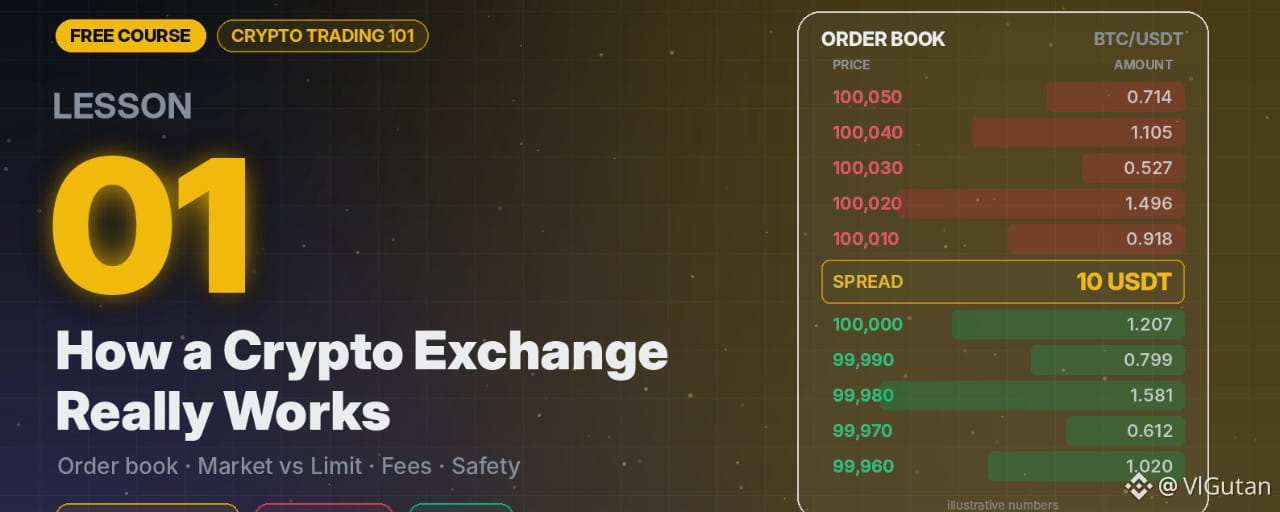
📖 THE ORDER BOOK: THE HEART OF THE EXCHANGE
The order book is a live list of everyone's waiting orders.
🔴 ASKS (top, red): sellers. "I'll sell at this price or higher."
🟢 BIDS (bottom, green): buyers. "I'll buy at this price or lower."
↔️ SPREAD: the gap between the lowest ask and the highest bid.
🧮 Spread = Ask − Bid
Example (illustrative numbers):
🔴 Best ask: 100,010 USDT
🟢 Best bid: 100,000 USDT
↔️ Spread: 10 USDT
✅ A tight spread means a liquid market: lots of buyers and sellers, so it's cheap to get in and out.
❌ A wide spread (common on small coins) means you lose more just by entering and exiting.
━━━━━━━━━━━━━━━━━━
⚡ MARKET ORDER vs 🎯 LIMIT ORDER
⚡ MARKET ORDER
• Fills instantly at the best price available
• You control SPEED, not PRICE
• On a fast or thin market you can get a worse price than you saw (this is called slippage)
• You are a TAKER: you take liquidity from the book
🎯 LIMIT ORDER
• You set the exact price: "buy BTC only at 99,500"
• It waits in the order book until the price comes to you
• You control PRICE, not speed: it may never fill
• If it waits in the book, you are a MAKER: you add liquidity
🧮 Worked example: you want to buy 1,000 USDT of BTC
• Market: filled in a second at ~100,010
• Limit at 99,500: filled only if price drops to 99,500. If BTC flies to 105,000, you're left watching.
━━━━━━━━━━━━━━━━━━
💸 FEES: THE COST NOBODY TALKS ABOUT
• Standard Binance spot fee for regular users: 0.1% maker / 0.1% taker
• Pay fees with BNB → 25% discount → 0.075%
• 1,000 USDT trade × 0.1% = 1 USDT fee. Buy + sell = 2 USDT.
💡 Small per trade, BIG over 100 trades. Always count fees in your profit.
(Fees can change: check your current rate in Profile → Fee Rate.)
━━━━━━━━━━━━━━━━━━
🛡️ BEFORE YOUR FIRST TRADE: SAFETY CHECKLIST
✅ Turn on 2FA (authenticator app or passkey)
✅ Set an Anti-Phishing Code in Security settings
✅ Never share SMS, email or 2FA codes with anyone, including "support"
✅ Start with an amount you are 100% OK to lose while learning
━━━━━━━━━━━━━━━━━━
📝 HOMEWORK (10 minutes)
1️⃣ Open BTC/USDT on Spot and find the order book
2️⃣ Write down the best bid, the best ask and the spread
3️⃣ Compare with a small altcoin pair: is its spread wider?
4️⃣ Bonus: place a tiny LIMIT buy far below the price, find it in "Open Orders", then cancel it. Now you know how orders live in the book.
━━━━━━━━━━━━━━━━━━
❓ QUICK QUIZ (answers below)
In BTC/USDT, which asset is the quote?
You need to get in NOW, no matter what. Which order type?
Bids are 99,990 and asks are 100,000. What's the spread?
👇
Answers: 1) USDT · 2) Market order · 3) 10 USDT
━━━━━━━━━━━━━━━━━━
📅 NEXT, LESSON 2: Markets & players. Who really moves crypto prices, and at what time of day 🌍⏰
Follow @CryptoBriefFirst so you don't miss it 🔔
💬 Tell me in the comments: what do you use more, MARKET or LIMIT orders? And what's the #1 thing you want to learn in this course? 👇
⚠️ Educational content only. Not financial advice. Crypto trading, especially with leverage, carries a high risk of loss. DYOR.
CRYPTO TRADING 101 · LESSON 1: How a Crypto Exchange Really Works (Order Book, Market vs Limit)
🎓 CRYPTO TRADING 101 · LESSON 1: How a Crypto Exchange Really Works (Order Book, Market vs Limit) 📚
A free beginner course by @Zlata - Crypto Brief : two lessons every week, from your very first order to futures and leverage.
#cryptotrading #TradingForBeginners #Binance #learncrypto #BTC
$BTC $BNB
━━━━━━━━━━━━━━━━━━
🔥 TL;DR
• Trading = buying and selling an asset to profit from its price moving
• Every trade happens in a PAIR, e.g. BTC/USDT: you swap one asset for another
• The ORDER BOOK shows who wants to buy (bids 🟢) and who wants to sell (asks 🔴)
• MARKET order = right now at the best available price · LIMIT order = only at YOUR price
━━━━━━━━━━━━━━━━━━
🧭 WHAT IS TRADING?
Investing usually means buying and holding for years.
Trading means opening and closing positions more often, to profit from price moves.
There are two big worlds on Binance, and this course covers both:
🟡 SPOT: you buy the real coin. If BTC goes up, you earn. If it goes down, you lose part of the value, but you still own the coin.
🟣 FUTURES: you trade a contract on the price. You can profit from a rise (LONG) or a fall (SHORT), and you can use leverage. More opportunity, and much more risk. We'll get there step by step, later in the course.
Today we start with the foundation that both worlds share: how an exchange matches buyers and sellers.
━━━━━━━━━━━━━━━━━━
💱 TRADING PAIRS: BTC/USDT EXPLAINED
A pair is always written as BASE / QUOTE.
• BTC = the base asset: what you buy or sell
• USDT = the quote asset: what you pay with
• "BTC/USDT = 100,000" means 1 BTC costs 100,000 USDT
👉 Buy BTC/USDT = give USDT, get BTC
👉 Sell BTC/USDT = give BTC, get USDT
🔀 3 types of pairs you'll see:
• Stablecoin pairs (BTC/USDT, ETH/USDC): price in "dollars", the easiest place to start
• Crypto-to-crypto pairs (ETH/BTC, SOL/BNB): one coin priced in another. ETH/BTC going up = ETH is beating BTC
• Fiat pairs (BTC/EUR and others): availability depends on your region
━━━━━━━━━━━━━━━━━━
📖 THE ORDER BOOK: THE HEART OF THE EXCHANGE
The order book is a live list of everyone's waiting orders.
🔴 ASKS (top, red): sellers. "I'll sell at this price or higher."
🟢 BIDS (bottom, green): buyers. "I'll buy at this price or lower."
↔️ SPREAD: the gap between the lowest ask and the highest bid.
🧮 Spread = Ask − Bid
Example (illustrative numbers):
🔴 Best ask: 100,010 USDT
🟢 Best bid: 100,000 USDT
↔️ Spread: 10 USDT
✅ A tight spread means a liquid market: lots of buyers and sellers, so it's cheap to get in and out.
❌ A wide spread (common on small coins) means you lose more just by entering and exiting.
━━━━━━━━━━━━━━━━━━
⚡ MARKET ORDER vs 🎯 LIMIT ORDER
⚡ MARKET ORDER
• Fills instantly at the best price available
• You control SPEED, not PRICE
• On a fast or thin market you can get a worse price than you saw (this is called slippage)
• You are a TAKER: you take liquidity from the book
🎯 LIMIT ORDER
• You set the exact price: "buy BTC only at 99,500"
• It waits in the order book until the price comes to you
• You control PRICE, not speed: it may never fill
• If it waits in the book, you are a MAKER: you add liquidity
🧮 Worked example: you want to buy 1,000 USDT of BTC
• Market: filled in a second at ~100,010
• Limit at 99,500: filled only if price drops to 99,500. If BTC flies to 105,000, you're left watching.
━━━━━━━━━━━━━━━━━━
💸 FEES: THE COST NOBODY TALKS ABOUT
• Standard Binance spot fee for regular users: 0.1% maker / 0.1% taker
• Pay fees with BNB → 25% discount → 0.075%
• 1,000 USDT trade × 0.1% = 1 USDT fee. Buy + sell = 2 USDT.
💡 Small per trade, BIG over 100 trades. Always count fees in your profit.
(Fees can change: check your current rate in Profile → Fee Rate.)
━━━━━━━━━━━━━━━━━━
🛡️ BEFORE YOUR FIRST TRADE: SAFETY CHECKLIST
✅ Turn on 2FA (authenticator app or passkey)
✅ Set an Anti-Phishing Code in Security settings
✅ Never share SMS, email or 2FA codes with anyone, including "support"
✅ Start with an amount you are 100% OK to lose while learning
━━━━━━━━━━━━━━━━━━
📝 HOMEWORK (10 minutes)
1️⃣ Open BTC/USDT on Spot and find the order book
2️⃣ Write down the best bid, the best ask and the spread
3️⃣ Compare with a small altcoin pair: is its spread wider?
4️⃣ Bonus: place a tiny LIMIT buy far below the price, find it in "Open Orders", then cancel it. Now you know how orders live in the book.
━━━━━━━━━━━━━━━━━━
❓ QUICK QUIZ (answers below)
In BTC/USDT, which asset is the quote?
You need to get in NOW, no matter what. Which order type?
Bids are 99,990 and asks are 100,000. What's the spread?
👇
Answers: 1) USDT · 2) Market order · 3) 10 USDT
━━━━━━━━━━━━━━━━━━
📅 NEXT, LESSON 2: Markets & players. Who really moves crypto prices, and at what time of day 🌍⏰
Follow @Zlata - Crypto Brief so you don't miss it 🔔
💬 Tell me in the comments: what do you use more, MARKET or LIMIT orders? And what's the #1 thing you want to learn in this course? 👇
⚠️ Educational content only. Not financial advice. Crypto trading, especially with leverage, carries a high risk of loss. DYOR.
3
82
Log in to explore more content
Join global crypto users on Binance Square
⚡️ Get latest and useful information about crypto.
💬 Trusted by the world’s largest crypto exchange.
👍 Discover real insights from verified creators.
Email / Phone number
Trending Topics
1
#CanBTCReboundAfterFallingBelow60K?
355,715 views
1,482 Discussing
2
#GlobalStocksFaceLongestLosingStreakSince2023
115,684 views
1,050 Discussing
3
#BlackRockIBITPostsRecord$541MSingleDayOutflow
551 views
14 Discussing
4
#AnthropicPlungesTowardIPOPriceonDay2
55,987 views
562 Discussing
5
#TwentyOneCapitalAdds172.25BTC
8,795 views
138 Discussing
6
#HKBillWouldExcludeTokenizedDepositsFromVirtualAssets
766 views
13 Discussing
7
#BNBDropsBelow540USDTWith8.46%DailyDecline
29,675 views
245 Discussing
8
#HKBillProposesHK$100KFineForUnauthorizedCryptoTitles
999 views
14 Discussing
9
#BitMineFaces$10.1BUnrealizedETHLoss
1,955 views
18 Discussing
10
#StrategyReports$35BNetReserves
1,814 views
17 Discussing