
#ai
ai
739.3M views
6.3M Discussing
Hot
Latest


·
--
Partly True
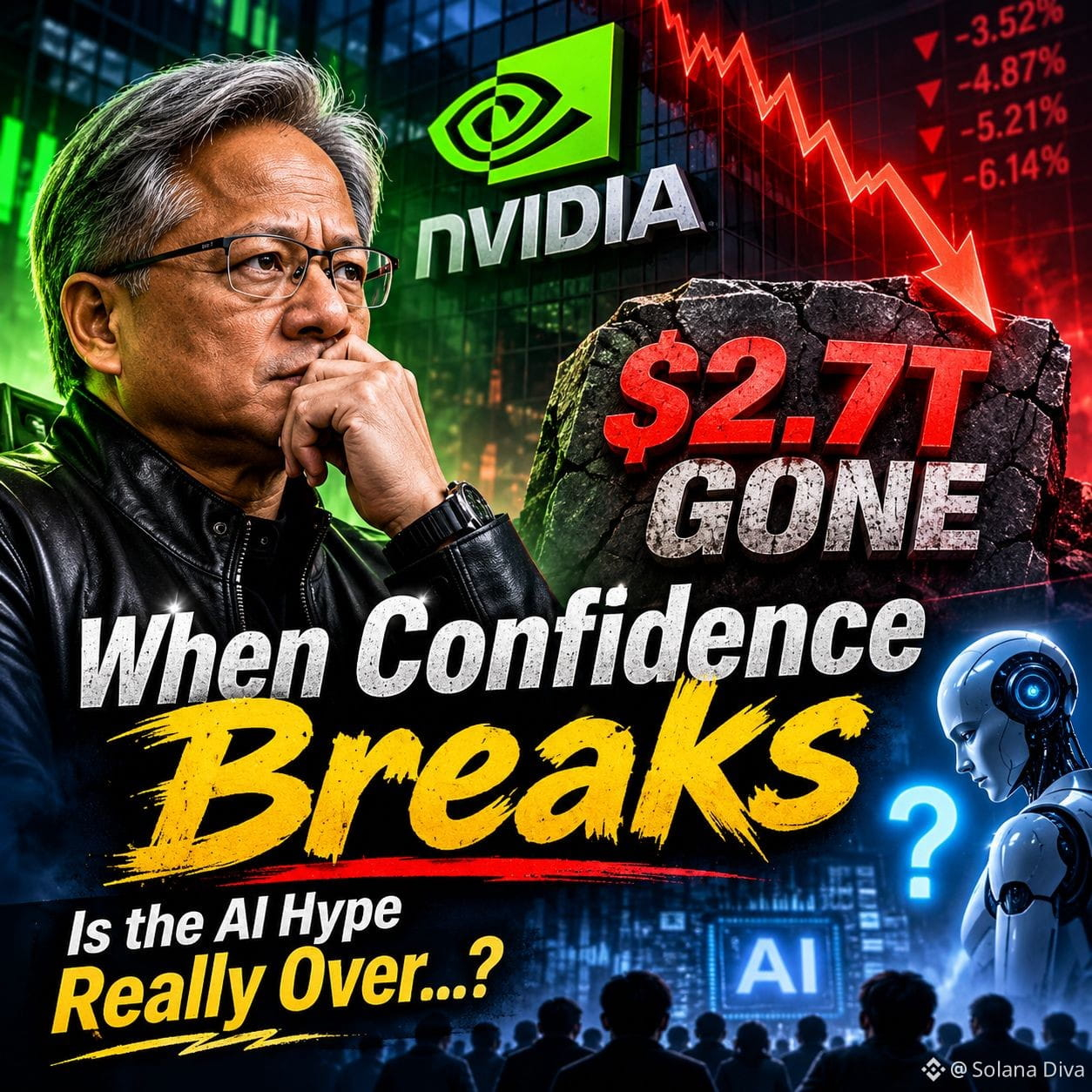
Nvidia just reminded the market of something we often forget.
A company can look unstoppable…
until people suddenly stop believing the story.
Nvidia has now lost roughly $2.7 trillion in market value from its October peak.
Read that again.
$2.7 TRILLION.
But honestly, the number isn’t the part that interests me most.
What interests me is what happens when the company that became the face of the AI boom suddenly becomes the company everyone is questioning.
For months, the story was simple:
AI is the future.
Nvidia is at the center of it.
So why fight the trend?
Now the mood feels very different.
$TRUMP
{spot}(TRUMPUSDT)
People are asking:
Was Nvidia priced too far ahead of reality?
Has the AI excitement gone too far?
Or is this simply what happens when the market gets scared after believing in the same story for too long?
I don’t think the AI story suddenly disappeared.
But I do think the market is being forced to separate two things:
BELIEVING IN AI
and
BELIEVING EVERY AI STOCK MUST KEEP GOING UP.
That difference matters.
And this is where things get interesting.
Because if Nvidia eventually finds its confidence again, the comeback could say a lot about the entire AI market.
But if people keep losing faith…
the impact may go far beyond one company.
So I want your honest opinion:
Is this the beginning of the end for the AI hype…
or just the moment when the strongest AI story gets tested?
$NVDA
#Nvidia #AI #SolanaDiva
$DODO
{spot}(DODOUSDT)
#NvidiaLoses$2.7TrillionInMonthAndAHalf
Nvidia just reminded the market of something we often forget.
A company can look unstoppable…
until people suddenly stop believing the story.
Nvidia has now lost roughly $2.7 trillion in market value from its October peak.
Read that again.
$2.7 TRILLION.
But honestly, the number isn’t the part that interests me most.
What interests me is what happens when the company that became the face of the AI boom suddenly becomes the company everyone is questioning.
For months, the story was simple:
AI is the future.
Nvidia is at the center of it.
So why fight the trend?
Now the mood feels very different.
$TRUMP
People are asking:
Was Nvidia priced too far ahead of reality?
Has the AI excitement gone too far?
Or is this simply what happens when the market gets scared after believing in the same story for too long?
I don’t think the AI story suddenly disappeared.
But I do think the market is being forced to separate two things:
BELIEVING IN AI
and
BELIEVING EVERY AI STOCK MUST KEEP GOING UP.
That difference matters.
And this is where things get interesting.
Because if Nvidia eventually finds its confidence again, the comeback could say a lot about the entire AI market.
But if people keep losing faith…
the impact may go far beyond one company.
So I want your honest opinion:
Is this the beginning of the end for the AI hype…
or just the moment when the strongest AI story gets tested?
$NVDA
#Nvidia #AI #SolanaDiva
$DODO
#NvidiaLoses$2.7TrillionInMonthAndAHalf
A company can look unstoppable…
until people suddenly stop believing the story.
Nvidia has now lost roughly $2.7 trillion in market value from its October peak.
Read that again.
$2.7 TRILLION.
But honestly, the number isn’t the part that interests me most.
What interests me is what happens when the company that became the face of the AI boom suddenly becomes the company everyone is questioning.
For months, the story was simple:
AI is the future.
Nvidia is at the center of it.
So why fight the trend?
Now the mood feels very different.
$TRUMP
People are asking:
Was Nvidia priced too far ahead of reality?
Has the AI excitement gone too far?
Or is this simply what happens when the market gets scared after believing in the same story for too long?
I don’t think the AI story suddenly disappeared.
But I do think the market is being forced to separate two things:
BELIEVING IN AI
and
BELIEVING EVERY AI STOCK MUST KEEP GOING UP.
That difference matters.
And this is where things get interesting.
Because if Nvidia eventually finds its confidence again, the comeback could say a lot about the entire AI market.
But if people keep losing faith…
the impact may go far beyond one company.
So I want your honest opinion:
Is this the beginning of the end for the AI hype…
or just the moment when the strongest AI story gets tested?
$NVDA
#Nvidia #AI #SolanaDiva
$DODO
#NvidiaLoses$2.7TrillionInMonthAndAHalf
4
2.1k


·
--
Bullish
Verified
AI Can't Afford Bad Data 🤖
AI systems need reliable information to make decisions, but businesses cannot expose confidential records to every application they use.
Space and Time Enterprise introduces a solution.
Powered by Proof of SQL, technology developed within the $SXT ecosystem allows businesses to generate verifiable calculations from private data while keeping the underlying records secure.
Here's what that enables:
🔐 Confidential information remains protected.
✅ Supported calculations become independently verifiable.
🤖 AI applications can use verified results without accessing the original database.
This creates opportunities for automated financial reporting, operational decision-making, and enterprise AI workflows.
The future of enterprise AI requires more than intelligence. It requires verifiable information.
#AI
AI Can't Afford Bad Data 🤖
AI systems need reliable information to make decisions, but businesses cannot expose confidential records to every application they use.
Space and Time Enterprise introduces a solution.
Powered by Proof of SQL, technology developed within the $SXT ecosystem allows businesses to generate verifiable calculations from private data while keeping the underlying records secure.
Here's what that enables:
🔐 Confidential information remains protected.
✅ Supported calculations become independently verifiable.
🤖 AI applications can use verified results without accessing the original database.
This creates opportunities for automated financial reporting, operational decision-making, and enterprise AI workflows.
The future of enterprise AI requires more than intelligence. It requires verifiable information.
#AI
AI systems need reliable information to make decisions, but businesses cannot expose confidential records to every application they use.
Space and Time Enterprise introduces a solution.
Powered by Proof of SQL, technology developed within the $SXT ecosystem allows businesses to generate verifiable calculations from private data while keeping the underlying records secure.
Here's what that enables:
🔐 Confidential information remains protected.
✅ Supported calculations become independently verifiable.
🤖 AI applications can use verified results without accessing the original database.
This creates opportunities for automated financial reporting, operational decision-making, and enterprise AI workflows.
The future of enterprise AI requires more than intelligence. It requires verifiable information.
#AI

Coruja 03:
Estou confiante com o projeto , acredito que no futuro dará frutos suculentos. 💡🧠🙏🏽
2
9
881

if NVIDIA is growing. The market is getting less convinced. That's the part I can't ignore.
Honestly, this is what makes the recent NVIDIA sell-off interesting to me.
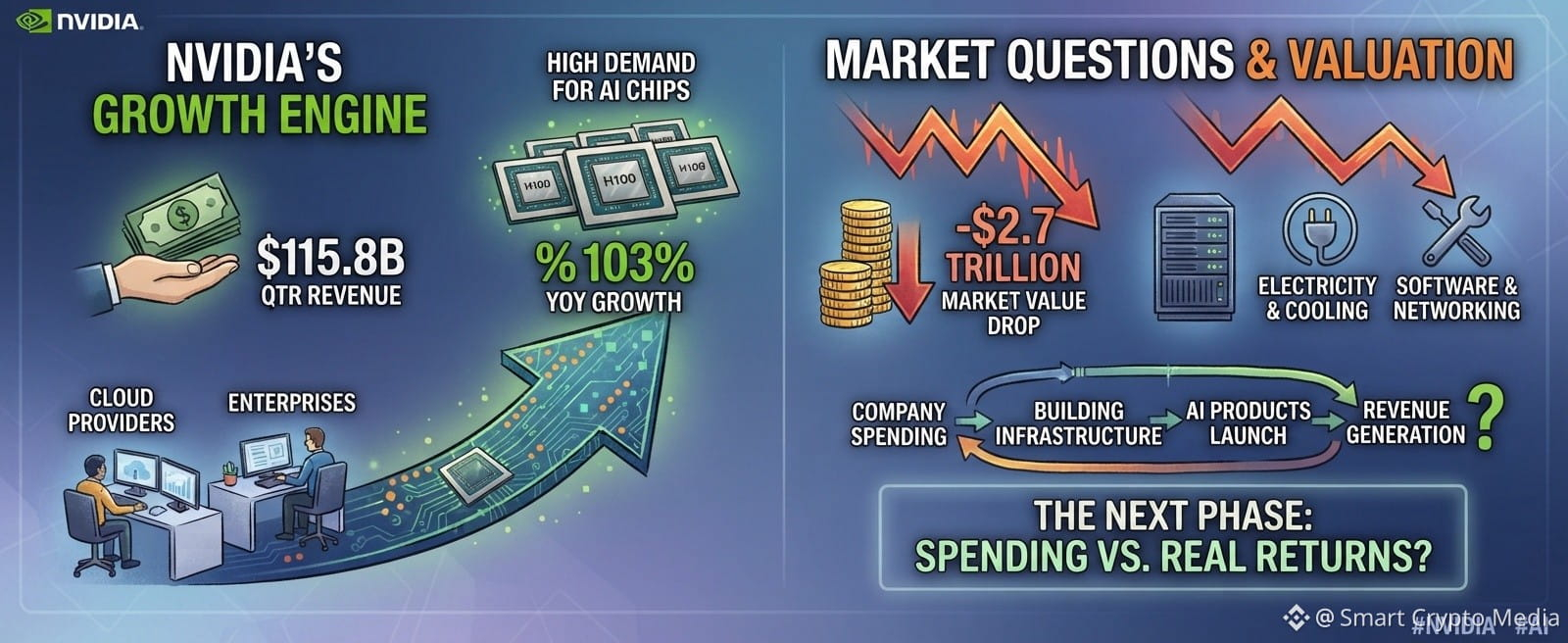
We're talking about a company reporting $115.8 billion in quarterly revenue, with 103% year-over-year growth, while the market is questioning its valuation and wiping roughly $2.7 trillion off its market value from the recent peak.
Those two things can happen at the same time.
And I think that's where the AI conversation is starting to change.
For a while, the story was simple: AI demand is growing, companies need more computing power, and NVIDIA is right in the middle of it.
But building AI infrastructure is expensive.
Chips are only one part of the bill. Companies also need data centers, electricity, networking, cooling, and software. Then comes the harder part: turning all that spending into revenue and eventually into real returns.
That's the loop investors are watching.
Companies spend on AI → build infrastructure → launch AI products → try to generate revenue → justify even more spending.
If that loop works, the investment cycle can keep expanding.
But if spending grows faster than the returns, eventually the market may start asking uncomfortable questions. Not because AI is useless, but because even a promising technology has to make economic sense.
That's why I don't think a falling NVIDIA share price automatically means the AI story is finished.
At the same time, record revenue doesn't automatically mean every valuation is justified.
The technology and the stock market are not the same thing. One can keep advancing while the other reassesses expectations.
Maybe this is the next phase of the AI narrative: less focus on how much companies can spend, and more focus on what that spending actually produces.
So what's the bigger test now: continued AI demand, or proof that the billions being invested can generate real returns?
#NVIDIA #AI #SmartCryptoMedia
if NVIDIA is growing. The market is getting less convinced. That's the part I can't ignore.
Honestly, this is what makes the recent NVIDIA sell-off interesting to me.
We're talking about a company reporting $115.8 billion in quarterly revenue, with 103% year-over-year growth, while the market is questioning its valuation and wiping roughly $2.7 trillion off its market value from the recent peak.
Those two things can happen at the same time.
And I think that's where the AI conversation is starting to change.
For a while, the story was simple: AI demand is growing, companies need more computing power, and NVIDIA is right in the middle of it.
But building AI infrastructure is expensive.
Chips are only one part of the bill. Companies also need data centers, electricity, networking, cooling, and software. Then comes the harder part: turning all that spending into revenue and eventually into real returns.
That's the loop investors are watching.
Companies spend on AI → build infrastructure → launch AI products → try to generate revenue → justify even more spending.
If that loop works, the investment cycle can keep expanding.
But if spending grows faster than the returns, eventually the market may start asking uncomfortable questions. Not because AI is useless, but because even a promising technology has to make economic sense.
That's why I don't think a falling NVIDIA share price automatically means the AI story is finished.
At the same time, record revenue doesn't automatically mean every valuation is justified.
The technology and the stock market are not the same thing. One can keep advancing while the other reassesses expectations.
Maybe this is the next phase of the AI narrative: less focus on how much companies can spend, and more focus on what that spending actually produces.
So what's the bigger test now: continued AI demand, or proof that the billions being invested can generate real returns?
#NVIDIA #AI #SmartCryptoMedia
Honestly, this is what makes the recent NVIDIA sell-off interesting to me.
We're talking about a company reporting $115.8 billion in quarterly revenue, with 103% year-over-year growth, while the market is questioning its valuation and wiping roughly $2.7 trillion off its market value from the recent peak.
Those two things can happen at the same time.
And I think that's where the AI conversation is starting to change.
For a while, the story was simple: AI demand is growing, companies need more computing power, and NVIDIA is right in the middle of it.
But building AI infrastructure is expensive.
Chips are only one part of the bill. Companies also need data centers, electricity, networking, cooling, and software. Then comes the harder part: turning all that spending into revenue and eventually into real returns.
That's the loop investors are watching.
Companies spend on AI → build infrastructure → launch AI products → try to generate revenue → justify even more spending.
If that loop works, the investment cycle can keep expanding.
But if spending grows faster than the returns, eventually the market may start asking uncomfortable questions. Not because AI is useless, but because even a promising technology has to make economic sense.
That's why I don't think a falling NVIDIA share price automatically means the AI story is finished.
At the same time, record revenue doesn't automatically mean every valuation is justified.
The technology and the stock market are not the same thing. One can keep advancing while the other reassesses expectations.
Maybe this is the next phase of the AI narrative: less focus on how much companies can spend, and more focus on what that spending actually produces.
So what's the bigger test now: continued AI demand, or proof that the billions being invested can generate real returns?
#NVIDIA #AI #SmartCryptoMedia
287

Verified
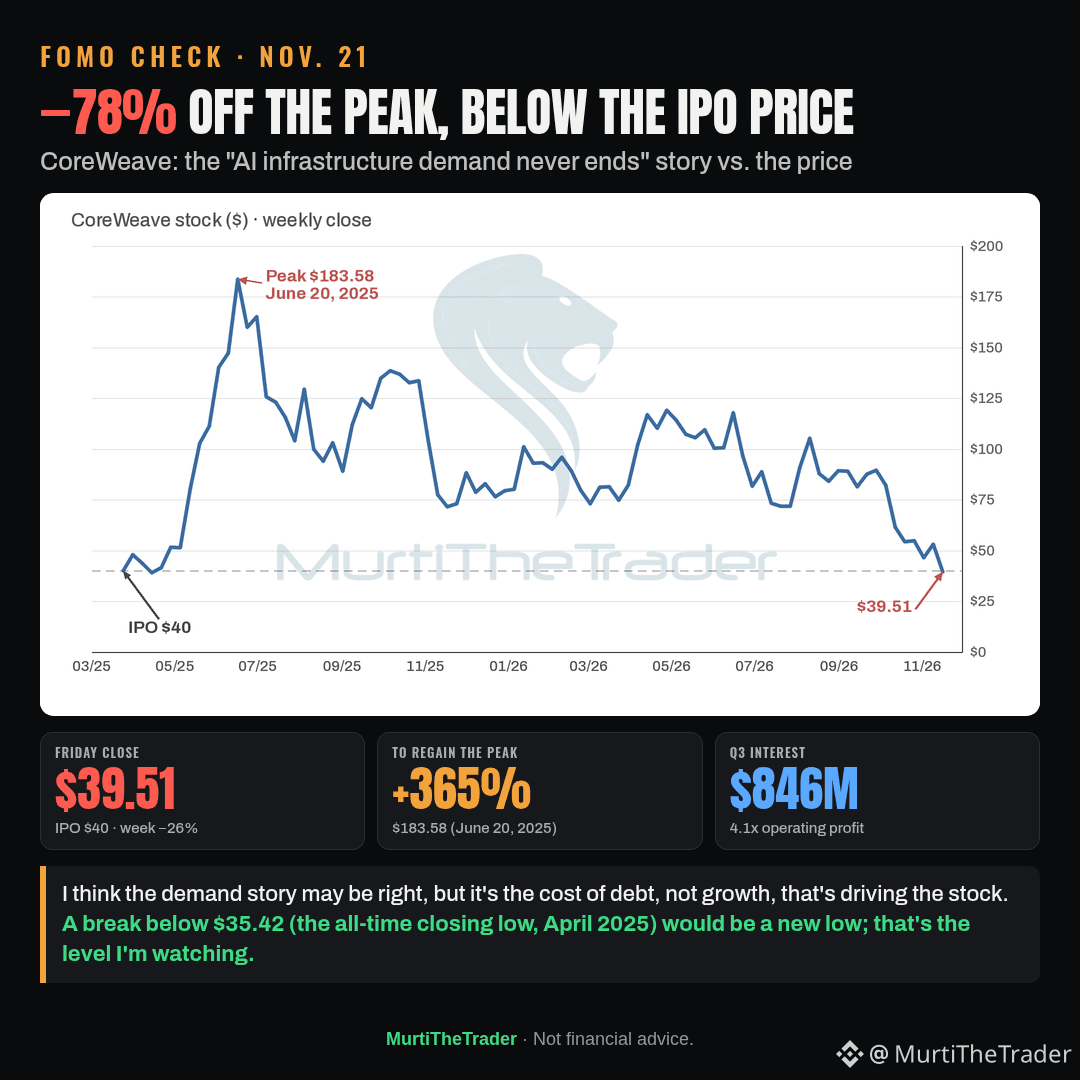
FOMO check: Everyone's saying "AI infrastructure demand never ends, buy the CoreWeave dip."
→ IPO at $40 on March 28, 2025; closing peak $183.58 on June 20, 2025
→ Q3 revenue +168%, net loss $709 million: interest expense $846 million, 4.1x operating profit
→ This week −26%, Friday −12% to $39.51: −78% from the peak, and below the IPO price for the first time since April 2025
I think the demand story may be right, but it's the cost of debt, not growth, that's driving the stock; the $35.42 low is on my radar.
#Stocks #AI
Watching: $CRWV $NVDA $QQQ
FOMO check: Everyone's saying "AI infrastructure demand never ends, buy the CoreWeave dip."
→ IPO at $40 on March 28, 2025; closing peak $183.58 on June 20, 2025
→ Q3 revenue +168%, net loss $709 million: interest expense $846 million, 4.1x operating profit
→ This week −26%, Friday −12% to $39.51: −78% from the peak, and below the IPO price for the first time since April 2025
I think the demand story may be right, but it's the cost of debt, not growth, that's driving the stock; the $35.42 low is on my radar.
#Stocks #AI
Watching: $CRWV $NVDA $QQQ
→ IPO at $40 on March 28, 2025; closing peak $183.58 on June 20, 2025
→ Q3 revenue +168%, net loss $709 million: interest expense $846 million, 4.1x operating profit
→ This week −26%, Friday −12% to $39.51: −78% from the peak, and below the IPO price for the first time since April 2025
I think the demand story may be right, but it's the cost of debt, not growth, that's driving the stock; the $35.42 low is on my radar.
#Stocks #AI
Watching: $CRWV $NVDA $QQQ
1
1.9k

·
--
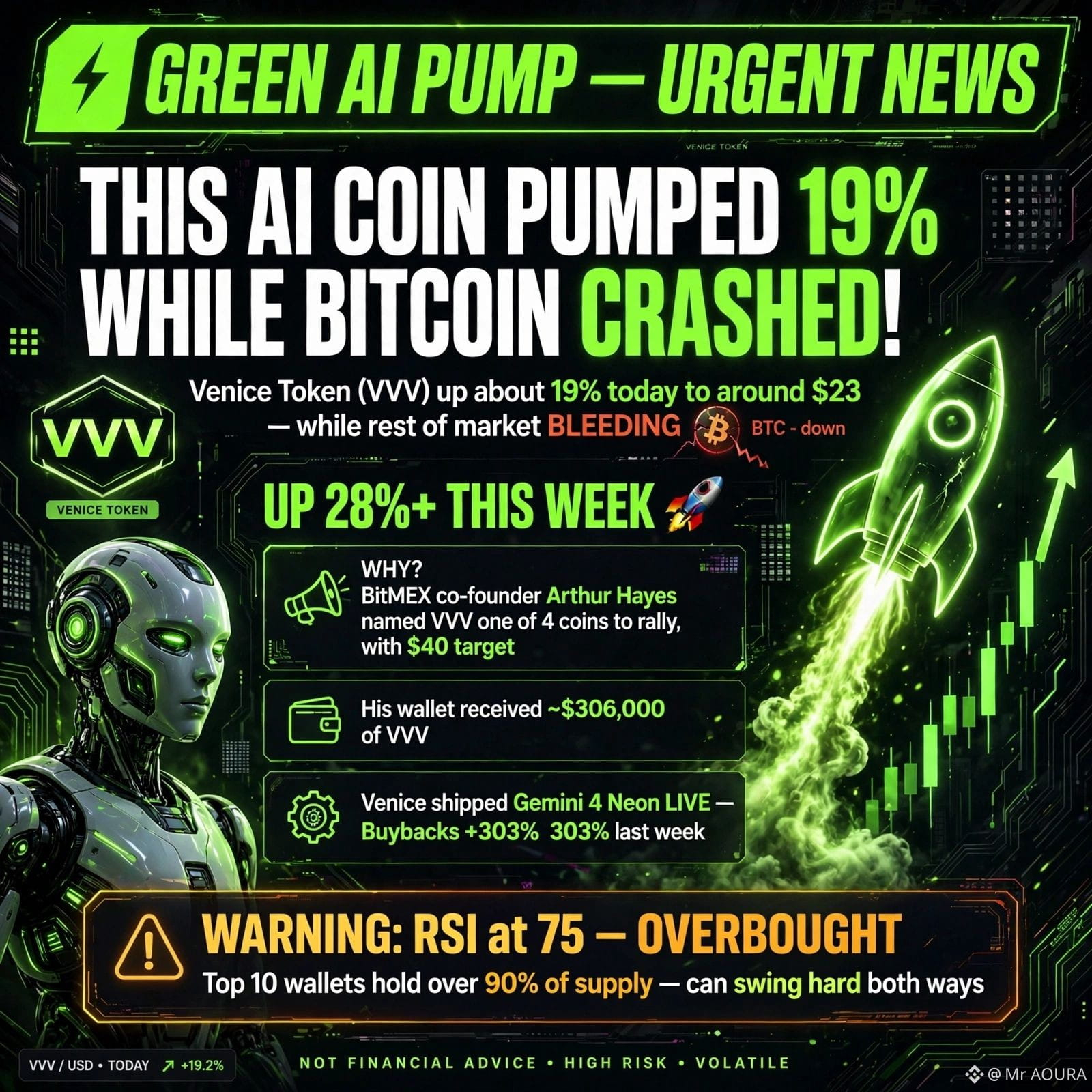
🚀 THIS AI COIN PUMPED 19% WHILE BITCOIN CRASHED!
$VVV $RENDER
Venice Token (VVV) is up about 19% today to around $23 — while the rest of the market was bleeding. It is up 28%+ this week.
Why? BitMEX co-founder Arthur Hayes just named VVV one of 4 coins to rally, with a $40 target — and his wallet then received about $306,000 of VVV. Venice also shipped Gemini 4 Neon live, and buybacks jumped 303% last week.
One honest warning: RSI is at 75 (overbought) and the top 10 wallets hold over 90% of the supply — so this can swing hard both ways.
Are you riding the AI wave, or waiting for a dip?
#AI #VVV #crypto #Binance
(Info only, not financial advice)
{future}(VVVUSDT)
{spot}(RENDERUSDT)
🚀 THIS AI COIN PUMPED 19% WHILE BITCOIN CRASHED!
$VVV $RENDER
Venice Token (VVV) is up about 19% today to around $23 — while the rest of the market was bleeding. It is up 28%+ this week.
Why? BitMEX co-founder Arthur Hayes just named VVV one of 4 coins to rally, with a $40 target — and his wallet then received about $306,000 of VVV. Venice also shipped Gemini 4 Neon live, and buybacks jumped 303% last week.
One honest warning: RSI is at 75 (overbought) and the top 10 wallets hold over 90% of the supply — so this can swing hard both ways.
Are you riding the AI wave, or waiting for a dip?
#AI #VVV #crypto #Binance
(Info only, not financial advice)
$VVV $RENDER
Venice Token (VVV) is up about 19% today to around $23 — while the rest of the market was bleeding. It is up 28%+ this week.
Why? BitMEX co-founder Arthur Hayes just named VVV one of 4 coins to rally, with a $40 target — and his wallet then received about $306,000 of VVV. Venice also shipped Gemini 4 Neon live, and buybacks jumped 303% last week.
One honest warning: RSI is at 75 (overbought) and the top 10 wallets hold over 90% of the supply — so this can swing hard both ways.
Are you riding the AI wave, or waiting for a dip?
#AI #VVV #crypto #Binance
(Info only, not financial advice)
1
183

·
--
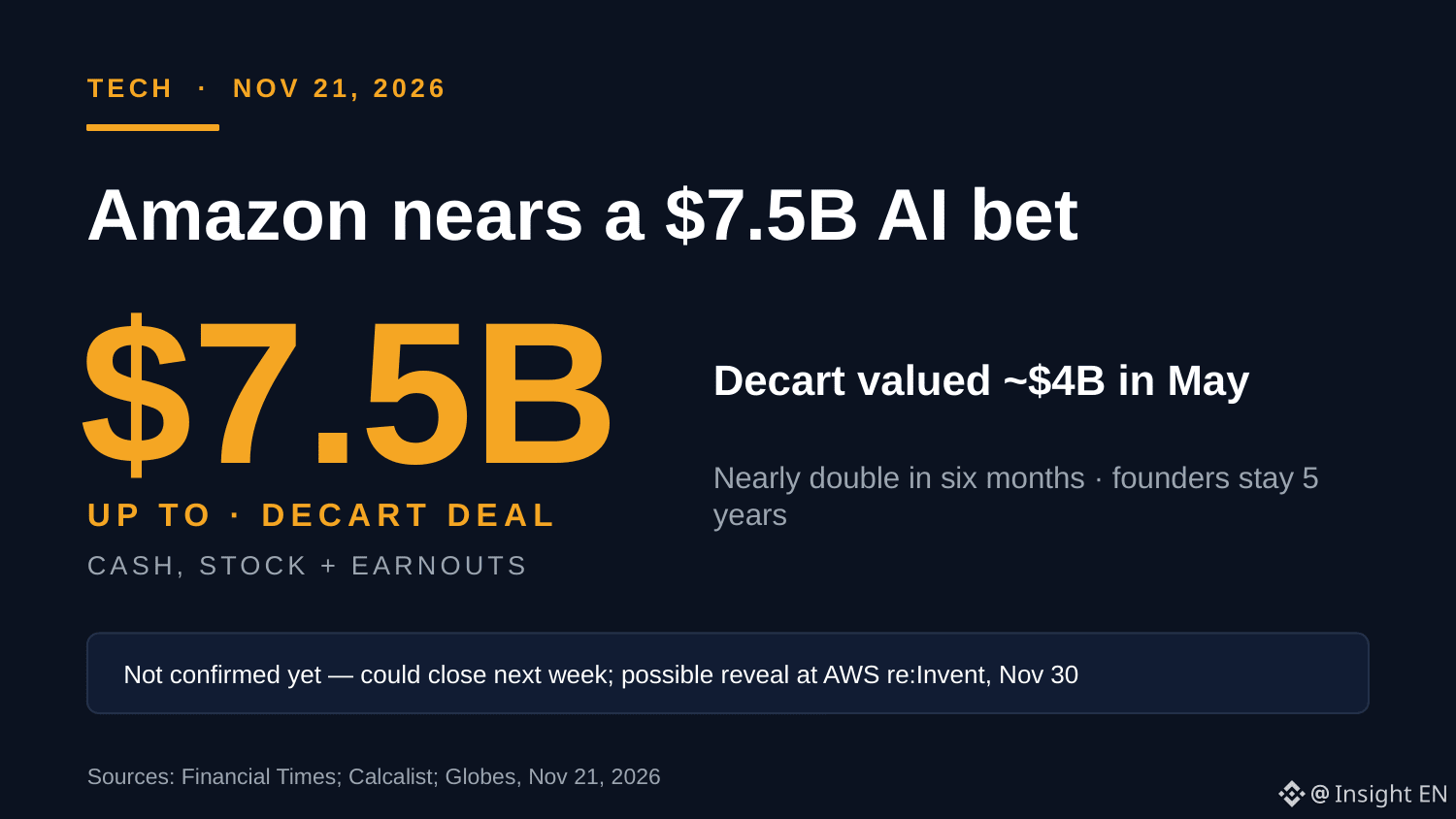
Amazon nears a $7.5B deal for AI startup Decart
Amazon is nearing a deal to acquire Israeli AI startup Decart for up to $7.5 billion, the Financial Times reports — with an agreement possible as early as next week.
The structure: more than $7 billion in cash, stock and deferred payments, with performance-based earnouts that could lift the total to nearly $7.5 billion.
Decart, founded in 2023, builds software that lets developers move AI workloads across different chips — a capability growing more valuable as demand for computing power surges. Amazon is already its biggest customer, using the technology across Twitch, online shopping and its film and TV business.
The price has climbed fast: Decart was valued at about $4 billion in May after raising $300 million in a round led by Radical Ventures, with Nvidia joining. At $7.5 billion, the deal would be worth nearly twice that — and among Amazon's largest ever. Anthropic walked away from a deal at about $6 billion earlier this year; Nvidia also passed.
The founders — Dean and Orian Leitersdorf and Moshe Shalev — have agreed to stay with Amazon for five years.
Why it matters: the deal would sharpen AWS's challenge to Nvidia in AI infrastructure, and could be unveiled at AWS re:Invent on November 30. But neither company has confirmed it, and talks could still collapse.
Saturday, November 21, 2026.
#amazon #ai
Amazon nears a $7.5B deal for AI startup Decart
Amazon is nearing a deal to acquire Israeli AI startup Decart for up to $7.5 billion, the Financial Times reports — with an agreement possible as early as next week.
The structure: more than $7 billion in cash, stock and deferred payments, with performance-based earnouts that could lift the total to nearly $7.5 billion.
Decart, founded in 2023, builds software that lets developers move AI workloads across different chips — a capability growing more valuable as demand for computing power surges. Amazon is already its biggest customer, using the technology across Twitch, online shopping and its film and TV business.
The price has climbed fast: Decart was valued at about $4 billion in May after raising $300 million in a round led by Radical Ventures, with Nvidia joining. At $7.5 billion, the deal would be worth nearly twice that — and among Amazon's largest ever. Anthropic walked away from a deal at about $6 billion earlier this year; Nvidia also passed.
The founders — Dean and Orian Leitersdorf and Moshe Shalev — have agreed to stay with Amazon for five years.
Why it matters: the deal would sharpen AWS's challenge to Nvidia in AI infrastructure, and could be unveiled at AWS re:Invent on November 30. But neither company has confirmed it, and talks could still collapse.
Saturday, November 21, 2026.
#amazon #ai
Amazon is nearing a deal to acquire Israeli AI startup Decart for up to $7.5 billion, the Financial Times reports — with an agreement possible as early as next week.
The structure: more than $7 billion in cash, stock and deferred payments, with performance-based earnouts that could lift the total to nearly $7.5 billion.
Decart, founded in 2023, builds software that lets developers move AI workloads across different chips — a capability growing more valuable as demand for computing power surges. Amazon is already its biggest customer, using the technology across Twitch, online shopping and its film and TV business.
The price has climbed fast: Decart was valued at about $4 billion in May after raising $300 million in a round led by Radical Ventures, with Nvidia joining. At $7.5 billion, the deal would be worth nearly twice that — and among Amazon's largest ever. Anthropic walked away from a deal at about $6 billion earlier this year; Nvidia also passed.
The founders — Dean and Orian Leitersdorf and Moshe Shalev — have agreed to stay with Amazon for five years.
Why it matters: the deal would sharpen AWS's challenge to Nvidia in AI infrastructure, and could be unveiled at AWS re:Invent on November 30. But neither company has confirmed it, and talks could still collapse.
Saturday, November 21, 2026.
#amazon #ai
89

·
--
🚀 WHAT IF $CHIP HITS $1? 👀
USD.AI ( $CHIP ) is operating at the intersection of two massive narratives: AI infrastructure + DeFi.
With a relatively small market cap and only 2 BILLION tokens circulating out of a 10 BILLION maximum supply, imagine what could happen if this project gains serious traction!
🎯 $1 per CHIP? That's a $10 BILLION fully diluted valuation!
Sounds ambitious? Absolutely. Impossible? I wouldn't dismiss the potential.
AI is growing. GPU demand is growing. Could $CHIP be one of the projects worth watching?
I'm keeping my eyes on this one! 🔥
#CHIP #crypto #AI #Binance
{future}(CHIPUSDT)
🚀 WHAT IF $CHIP HITS $1? 👀
USD.AI ( $CHIP ) is operating at the intersection of two massive narratives: AI infrastructure + DeFi.
With a relatively small market cap and only 2 BILLION tokens circulating out of a 10 BILLION maximum supply, imagine what could happen if this project gains serious traction!
🎯 $1 per CHIP? That's a $10 BILLION fully diluted valuation!
Sounds ambitious? Absolutely. Impossible? I wouldn't dismiss the potential.
AI is growing. GPU demand is growing. Could $CHIP be one of the projects worth watching?
I'm keeping my eyes on this one! 🔥
#CHIP #crypto #AI #Binance
USD.AI ( $CHIP ) is operating at the intersection of two massive narratives: AI infrastructure + DeFi.
With a relatively small market cap and only 2 BILLION tokens circulating out of a 10 BILLION maximum supply, imagine what could happen if this project gains serious traction!
🎯 $1 per CHIP? That's a $10 BILLION fully diluted valuation!
Sounds ambitious? Absolutely. Impossible? I wouldn't dismiss the potential.
AI is growing. GPU demand is growing. Could $CHIP be one of the projects worth watching?
I'm keeping my eyes on this one! 🔥
#CHIP #crypto #AI #Binance
4
367

·
--
Here's what happened when Anthropic listed $ANT right as the AI sector started getting hammered.
Crypto traders know this sting too well. You FOMO into a hyped new name like Claude thinking the tech will carry it, then sit there watching the position bleed with everything else while you debate whether to cut losses or hold through the pain.
The numbers line up almost too neatly. SOXL dropped 11.43 percent, AMD fell 9.87 percent, Nvidia lost 3.90 percent and Google 3.69 percent. $ANT itself is down 3.79 percent, tracking the established names instead of breaking away. Nobody is questioning Claude's actual technology. The issue is timing. Anthropic walked straight into heavy selling pressure across tech and AI. We've seen the same pattern with other AI tokens. $FET and $TAO both took similar hits whenever the broader narrative cooled, even when the projects themselves were solid.
Market conditions often matter more than the product. Launching into a downturn means fighting gravity from day one, just like previous sector rotations that punished even the stronger names.
Where do you think this goes from here?
#AI #Crypto #MarketTiming
Here's what happened when Anthropic listed $ANT right as the AI sector started getting hammered.
Crypto traders know this sting too well. You FOMO into a hyped new name like Claude thinking the tech will carry it, then sit there watching the position bleed with everything else while you debate whether to cut losses or hold through the pain.
The numbers line up almost too neatly. SOXL dropped 11.43 percent, AMD fell 9.87 percent, Nvidia lost 3.90 percent and Google 3.69 percent. $ANT itself is down 3.79 percent, tracking the established names instead of breaking away. Nobody is questioning Claude's actual technology. The issue is timing. Anthropic walked straight into heavy selling pressure across tech and AI. We've seen the same pattern with other AI tokens. $FET and $TAO both took similar hits whenever the broader narrative cooled, even when the projects themselves were solid.
Market conditions often matter more than the product. Launching into a downturn means fighting gravity from day one, just like previous sector rotations that punished even the stronger names.
Where do you think this goes from here?
#AI #Crypto #MarketTiming
Crypto traders know this sting too well. You FOMO into a hyped new name like Claude thinking the tech will carry it, then sit there watching the position bleed with everything else while you debate whether to cut losses or hold through the pain.
The numbers line up almost too neatly. SOXL dropped 11.43 percent, AMD fell 9.87 percent, Nvidia lost 3.90 percent and Google 3.69 percent. $ANT itself is down 3.79 percent, tracking the established names instead of breaking away. Nobody is questioning Claude's actual technology. The issue is timing. Anthropic walked straight into heavy selling pressure across tech and AI. We've seen the same pattern with other AI tokens. $FET and $TAO both took similar hits whenever the broader narrative cooled, even when the projects themselves were solid.
Market conditions often matter more than the product. Launching into a downturn means fighting gravity from day one, just like previous sector rotations that punished even the stronger names.
Where do you think this goes from here?
#AI #Crypto #MarketTiming

2k

·
--
📰 Nvidia’s moat looks shallower as Anthropic shows AI chips are becoming interchangeable
The shift towards interchangeable AI chips could erode Nvidia's pricing power, benefiting competitors like AMD and Alphabet's TPUs. The post Nvidia’s moat looks shallower as Anthropic shows AI chips are becoming interchangeable appeared first on Crypto Briefing.
Source : Crypto Briefing
Time : 2026-11-21 11:20:41
Credit : diego almada lopez
#ai
Share your opinion in the comment section below
📰 Nvidia’s moat looks shallower as Anthropic shows AI chips are becoming interchangeable
The shift towards interchangeable AI chips could erode Nvidia's pricing power, benefiting competitors like AMD and Alphabet's TPUs. The post Nvidia’s moat looks shallower as Anthropic shows AI chips are becoming interchangeable appeared first on Crypto Briefing.
Source : Crypto Briefing
Time : 2026-11-21 11:20:41
Credit : diego almada lopez
#ai
Share your opinion in the comment section below
The shift towards interchangeable AI chips could erode Nvidia's pricing power, benefiting competitors like AMD and Alphabet's TPUs. The post Nvidia’s moat looks shallower as Anthropic shows AI chips are becoming interchangeable appeared first on Crypto Briefing.
Source : Crypto Briefing
Time : 2026-11-21 11:20:41
Credit : diego almada lopez
#ai
Share your opinion in the comment section below

⚡ 21.62 TRILLION $BTT BURNED AS SMART MONEY EYES THE NEW AI INFRASTRUCTURE PLAY 🦈
Institutional capital is tracking structural shifts as $BTT executes its first major quarterly buyback, removing a staggering 21.62 trillion tokens from circulation using verified decentralized service revenue. 📊 Beyond the supply contraction, the structural pivot toward distributed GPU computing via BTTInferGrid introduces a utility layer targeting institutional AI workloads. 💡
While network installations dwarf active user metrics, aligning token velocity with real-world infrastructure demand creates an intriguing volume profile for $BTTC and $BNB ecosystem participants. 🌊 Can decentralized AI protocol revenue realistically sustain long-term buyback pressure, or is this supply reduction merely a temporary liquidity event? 💬
⚠️ Not financial advice. Always manage your risk. 🛡️
🏷️ #BTT #SmartMoney #AI #Crypto
🔥 💎
⚡ 21.62 TRILLION $BTT BURNED AS SMART MONEY EYES THE NEW AI INFRASTRUCTURE PLAY 🦈
Institutional capital is tracking structural shifts as $BTT executes its first major quarterly buyback, removing a staggering 21.62 trillion tokens from circulation using verified decentralized service revenue. 📊 Beyond the supply contraction, the structural pivot toward distributed GPU computing via BTTInferGrid introduces a utility layer targeting institutional AI workloads. 💡
While network installations dwarf active user metrics, aligning token velocity with real-world infrastructure demand creates an intriguing volume profile for $BTTC and $BNB ecosystem participants. 🌊 Can decentralized AI protocol revenue realistically sustain long-term buyback pressure, or is this supply reduction merely a temporary liquidity event? 💬
⚠️ Not financial advice. Always manage your risk. 🛡️
🏷️ #BTT #SmartMoney #AI #Crypto
🔥 💎
Institutional capital is tracking structural shifts as $BTT executes its first major quarterly buyback, removing a staggering 21.62 trillion tokens from circulation using verified decentralized service revenue. 📊 Beyond the supply contraction, the structural pivot toward distributed GPU computing via BTTInferGrid introduces a utility layer targeting institutional AI workloads. 💡
While network installations dwarf active user metrics, aligning token velocity with real-world infrastructure demand creates an intriguing volume profile for $BTTC and $BNB ecosystem participants. 🌊 Can decentralized AI protocol revenue realistically sustain long-term buyback pressure, or is this supply reduction merely a temporary liquidity event? 💬
⚠️ Not financial advice. Always manage your risk. 🛡️
🏷️ #BTT #SmartMoney #AI #Crypto
🔥 💎

1

·
--
500,000+ viewers. One fake Elon Musk livestream. Millions in potential losses.
A fake Tesla livestream reportedly used an AI-generated Elon Musk to promote a crypto giveaway.
The promise? Send crypto and receive double.
Coinbase says its AI fraud defenses stopped $4.7 million in suspicious transfers before the money left customer accounts.
Remember this:
Nobody can guarantee to double your crypto.
Would you recognize an AI-generated crypto scam?
#Cryptoscam #AI #BinanceSquare
500,000+ viewers. One fake Elon Musk livestream. Millions in potential losses.
A fake Tesla livestream reportedly used an AI-generated Elon Musk to promote a crypto giveaway.
The promise? Send crypto and receive double.
Coinbase says its AI fraud defenses stopped $4.7 million in suspicious transfers before the money left customer accounts.
Remember this:
Nobody can guarantee to double your crypto.
Would you recognize an AI-generated crypto scam?
#Cryptoscam #AI #BinanceSquare
A fake Tesla livestream reportedly used an AI-generated Elon Musk to promote a crypto giveaway.
The promise? Send crypto and receive double.
Coinbase says its AI fraud defenses stopped $4.7 million in suspicious transfers before the money left customer accounts.
Remember this:
Nobody can guarantee to double your crypto.
Would you recognize an AI-generated crypto scam?
#Cryptoscam #AI #BinanceSquare

AI security is facing a harsh reality check as hackers secretly swapped a hosted DeepSeek model for nearly three days, completely gutting its safety filters. This exploit shows how vulnerable centralized AI infrastructure really is. As decentralized compute and AI models increasingly intersect in Web3, securing the underlying pipelines isn't optional—it's the whole game. The race to build truly tamper-proof AI networks just heated up significantly. #AI #Security #Web3
AI security is facing a harsh reality check as hackers secretly swapped a hosted DeepSeek model for nearly three days, completely gutting its safety filters. This exploit shows how vulnerable centralized AI infrastructure really is. As decentralized compute and AI models increasingly intersect in Web3, securing the underlying pipelines isn't optional—it's the whole game. The race to build truly tamper-proof AI networks just heated up significantly. #AI #Security #Web3
Singapore is pioneering the future of fintech by exploring stablecoin payments executed directly by AI agents. This sandbox project is a critical step toward automating digital commerce while ensuring strict security and identity verification. By bridging AI autonomy with regulated financial frameworks, Singapore reinforces its role as a global crypto hub. Expect this to set a new standard for how machine-to-machine economies operate under the oversight of traditional banking institutions. $USDC $PYUSD #Singapore #Stablecoins #AI
Singapore is pioneering the future of fintech by exploring stablecoin payments executed directly by AI agents. This sandbox project is a critical step toward automating digital commerce while ensuring strict security and identity verification. By bridging AI autonomy with regulated financial frameworks, Singapore reinforces its role as a global crypto hub. Expect this to set a new standard for how machine-to-machine economies operate under the oversight of traditional banking institutions. $USDC $PYUSD #Singapore #Stablecoins #AI
1

Anthropic has gone public first. Now OpenAI’s valuation faces a real market test.
Anthropic’s IPO raised $81.3 billion at a valuation of about $1.5 trillion, while OpenAI, which filed confidentially in June, has pushed its listing to next year.
The revenue numbers tell an interesting story. In Q2, Anthropic generated nearly $17 billion, compared with OpenAI’s about $10 billion. Anthropic’s revenue grew over 12x year over year, while OpenAI’s increased about 3x.
However, Bloomberg has warned that this is not an apples-to-apples comparison: Anthropic books full sales through partners like Amazon, while OpenAI books only its cut through Microsoft.
Valuation is another challenge. OpenAI’s latest private round valued it at $1.25 trillion, down from a target of around $1.4 trillion.
The capital commitments are equally striking. SoftBank invested $64.6 billion for about 13% of OpenAI, but its shares fell 14.5% on Friday. Nvidia guaranteed up to $105 billion for an Ohio data center campus. OpenAI has roughly $750 billion in computing plans through 2030, while Anthropic has nearly $900 billion in computing commitments.
Anthropic's stock closed up 17% on its first day, while the Nasdaq fell 2.2%.
Now the big question: when OpenAI finally lists, will investors value it on its scale and ambitions, or will Anthropic’s public-market performance set the benchmark?
Anthropic has made its market debut. OpenAI is next in the valuation spotlight.
#Anthropic #OpenAPI I #AI
$DODO
{spot}(DODOUSDT)
$YB
{future}(YBUSDT)
$ORCA
{future}(ORCAUSDT)
Anthropic has gone public first. Now OpenAI’s valuation faces a real market test.
Anthropic’s IPO raised $81.3 billion at a valuation of about $1.5 trillion, while OpenAI, which filed confidentially in June, has pushed its listing to next year.
The revenue numbers tell an interesting story. In Q2, Anthropic generated nearly $17 billion, compared with OpenAI’s about $10 billion. Anthropic’s revenue grew over 12x year over year, while OpenAI’s increased about 3x.
However, Bloomberg has warned that this is not an apples-to-apples comparison: Anthropic books full sales through partners like Amazon, while OpenAI books only its cut through Microsoft.
Valuation is another challenge. OpenAI’s latest private round valued it at $1.25 trillion, down from a target of around $1.4 trillion.
The capital commitments are equally striking. SoftBank invested $64.6 billion for about 13% of OpenAI, but its shares fell 14.5% on Friday. Nvidia guaranteed up to $105 billion for an Ohio data center campus. OpenAI has roughly $750 billion in computing plans through 2030, while Anthropic has nearly $900 billion in computing commitments.
Anthropic's stock closed up 17% on its first day, while the Nasdaq fell 2.2%.
Now the big question: when OpenAI finally lists, will investors value it on its scale and ambitions, or will Anthropic’s public-market performance set the benchmark?
Anthropic has made its market debut. OpenAI is next in the valuation spotlight.
#Anthropic #OpenAPI I #AI
$DODO
$YB
$ORCA
Anthropic’s IPO raised $81.3 billion at a valuation of about $1.5 trillion, while OpenAI, which filed confidentially in June, has pushed its listing to next year.
The revenue numbers tell an interesting story. In Q2, Anthropic generated nearly $17 billion, compared with OpenAI’s about $10 billion. Anthropic’s revenue grew over 12x year over year, while OpenAI’s increased about 3x.
However, Bloomberg has warned that this is not an apples-to-apples comparison: Anthropic books full sales through partners like Amazon, while OpenAI books only its cut through Microsoft.
Valuation is another challenge. OpenAI’s latest private round valued it at $1.25 trillion, down from a target of around $1.4 trillion.
The capital commitments are equally striking. SoftBank invested $64.6 billion for about 13% of OpenAI, but its shares fell 14.5% on Friday. Nvidia guaranteed up to $105 billion for an Ohio data center campus. OpenAI has roughly $750 billion in computing plans through 2030, while Anthropic has nearly $900 billion in computing commitments.
Anthropic's stock closed up 17% on its first day, while the Nasdaq fell 2.2%.
Now the big question: when OpenAI finally lists, will investors value it on its scale and ambitions, or will Anthropic’s public-market performance set the benchmark?
Anthropic has made its market debut. OpenAI is next in the valuation spotlight.
#Anthropic #OpenAPI I #AI
$DODO
$YB
$ORCA

31
·
--
Okay… this is getting interesting. 👀💅
Anthropic just had one of the biggest IPO debuts ever.
Everyone was excited.
AI. Claude. Huge valuation. Massive demand.
And then…
Day 2 happened.
The excitement started fading almost as quickly as it arrived.
That’s the part I’m watching.
Because an IPO isn’t just about a company becoming public.
It’s also a test of how badly people still want to own the story.
And right now, the AI story is being tested.
For a while, it felt like:
“AI is the future.”
So every big AI name deserved a bigger price.
Now investors are asking a much harder question:
“Okay… but how much is this future actually worth?”
That question matters.
Because I don’t think people suddenly stopped believing in AI.
I think they’re becoming more selective about WHAT they’re willing to believe.
And honestly?
I like that.
The strongest stories should survive a little doubt.
So, Divas… 💅
Would you buy Anthropic after this kind of debut?
Or would you rather wait until the excitement completely cools down?
No safe answers.
I want your real opinion. 👀
$ANT $NVDA $BTC
#AI #Crypto #SolanaDiva
#AnthropicPlungesTowardIPOPriceonDay2
Okay… this is getting interesting. 👀💅
Anthropic just had one of the biggest IPO debuts ever.
Everyone was excited.
AI. Claude. Huge valuation. Massive demand.
And then…
Day 2 happened.
The excitement started fading almost as quickly as it arrived.
That’s the part I’m watching.
Because an IPO isn’t just about a company becoming public.
It’s also a test of how badly people still want to own the story.
And right now, the AI story is being tested.
For a while, it felt like:
“AI is the future.”
So every big AI name deserved a bigger price.
Now investors are asking a much harder question:
“Okay… but how much is this future actually worth?”
That question matters.
Because I don’t think people suddenly stopped believing in AI.
I think they’re becoming more selective about WHAT they’re willing to believe.
And honestly?
I like that.
The strongest stories should survive a little doubt.
So, Divas… 💅
Would you buy Anthropic after this kind of debut?
Or would you rather wait until the excitement completely cools down?
No safe answers.
I want your real opinion. 👀
$ANT $NVDA $BTC
#AI #Crypto #SolanaDiva
#AnthropicPlungesTowardIPOPriceonDay2
Anthropic just had one of the biggest IPO debuts ever.
Everyone was excited.
AI. Claude. Huge valuation. Massive demand.
And then…
Day 2 happened.
The excitement started fading almost as quickly as it arrived.
That’s the part I’m watching.
Because an IPO isn’t just about a company becoming public.
It’s also a test of how badly people still want to own the story.
And right now, the AI story is being tested.
For a while, it felt like:
“AI is the future.”
So every big AI name deserved a bigger price.
Now investors are asking a much harder question:
“Okay… but how much is this future actually worth?”
That question matters.
Because I don’t think people suddenly stopped believing in AI.
I think they’re becoming more selective about WHAT they’re willing to believe.
And honestly?
I like that.
The strongest stories should survive a little doubt.
So, Divas… 💅
Would you buy Anthropic after this kind of debut?
Or would you rather wait until the excitement completely cools down?
No safe answers.
I want your real opinion. 👀
$ANT $NVDA $BTC
#AI #Crypto #SolanaDiva
#AnthropicPlungesTowardIPOPriceonDay2

1
444
Signal is drawing a hard line on privacy, treating OS-level AI assistants as a serious threat to user confidentiality. By actively blocking screenshots on iOS and enforcing strict screen security on Android when AI is detected, they are prioritizing zero-knowledge ideals over convenient tech integration. This move highlights a growing friction between native AI surveillance features and true end-to-end encryption. Privacy-first tools will need to adapt fast. #Signal #Privacy #AI
Signal is drawing a hard line on privacy, treating OS-level AI assistants as a serious threat to user confidentiality. By actively blocking screenshots on iOS and enforcing strict screen security on Android when AI is detected, they are prioritizing zero-knowledge ideals over convenient tech integration. This move highlights a growing friction between native AI surveillance features and true end-to-end encryption. Privacy-first tools will need to adapt fast. #Signal #Privacy #AI

The AI trade just had its worst week in 18 years — and Bitcoin felt every bit of it.
Nvidia crashed 14% on Friday to $125.53 after Reuters reported the SEC is looking into its accounting. That's -23% for the week, roughly $1 trillion of market value gone, and the stock is now about 48% below its October record. Jensen Huang resigned on Nov 11, the board said no to bringing him back, and even Trump chimed in saying he'd like Huang back.
Why should spot traders care? Because this selloff isn't a crypto-only story. The Nasdaq dropped 5.3% on Friday, and Bitcoin's 40-day correlation with the Nasdaq is around 0.69 — when the AI king sneezes, $BTC catches the cold.
Bitcoin did bounce though — back above $60,000, up about 9% off Saturday's $55,130 low. But with stocks closed till Monday, that bounce is still on trial. Fear & Greed is stuck at 12, ninth straight day in Extreme Fear.
If Nvidia keeps sliding on Monday, does Bitcoin hold $60K or give it back?
#Bitcoin #Crypto #AI
Not financial advice. DYOR.
The AI trade just had its worst week in 18 years — and Bitcoin felt every bit of it.
Nvidia crashed 14% on Friday to $125.53 after Reuters reported the SEC is looking into its accounting. That's -23% for the week, roughly $1 trillion of market value gone, and the stock is now about 48% below its October record. Jensen Huang resigned on Nov 11, the board said no to bringing him back, and even Trump chimed in saying he'd like Huang back.
Why should spot traders care? Because this selloff isn't a crypto-only story. The Nasdaq dropped 5.3% on Friday, and Bitcoin's 40-day correlation with the Nasdaq is around 0.69 — when the AI king sneezes, $BTC catches the cold.
Bitcoin did bounce though — back above $60,000, up about 9% off Saturday's $55,130 low. But with stocks closed till Monday, that bounce is still on trial. Fear & Greed is stuck at 12, ninth straight day in Extreme Fear.
If Nvidia keeps sliding on Monday, does Bitcoin hold $60K or give it back?
#Bitcoin #Crypto #AI
Not financial advice. DYOR.
Nvidia crashed 14% on Friday to $125.53 after Reuters reported the SEC is looking into its accounting. That's -23% for the week, roughly $1 trillion of market value gone, and the stock is now about 48% below its October record. Jensen Huang resigned on Nov 11, the board said no to bringing him back, and even Trump chimed in saying he'd like Huang back.
Why should spot traders care? Because this selloff isn't a crypto-only story. The Nasdaq dropped 5.3% on Friday, and Bitcoin's 40-day correlation with the Nasdaq is around 0.69 — when the AI king sneezes, $BTC catches the cold.
Bitcoin did bounce though — back above $60,000, up about 9% off Saturday's $55,130 low. But with stocks closed till Monday, that bounce is still on trial. Fear & Greed is stuck at 12, ninth straight day in Extreme Fear.
If Nvidia keeps sliding on Monday, does Bitcoin hold $60K or give it back?
#Bitcoin #Crypto #AI
Not financial advice. DYOR.
3

·
--
Bullish
🤖 CRYPTO PLATFORMS ARE EXPANDING BEYOND CRYPTO!
A new trend is emerging as digital trading platforms explore products connected to major private technology companies.
The lines between:
🤖 Artificial Intelligence
🚀 Technology companies
🌐 Digital financial markets
are becoming increasingly connected.
The financial world is changing rapidly.
Would you like to see traditional technology and digital finance become more connected?
#AI #Technology #Crypto #DigitalFinance #BinanceSquare $CRPT.ETF
{etf_us}(CRPT.ETF)
$BTC
{spot}(BTCUSDT)
🤖 CRYPTO PLATFORMS ARE EXPANDING BEYOND CRYPTO!
A new trend is emerging as digital trading platforms explore products connected to major private technology companies.
The lines between:
🤖 Artificial Intelligence
🚀 Technology companies
🌐 Digital financial markets
are becoming increasingly connected.
The financial world is changing rapidly.
Would you like to see traditional technology and digital finance become more connected?
#AI #Technology #Crypto #DigitalFinance #BinanceSquare $CRPT.ETF
$BTC
A new trend is emerging as digital trading platforms explore products connected to major private technology companies.
The lines between:
🤖 Artificial Intelligence
🚀 Technology companies
🌐 Digital financial markets
are becoming increasingly connected.
The financial world is changing rapidly.
Would you like to see traditional technology and digital finance become more connected?
#AI #Technology #Crypto #DigitalFinance #BinanceSquare $CRPT.ETF
$BTC
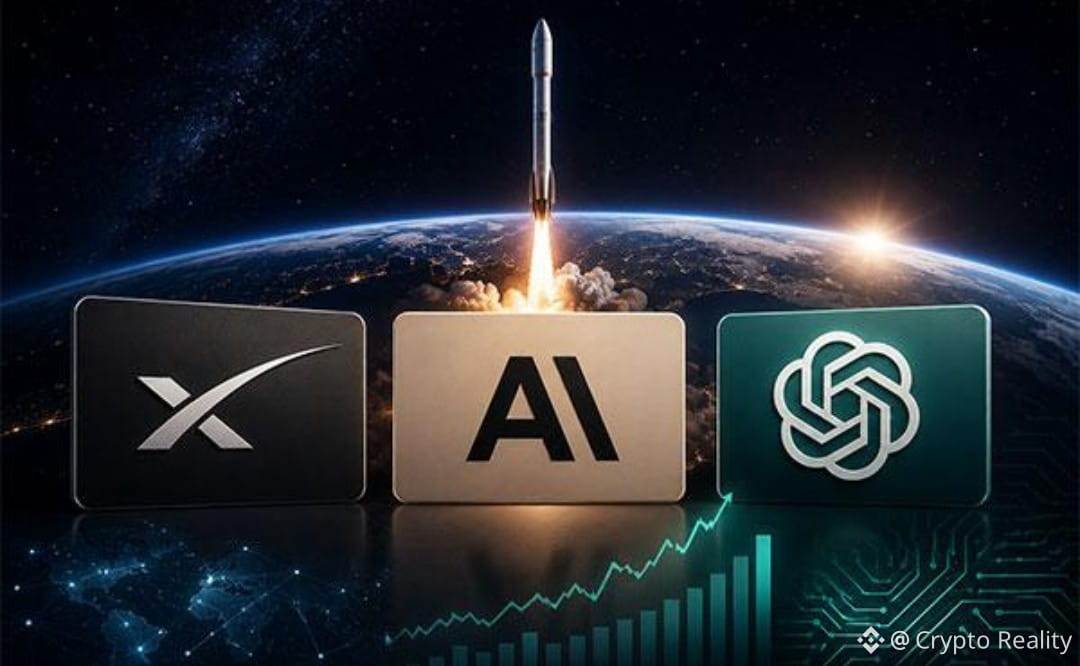
58
·
--
📉 Nvidia Has Now Lost $2.7T in Six Weeks — More Than the Entire Crypto Market
📌 What happened
Nvidia (NVDA) fell 14.01% on Friday to close at $125.53 — its seventh straight losing session and worst single-day drop since January 2025 — after Reuters reported the US Securities and Exchange Commission is examining potential accounting issues at the chipmaker. The stock is now down 47.5% from its record close of $239.24 on October 6, and Nvidia has slipped to fourth among US companies by market value, overtaken by Alphabet.
📊 Key numbers
• Friday: -14.01% to $125.53; roughly $485–491B of market value erased in one session
• Since Oct 6 record: -47.5%, about $2.7–2.75T of market cap wiped out in six weeks
• Week: -22.9%, the worst weekly drop since October 2008; nearly $900B lost in the week
• Market cap now ~$3.03T, vs ~$5.77T at the October peak
• The $2.7T loss is larger than the entire crypto market, worth ~$2.02T
• Nasdaq fell 5.28% on Friday, erasing all of its 2026 gains
• Context: CEO Jensen Huang resigned Nov 12; Q3 revenue was $115.8B, up 103% year over year, with Q4 guidance of $130B
🔍 Why it matters
Nvidia is the bellwether of the AI trade, so a $2.7T wipeout is not just a single-stock story — it reflects a market-wide reassessment of whether enormous AI infrastructure spending will pay off, compounded by the SEC probe. The scale puts crypto's own rout in perspective: Nvidia alone has lost more value than the whole crypto market is worth, and the same risk-off mood is driving both. For Binance traders, NVDAUSDT perpetuals trade 24/7, so the weekend is when crypto markets price the next leg while US equities are closed.
👀 What to watch
• Any further detail on the SEC accounting probe
• Whether NVDA holds around $125 when US markets reopen Monday
• Whether the AI-spending reassessment spreads to other chip and cloud names
• NVDAUSDT perp flows on Binance over the weekend
Not financial advice. Source: Reuters / Motley Fool / Bitcoin.com / WSJ, Nov 21.
$NVDA #Nvidia #AI #Stocks
📉 Nvidia Has Now Lost $2.7T in Six Weeks — More Than the Entire Crypto Market
📌 What happened
Nvidia (NVDA) fell 14.01% on Friday to close at $125.53 — its seventh straight losing session and worst single-day drop since January 2025 — after Reuters reported the US Securities and Exchange Commission is examining potential accounting issues at the chipmaker. The stock is now down 47.5% from its record close of $239.24 on October 6, and Nvidia has slipped to fourth among US companies by market value, overtaken by Alphabet.
📊 Key numbers
• Friday: -14.01% to $125.53; roughly $485–491B of market value erased in one session
• Since Oct 6 record: -47.5%, about $2.7–2.75T of market cap wiped out in six weeks
• Week: -22.9%, the worst weekly drop since October 2008; nearly $900B lost in the week
• Market cap now ~$3.03T, vs ~$5.77T at the October peak
• The $2.7T loss is larger than the entire crypto market, worth ~$2.02T
• Nasdaq fell 5.28% on Friday, erasing all of its 2026 gains
• Context: CEO Jensen Huang resigned Nov 12; Q3 revenue was $115.8B, up 103% year over year, with Q4 guidance of $130B
🔍 Why it matters
Nvidia is the bellwether of the AI trade, so a $2.7T wipeout is not just a single-stock story — it reflects a market-wide reassessment of whether enormous AI infrastructure spending will pay off, compounded by the SEC probe. The scale puts crypto's own rout in perspective: Nvidia alone has lost more value than the whole crypto market is worth, and the same risk-off mood is driving both. For Binance traders, NVDAUSDT perpetuals trade 24/7, so the weekend is when crypto markets price the next leg while US equities are closed.
👀 What to watch
• Any further detail on the SEC accounting probe
• Whether NVDA holds around $125 when US markets reopen Monday
• Whether the AI-spending reassessment spreads to other chip and cloud names
• NVDAUSDT perp flows on Binance over the weekend
Not financial advice. Source: Reuters / Motley Fool / Bitcoin.com / WSJ, Nov 21.
$NVDA #Nvidia #AI #Stocks
📌 What happened
Nvidia (NVDA) fell 14.01% on Friday to close at $125.53 — its seventh straight losing session and worst single-day drop since January 2025 — after Reuters reported the US Securities and Exchange Commission is examining potential accounting issues at the chipmaker. The stock is now down 47.5% from its record close of $239.24 on October 6, and Nvidia has slipped to fourth among US companies by market value, overtaken by Alphabet.
📊 Key numbers
• Friday: -14.01% to $125.53; roughly $485–491B of market value erased in one session
• Since Oct 6 record: -47.5%, about $2.7–2.75T of market cap wiped out in six weeks
• Week: -22.9%, the worst weekly drop since October 2008; nearly $900B lost in the week
• Market cap now ~$3.03T, vs ~$5.77T at the October peak
• The $2.7T loss is larger than the entire crypto market, worth ~$2.02T
• Nasdaq fell 5.28% on Friday, erasing all of its 2026 gains
• Context: CEO Jensen Huang resigned Nov 12; Q3 revenue was $115.8B, up 103% year over year, with Q4 guidance of $130B
🔍 Why it matters
Nvidia is the bellwether of the AI trade, so a $2.7T wipeout is not just a single-stock story — it reflects a market-wide reassessment of whether enormous AI infrastructure spending will pay off, compounded by the SEC probe. The scale puts crypto's own rout in perspective: Nvidia alone has lost more value than the whole crypto market is worth, and the same risk-off mood is driving both. For Binance traders, NVDAUSDT perpetuals trade 24/7, so the weekend is when crypto markets price the next leg while US equities are closed.
👀 What to watch
• Any further detail on the SEC accounting probe
• Whether NVDA holds around $125 when US markets reopen Monday
• Whether the AI-spending reassessment spreads to other chip and cloud names
• NVDAUSDT perp flows on Binance over the weekend
Not financial advice. Source: Reuters / Motley Fool / Bitcoin.com / WSJ, Nov 21.
$NVDA #Nvidia #AI #Stocks
72
Log in to explore more content
Join global crypto users on Binance Square
⚡️ Get latest and useful information about crypto.
💬 Trusted by the world’s largest crypto exchange.
👍 Discover real insights from verified creators.
Email / Phone number
Trending Topics
1
#NvidiaLoses$2.7TrillionInMonthAndAHalf
21,076 views
135 Discussing
2
#CanBTCReboundAfterFallingBelow60K?
783,118 views
3,013 Discussing
3
#GlobalStocksFaceLongestLosingStreakSince2023
286,132 views
2,012 Discussing
4
#BlackRockIBITPostsRecord$541MSingleDayOutflow
34,435 views
101 Discussing
5
#AnthropicPlungesTowardIPOPriceonDay2
146,952 views
1,228 Discussing
6
#TwentyOneCapitalAdds172.25BTC
67,425 views
673 Discussing
7
#HKBillWouldExcludeTokenizedDepositsFromVirtualAssets
8,886 views
50 Discussing
8
#BNBDropsBelow540USDTWith8.46%DailyDecline
79,793 views
656 Discussing
9
#HKBillProposesHK$100KFineForUnauthorizedCryptoTitles
2,674 views
22 Discussing
10
#BitMineFaces$10.1BUnrealizedETHLoss
5,618 views
28 Discussing